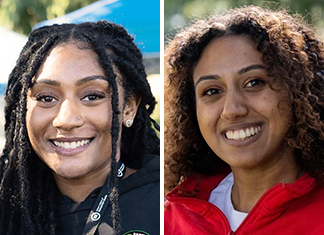
By NiRae Petty and Jude Ahmed
If you have lived in this city for over a decade, you would agree that 2013 was a pivotal year for Seattle. Our Seahawks won their first Superbowl, Macklemore was overplayed on every major radio station, and an influx of inclusion signs stating, “In This House” infiltrated the Central District. Among all this, our city approved a charter amendment to create city council districts for the first time in history.
For many, this monumental amendment to our Charter went unnoticed. In fact, most communities of color are uninformed and disengaged with the redistricting process in general. Yet, we tend to be the most impacted by it.
This year, the Seattle Districting Commission will redraw the city council districts for the next ten years. At the Urban League of Metropolitan Seattle, our Advocacy and Community Engagement department is a team of young Black and Brown women. We acknowledge that for the average young adult like us, city council districts are the last thing we would place on our ten-year vision board. But here’s why we believe they should be: your city council members are some of the most influential people in determining the funding and policies for your interests and well-being, and the district you live in determines who you’ll vote for to advocate for those interests.
We cannot allow the new districts to be established again without informed decisions from all our communities. It is imperative for culturally competent outreach and education to equip our communities to contribute to such governmental processes. To understand the significance of the Seattle redistricting process, we must examine its history.
In 2013, Charter Amendment 19 created a Districting Commission to redraw seven districts every 10 years. It set the rules for redistricting; districts must be compact and contiguous, be roughly equal in population, and cannot be based on the residence of any person. In addition, when practical, new boundaries should follow existing district boundaries, factor waterways and geographic boundaries, and Seattle communities and neighborhoods.
Unfortunately, these “existing district boundaries” were created with limited public input and had no accountability to the input that was given by advocates. By the time Charter Amendment 19 came to a direct vote to Seattleites on the 2013 ballot, the Seattle district map was already drawn by a UW Geography Professor. All the while, the number of districts was quietly negotiated among Seattle’s elite political players and those funding the ballot initiative.
On the City Clerk’s website, you can read ballot initiatives from 1994 and 2002 that attempted to create city council districts. However, in these failed initiatives they proposed drawing nine districts to fill all the nine council positions. When asked what made the Charter Amendment 19 different from the previous initiatives, Eugene Wasserman, of Seattle Districts Now, shared that, this time, the amendment proposed a map and compromised two at-large seats.
Preserving two at-large seats was the best shot at moving towards a system in which the elites would have to loosen their grasp on city-wide city council power. But who benefited from that political compromise? Certainly not Black and Brown communities, especially in Yesler Terrace and Chinatown-International District.
These vibrant neighborhoods of Black and Asian communities were split between three districts as an unwilling sacrifice for the new Charter Amendment. In response to advocates against the map, Faye Garneau, who bankrolled the Charter Amendment 19 campaign, stated, “We’re all part of the same race. The human race.” But like every other political process, “color-blind” approaches result in further discrimination.
Ten years later, though districts intended to bind certain elected officials to newly empowered neighborhoods, communities of color are left out of the benefits of districting. The only majority-minority district, District 2, got whiter, and all the other districts got richer. The same Black and Brown communities that were excluded in the creation of these districts were uncoincidentally the most gentrified, underserved, and displaced communities.
Ultimately, our communities’ challenges can only be remedied with serious reform of our electoral system. Our current voting system is flawed with a lack of equitable voter education and outreach, restrictive voting laws, gerrymandering, and it desperately needs reformation.
But with this year’s redistricting process we can increase equitable representation by amplifying the voices in underserved communities and keeping our communities together. The Urban League of Metropolitan Seattle is one of many organizations in the Redistricting Justice for Seattle Coalition (RJS) dedicated to providing culturally competent, language inclusive outreach and mapping sessions to community.
Started in May, RJS plans to host multiple mapping sessions focused on marginalized communities and present sample city council maps drafted by More Equitable Democracy. The community can learn more about the redistricting process, review alternative city council maps and provide input on the RJS maps through Q&A and Ranked-Choice Voting.
Most Geography experts may tell you they create story-telling through maps. The current city council districts tell the story of a political feud without prioritizing collaborative effort from communities of color, resulting in further housing and economic disparities. This year, Seattle has a chance to change the narrative with the redistricting process.