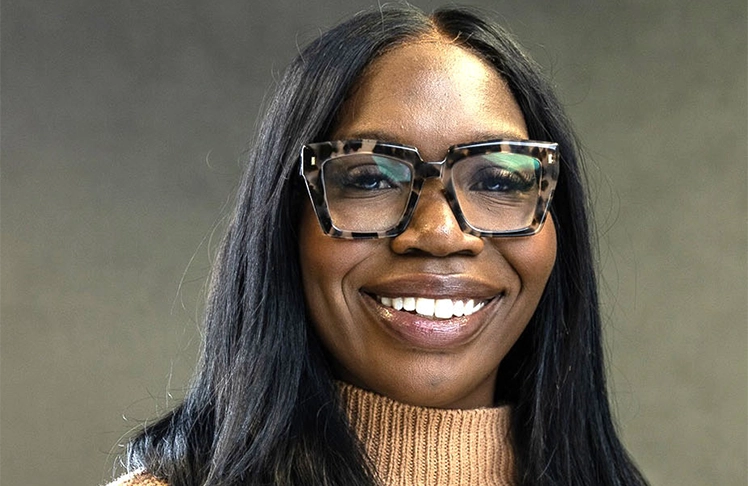
Founder of Kyla Care Therapy
By Kiara Doyal, The Seattle Medium
For many people, mental health support is associated with traditional therapy sessions and counseling appointments. But Lyndsey Williams, founder of Kyla Care Therapy, believes reproductive mental health care can and should extend far beyond those settings.
Through professional development, organizational consulting, trainings, workshops and community engagement, Williams has built a model that supports both individuals and the broader healthcare system, helping expand conversations around reproductive mental health and access to care.
As a social worker, Williams’ path into reproductive mental health began through work in hospital systems, including OB-GYN clinics and women’s wellness settings, before evolving into specialized perinatal mental health support. She later returned to graduate school to earn a degree in public health, helping shape the systems-based approach she now brings to Kyla Care.
Throughout that journey, one of the most rewarding aspects of her work has been helping people understand how deeply reproductive mental health influences everyday life.
“The positive changes in their everyday life that they didn’t expect to see are rewarding. But it is pretty fascinating when people find out how many lifestyle changes actually support mental health,” Williams said. “When I say reproductive health, many people say, ‘But I am not pregnant,’ and they don’t have any idea that it has to do with all types of bodily functions and hormonal changes that we have. Many don’t look at how it influences things, and I just find it fascinating when people realize that reproductive mental health affects them, and men are also included in this conversation.”
That broader understanding of mental health has influenced the range of services Kyla Care offers today.
While many people think of therapy as a one-on-one experience between a client and a clinician, Williams said support can take many forms. In addition to counseling services, Kyla Care offers digital resources designed to help people access support on their own terms.
“We sell eBooks and workbooks that support all different types of nuanced situations that women go through. People don’t have to be a client of ours directly to benefit from mental health support,” Williams said. “People can use these eBooks to support their mental health at their own pace. When people do buy them, they are really helpful, but it is an overlooked offering that we have.”
Beyond serving individual clients, Williams said one of Kyla Care’s most in-demand services involves helping organizations better support reproductive mental health.
“On the business-to-business side, our most requested services actually are organizational training. So, we are helping organizations understand how to better support women’s mental health in general and reproductive mental health,” Williams said. “It has been really surprising to see the amount of support. We really like to work with patients, clients and providers to create a better health ecosystem overall.”
That systems-level approach reflects Williams’ belief that mental health outcomes are influenced not only by individuals, but also by the environments and institutions that serve them.
“Organizational support is definitely a service people don’t realize we have. The private practices that we support, like fertility clinics, women’s wellness clinics and even community-based organizations that work with that population,” Williams said. “I think we see mental health not just for individuals, but also at a system level. How can we be better equipped to support and create a more healing environment overall.”
Williams believes growing public conversations around mental health have encouraged more people to seek support and helped reduce the stigma surrounding reproductive health concerns.
“It has helped people understand that there is someone they can talk to, and that has been one of my biggest campaigns at Kyla Care, that there is somebody to talk to about reproductive mental health,” Williams said. “Types of things like endometriosis, fibroids, PCOS, many people suffer in silence around those things. Women kind of were told not to talk about that, and that these things are too private or personal, so lately with just more attention around that, I do think that’s helped [bring in clients].”
As a femme-focused, neo-feminist therapist, Williams said her work also centers on addressing healthcare disparities that disproportionately affect Black women and creating spaces where women feel empowered to advocate for themselves and prioritize their needs.
“I think that the intersection of being Black, and if we are identifying as women, that increases our intersectionality, right? And that alone can create some disparities in how we’re responded to, and we see that across the board with many statistics,” Williams said. “We often overlook our own needs and downplay them. One thing I really try to highlight is acknowledging our vulnerability and being able to name our needs. I think that increased acceptance and vulnerability in our community can help us get the help we need.”
Through Kyla Care’s combination of direct services, educational resources, organizational consulting and community-centered advocacy, Williams continues to push for a broader understanding of mental health, one that recognizes support can happen at both the individual and systemic level.
“We are helping people find a way to land with their mental health. Consultations, digital workbooks, healing circles [are all a way],” Williams said. “There is a lot of mental health support that just comes in different mediums.”
For Williams, one of the most important steps toward healing is helping people recognize they do not have to navigate reproductive mental health challenges alone. Whether through therapy, education, community support or healthcare advocacy, she hopes more people feel empowered to seek help, speak openly about their experiences and acknowledge needs that have too often gone unspoken.