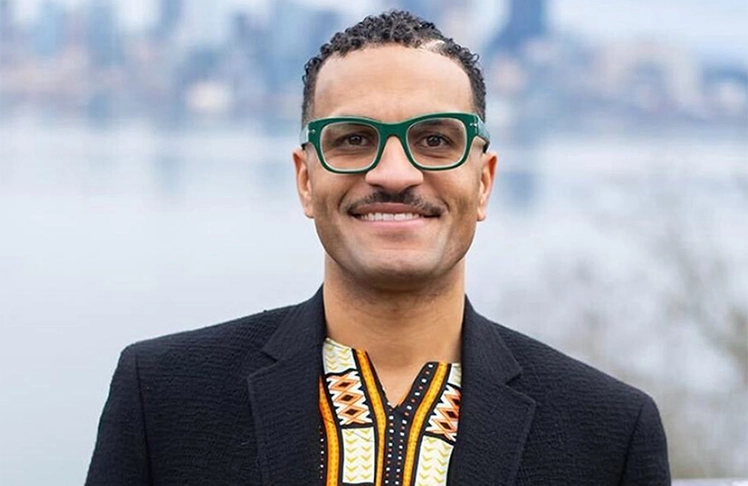
By Aaron Allen, The Seattle Medium
Seattle’s new police contract has sparked renewed debate over the city’s approach to public safety, accountability, and budget priorities. While the City Council approved the agreement in a 6 to 3 vote, Councilmember Rob Saka, vice chair of the Public Safety Committee, opposed the deal, pointing to what he called critical gaps in accountability and a missed opportunity to align public safety with community values.
Joining Saka in opposition to the contract were Seattle City councilmembers Eddie Lin, and Alexis Mercedes Rinck.
The new collective bargaining agreement with the Seattle Police Officers Guild (SPOG), covering 2024 through 2027, is partially retroactive and preserves Seattle police officers’ status as the highest paid in the state. The contract also introduces new incentives for college degrees and bilingual skills, expands the role of civilian oversight in serious misconduct investigations, and marks a turning point in the deployment of unarmed crisis response teams.
“Don’t get me wrong,” said Saka. “There are some good wins for the community in this contract, specifically, the CARE expansion moving our city away from a dual dispatch model, where crisis care responders had to respond with a police officer. Now they are able to respond on their own. Not on every response but for most things.”
The agreement allows the Community Assisted Response and Engagement (CARE) Department’s unarmed responders to attend certain calls without a police escort for the first time. This change is designed to reduce unnecessary law enforcement interactions in cases involving behavioral health, homelessness, and other nonviolent emergencies.
Mayor Bruce Harrell, who negotiated the agreement and signed it after it was ratified by SPOG, praised the contract as a significant milestone in reforming public safety and diversifying emergency response options.
“The CARE Department’s crisis responder teams are essential to Seattle’s comprehensive approach to public safety, ensuring residents get the right response at the right time,” said Harrell. “Building an effective, evidence-based, and data-driven third public safety department has been a priority for my administration, and this contract unlocks CARE’s potential to respond with compassionate care and services to those in need. I’m thankful to our City Council partners for supporting this agreement that will continue to diversify emergency response options and build a police department that represents our highest values as a city.”
Despite those advances, the vote was not without conflict. Protesters disrupted the meeting during public testimony, prompting Council President Sara Nelson to adjourn the in-person proceedings and resume the vote remotely.
While Saka acknowledged the progress the contract represents in some areas, he remained firm in his opposition, arguing that it ultimately fails to deliver on accountability. One of his key objections is the continued lack of subpoena power for the Office of Police Accountability and the Office of Inspector General, civilian-led oversight bodies charged with investigating misconduct.
“We strengthen public safety when we strengthen accountability. The two rise or fall together. The most glaring failure for me is the continued refusal to grant subpoena power to the civilian Office of Police Accountability and the Inspector General,” said Saka. “Without this critical tool, misconduct investigations can’t be completed, trust erodes, and institutions are shielded instead of people. I can’t justify spending tens of millions more on officers while essential oversight tools remain missing.”
Saka also raised concerns about the contract’s financial impact in the context of the city’s broader budget. He said that while the raises and incentives may improve recruitment and retention, they come at a time when other critical city services are under pressure.
“Seattle police officers are already the highest paid in the state. They didn’t need this contract to pass to remain the highest paid officers. Meanwhile, our local needs are going unaddressed,” said Saka. “My primary reason was the fundamental lack of accountability provisions in the contract. If we are going to pay that kind of cost as a city, for me, I need to see, the communities are expecting to see more accountability, and we didn’t get that. And because there are more pressing needs in the city.”
Saka has long positioned himself as a champion of public safety reform. He has consistently advocated for greater transparency and civilian oversight, both locally and at the state level.
“Accountability is non-negotiable for me. Throughout my adult career I’ve fought for stronger civilian oversight and advancing fairness. I’m also committed to fighting for statewide reform to remove police discipline and misconduct rules from being treated as expensive bargaining chips,” said Saka. “Seattle deserves a contract that provides meaningful oversight and real tools. Our city deserves better. This is why I voted no.”