By Ruoxi Zhao, The Seattle Medium
For over two decades, the Seattle Black Film Festival (SBFF) has been more than just a film festival—it’s a testament to Black resilience, creativity, and community. “The Seattle Black Film Festival isn’t going anywhere,” said Taylor Freeman, SBFF’s program manager.
“It’s a gathering place of joy, laughter, and the sharing of ideas, standing strongly against anti-Blackness.”
As the festival returns April 24–27, audiences can expect a weekend of powerful storytelling, and a space to connect, celebrate and take a collective breath.
“This year, we are uplifting films made by local Black filmmakers, as well as bringing in a lot of films from across the diasporas,” Freeman said. “It’s about showcasing films made by and for Black people, bringing them to Seattle so that our city knows what’s happening in Black film worldwide.”
With over 200 submissions annually, films are selected based on storytelling, cinematography and representation. A panel of volunteer screeners reviews submissions, ensuring films authentically center Black experiences.
“The most important thing is representation,” Freeman said. “Does this film depict Black people? Is it about Black people? Does it show us in a non-derogatory way?”
Derek Nunn is a Tacoma-based filmmaker and storyteller. Among this year’s selections is his “Wild Dreams,” which explores themes of identity, racial microaggressions and self-worth.
“There is a phrase, some call it a slogan, that says, ‘I am my ancestors’ wildest dreams,’” Nunn said. “If you were to go back 100, 200, 300, 400, 500 years and meet one of your ancestors, I’m pretty certain that you would blow their mind. They could never have imagined who we are as people today, regardless of the struggles that any one of our communities have experienced.”
His film follows a Black man navigating success while grappling with microaggressions and remnants of racial discrimination.
“We’ve made so much progress, but there’s still so much more to go,” Nunn said. “I wanted to capture that balance—the pride in how far we’ve come, but also the struggles we still face.”
“As any artist will probably tell you, getting recognition is the lifeblood of our art,” Nunn said. “No writer wants to write in the dark or not have their work be read. No painter or dancer or performer wants to express themselves in a way where they’re never seen. So getting that recognition means everything.”
Being selected for SBFF holds special meaning for Nunn.
“I’ve submitted to several film festivals and did not get accepted,” he said. “But given what we created and the film that we made, it means everything to be accepted.
“Being in a space where you are not only comfortable but valued is very, very important,” he said. “You don’t have to code-switch. You don’t have to adjust how you speak or explain your experiences in a way that makes someone else comfortable. That’s why spaces like SBFF matter.”
Beyond screenings, SBFF supports Black filmmakers through networking opportunities and exposure. Many film festivals charge submission fees and do not compensate filmmakers for showcasing their work, but SBFF takes a different approach,” said Taylor Freeman, SBFF’s program manager. “We pay most of our filmmakers an honorarium because we value their labor and artistic contributions.
“Unlike many film festivals that rely solely on submission fees, SBFF is funded through a combination of grants, sponsorships, and community partnerships, allowing us to offer financial honorariums to most of our filmmakers,” Freeman said. “It’s important that we recognize their labor and artistic contributions.”
New this year, the festival is launching its first-ever Industry Night, a space designed for local creatives and film professionals to connect and exchange ideas.
“This year’s debut Industry Night event is The Ripple Effect: Black Creators Making Waves in New Media, co-presented by Heye Frequency,” said Taylor Freeman, SBFF’s program manager. “The night will entail a panel discussion including Rome Green Jr. and Cameron Miller, two incredible creators who’ve recently moved to Seattle, to talk about the crossover between social media and creative media and its role in shaping Black entertainment.”
This event highlights the evolving path from content creator to mainstream filmmaker, a trajectory reflected in the careers of figures who transitioned from digital platforms to network television.
Steve Sneed, a board member of Langston and former director of Langston Hughes Performing Arts Institute, has always believed in the power of film to spark discussions on critical social issues. While leading the youth theater program at Langston, he co-produced Terminal 187, a film addressing youth gun violence in Seattle’s Central District.
“In the early ’90s, gun violence in Seattle’s Black community was rising,” Sneed said. “We worked with young people in our youth theater program, and one of my colleagues had an idea for a film about how choices impact your future.”
The film follows a young man caught in violence and who is transported to a purgatory-like space, where he sees how his actions affect his loved ones.
“It’s a bit of a take on It’s a Wonderful Life,” Sneed said. “The idea was to give young people a chance to reflect on their choices.”
Terminal 187 is still shown in schools across the country. “It’s 24 years later, and people still screen it,” Sneed said. “That tells you these issues are still relevant.”
SBFF serves as an essential counter to Hollywood’s history of marginalizing Black voices. It ensures diverse, authentic portrayals of Black experiences.
“We’ve got films about Black farmers, Black basketball players, Black mothers—there’s no one way to define Black film,” Freeman said.
Nunn echoed the importance of diverse Black storytelling.
“Too often, Black narratives are reduced to a few dominant themes—poverty, crime, struggle,” he said. “Those stories are real, but they’re not the only stories. SBFF gives us space to tell the full range of Black experiences.”
For possible new attendees, Nunn has a simple message:
“If you have never been to the Seattle Black Film Festival, you are missing out.”
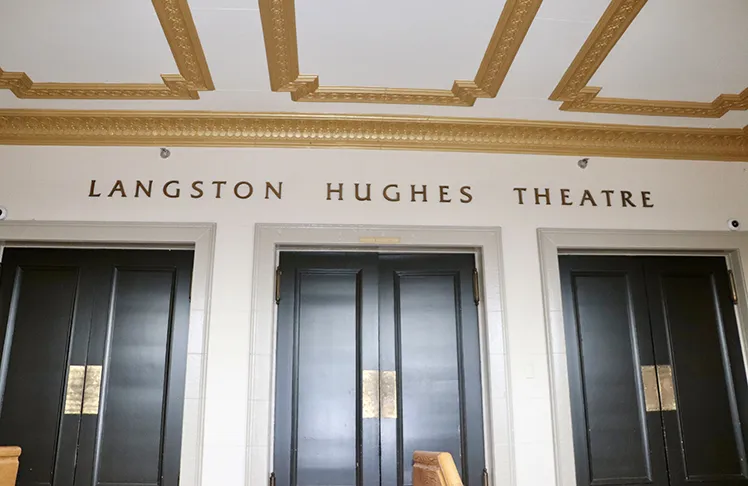
The Seattle Black Film Festival (SBFF) will take place April 24–27, 2025, at the Langston Hughes Performing Arts Institute.. The four-day festival will showcase feature-length films, documentaries, shorts, workshops and panel discussions highlighting Black storytelling.
Tickets and the full festival schedule will be available closer to the event date on the SBFF website.