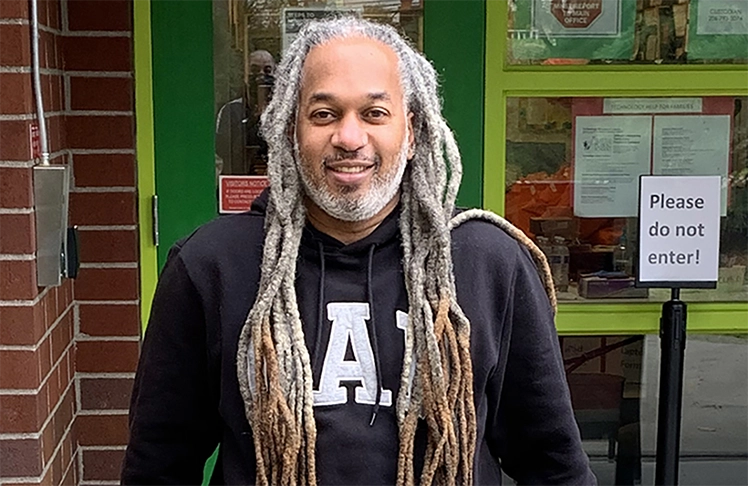
By Aaron Allen, The Seattle Medium
After deeply examining Seattle Public Schools’ longitudinal data across multiple measures including academic performance, discipline, and attendance, educators and education advocates say it became clear that previous initiatives had done little to transform the educational experiences, access, or attainment for African American male students.
District data confirms that African American boys and young men continue to be furthest from educational justice. Regardless of the instructional model, school location, or reform, the academic needs of Black boys remain persistently unmet across the district.
However, there is some encouraging news. Since its inception, Seattle Public Schools’ African American Male Achievement (AAMA) program has made measurable progress. AAMA data shows that between 70 and 74 percent of Black males in the district are now graduating on time and considered college-ready, marking a notable improvement from previous years.
Despite the progress, community and education advocates say the work is far from finished. Their continued efforts are focused on the 25 to 30 percent of Black male students who are still struggling with academics, attendance, and truancy and who risk falling through the cracks.
Community activist and education advocate Chunkundi Salisbury continues to raise concerns about the graduation rates and academic achievement of African American males in Seattle Public Schools, as well as the alignment between community priorities and the efforts of the district. Salisbury says the community often turns out in full force to support young Black athletes, yet participation in academic-focused events like the Black Parent Summit is often minimal, and in some cases, nonexistent.
“We should all be focused on trying to have as many young Black men graduate as possible,” says Salisbury. “Because we know that obviously we do better when we graduate. One out of four Black boys are not graduating and not having the skill sets they need to navigate in this world, and that’s a big problem.”
Deshawn Jackson, an educator within Seattle Public Schools, agrees with Salisbury’s view on shifting community focus toward academics. He says parent and community presence in schools is critical for student success and is a factor that continues to be overlooked.
“I think having more Black men being present in the schools can make a significant difference. That is a start,” says Jackson. “But historically, in our community we seem to glorify sports more than we do academics.”
“Being in the schools you don’t see a lot of the parents come to their parent-teacher conferences, but you’ll see everybody at the football games, basketball games,” Jackson adds. “Long story short, I think we have to see more of a presence in our schools.”
Where the Black community places its priorities is a concern for Jackson, who says improvement must start at home if the academic achievement levels of Black boys are to rise. He acknowledges that the dynamics of family life vary widely, and that attending school functions or supporting a student academically requires time, resources, and stability that all families do not always have.
“I’m sure every school is different, but I believe parents have to step up on their end,” says Jackson. “Or we need some type of education for parents on how to start. Until that happens, I don’t know if there is going to be any way to bring students who are falling through the cracks back.”
“I’m not talking individually, but collectively, you can go to any game and see it packed. Come to these parent-teacher conferences, most of the Black parents, they don’t come,” added Jackson.
Student truancy and the lack of academic accountability, both inside and outside the home, are often linked to deeper systemic issues and community-level challenges. Salisbury says it takes a village to raise a child and emphasizes that community involvement must go beyond cheering from the sidelines.
“It’s one of the reasons we started 100 Black Parents,” says Salisbury. “All of these kids should be our children. There should be no such thing as ‘other people’s kids,’ because it only takes one of those so-called ‘other people’s kids’ to open fire.”
Salisbury says community involvement means more than attendance at events or support at games. It means consciously choosing to engage in the academic lives of children and advocating for their success in school.
Concerns about where community energy and attention are directed reflect deeper questions about values, priorities, and the long term investment needed to improve educational outcomes. Salisbury and Jackson both argue that while sports can offer opportunities for some, the vast majority of students will not pursue athletics at college or professional levels. These advocates ask the community to consider who is supporting the rest of the student population and how that support might be strengthened.
“What we can do is have more mentorship programs,” says Salisbury. “If we had the same level of engagement about our young men that are skipping class and out in the streets that we do with this basketball and sports stuff, perhaps we just need the community to wrap their arms around those kids. I know that sounds really altruistic and big picture, but at the end of the day, if these young people are not in the classroom, if they are not in the community centers, if they are in the streets, who is talking or teaching them? If they are in the streets, the police are talking to them and we do not want that.”