By Kiara Doyal, The Seattle Medium
As President Donald Trump nears the first full year of his second term, many in the Black community are reflecting on the turmoil his administration has brought to Black America and are bracing for what is to come in the remaining three years.
In just 11 months, community members have endured the rollbacks of civil rights enforcement, the dismantling of federal DEI initiatives, and proposed cuts to housing, education, and community programs that disproportionately serve Black communities, all of which weaken protections against discrimination, reduce investment in historically marginalized neighborhoods, and overall make it harder to address racial gaps in wealth, health, and opportunity.
“I was raised with the wisdom of Marcus, Elijah, Malcolm, Shirley, Harriet, Rosa, and Frederick, and we now have contemporary philosophers like Wilkerson, Kendi, and Coates,” said former state Rep. and community elder Dawn Mason. “We should spend as much time internalizing our greatness, and know Trump was a chump on inauguration day and has not changed one iota. It is four years and whatever lasting turbulence.”
From January 20, 2025, to now, Mason says her stance on President Trump has not changed, arguing that his administration has done very few things to benefit Black Americans.
Since taking office, one of the many troubling developments for the Black community has been Trump’s effort to dismantle DEI programs across the federal government. These actions have placed many Black-owned businesses on the back burner, showing that they are no longer viewed as a priority.
According to Jay Doyal, owner of Doyal Construction LLC, Trump’s attacks on DEI have made working with minority-owned businesses seem less important to White America, resulting in fewer opportunities for general contractors to partner with his company.
“For me to say that I am a minority-owned business is not a big thing anymore, and it reduces the opportunities for Black-owned businesses if these contractors are not required to work with a minority-owned business. They were required to meet a certain quota, but now they are not required to work with me as much,” said Doyal. “It is not a big deal to work with a minority-owned business because we have a president who doesn’t see any value in diversity or working with a minority-owned business.”
“The anti-DEI policies by the administration hurt businesses like mine,” Doyal continued.
Nate Miles, a prominent member of Seattle’s African American community, says much of the controversy around DEI centers on misunderstanding its purpose. He said most people simply want fairness and equal treatment in the workplace.
“When they start misrepresenting these goals, they start to believe it’s not about fairness, they think it’s about unfairness and that is not true at all,” Miles said. “Too often the concept of diversity, equity and inclusion gets reduced to some kind of bumper sticker slogan.”
Many Trump supporters often praise him as a strong president, focusing on his policies that benefit businesses and stimulate economic growth. However, this focus often overlooks the harm his policies have caused for small Black-owned businesses, with attention largely centered on the advantages for larger White-owned businesses.
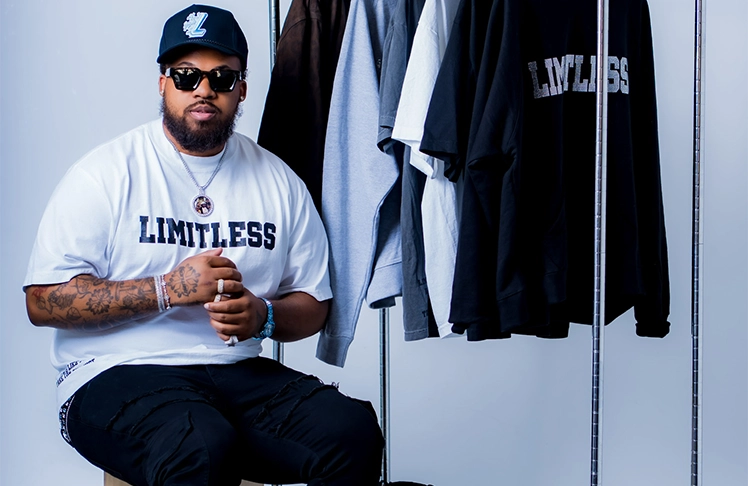
For Black small business owners like Ronnie Davis, owner of Limitless by Frost, a Seattle-based clothing brand, Trump’s policies led to major changes in import rules and tariffs that severely impacted his cost of goods and business model.
“Previously, shipments under $800 were exempt, which is something many small brands rely on to survive early on,” said Davis. “But that exemption changed in mid-production [for me], and on top of that, tariffs increased [the cost of my products].”
“For a small startup like mine, those two things happening at once were huge. My costs jumped by thousands of dollars after I had already priced my product and committed to manufacturing, completely changing everything,” continued Davis. “This was a major hit to my business, especially with us being new; it had made it a real challenge to grow.”
Doyal also agrees that the tariffs have heavily impacted his flow of business.
“My material costs have increased due to tariffs, which means I am not making as much on jobs as I used to,” said Doyal. “My margins are smaller because I have to pay more for the raw materials that I need, like wood for fences, decks, kitchen remodels, and flooring.”
Another point of frustration for many business owners is the Trump administration’s deportation policies, which have caused many immigrant workers, even those who are in the U.S. legally, to leave jobs that they have worked on for years out of fear of deportation. This has not only disrupted many families but has also created workforce challenges for many small businesses and employers who depended on their skills and work ethic.
“There is less availability of labor because of all the ICE deportations,” says Doyal. “Most Americans don’t want these jobs. Generation Z doesn’t want them, they just want to make quick money.”
“I would like to employ anyone who is willing to work, but as a business owner I can’t afford to pay a premium for workers who don’t have the same skills and work ethic just because they look like they were born in America.”
Miles said Trump’s critics often frame issues narrowly, but he believes the challenges reflect broader problems in American race relations.
“I’d rather look at it in a much larger frame, and talk about race relations in this country because the greatest risk to this country, at least in my mind’s eye, is race relations,” Miles said. “It’s a breakdown in empathy and mutual respect. We can differ on policy, but if we lose the ability to see each other as fellow Americans, then we are all going to lose.”
Miles also criticized efforts to revise or remove certain historical narratives.
“If that means taking books out of libraries, lying about history, and pretending that something didn’t happen, then that is where it starts to break down, and that is a problem. But that is the race relations that we have in this country,” he said.
Despite the harm this administration has caused the Black community, Mason said that, as descendants of the atrocities of chattel slavery, Black people have endured far worse. She said that she hopes that younger generations will understand that this period of violence and injustice will eventually pass.
“Trump brings nothing but violence and inhumanity. I am an elder among us, and the best I can do is model Black brilliance and pass my baton to the younger Black brilliance among us and tell them this, too, shall pass,” said Mason. “We are not the poor souls who now must worry because of the color of our skin. What is practiced on those who are thought to be the lesser among us is perfected on those who think of themselves as greater.”