By Aaron Allen, The Seattle Medium
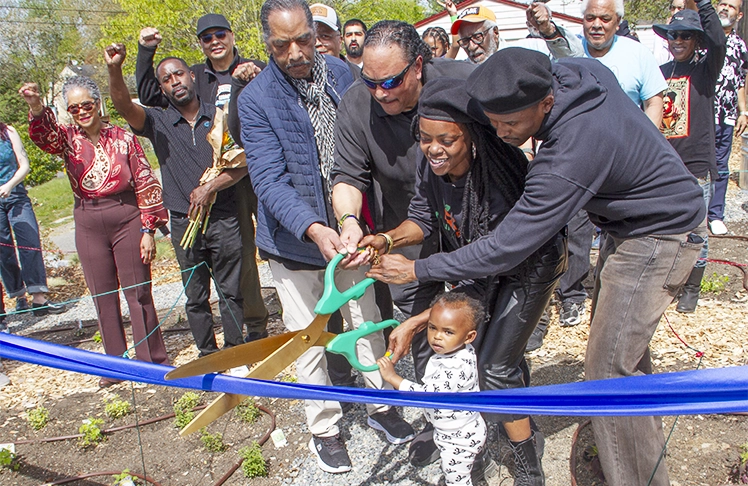
A decade-long community effort to honor the legacy of Seattle’s Black Panther Party culminated Sunday with the opening of Black Panther Park, a space rooted not only in history, but in the enduring power of community, resistance and self-determination.
The park, developed through a collaboration between Nurturing Roots, King County Parks and Stone Soup Gardens, reflects years of organizing, community input and persistence aimed at reclaiming space and preserving cultural history in one of the region’s most diverse and historically under-resourced neighborhoods.
For Nyema Clark, founder and director of Nurturing Roots, the project began as an opportunity to create something meaningful for the community and quickly evolved into a vision rooted in legacy.
“As a part of a collaboration between King County Parks and Stone Soup Gardens, which is a landscaping firm out of Seattle, we were invited to the project,” said Clark. “At the time there was no name. It was just the idea to kind of take up space and create a more beautiful space in Skyway, and I thought, who better than commemorate our Seattle Black Panther Chapter.”
Clark said the decision to center the park around the Black Panther Party was intentional, reflecting the organization’s long-standing impact on community empowerment, food access and social justice.
“They definitely resonated throughout my life and in my career,” said Clark. “We had the opportunity to name it, and we chose to move forward with the Seattle Black Panther chapter.”
Designed as a living tribute, the park highlights the values long associated with the Black Panther Party, including mutual aid, food justice, community safety and collective healing. The space features nine murals created by local artists that interpret the Panthers’ legacy and their impact on social change and activism.
In addition to public art, the park includes a community food pantry, a lending library and raised garden beds for herbs and medicinal plants. These elements reflect the Panthers’ historic commitment to providing resources directly to the community.
The site also includes a central gathering space with a concrete patio, a symbolic sundial, seating areas and ADA-accessible pathways and parking, creating a space designed for both reflection and everyday use.
Charlie Hohlbein, a project manager with King County Parks, said the park’s completion represents years of sustained community effort.
“The completion of this park from the county’s perspective is that it’s a huge success,” said Hohlbein. “The desire for this space to be activated and to involve the community garden component has been a community effort for over a decade that honestly predates my individual involvement.”
Hohlbein credited a wide network of organizations and residents who contributed to the project over time, noting that the park’s success is rooted in collective ownership and long-term commitment.
That long timeline also came with challenges, particularly around funding and sustaining the full vision for the site. Organizers addressed those challenges by phasing the project, allowing core elements to be completed first and additional features to be added as funding became available.
Funding for the park came largely through King County’s participatory budgeting process, which allows residents to directly decide how public funds are spent. Additional support came through beautification funds, land conservation grants and other public investment programs aimed at expanding green space and community resources in under-resourced areas.
Clark said the project also faced early skepticism, particularly around naming the park after the Black Panther Party.
“There were challenges,” said Clark. “In the beginning, the validity of why this would resonate in community, the importance of this party… there was a little pushback. However, I feel like the truth about the organization and the impact they had, from free breakfast programs to education and medical opportunities, I think that stood out.”
For many in attendance, the park represents more than a physical space. It reflects history, resilience and community-driven change.
Several original members of the Seattle Black Panther Party attended the opening, including Aaron Dixon and Elmer Dixon, along with longtime community leader Larry Gossett.
“It is so powerful,” said Aaron Dixon. “And it speaks to the power of the people. It speaks of the fact that the youth make revolution. Because the youth made this happen, power to the people.”
“This is significant as it makes sure that the legacy of the Black Panther Party lives on into history,” said Elmer Dixon.
“It is rare that any community in the country would do this,” said Gossett. “So, I am very proud of the effort that the community, King County and all the organizations involved, working together, putting this beautiful park together.”
For those who helped bring the project to life, the park stands as more than a finished space. It represents what is possible when a community comes together to reclaim its history, invest in its future and ensure that the legacy of those who fought for justice continues to inspire the next generation.