
This article is one of a series of articles produced by Word in Black through support provided by the Chan Zuckerberg Initiative. Word In Black is a collaborative of 10 Black-owned media outlets across the country.
By Kiara Doyal,The Seattle Medium
In 2021, Seattle Public Schools (SPS) introduced its first Black Studies course, Black Studies U.S. History 11B, as part of its Black Education Program for eleventh graders. What began as a single virtual class during the pandemic has since grown into a district-wide initiative spanning multiple grades and schools.
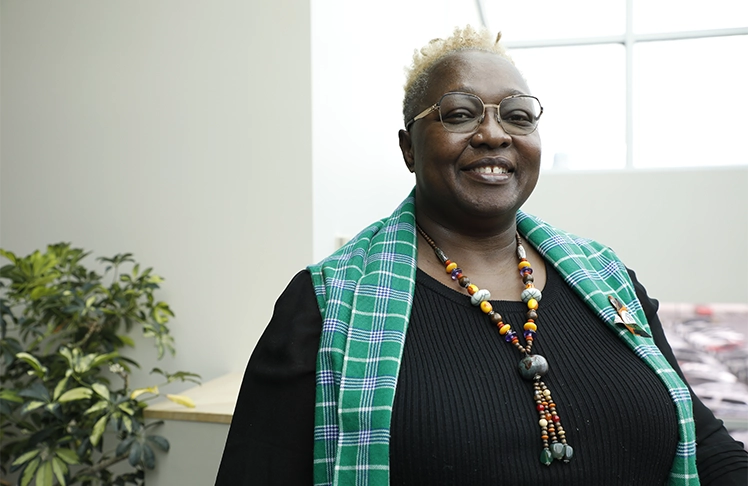
“The initial class was a COVID virtual class, and it is exciting to see that we are now at a really good place,” said Anita Koyier-Mwamba, SPS Black Education Program Manager. “We have courses happening now at Rainier Beach and Chief Sealth. We have introduced AP African American Studies at Garfield for the second year, and then we have Black Studies U.S. History honors for four sections at Lincoln High School. In other words, there has been exponential growth. We are now offering eighth-grade social studies as Black Studies. So, the growth, I think, has been quite impressive, considering how few resources we have had.”
The Black Education Program was created in response to advocacy from Black students, families, and community members.
“The initial idea was to develop a Black education program that would be comprehensive, not just in an academic space, but coursework,” said Koyier-Mwamba. “We were looking at how we could create a department that maybe could be nationally modeled.”
Koyier-Mwamba’s vision is rooted in the belief that every student should graduate with exposure to Black history.
“No student should graduate from SPS without having some contact with Black knowledge, because Black history is American history, and Black history is World History,” she said. “Our idea was to give kids a comprehensive experience of education, and we can’t say that it has been done if we don’t have any knowledge about Black things and Black people.”
While Black Studies has often been treated as an elective elsewhere, SPS offers these courses as credit-bearing, graduation-qualifying classes.
“I want to make it clear that these courses are not side kind of courses,” said Koyier-Mwamba. “If you take Black Studies U.S. History 11A and 11B, you will meet your graduation requirements. You don’t have to take U.S. history; you’re learning Black Studies and learning it from the Black perspective.”
For many students, this shift has made school feel more relevant.
“This young woman said to me, ‘I took this other course, and my soul was dying, and as soon as I found out Black Studies was offered, I left the other course,’ and she said it was the best decision of my life,” Koyier-Mwamba said. “I heard about a data point where kids were saying only 20% of students feel like school is relevant, and that is scary to me, because they’re spending the bulk of their time in a space that doesn’t feel relevant to them, and our courses offer relevance.”
For Koyier-Mwamba, joy is central to Black Studies—for both teachers and students.
“My son is an athlete, so I have met so many young Black men who tell me that their motivation to come to school is because of football or basketball, and they keep their grades up because of their sports,” she said. “And I am wondering, how do we bring more joy to the student-athletes? And I think that is what Black Studies is about—bringing kids joy, from the teachers to the students. I start my day with joy every day [because of Black Studies].”
Her work is grounded in a belief that when Black students thrive, all students benefit.
“For me, it’s about learning how Black people thrive. There are not a lot of spaces where it is centered on how we thrive, and I found that when we do right by Black folk, we do right by everybody,” she said.
A guiding principle for Koyier-Mwamba comes from a close friend: “We don’t all Black the same.”
“I think that’s a really important piece to it, is being open to the fact that Black is not an easy thing to define,” she said. “Some of us come from other places. Because we are a public institution, we have to orient ourselves accordingly. We must create a space where we can disagree without disrespecting each other, and we must allow people to develop Afro-futuristic ways of thinking. And when I say Afrofuturism, I’m talking about our children being able to see themselves in a thriving future that they define. We want everybody to recognize Black humanity as a source of contribution to great human experiences, because I feel like that is what was cut out of history.”
Her philosophy of education is rooted in love as a practice.
“I don’t mean the touchy-feely warm thing,” she said. “I mean that our actions demonstrate our love for humanity. So, if I’m doing things that intentionally hurt other people, then I’m not being a good steward of the gifts I have been given. I am motivated by centering on our young people, because they’re the future. How are we respecting what we found and creating space for what others will experience long after we are gone?”
For Koyier-Mwamba, Black Studies is more than a program. It is about creating joy, fostering relevance, and ensuring that all students see themselves reflected in the history they learn.