By Aaron Allen, The Seattle Medium
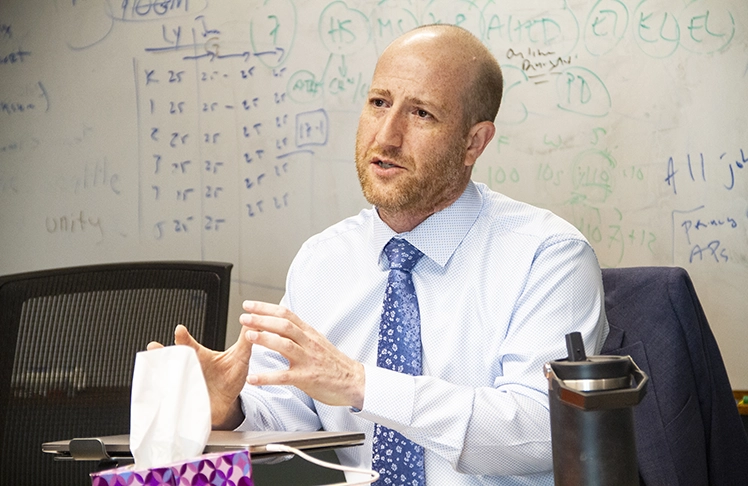
Seattle Public Schools Superintendent Ben Shuldiner says that the district could face insolvency within a year without major financial changes. Shuldiner made the remarks during a press briefing Tuesday, where he described the district’s current financial condition as “structurally insolvent.”
Despite reducing an initial projected deficit of between $87 million and $100 million by roughly $50 million through central office and school-level cuts, Shuldiner said the district’s long-term financial outlook remains precarious.
“The latest information we showed is that we were going to be insolvent in about 10 months,” Shuldiner said. “If the board approves our new budget, we’ll have staved off insolvency for one more year, but like, it’s getting really bare bones, folks.”
The district’s rainy-day fund has fallen to approximately $30 million, well below the recommended reserve level of 10% to 15% of operating expenses. For a district the size of Seattle Public Schools, that reserve would total approximately $135 million.
Shuldiner said addressing the district’s structural deficit will require difficult decisions about staffing levels, operational costs and the way schools are organized throughout the district.
Among the most significant possibilities is the prospect of school mergers, an issue that generated controversy during previous administrations. Unlike past consolidation efforts, Shuldiner said the district intends to engage principals, educators, staff and families before any decisions are made.
He argued that mergers could help stabilize district finances while also improving educational opportunities for students by reducing the need for multi-grade “triple split” classrooms and isolated teaching assignments that can strain resources and limit instructional consistency.
While the district’s financial challenges remain front and center, Shuldiner emphasized that improving academic outcomes remains equally urgent.
He pointed to persistent achievement gaps in reading and math that continue to disproportionately affect students based on race, income and home language, noting that the district cannot focus solely on balancing its budget while ignoring student performance.
Part of that effort includes establishing clearer expectations for instructional time and classroom learning. Shuldiner recalled visiting a classroom where students received only about 30 minutes of instruction during the first three hours of the school day because of a fragmented schedule.
To address those concerns, the district is implementing a more standardized framework for classroom instruction and rolling out a newly approved K-5 curriculum designed to improve consistency across schools.
The district is also restructuring its Office of Student and Family Support to expand high-dosage tutoring and mentoring programs through partnerships with local nonprofit organizations. District leaders hope those investments will help address longstanding disparities in academic achievement and provide additional support for students who need it most.
In addition to academic reforms, Seattle Public Schools is planning operational changes aimed at improving efficiency and reducing costs. Central office staff are expected to return to full-time in-person work, and district leaders are evaluating a broader reorganization that could eliminate some administrative positions while returning certified educators currently working in office-based roles to school settings.
Shuldiner also said the district plans to continue investing in campus safety improvements, including perimeter fencing and upgraded security camera placement at school buildings across the city.
Shuldiner said difficult decisions about staffing, school operations and school structures can no longer be postponed.
“Everything’s on the table,” he said.
As Seattle Public Schools prepares for a summer budget vote, the decisions made in the coming months could shape not only the district’s financial future, but also the educational experience of thousands of students across the city.