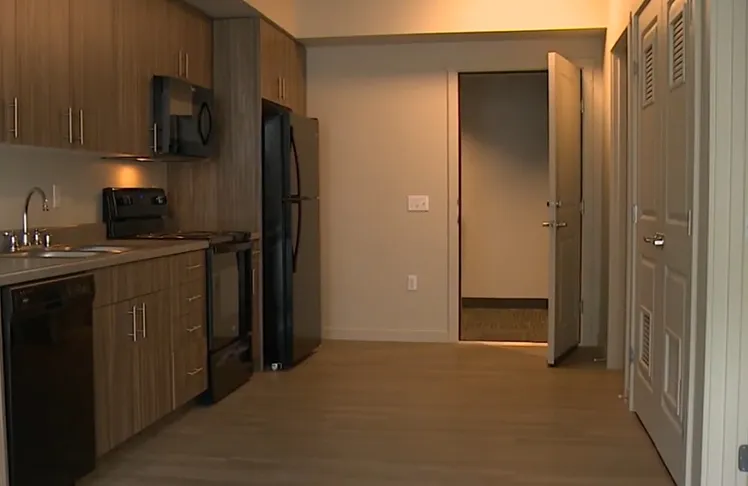
In February 2025, Seattle made headlines among housing advocates nationwide when approximately two-thirds of voters approved a ballot initiative introducing a new 5% payroll tax on salaries exceeding $1 million. This initiative is projected to generate an estimated $52 million annually, which will be allocated to a public development authority known as Seattle Social Housing. This authority is tasked with constructing and maintaining permanently affordable housing options.
Since 2021, the county’s housing authority has leveraged a $100 million housing fund to invest in new mixed-income developments. These investments allow the county to maintain co-ownership and reduce development costs, enabling 30% of homes to be offered at significantly below-market rents indefinitely. While Vienna is often seen as the global leader in social housing, Montgomery County has emerged as its domestic equivalent.
Over the past two decades, Seattle has experienced soaring rents and home prices, largely driven by high incomes and relatively low tax contributions from major tech companies like Amazon. Previous attempts to compel these corporations to contribute to the city’s affordability have yielded mixed outcomes. The approval of this initiative indicates that, in the face of a significant affordability crisis, voters recognize the need for a new public sector role and a dedicated revenue stream to support housing solutions.
As an architect and urban historian, I focus on how capitalist societies have either embraced or rejected housing models that are permanently insulated from market fluctuations and the implications for architecture and urban design. Seattle’s social housing initiative illustrates that the traditional “either-or” model of housing—where options are either unregulated market-rate housing or tightly controlled, income-restricted affordable housing—has reached its limits.
Social housing offers an alternative approach. In the U.S., the term encompasses various programs, including limited equity cooperatives, community land trusts, and public housing. Despite their diversity, these programs share several core principles.
Firstly, social housing advocates for permanently protecting homes from the private real estate market, often referred to as “permanent affordability,” which typically involves public investment and ownership of housing. Secondly, in contrast to the traditional U.S. public housing model, most social housing programs aim to cater to a wider income spectrum, striving to create financially viable housing that appeals to a broad range of constituents. Lastly, social housing seeks to empower residents by granting them greater control over the governance of their living spaces.
In Seattle, social housing will entail homes that are constructed and permanently owned by Seattle Social Housing, funded by the payroll tax on higher incomes. The initiative envisions developments that include a variety of apartment sizes to accommodate different family needs, all built to high energy-efficiency standards. Homes will be accessible to households earning up to 120% of the area median income, with residents expected to pay no more than 30% of their income on rent. In practical terms, this means that a single-person household earning up to $120,000 would qualify for these housing options.