By Kiara Doyal, The Seattle Medium
As hundreds of thousands of visitors arrive in Seattle for World Cup events, local businesses are seeing both new opportunities and new questions about who benefits from the tournament’s economic impact.
While many business owners have experienced increased sales and exposure, others say accessing those opportunities has been more difficult, raising concerns about whether the economic benefits of hosting a global event are reaching businesses across Seattle’s diverse communities.
“I think what would be best for the city of Seattle is if the economic impact can really be widespread and hit lots of small businesses, local businesses, and immigrant communities,” said Ron Krabill, professor at the University of Washington Bothell and director of the UW Global Sport Lab. “The best impact would be for it to really create a much more inclusive economic impact. Sometimes that doesn’t necessarily get distributed widely, and it goes into just a very few pockets.”
For some local business owners, the World Cup has already translated into increased sales and new opportunities.
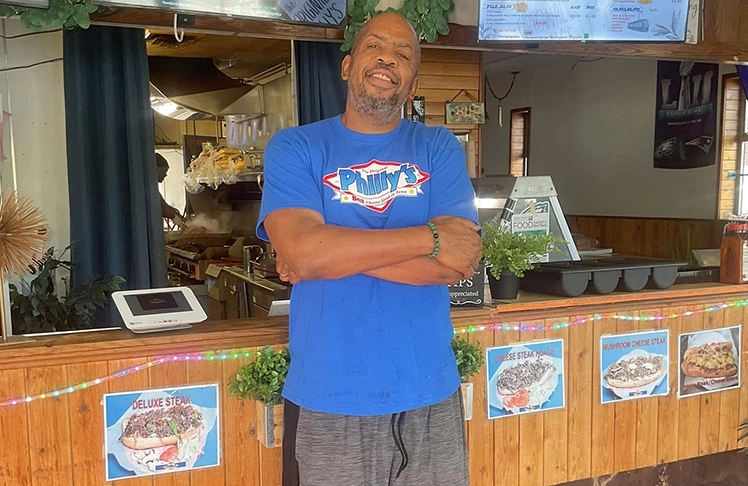
Guy Thomas, owner of The Original Philly’s restaurant, said Seattle being a host city has been a positive experience for his business. As an international city, Seattle regularly attracts visitors from around the world, but the World Cup has amplified that reach and introduced his brand to an even broader audience.
“We have people coming from all over the world that may come into the restaurant, and we get that chance to chat and talk,” said Thomas. “It is just a good feeling seeing the ones abroad coming into the store. It has been helping the business.”
Thomas said his food truck was one of only two operating outside the stadium during World Cup events. His team was given the opportunity to serve during two matches, June 15 and the USA versus Australia game on Juneteenth.
“It was phenomenal, and we were blessed to be at the USA game,” said Thomas. “Between the 15th and that whole week, we had people who ate at the truck, and then came by the restaurant. We are located right by the Mount Baker station, so that light rail has been a feeder for us getting a lot of people that are running up through the city.”
Not every business owner, however, found it easy to tap into the influx of visitors.
Nikia Mathis, owner of Platinum Plush Fashions, said she spent months seeking opportunities to participate in World Cup-related activities. After applying to vend near the waterfront and not being selected, she began questioning whether Black-owned businesses were receiving equitable access to some of the economic opportunities associated with the event.
“There were a lot of Black and brown businesses trying to vend around that area. I know only probably three people that got selected, so there wasn’t really ample opportunity for Black-owned businesses to have a vendor booth in the area,” said Mathis. “Why is it that the vendors and the business owners throughout the community are limited to capitalizing off what you say 700,000 people pouring into the city?”
Rather than abandoning the opportunity, Mathis sought other ways to reach visitors during World Cup events.
She said her experience highlights the challenges some entrepreneurs face when trying to benefit from major events, despite the attention and economic activity they generate.
“It is not coming to us easily; we are having to get creative,” said Mathis. “Entrepreneurs are going to find a way. We did well, but there have been many roadblocks.”
Despite those frustrations, Mathis said some organizations have worked intentionally to create opportunities for small and minority-owned businesses during the World Cup.
She credited Pioneer Square organizers for welcoming Black- and brown-owned businesses through events in Occidental Square and noted that HomeSight provided stipends to several Southeast Seattle businesses to help support World Cup watch parties and related programming.
“They have watch parties going on in Occidental Square, and they have been very welcoming. They are welcoming small businesses, small vendors, and giving them space down there,” said Mathis. “HomeSight gave a little stipend to some of the businesses, especially the restaurant and some retailers down in southeast MLK, stipends to host watch parties, and my business was selected as one of those businesses who received a stipend to throw a watch party.”
Other businesses have also reported positive results from the tournament.
Theo Martin, owner of Island Soul restaurant, said business surged during World Cup week, particularly during the USA-Australia match.
“It has been great. We hosted a watch party on Juneteenth, and had about 50 people show up, and they prepaid for a brunch. We were a full house all day,” said Martin. “The games prior, it was the same thing. We actually have a trophy and decal on our window and have spent money to put it there to let people know what we are doing, and we have had plenty of people come in just because of that.”
For Krabill, the long-term significance of the World Cup extends beyond immediate sales figures.
“I think it’s an incredibly hard question, and I think it depends a lot on where you stand,” said Krabill. “I think a lot of people have a lot of high hopes for what the impact will be, and I think what that impact actually is depends on how the city and how individuals within the community respond to it.”
“Just hosting the World Cup itself is not going to be a long-term net gain for Seattle,” he added. “It has to be creative solutions and actions by those involved to make sure it is going to be a long-term net gain.”