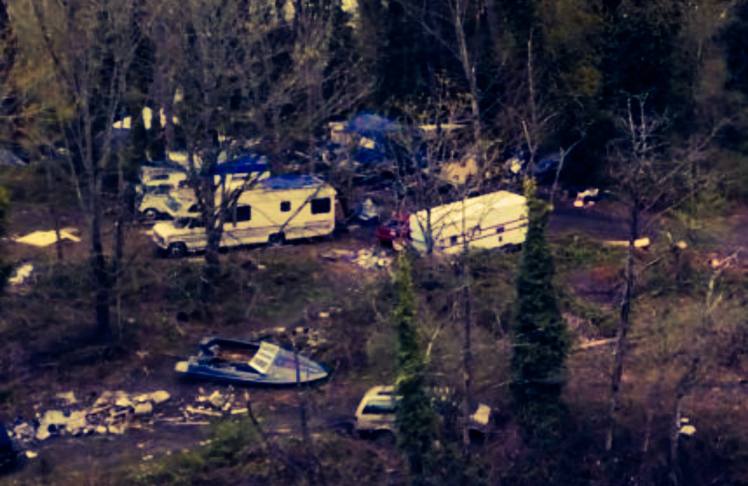
A homeless encampment has gotten larger and local seniors are complaining about the boldness of the camp. Residents at the Arrowhead Gardens senior living apartments says the encampments are across the street from them. It is located in a wooded area owned by the Washington State Department of Transportation (WSDOT). Gunshots and illegal building has been reported by nearby residents.
Seniors not only says gunshots but gunshots on a nightly basis. In addition, people in the encampment are reportedly using tractors to clear trees from the property that is owned by the state.
This particular encampment grew after WSDOT crews cleared out a large RV encampment under the First Avenue South Bridge in late March. More and more RVs began showing up over the last month. Local residents say that the people in the camps are brazen. They have built wooden stairs and fencing between the road and their RVs, said one senior to the local media.
The WSDOT sent the following statement in response to questions from KOMO News about the encampment:
“Homelessness is a complex issue with no easy solutions that requires a coordinated approach for the safety of those who are in need, nearby residents, the traveling public and our workers who must access sites for inspections and repairs. In addition, access to resources that can make a difference are key in outreach to people living on right of ways or roadsides. We work closely with local partners, who have access to the resources and human services required to provide a pathway to temporary and permanent housing. There are four actions that allow encampments to be removed from WSDOT right of way:
– The offering of shelter and services to people living there
– Storage of their belongings
– Safety and security for people on site and work crews
– Restoration and cleanup of the property”
The statement continued as follows:
“WSDOT’s responsibility and expertise is limited to the last action, the clean-up of right of way. As such we must rely on our partnerships with local jurisdictions, law enforcement and social services when addressing any area with an encampment. And, the overarching need is for creation of safe, secure housing options for people experiencing homelessness, which is well beyond the expertise, ability or funding of a transportation agency. We do engage our partners when there is an immediate safety threat at a particular encampment on our right of way, but given the number of encampments and our limited resources, we are unable to address all of them with the care, compassion and resources such work requires.”