By Kiara Doyal, The Seattle Medium
September is Sickle Cell Awareness Month, bringing attention to an inherited blood disorder that disproportionately affects people of African descent and can cause severe pain, stroke, lung complications and organ damage.
Dr. Christopher Clement Denton, sickle cell medical director at Seattle Children’s Odessa Brown Children’s Clinic, works with children and families living with the disease. For Black families and communities disproportionately affected by sickle cell, Denton says greater understanding of the disease, including the difference between sickle cell trait and sickle cell disease, can help families make informed decisions about testing, treatment and care while addressing misconceptions that can contribute to stigma.
Denton says understanding sickle cell starts with understanding hemoglobin, the protein responsible for carrying oxygen through the body.
“Sickle cell comes from a very specific genetic change in the way that we make hemoglobin. Hemoglobin is the type of protein that carries oxygen within our red blood cells, and hemoglobin is actually made up of a pair of proteins that are called alpha and beta globin proteins,” said Denton. “Sickle cell causes a change in beta globin, so that overall hemoglobin is changed as well.”
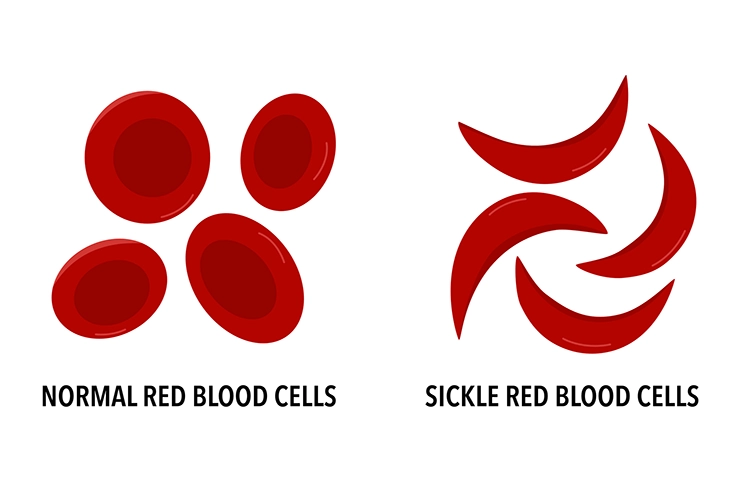
That genetic difference can cause red blood cells to change from flexible, rounded cells into rigid and sticky cells after releasing oxygen. According to Denton, those changes can interfere with circulation and lead to complications ranging from severe pain to organ damage.
“The most common symptom related to sickle cell is pain, because that area of the body where the blockage is occurring then loses oxygen and appropriate blood flow, and patients have excruciating pain associated with that,” said Denton. “It can also cause problems in the brain in the way of a stroke if blood vessel occlusion occurs there. And another common dangerous area is having blockage of blood flow in the lung blood vessels, and then you develop something called acute chest syndrome, which is very similar to pneumonia.”
Denton says sickle cell is found most frequently among people with ancestry from regions where malaria has historically been widespread.
“The highest rate of frequency of the genetic changes is in people of African descent. It is also very common in people of Indian descent, some in Middle Eastern as well, and in Hispanic culture as well,” said Denton. “We see a high frequency of sickle cell trait in these demographics, and it’s all related to the endemicity of malaria.”
The relationship between malaria and sickle cell also helps explain the difference between carrying the trait and having the disease. Denton says a person with sickle cell trait carries one genetic change affecting beta globin, while sickle cell disease results from inheriting genetic changes that cause the disease.
“In someone who carries sickle cell trait, meaning that they have one genetic change for their beta globin, but their other gene for beta globin is unaffected. That leads to a slightly shortened red cell lifespan that is shorter than the time it takes for malaria to move through its life cycle. So it’s an advantage to have the sickle cell trait against malaria.”
That history is also important when confronting misconceptions about sickle cell, particularly the idea that it is a curse or something that should be hidden.
“I think a common misconception overall is that sickle cell is a curse, and I like to bring it back to the fact that it was naturally selected because in some ways the sickle cell trait at least provides a survival advantage,” said Denton. “So rather than being a curse in the setting of malaria, it was actually a blessing.”
While carrying the genetic trait can provide protection against malaria, sickle cell disease can lead to lifelong health challenges. Denton says treatment options have evolved significantly, giving patients more ways to manage the disease and, in some cases, pursue treatments that can be curative.
“For many years, hydroxyurea was really the best form of therapy for sickle cell, but a lot of families are hesitant to start that medication especially if you are not seeing the effects of sickle cell yet. A lot of families actually choose to hold off on starting hydroxyurea, or probably any medication until they see what kind of problems might develop,” said Denton. “Unfortunately, one of those first problems could be very severe and lead to a lot of trauma and problems for the patient.”
Stem cell transplantation has been used to treat sickle cell for decades, while Denton says gene therapy has more recently expanded the possibilities available to some patients.
“In the last 10 years, gene therapy has come onto the scene, and the benefit of gene therapy is that it’s sort of like a stem cell transplant because you’re taking stem cells and giving them to the patient,” said Denton. “But the difference is rather than taking stem cells from a different person, you’re taking the stem cells from the patient, you’re modifying them and giving them back to the patient.”
Understanding sickle cell status can also be important for people considering their family health histories. Denton says having the sickle cell trait does not mean someone cannot have children, even when their partner also carries the trait.
“I think you can have children, and yes, you potentially could have a child with sickle cell,” said Denton. “And that would be okay as long as they get appropriate medical care.”
For people who are uncertain about their status, Denton encourages testing and, when appropriate, consultation with a hematologist. Knowing whether someone has sickle cell disease or carries the trait can provide information that may be important for both personal health and family planning.
“It’s not hard. You just do a test to determine that,” said Denton. “It’s just a blood draw that would help us determine whether someone has sickle cell disorder or just sickle cell trait.”
For children living with sickle cell disease, prevention and regular monitoring remain major focuses of care. Denton says some of the disease’s most serious complications may not always be immediately visible, making ongoing medical care particularly important.
“While pain is the most frequent problem that occurs, it’s not really the most severe problem. The highest cause of death is related to acute chest syndrome, which is like a pneumonia in the lungs,” said Denton. “And stroke is another problem that might not have the highest rate of death associated, but does cause significant comorbidity in having to recover from a stroke.”
Along with medical treatment and monitoring, Denton emphasizes everyday care, including staying hydrated. His clinic plans to distribute water bottles to patients during Sickle Cell Awareness Month as a reminder of the importance of hydration.
For Denton, awareness also means addressing the stigma that can keep people from talking openly about sickle cell or seeking medical attention. He says greater understanding of the disease can help families make informed decisions about their health and care.
“I think the idea of it being a curse leads families not to want to report it or seek care, especially because unfortunately there’s a lot of stigma associated with sickle cell,” said Denton. “I do hope that those in need seek care so that they can live their fullest lives and hopefully be pain-free as much as possible.”