By Aaron Allen
The Seattle Medium
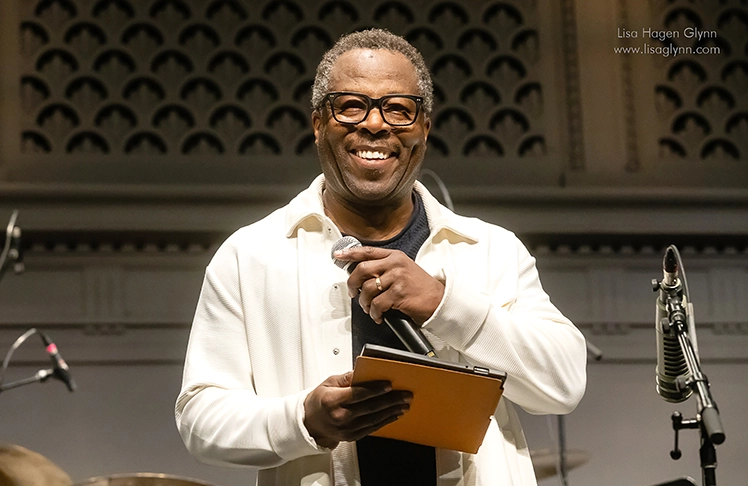
As Earshot Jazz prepares for the 38th Annual Earshot Jazz Festival this fall, Executive Director Dr. Stephan Blanford is focused on more than presenting world-class performances. He wants to introduce a new generation to jazz, strengthen music education and ensure Seattle’s premier jazz organization reflects the diversity, creativity and cultural richness of the community it serves.
Seven months into his tenure, Blanford is leading Earshot Jazz through a period of transition following the retirement of longtime Executive Director John Gilbreath. While arts organizations across the country face financial pressures, shifting audiences and declining public investment in arts education, Blanford sees an opportunity to broaden Earshot’s reach without losing sight of jazz’s cultural roots.
“Jazz is Black America’s gift to the world,” said Blanford. “When I say that, I want to be sure that communities all across the city and the region get a chance to experience it and love it in the way that I do. A lot of that comes with the programming choices we make, but it also comes from our outreach to ensure all communities see Earshot as theirs.”
Founded in 1984, Earshot Jazz has anchored Seattle’s regional music community for more than four decades through its monthly magazine, year-round concerts and the annual Earshot Jazz Festival, one of the Pacific Northwest’s premier celebrations of jazz. Blanford believes that for jazz to remain a living, evolving art form, the organization must continue expanding its audience while honoring the music’s Black American origins.
That vision will be on full display during the 38th Annual Earshot Jazz Festival, Earshot’s signature event, which runs Oct. 7-25 at venues throughout Seattle. Hailed by DownBeat magazine as “Seattle’s most important annual jazz event,” the festival will feature Branford Marsalis and Dianne Reeves celebrating the centennial of jazz legend John Coltrane. The lineup also includes NEA Jazz Master Gary Bartz, genre-defying artist Meshell Ndegeocello, acclaimed guitarist Julian Lage, pianist Christian Sands and Korean composer and multi-instrumentalist DoYeon Kim.
The festival will also spotlight Seattle’s vibrant jazz community through Festival Resident Artist Sidney Hauser and album release performances by regional artists Ahamefule J. Oluo, Jun Iida, Carmen Staaf and Ted Poor.
Earshot Jazz Board Chair Maurice James said Blanford’s combination of nonprofit leadership experience and lifelong passion for jazz made him the ideal person to guide the organization into its next chapter.
“Stephan embodies the kind of leadership that inspires confidence, energizes community, and strengthens our mission at every level,” said James. “His depth of nonprofit experience, combined with his lifelong passion for jazz, makes him the ideal person to shepherd Earshot into its next chapter.”
Although Blanford’s professional background includes leadership in education and public policy, music has always been part of his life. Raised in a military family that lived in more than two dozen states and Japan before settling in Seattle in 1989, he grew up in a home where jazz was a constant presence.
After earning degrees in political science, public administration and educational leadership, Blanford served on the Seattle School Board from 2013 to 2017 before spending five years as executive director of Children’s Alliance, where he helped secure billions of dollars in investments for Washington’s children and families.
When Earshot Jazz launched a national search to replace Gilbreath, attracting more than 70 applicants, Blanford saw an opportunity to combine his professional experience with a lifelong passion.
“I had already informed my board that I was going to leave Children’s Alliance at the end of my fifth year, and when this position came up, it seemed like the universe was telling me that I needed to pursue it,” said Blanford. “I’ve been in the role since January, and it’s been an incredible journey.”
One of the central challenges facing jazz presenters nationwide is an aging audience. Recent audience studies show today’s jazz listeners are increasingly divided between longtime fans over 65 and younger “musical omnivores” who move fluidly among jazz, hip-hop, world music, rock and jazz fusion.
Blanford believes Earshot’s future depends on embracing both audiences by presenting traditional jazz alongside artists who stretch the genre’s boundaries while remaining rooted in its history.
That vision came to life earlier this summer when Earshot Jazz presented the Miles Electric Band at Town Hall Seattle during the opening week of the FIFA World Cup. Celebrating the centennial of Miles Davis, the ensemble featured musicians who performed with Davis alongside contemporary artists, creating an energetic atmosphere that drew longtime jazz enthusiasts and younger listeners alike.
“It wasn’t your normal jazz audience. People were moving in their seats,” said Blanford. “I looked out at the audience, and almost everybody was bopping their head or wanting to get up and dance. I saw the vision of where our festival and programming can go: presenting a vibrant mix of styles, from intimate chamber settings to high-energy, danceable fusion.”
For Blanford, expanding jazz audiences goes hand in hand with reinvesting in youth music education, a sector hit hard by public school funding cuts across the country.
Reflecting on Seattle’s historic legacy of powerhouse high school jazz programs like Garfield and Roosevelt, Blanford recalled an experience that reinforced the importance of investing in young musicians.
“My wife and I were flying back from a European jazz festival, and we heard all this commotion in the back of the plane,” said Blanford. “It was the Garfield High School Jazz Band returning from playing at Montreux. To see local kids from my neighborhood performing at a premier international festival was deeply inspiring.”
Blanford warns that without sustained investment in music education and educational outreach, jazz risks losing its connection to the Black American communities that gave birth to the genre.
Earshot Jazz is pursuing grant funding and partnerships with Seattle Public Schools to reignite youth participation, cultivate the next generation of musicians and introduce more students to improvisation and the history of Black American music.
For Blanford, those efforts are essential to ensuring jazz remains a living art form rather than simply a celebrated tradition.
“I’m eager to listen, collaborate, and build with the artists, audiences, and partners who make this scene so extraordinary,” said Blanford. “We want people to reach out to us at earshot.org and tell us what they want to hear. Together, we’ll carry this legacy forward with creativity, equity, and renewed energy.”