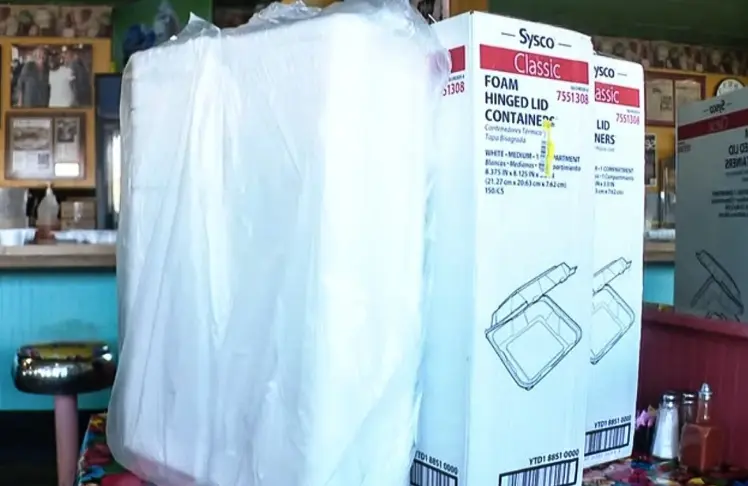
Starting from June 1, Washington state has implemented a ban on Styrofoam, making foam containers illegal. The ban, which stems from a 2021 law passed by the state legislature, aims to reduce the environmental impact of expanded polystyrene (EPS) materials commonly used for coffee cups, clamshell takeout containers, trays, and other food and drink carriers.
Violators of the ban could face a $250 fine for their first offense, with the penalty increasing to up to $1,000 for repeat offenders. The ban also extends to foam packing peanuts, which were prohibited from being sold or distributed last year.
EPS foam is described by the Washington State Department of Ecology as a lightweight cellular plastic material made up of small hollow spherical balls that are expanded and processed through various techniques. These materials are brittle and easily break into tiny pieces, making them difficult to recycle. Additionally, the recycling process for EPS foam is costly and not widely available in Washington, leading to the materials often ending up in landfills or the environment.
However, the ban does include exemptions for certain packaging. Boxes used for raw, undercooked, or slaughtered meat, fish, poultry, or shellfish are exempt from the restriction. Similarly, packaging for fruits, vegetables, or eggs is also exempt.
The implementation of the Styrofoam ban reflects Washington state’s commitment to reducing waste and protecting the environment. By prohibiting the use of foam containers and encouraging the use of more sustainable alternatives, the state aims to mitigate the negative impact of EPS materials on both landfills and the natural surroundings.