By Mariah Beverly
Seattle Medium Intern
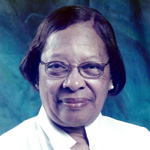
T. Marie Floyd has been, and continues to be an exemplary role model in her neighborhood. Budding with a passion for the education and development of children at an early age, Floyd has committed her life to helping not only the youth of her community, but any of the people around her who may need it.
A retired educator, Floyd’s legacy lives far beyond the reach of her immediate family. Her impact on her former students, fellow educators, and the community as a whole can be measured in the success stories of those she taught, helped and/or mentored not just over the course of her teaching career, but throughout the course of her life.
“It’s my favorite part (about being a teacher), seeing all my students 20 years later married with families and successful in whatever they’re doing.” says Floyd. “Knowing I was a part of that success makes it all worth it.”
Born in the small town of Bastrop, Louisiana, Floyd and her younger sister were practically raised by her grandmother, Mariah Greenberry, a woman who was well-known in their area for being headstrong and intolerant, yet caring and nurturing. Greenberry, one of the wealthiest African American women in the area, was very deliberate in sharing her material and spiritual wealth with those around her. During Floyd’s childhood, she witnessed her grandmother open up her home to anyone who needed help, especially children. Between the ages of 10 and 15, Floyd was babysitting the neighborhood children all by herself, which is when she realized she had a passion for the development and care of children. After finishing high school, she enrolled in college at Southern University, with intentions of majoring in Elementary Education.
“I wanted to help people like my grandmother helped people, and to me, becoming a teacher was the first step in doing so,” says Floyd, when asked why she chose an education major.
Because of her strong bond with her grandmother, Floyd was very homesick her freshman year, not used to everyday home life without her family.
“I was nervous of course, I remember asking to come home for a long weekend” Floyd recalls. “My grandmother said no of course. She was forcing me to prioritize, grow up.”
Despite missing home, freedom, and the surroundings she was used to, Floyd graduated from Southern university with one the highest GPA’s in her class. Right before she graduated, Floyd’s mother, Mamie Berkeley, took her to Oakland, California where she helped support WWII by working in a Naval Supply store.
The following summer, Floyd’s grandmother recognized there were only a few teachers in Bastrop, and decided Floyd needed to come home and teach the children in her hometown. This was the beginning of her independent teaching career, and her very first paid teaching job.
After a year of teaching school in Bastrop, Floyd decided it was time for her to permanently leave her hometown and make a name for herself.
“I was excited to leave; I wanted to go back to California and buy a house and start my life.” Floyd says.
Leaving her family behind, Floyd moved to Oakland where she married her first husband and began teaching in the San Francisco Unified School district as an early childhood teacher. She taught in California for five years, also having two children during the process, and then shortly after taught in the Oakland Unified School district for three additional years.
After her stint in Oakland, Floyd decided to move to Seattle to raise her family. In Seattle, Floyd continued her teaching career. She started as a Social studies teacher, and her passion and work ethic allowed her to move up the corporate ladder. She also became active with the Local School board. Floyd eventually became a principal and began to supervise other teachers, further insuring the proper education of the children in her community.
Floyd had a serious passion for the education of children, and she strived to be the best teacher she could possibly be by instilling into her students what her grandmother instilled in her.
“My philosophy that I learned from (my family), that I tried to practice everywhere I went, was to follow the golden rule. I treated others the way I wanted to be treated,” Floyd states. “Even being the only Black teacher in the area, I was cordial and polite to everyone I came into contact with.”
“No one could ever say I didn’t handle business,” added Floyd, when asked what aspects of her childhood she brought into her career.
When it came to Floyd’s actual teaching techniques and, in her opinion, the necessary building blocks for a stable classroom, she believes in holding high expectations for all of her students and to spend a healthy amount of time setting guidelines and rules.
“(As a teacher) I spent the first week of school going over rules, going over expectations, and going over consequences,” said Floyd. “When I became a principal I encouraged my teachers to do the same in their classrooms.”
Floyd also recognized that teachers need to adapt their teaching methods to fit their learning styles of students, and that by catering her teaching styles to the strengths of the students she was able to push all of her students to be the best that they could be.
“Some children had special ways of learning,” said Floyd. “I made an attempt to appeal to everyone’s learning levels and communicate with them, while still remaining firm.”
Some people say that teaching is more of an art than a science. If that theory holds true, then T. Marie Floyd has her fair share of ‘fine art’ showcased on a daily basis not only in Seattle, but around the world.