By Aaron Allen, The Seattle Medium
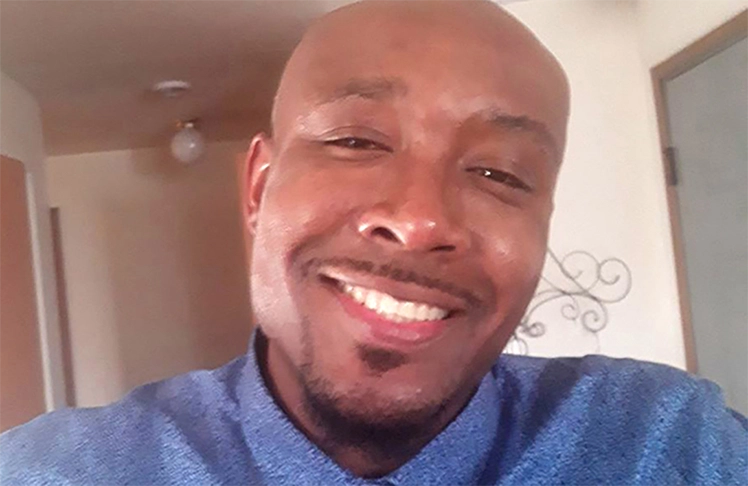
Five years after Manuel Ellis, a 33-year-old African American man, died in police custody, the City of Tacoma has agreed to pay $6 million to settle a wrongful death lawsuit filed by Ellis’ family. This settlement, confirmed by the family’s attorney, James Bible, follows a $4 million payment from Pierce County in 2022, bringing the total financial recovery for the Ellis family to $10 million.
“This has been a remarkable five-year journey, as an entire community sought justice for one of their community members,” Bible said. “There have been a lot of trials and tribulations, a lot of difficult, heartbreaking moments. Virtually every member of the Ellis family at some point called me in the middle of the night devastated in tears over the loss of their loved one. This was a David versus Goliath sort of feeling even to get criminal charges filed.”
On March 3, 2020, Ellis died while in the custody of Tacoma police. Even before the murder of George Floyd, Ellis’ last words—captured on a police radio recording—were “I can’t breathe.” Prosecutors revealed that Ellis pleaded, “Can’t breathe, sir,” multiple times during the encounter.
Investigation reports indicated that Ellis was face-down, hogtied, and restrained by an officer for at least six minutes. A spit hood was placed over his head while in this position. Ellis died at the scene as paramedics attempted to render aid.
According to Bible, the dual settlements reflect both the dedication of the legal team and the urgency for change in Tacoma and beyond.
“Two fairly substantial settlements are reflective of the level of dedication that everybody had for this particular family—and the level of change that we wanted to see in this community and in others,” Bible said. “It is notable that this family was, in many ways, at the center of the ‘I can’t breathe’ movement in the summer of 2020. In fact, this happened a few months before the death of George Floyd, and it’s remarkable in that way.”
Initially, the Pierce County Sheriff’s Department claimed Ellis had attacked a police vehicle and its officers, leading to his arrest. However, state investigations contradicted those accounts. Civilian witnesses stated that Ellis never attacked the officers; instead, they said officers initiated force following a conversation.
Video evidence confirmed that officers physically restrained Ellis, repeatedly punched him, and used a taser, while Ellis did not appear to be fighting back. State prosecutors corroborated these accounts with both witness testimony and video footage.
Bible underscored how critical it was to expose the discrepancies in the official narrative.
“I think that’s a critical thing to note—that the powers that be in Tacoma and Pierce County had that information while they were misrepresenting what had occurred between Manny and those police officers,” Bible said. “Manny was just coming home from the 7-Eleven.”
The exposure of misinformation marked a pivotal shift in the investigation. With then-Attorney General Bob Ferguson—now Washington’s governor—assuming oversight, the case moved out of local hands.
“Yes, uncovering the misinformation was, in fact, a turning point for us as the state took over the investigation,” Bible said. “It was a turning point in terms of Pierce County and the state deciding that there was reason and room to take over this particular investigation.”
Despite the gravity of Ellis’ death, the officers involved were initially placed on paid administrative leave and reinstated within two weeks. The Tacoma Police Department claimed at the time there were “no known departmental violations.”
However, a later investigation revealed a Pierce County deputy had been present during Ellis’ arrest, triggering Washington Governor Jay Inslee to order a new probe by the Washington State Patrol. In May 2021, state prosecutors charged Tacoma police officers Christopher Burbank and Matthew Collins with second-degree murder and officer Timothy Rankine with first-degree manslaughter.
Yet for Ellis’ family and their legal team, accountability remains elusive. Bible expressed frustration over the officers receiving $500,000 severance payments and facing no lasting consequences.
“It’s gut-wrenching that these officers were not held accountable,” Bible said. “The city paid out approximately $10 million, but that doesn’t change the fact that the three officers charged received $500,000 each and were allowed to move on. And it doesn’t stop there—other officers clearly responsible never faced consequences.”
Bible called attention to what he sees as a systemic flaw in how officers are shielded from liability.
“I think that’s a fundamental flaw in our system—that individual officers, in terms of lawsuits or otherwise, are rarely ever reached,” said Bible. “They’re always covered by the city. I think that it’s a flaw in our system.”
For the Ellis family, no amount of money can replace the life lost. While the settlement represents a legal victory, it is tempered by lingering pain and the sense that true justice has not been served.
“It’s definitely a legal victory and their first real acknowledgment that there was a wrong committed against their family,” Bible said. “But it’s a difficult moment because they fought so long and so hard. They were looking for convictions, and they feel like that would have been the right thing in this case.”
Bible concluded with a call for the community — and the city of Tacoma — not to forget Ellis’ name or the circumstances of his death.
“I think it’s going to be critical that Manny’s name and the names of others who lost their lives to police violence are not forgotten,” Bible said. “Tacoma needs to remember Manny and the circumstances of his death so that we can do better than we have in the past.”