By Emily Riehl, The Seattle Medium
Warm lighting and candles create a calm atmosphere on Tuesday nights as voices of all kinds sing to the melodic chimes of a piano in Larson Hall.
The Inn Seattle, a ministry of University Presbyterian Church in the University District, seeks to change the perception of Christianity by celebrating the diverse cultures of people who identify as Christian.
The Inn Seattle is a ministry designed for college students and college-aged adults seeking a community of discovery in “Real Life in Jesus Christ,” as their mission statement says.
Multiculturalism is the practice of giving equal attention to different backgrounds and cultures. The Inn Seattle not only gives equal attention to the variety of cultures of their community members, but actively celebrates these cultures through community engagement, intentional sermons and worship music.
Aseda Bekoe- Sakyi, the Inn’s worship coordinator, says multicultural worship includes a variety of lenses and different views outside of the Western American culture.
Alongside Bekoe Sakyi’s goal of inclusive worship music, Mike McEvoy, the director at the Inn, says he is intentional with who he coordinates to speak up front each Tuesday night as well.
“I want people to see both men and women of color, leading things in a pastoral way because that is where representation does matter. When you’ve never seen someone that looks like you up front, you’ve never been able to picture yourself as a minister of the gospel.”
Leylani Fombona, a senior at Seattle Pacific University, has been attending The Inn for several years and appreciates its mindfulness towards its community, even outside of the organization’s walls. Interns and staff from the Inn frequently visit Seattle college campuses to engage with students and ask them what they hope to see at the Inn.
The Inn decided to switch to a more multicultural style of church after McEvoy interviewed several students of different backgrounds who had been regularly attending The Inn. He has been working for The Inn for 10 years and began incorporating multiculturalism six years ago when he became head pastor. The Inn was established in 1973.
“Most of them felt very welcomed in the space, but not a lot of them said that it was home for them,” says McEvoy. “We asked, what would it look like to better represent our community and have a space both a staff leadership team and student population felt like it represented the people we’re actually trying to serve, instead of trying to create a little pocket within a larger campus.”
At the beginning of the year, Fombona told Bekoe-Sakyi that she most connected to Jesus through worship songs in Spanish. Not long after that conversation, multiple setlists included Spanish worship.
“I love that it’s something that we get to build, and something that is still growing, and something that we’re still learning how to do together,” says Fombona. “Allowing students to have ownership over that is what makes it really special.”
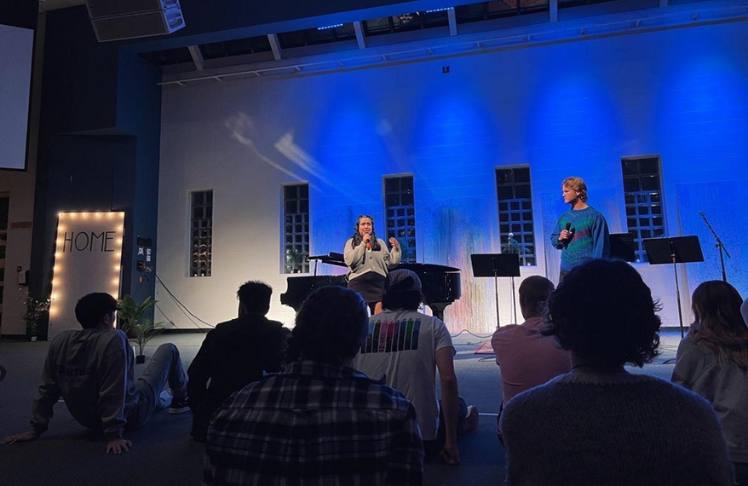
Bekoe- Sakyi explains that The Inn combines two styles of multicultural worship credited from the book “The Next Worship. Glorifying God in a Diverse World” by Sandra Maria Van Opstal. Opstal calls these styles collaborative rotation and blended.
“Collaborative rotation included with blended is probably what we do the most. Where you’re taking insight from the community about their stories, their backgrounds, and then you’re letting that inform the way that you choose songs,” says Bekoe-Sakyi.
Transitioning to a multicultural style of church, she says, starts with acknowledging who is coming to your church and allowing them to engage more deeply.
“I think having those conversations that are uncomfortable like, ‘Who isn’t in the room? Who are we catering towards? And who are we not catering for,’ is important,” says Fombona.“Those are hard conversations to have, especially within churches that have very specific traditions because it’s always been done like this.”
“A lot of the upper class, white, more stereotypical Christian students that have not loved what we’ve done has been because they no longer feel centered,” says McEvoy.
He says it’s hard to know how to pastor in a way that makes those students feel seen, but not carry on a pattern of centering them at the expense of others.
Bekoe-Sakyi says the transition to becoming a multicultural church begins gradually, and worship music is a good place to start.
“It’s like putting medicine in applesauce, you slowly just keep slipping it in there until it becomes normal.”
Including multicultural worship and sermons in church is not just a new and fun idea, but essential to ensuring all church members feel seen, recognized and celebrated.
“If churches lived into that and presented that from the front, that would also communicate to the people showing up, that that is something that is valued, and that they are valued outside of just being a number or a person in a seat on Sunday,” says Bekoe-Sakyi.