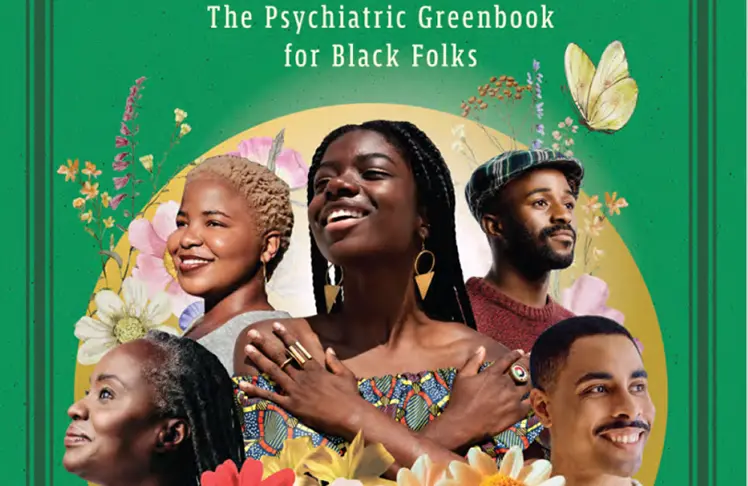
A first-of-its-kind resource is now available to help Black families manage one of the most unsettling occurrences it can face — a family member’s mental health crisis.
“What I Wish My People Had Known — The Psychiatric Green Book: A Guide for Black Folks,” published by the Black Emotional and Mental Health Collective, is written by experts to help families before and during a mental health emergency to effectively advocate for their loved ones in a mental health system that often is harmful to Black people.
It features checklists and step-by-step guidance for navigating a psychiatric crisis, explanations of legal rights and involuntary holds, and guidance for drafting psychiatric advance directives for oneself or a family member.
Preparing Before A Crisis
The guide is meant to reach families before a crisis hits.
“Too often, Black families are forced to make life-changing decisions during psychiatric crises without the information they need,” said BEAM founder and executive director Yolo Akili Robinson.
Robinson created the book with mental health advocate and author Kelechi Ubozoh “so our communities can prepare before a crisis happens, while being able to understand their rights and advocate for themselves and their loved ones with greater confidence and care.”
Ubozoh said the guide “isn’t simply to help families respond during a crisis, but to equip them with knowledge beforehand, so they’re empowered to ask questions, make informed decisions and advocate for the care they deserve,” she said.
The Psychiatric Green Book was developed with Disability Rights California, the Georgia Advocacy Office, Depressed While Black, and psychiatrists, psychiatric survivors, parents, caregivers and advocates nationwide. Its name honors Victor Hugo Green, creator of “The Negro Motorist Green Book,” which helped Black travelers safely navigate the United States during the Jim Crow era. BEAM’s Psychiatric Green Book serves the same navigational purpose when facing roadblocks and pitfalls in the psychiatric care system by offering clear explanations of patients’ and families’ legal rights and tactics for supporting loved ones through a crisis.
Managing Varied Legal Issues
Research continues to document how disproportionately Black people are subjected to involuntary psychiatric hospitalization and psychiatric holds.
“Compared with white patients, all non-white groups were more likely to be involuntarily admitted, and Black and Asian patients were more likely to have court commitment petitions filed,” according to research published in the journal Psychiatric Services. Black patients also were more likely to be uninsured and to be referred to psychiatric care by a hospital or clinic emergency department.
Complicating matters further, psychiatric law is almost entirely a matter of state jurisdiction. No single federal law governs how and when a patient can be involuntarily committed.
The Treatment Advocacy Center captured that reality bluntly in its 2020 “Grading the States” report. “The U.S. mental health system is not one single broken system, but many… We are effectively running 50 different experiments, with no two states taking the same approach.”
The report continued: “As a result, whether or not an individual receives timely, appropriate treatment for an acute psychiatric crisis or chronic psychiatric disease is almost entirely dependent on what state he or she is in when the crisis arises.”
Robinson and Ubozoh understand both the possibilities and the shortcomings of mental health care. They have included in the book contributions from experts and clinicians, such as Dr. Rupi Legha, a Harvard-trained psychiatrist who treats children, adolescents and adults and who founded Antiracist MD, which she says”seeks to transform mental health care through an anti-racist lens.”
Dr. Legha has been outspoken about the profession’s history and its lingering effects on patients today.
“The mental health professions — psychiatry and psychology in particular — have very deep ties to slavery… and that rotten foundation shows up in clinical care today,” she said. “There’s a reason why I fled all of those settings. It was a moral breakdown for me to see how harmful some of my colleagues were.”
Robinson said working on the guide surfaced findings that startled him, even after years in the field.
“One of the things that surprised me most was learning just how few requirements there are for meaningfully involving families and trusted loved ones in psychiatric care,” he said. “That approach feels deeply rooted in an individualistic, Western model of care that often overlooks the importance of community, relationships, and collective decision-making,; values that are central in many Black communities.”
Leveraging Lived Experiences
That gap between statistics and lived experience became personal during the project, Robinson said.
“I was already familiar with the statistics documenting racial disparities and harm within psychiatric systems. Hearing those experiences firsthand was heartbreaking. Behind every statistic is a person, a family, and a community trying to navigate an incredibly difficult moment.”
He added: “As we researched policies and practices, it became increasingly clear that too many aspects of our psychiatric system prioritize compliance, liability, and risk management over dignity, autonomy, and genuine care. I understood some of this through my own lived experience. But seeing how these priorities are embedded in policy and institutional practice made the reality even more sobering.”
Because commitment law varies so widely by state, The Psychiatric Green Book’s first edition focuses specifically on California and Georgia. Other state-specific editions are being planned for future publication. The book’s family checklists are accessible without charge on BEAM’s website. Digital copies of the entire book are available on the site on a pay-what-you-can basis. Paperback copies of the book are $15.