By The Seattle Medium
The Seattle Medium, in partnership with the Urban League of Metropolitan Seattle and Byrd Barr Place, is launching its “Pack the House” campaign Sept. 2, beginning a 10-week effort to rally community support for Black-owned restaurants throughout the greater Seattle area.
Each week, The Seattle Medium will utilize its media resources to highlight one of 10 local Black-owned restaurants, sharing the stories behind the businesses while encouraging residents to visit, spend money and, most importantly, return and do business with them over and over again.
While the campaign will highlight specific businesses each week, its broader message extends beyond the featured restaurants. Organizers are encouraging residents to seek out and support Black-owned restaurants throughout the greater Seattle area as they navigate rising costs and other economic pressures facing the restaurant industry.
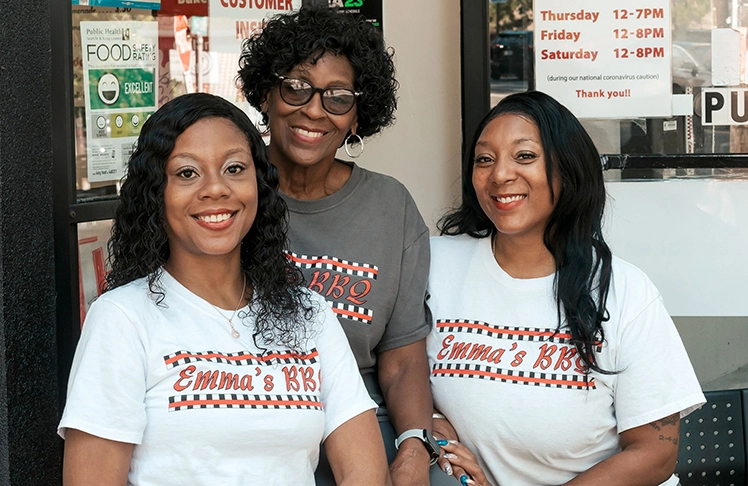
The campaign kicks off Sept. 2 with Island Soul in Columbia City. In the weeks that follow, The Seattle Medium will feature Simply Soulful Cafe, The Black & Tan Hall, Emma’s BBQ, La Spiga, Mo Vegan, Fat’s Chicken and Waffles, Wally’s NW Soul, Marjorie and Classic Eats.
The campaign will also encourage community support for three Black-owned coffee shops: The Scene in South Park, Boon Boona Coffee and Avole Coffee.
The goal is immediate: bring customers through the doors and put money into registers. But organizers hope the campaign will help participating businesses develop new customers who will continue supporting them long after the campaign ends.
“The bottom line is they need cash,” said Chris B. Bennett, CEO of The Seattle Medium. “They need people coming into their business, spending money with them, to get them through these rough times and help stabilize their business.”
The idea for Pack the House began after Bennett received a call about a local Black-owned restaurant struggling to keep up with operating expenses. The business had fallen behind on a number of bills and needed to make some substantial payments to avoid further financial difficulties.
“They literally were walking through the door every day just praying that their water, gas and lights were still on so they could continue to do business,” Bennett said.
The situation led Bennett to wonder how many other established Black-owned restaurants were quietly facing similar financial challenges.
“I was like, this probably is not the only business that’s struggling,” Bennett said. “I know a lot of other businesses are struggling as well. Instead of doing one thing for this particular business, I asked myself, what can we do that would help a lot of our local Black-owned restaurants in the process?”
The campaign arrives as restaurant operators continue to contend with rising labor, food, utility, rent and other operating expenses while trying to keep prices affordable enough to retain customers.
“There has to be a why,” Bennett said. “Not just ‘hey, we’re supporting them,’ but a why. These businesses are integral parts of our community. They give back to our community. They help other organizations raise funds. They provide jobs. They’re more than just a business. They’re part of the foundation of our community.”
That role has taken on added significance as Seattle’s Black population has become increasingly dispersed. In 1960, more than 90% of the city’s Black population lived in the Central District. In the decades since, rising housing costs, development and demographic changes have pushed many Black families farther south and into surrounding communities.
For Bennett, preserving Black-owned restaurants is also about preserving places where a community whose geographic center has changed can continue to gather.
“We no longer have a Black neighborhood here in Seattle, but we do have a Black community,” Bennett said. “A lot of those connections are through restaurants and businesses and institutions in our community. As some of those institutions start to dissipate and disappear, so does the identity of our community as a whole.”
Island Soul, the campaign’s first featured restaurant, reflects that history. Owner Theo Martin traces his family’s entrepreneurial roots in Seattle back more than five decades, including his father’s Judkins Barbecue in the Central District. Today, Island Soul combines Southern and Caribbean cuisine while serving as a gathering place in Columbia City.
Bennett said the success of the campaign will not be measured simply by whether a restaurant has a crowded dining room during its featured week.
“The best-case scenario is that the restaurant is fully staffed and prepared to handle the increased volume, putting its best foot forward and really showing out for the community,” Bennett said. “But more importantly, we want these businesses to generate much-needed cash flow, attract new customers and turn those customers into repeat customers who continue supporting them long after the campaign is over.”
Bennett said the longer-term goal is stability that allows businesses to grow.
“Hopefully they can restore themselves to full capacity, where they’re expanding and growing, hiring people and making sure their employees are getting 40 hours a week as opposed to having to cut back,” Bennett said. “And making it so business owners are able to work on their business again, instead of working in their business.”
The Urban League of Metropolitan Seattle and Byrd Barr Place bring to the partnership decades of experience supporting economic opportunity and strengthening Black communities throughout the Seattle area. For both organizations, Pack the House builds on their broader work to support economic stability and opportunity in the community.
Michelle Merriweather, president and CEO of the Urban League of Metropolitan Seattle, said supporting Black-owned restaurants represents one of the most direct ways residents can help strengthen the economic foundation of the community.
“For nearly a century, the Urban League of Metropolitan Seattle has believed that economic empowerment is essential to the strength and freedom of our community. That work doesn’t only happen through programs; it happens in the choices we make every day. These restaurants employ our people, feed our families, support our organizations and give us places to gather, laugh, celebrate and simply be together. When we talk about building Black wealth, strengthening our community and creating opportunity for the next generation, sometimes it can sound like something big and complicated. But sometimes it is as simple as where we choose to spend our money. We cannot wait until another beloved Black business closes its doors to talk about how much it meant to us. We have an opportunity to love on them now.”
For The Seattle Medium, Bennett said Pack the House is an extension of the newspaper’s broader mission to use its platforms not only to report on issues affecting the Black community but also to help strengthen the institutions within it.
“We not only write stories, but we’re also advocates, proponents,” Bennett said. “We stand up to injustice and inequities. But the main thing we try to do is propel our community forward.”
Throughout the campaign, readers will be introduced to the people, family histories and stories behind the participating restaurants, while The Seattle Medium’s podcast, website and social media platforms will provide additional opportunities to learn about and support the businesses.
For Bennett, the campaign ultimately comes down to the community recognizing the role these businesses play and choosing to help sustain them.
“It’s important to note that this isn’t about me, it’s about us,” Bennett said. “It’s about our community, and about economic growth. It’s about the survival and longevity of institutions that have been here in our community doing business and being part of our community for a number of years, making sure they’re still in place during these tough economic times, but also helping things get better.”
the Pack The House campaign, a 10-week community initiative presented by The Seattle Medium, the Urban League of Metropolitan Seattle and Byrd Barr Place to encourage the community to intentionally support local Black-owned restaurants. For more information about the campaign, participating restaurants and weekly schedule, visit PackTheHouseSeattle.com.