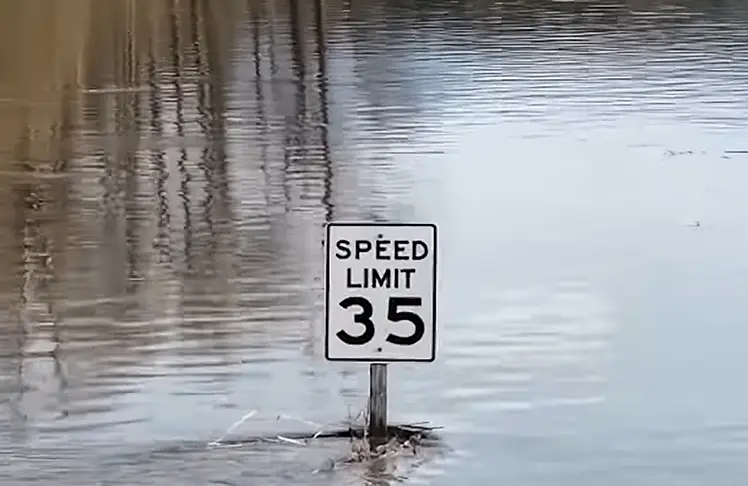
As Washington state residents assess the aftermath of recent storms that have caused widespread damage, officials are emphasizing the urgent need for proactive measures to protect communities from flooding. The recent succession of atmospheric river storms has resulted in at least 1,300 rescues, one confirmed death, and thousands of homes inundated. However, efforts to enhance flood resilience are hindered by delays and cuts to federal funding under the Trump administration, leaving essential projects in limbo.
Earlier this year, the Trump administration attempted to cancel approximately $182 million in funding from the Federal Emergency Management Agency (FEMA) designated for natural hazard mitigation projects in Washington. This prompted a court battle, with state officials arguing that the funding is crucial for initiatives aimed at elevating homes, relocating residents from flood-prone areas, and constructing new levees. Tim Cook, Washington’s state hazard mitigation officer, noted that an additional $31 million in disaster prevention grants has also been awaiting approval from Kristi Noem, the U.S. Secretary of Homeland Security.
The atmospheric river storms, which transport moisture from the Pacific and can resemble fire hoses on weather radar, have underscored the vulnerability of Washington communities to severe flooding. Experts warn that as global warming intensifies, the state can expect more intense rainfall and severe flooding events in the future. While the delayed federal funding may not have provided immediate relief during this month’s storms, state officials stress that it is essential for long-term protection against future deluges.
Currently, Washington state has allocated $182 million for 27 ongoing flood mitigation projects, which have been stalled due to the funding hold-up. For instance, in coastal areas like Hoquiam and Aberdeen, the Building Resilient Infrastructure and Communities (BRIC) funding would have financed essential infrastructure like earthen levees and concrete floodwalls. In anticipation of this federal support, local governments have already invested over $31 million in design and pre-construction work for these critical projects.
In April, the Trump administration announced plans to terminate the BRIC program, labeling it as “wasteful” and “politicized.” This decision spurred Washington and over 20 other states to file a lawsuit challenging the cancellation. A recent summary judgment favored the states, but the much-needed funds have yet to be distributed.
One specific grant that has been delayed includes an $18.8 million program aimed at acquiring or elevating properties that have flooded at least twice in the past ten years. The state had identified about 530 properties across all counties as candidates for voluntary buyouts, intending to convert them into open space buffers for floodwaters.
As Washington state grapples with the immediate impacts of severe flooding, the ongoing struggle for federal funding highlights the critical need for investment in disaster preparedness and resilience. Without these funds, communities remain vulnerable to the increasing threat of flooding, exacerbated by climate change and extreme weather events.