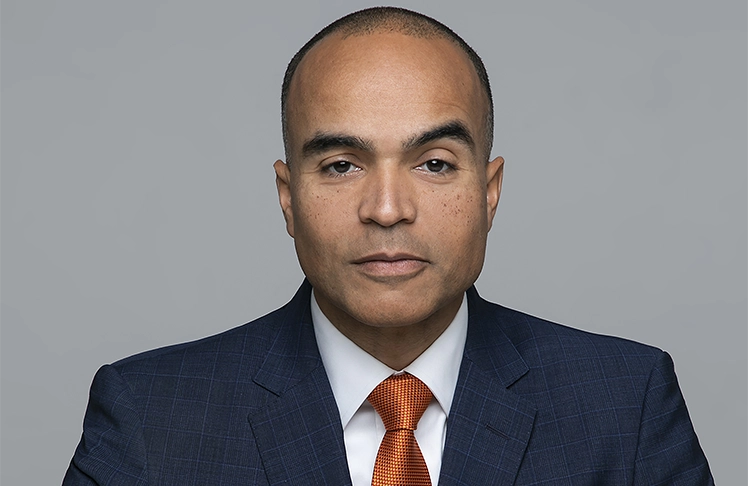
Washington Attorney General Nick Brown is seeking to join a federal lawsuit challenging Trump administration policies that threaten Medicaid coverage for nearly 1,000 legally present immigrants in Washington, including refugees, asylum recipients, seniors and people living with serious disabilities.
The state’s intervention would strengthen an ongoing legal effort to preserve health care benefits for some of Washington’s most medically vulnerable residents, many of whom depend on Medicaid for prescription medications, long-term care and other essential services.
Brown’s office filed a motion Oct. 16 in U.S. District Court in Seattle to intervene in a lawsuit brought by Seattle-based nonprofit Neighborhood House and Washington resident Mariia Matsai against the U.S. Department of Health and Human Services and Secretary Robert F. Kennedy Jr.
The legal action follows a Sept. 30 preliminary injunction issued by U.S. District Judge Thomas S. Zilly ordering the federal government to continue Medicaid funding for affected recipients while the lawsuit proceeds.
“We have a clear interest in protecting our neediest residents, many of whom fled warzones, and ensuring the federal government fulfills its financial responsibility to the state,” said Brown. “Many of these individuals are elderly, with significant medical needs, and would lose their healthcare or even their lives without this support that is now illegally threatened.”
At the center of the dispute is the federal government’s interpretation of H.R. 1, the sweeping 2025 budget legislation known as the One Big Beautiful Bill Act.
The legislation restricted federal Medicaid funding for certain categories of legally present immigrants. However, according to the lawsuit, Congress did not eliminate existing federal protections that make qualifying noncitizens who receive Supplemental Security Income, or SSI, eligible for Medicaid.
SSI provides financial assistance to people 65 and older, people who are blind and people with qualifying disabilities who have extremely limited income and resources. Some refugees, people granted asylum and other qualifying noncitizens are eligible for the program under federal law.
For these residents, Medicaid can provide access to medical treatment, prescription medications, personal care and long-term support services that would otherwise be financially out of reach.
The dispute intensified in April 2026 when the Centers for Medicare and Medicaid Services issued guidance directing states to stop claiming federal Medicaid funding for certain noncitizens beginning Oct. 1. Additional federal guidance followed in July.
The Trump administration’s interpretation would exclude some legally present immigrants from federally funded Medicaid benefits despite their continued eligibility for SSI.
Neighborhood House and Matsai challenged that interpretation in August, arguing that federal officials had exceeded their authority and misapplied existing law.
The federal court granted preliminary relief Sept. 30, temporarily protecting affected recipients across Washington while the underlying legal questions are resolved.
“We are grateful the AGO is joining in this fight to preserve critical, life sustaining services for the most vulnerable Washingtonians,” said Janice Deguchi, Executive Director of Neighborhood House. “HR1 will strip coverage and cause deep, lasting harm to consumers and providers that rely on Medicaid. Neighborhood House is proud to stand with the AGO, co-plaintiff Mariia Matsai, and partners Northwest Health Law Advocates and Barnard, Iglitzin and Lavitt to preserve coverage and care for hundreds of the most vulnerable legally present non-citizen SSI Medicaid recipients in Washington.”
Washington officials argue that the federal guidance threatens not only individual health coverage but also the state’s ability to administer its Medicaid program and meet its financial obligations.
According to the state’s proposed complaint, Washington’s Apple Health program provides health coverage to approximately 1.9 million residents. Federal funding covers an average of 67% of program expenditures for eligible enrollees.
The Washington Health Care Authority estimates that more than 1,000 noncitizens receive SSI benefits and several hundred receive long-term care services funded through Medicaid, according to the state’s court filing.
Without continued federal support, Washington could face the difficult choice of replacing lost federal dollars with state funding or allowing affected residents to lose coverage.
State attorneys say the Legislature has not appropriated enough money to fully replace the federal funding at issue. They also warn that interruptions in coverage could increase emergency medical costs and place additional pressure on hospitals and other safety-net providers.
For some recipients, Medicaid-funded long-term care includes assistance with everyday activities such as bathing, eating, taking medications and managing serious medical conditions. Losing those services could threaten their ability to remain safely housed or receive appropriate care.
In its motion, Washington argues that the existing plaintiffs cannot fully represent the state’s separate financial and legal interests, even though they are seeking substantially the same outcome.
The attorney general’s office wants the court to recognize the state’s right to participate directly in the litigation and challenge the federal government’s interpretation of Medicaid eligibility requirements.
The state is also asking the court to invalidate the federal guidance it contends conflicts with existing law.
Although the preliminary injunction currently protects affected Washington residents, it is not a final decision on the merits of the lawsuit.
The court must still decide whether to allow Washington to formally join the case and ultimately determine whether the federal government’s Medicaid guidance violates federal law.
Washington’s motion to intervene is scheduled for consideration on the court’s Nov. 6 motion calendar.