By Kiara Doyal, The Seattle Medium
Washington is taking a new step to address a long-overlooked stage of women’s health in the workplace.
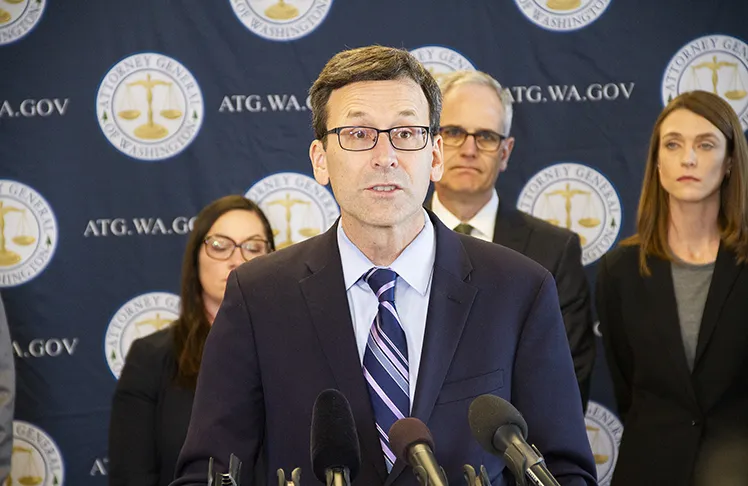
Gov. Bob Ferguson recently announced Executive Order 26-01, directing the Washington State Women’s Commission to partner with cabinet agencies to implement workplace accommodations for employees experiencing menopause and develop guidance and training resources for both public and private employers.
Nationally, menopause affects most women during their working years, with an AARP survey finding that 90% of women age 35 and older experience symptoms that can sometimes be debilitating. Perimenopause can begin as early as a woman’s 30s.
Research also points to disparities in how menopause is experienced across different populations. Studies show that Black, Asian and Latina women tend to enter menopause earlier than white women, while women living in rural areas are also more likely to experience earlier onset compared to those in urban communities.
“We know that the challenges do not affect everyone equally. Women workers, particularly Black women and women of color, and workers in physically demanding jobs often face additional barriers throughout their careers,” said Cherika Carter, secretary-treasurer of the Washington State Labor Council. “So, addressing menopause in the workplace is part of a broader commitment to equity, ensuring that all workers have the opportunity to advance, lead, or retire with dignity.”
In Washington, state data shows that 38% of working women are between the ages of 40 and 59, an age range commonly associated with menopause and perimenopause symptoms, including insomnia, brain fog and hot flashes. Without adequate workplace support, those challenges can affect job performance, career advancement and long-term financial stability.
According to the Society for Women’s Health Research, two in five women have considered leaving or did leave their jobs because of menopausal symptoms, while one in four considered not pursuing or did not pursue leadership opportunities as a result.
“Like too many issues around women’s health, we don’t talk much about menopause. We believe this is one of the most comprehensive single pieces of policy put forward to date, combining both worker protections with increasing health profession education on perimenopause and menopause,” said Ferguson. “Menopause will impact half our population at some point in their lives, yet women are too often left to navigate this change alone.”
Ferguson said the executive order is intended to help retain experienced employees and ensure workplaces are better equipped to support women through this stage of life.
“We are losing women in the workforce with tremendous knowledge and experience because we are not doing enough to prepare for a natural stage of life,” said Ferguson. “As governor, my Administration will be a place where the best, most experienced workers can come serve the people of Washington and know that they will be supported. We must do more to support women, and to support employers who want to keep their experienced staff in the workforce. This Executive Order ensures Washington will remain a leader in supporting our workers.”
Under the order, the Washington State Women’s Commission will work with state agencies to review and strengthen existing menopause and perimenopause workplace policies. Recommendations are expected to include practical accommodations such as telework options, flexible dress codes, access to cold water and improved temperature control in workplaces.
Washington State Women’s Commission Executive Director Brittany Gregory said momentum for the executive order began late last year after commissioners and health committee members began hearing directly from women across the state who felt unsupported during a major life transition.
Many described experiencing one of the most significant physiological changes of their lives without access to clear answers or adequate support systems.
“Their doctors did not have answers when they were having heart palpitations and panic attacks and experiencing other uncommon symptoms during perimenopause and menopause,” said Gregory. “But they did what women have always done. They turned towards one another and found support in one another. And in partnership with the Women’s Commission, we got to work.”
The executive order also directs the Women’s Commission to collaborate with the Department of Health, the Health Care Authority and the Bree Collaborative to develop guidance and training resources that can be used by state agencies as well as public and private employers. The Commission will also ensure agency leadership and employees receive training on workplace rights and responsibilities related to menopause accommodations.
“Menopause has been invisible in workplace policy for too long,” said Gregory. “These are not burdensome changes; they are smart workforce policy that ensures experienced workers can stay, grow and lead.”
Gregory said the executive order sends an important message that menopause should no longer be treated as a private issue that employees are expected to manage on their own.
“By issuing an executive-level directive to create standards for menopausal accommodations in the workplace, we become one of the first states to say that women should not have to suffer in silence alone,” said Gregory. “And that is important, and that is something that we should be proud of.”