By Evie Mason, The Seattle Medium
Unwritten rules elevate women athletes seeking to reap the benefits of NCAA’s name, image and likeness (NIL) campaign, and the rules don’t necessarily include being a top performer.
For example, in the past few years, the college sports scene has seen the immensely rapid rise to fame of athletes such as Louisiana State University gymnast Olivia Dunne and University of Miami basketball players Hanna and Haley Cavinder.
The deals and paid endorsements athletes can now accept are being touted as revolutionary for college sports, giving young women the chance to pave their own financial paths and not settle for scraps as universities profit off of their personas.
The three aforementioned athletes, though talented, are not regarded as the most elite, highest-performing or highest-ranked in their sports. But their social media savvy and witty marketing tactics foster large followings. Dunne’s 4 million Instagram followers, for instance, tops the vast majority of decorated, women Olympic gymnasts, save for Simone Biles.
The endorsement deals stemming largely from media “profitability” begs the question: Who’s benefiting from all this, really? Major brands continue to maintain a hold on young women in the athletics world, rewarding those who fulfill a certain, marketable persona.
“It doesn’t even matter about your athletic ability a lot of the time,”said Asha Fletcher, a senior triple-jumper on the UC Berkeley track team who has engaged in several NIL deals. “Marketing yourself as an athlete is really what matters.”
“There will be athletes who will either not have the best marks, or have the best qualifying times or anything; but because they can market themselves on their Instagram like they’re training six times a week, and putting in all this work, and doing all this other stuff while being conventionally attractive, it makes them look as though they’re more marketable.”
Fletcher says athletes truly concerned with their craft don’t have time to pump out constant social media content.
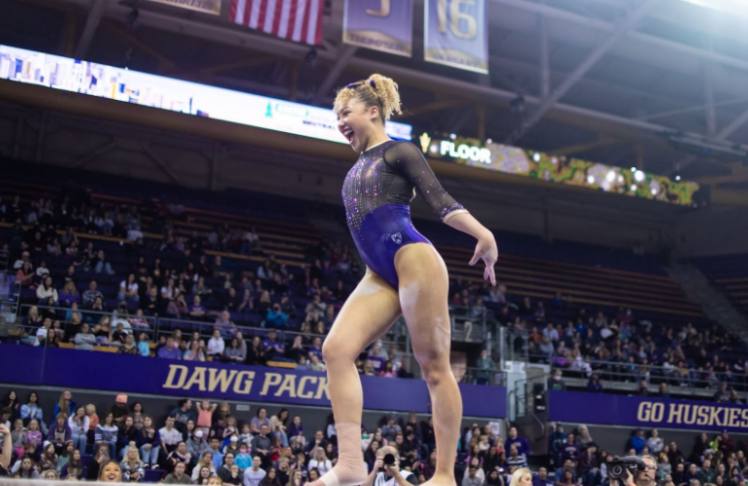
This is a large reason why Brenna Brooks, a fifth-year senior on the Washington gymnastics team, hasn’t sought any NIL deals herself. Focusing more on her schoolwork and training itself has always been her priority, she says.
“I think it can either do really good, or there can be some damage,” Brooks said. “We are attracting a lot more people, and more networks, because of NIL, because of the beauty of the sport. People are starting to realize how cool and awesome and fun gymnastics is. But I think we’re also getting more of a male crowd — older men — because of NIL.”
The leotards gymnasts wear play a significant role in heightening male attention.
“I think what we wear is beautiful, and I don’t think we should change it for anybody —that’s their problem, not ours. You have to see lines, you have to see body shapes, that’s kind of what they were designed to do. But I think there is a danger to it.”
Women who participate in more “aesthetic” sports, like gymnastics, figure skating and diving, commonly fall under intense pressure from that scrutiny and sexualization of their bodies, according to Jennifer McClearen, assistant professor in UT Austin’s Department of Radio-Television-Film and author of “Fighting Visibility: Sports Media and Female Athletes in the UFC.”
“In each of those sports, athletes are judged on artistry rather than skill, and ‘artistry’ scores in women’s sports tend to favor thin, feminine, white bodies over others,” McClearen said in an email.
Though track is not considered an “artistic” sport, Fletcher espoused similar sentiments in regards to apparel.
“The track uniform is absolutely heinous as you move up in the ranks,” she joked about the short spandex and tight-fitting, often cropped tank tops that women’s track athletes wear.
Over time, Brooks has observed how a growing number of gymnasts who aren’t frequent or exceptional performers have nevertheless been able to land high scores due to either their own or a teammate’s popularity.
“They don’t even touch an event, and they’re doing these deals, and I think it makes the team as a whole do better,” Brooks said. “The judges know who these people are, and all of a sudden the team’s doing better, even though they don’t look any better, or they’re doing maybe the same as the previous years.”
Women athletes across the board have begun to amass recognition based on whether they fit a specific physical prototype. McClearen evoked an example from the professional world:
Maria Sharipova has received more sponsorship than Serena Williams for years, even though Williams has defeated Sharipova 20-2. Other examples include golfer Paige Spiranac and tennis player Anna Kournikova, both more famous for their appearances and status than their athletic accomplishments.
“One thing we are seeing is that white women who are conventionally attractive are considered better investments for sponsorships,” McClearen added. “If you look at the highest-earning women, the majority of them are white and conform to traditional standards of femininity and beauty. There are exceptions, such as athletes Suni Lee and Angel Reese, but white women are definitely reaping more benefits overall.”
Gymnast Suni Lee won three Olympic medals — one gold, one silver and one bronze — at Tokyo 2020, while Angel Reese and the LSU women’s basketball team won the 2023 Women’s NCAA Tournament in early April 2023.
Though the NIL landscape remains relatively undeveloped, it’s clear that companies and sponsors prioritize athletes who connect them with the most consumers. At its core, it doesn’t really matter how talented an athlete is.
“It’s really about who has a following that can attract other people from diverse backgrounds, and diverse sports,” Brooks said. “Who can bring in the most revenue? Who can bring the most people to come and get your product? That’s really what it’s all about — it’s a business deal, it doesn’t matter who it is.”