By Aaron Allen, The Seattle Medium
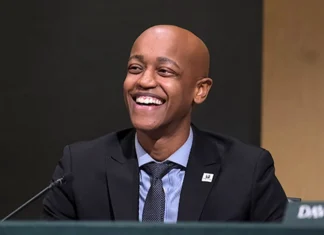
For Gerald Bradford and Henterson “Joe” Carlisle, preventing young people from entering the juvenile justice system begins long before a courtroom appearance. It starts by keeping students connected to school, helping them recognize their own potential and surrounding them with trusted adults who can guide them through life’s challenges.
Through Seattle Peace and Safety (SPS), the longtime educators, coaches and community mentors are working to interrupt what many educators and community leaders describe as the school-to-prison pipeline by connecting Black youth with educational support, restorative programs and mentorship before involvement with the justice system becomes permanent.
Across King County and the nation, educators and advocates have raised concerns that repeated school discipline, early justice system involvement and other systemic barriers can leave young people with increasingly limited educational and career opportunities. Seattle Peace and Safety was created to intervene before that cycle takes hold.
Founded by veteran educators, coaches and credible messengers, SPS is built on the belief that lasting public safety begins with prevention rather than punishment. The organization’s work focuses on educational continuity, emotional wellness, workforce development and community-based mentorship to help young people build stable futures.
“We begin with the work we’ve been doing in the community for a number of years,” said Bradford. “One of the challenges that we’re seeing is that a lot of our young people really don’t know who they are. They don’t have an idea of what their purpose is, and they’re not engaging in school. In order to have safer communities, we need to engage our young people in a way to get them to start believing in themselves and their future, making sure education is a part of that.”
Bradford and Carlisle have spent decades working with young people throughout Seattle, including in the Central District and at Garfield High School. Their experience inside classrooms, on athletic fields and in neighborhoods shaped the philosophy behind Seattle Peace and Safety.
Today, the organization works with youth participating in King County diversion programs and with pre-adjudicated youth housed at the King County Juvenile Detention Center. Its goal is to intervene early, helping young people avoid deeper involvement with the justice system while reconnecting them with school, family and future career opportunities.
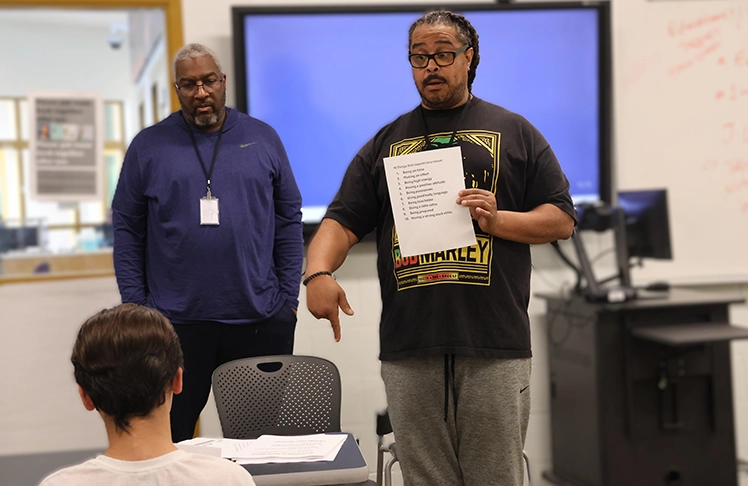
One of the organization’s primary tools is its participation in Community Accountability Sessions, a diversion program that allows many first-time, low-level youth offenders to avoid formal prosecution by completing restorative workshops alongside a parent or another trusted adult.
Rather than relying on punishment alone, SPS uses a “credible messenger” model that pairs participants with mentors whose lived experiences allow them to build trust and credibility with young people facing similar challenges.
“We’ve got plenty of adults in their life, whether it’s at school, lawyers, or the judicial system, that are talking at them,” said Carlisle. “What we try to do is come at it where we’re having a conversation with the kid. We’re helping them discover themselves, which in turn helps them discover their passions and their goals for the future. That’s where we find success. It’s a conversation, not a lecture.”
That approach also allows mentors to address issues that often contribute to a young person’s involvement with the justice system, including trauma, peer pressure and emotional regulation. Through its Protect Your Crown curriculum, participants complete written reflections, practice conflict de-escalation, strengthen emotional regulation skills and establish educational and personal goals.
“Getting off course doesn’t make a young person powerless. Their next decision can still move them toward safety, freedom, education, and home,” said Bradford.
Education remains at the center of the organization’s work.
Bradford said one of the greatest risks facing youth in detention is falling behind academically. SPS works with families, schools and detention staff to help students remain enrolled, recover academic credits and continue working toward graduation while navigating the justice system.
He recalled working with several pre-adjudicated youth who entered detention with fewer than two high school credits. Through consistent mentoring, behavior coaching and academic planning, some accumulated as many as 18 credits, placing them back on track to graduate.
One success story continues to motivate Bradford.
A young man who had transferred to a state correctional facility later called him with unexpected news.
“He called me and said, ‘Mr. Bradford, I just called to tell you that I finished my first quarter of college… When you said I was college material, I didn’t believe it, but I wanted to be,'” recalled Bradford. “That is why we do the work. So when these young people come out, they actually have skills and opportunities rather than being funneled into the Department of Corrections.”
Beyond helping students remain on track academically, Seattle Peace and Safety connects young people and their families with workforce development opportunities, skilled trades, apprenticeship programs, mental health services, transportation assistance and other community resources. The organization also partners with local groups on violence prevention and conflict mediation efforts designed to support youth long after they complete diversion programs or leave detention.
Carlisle said building relationships before a crisis occurs is one of the organization’s most important goals.
“I wanted to make sure I was that face as a teacher—and later in administration—so kids see African American leadership in the educational system,” said Carlisle. “It’s about making sure the youth have every opportunity to succeed. Together, we’re better, and it takes all of us pitching in to give them that chance.”
For Bradford, success is measured not simply by helping young people avoid detention but by giving them opportunities to build productive futures through education, employment and community support.
“When these young people come out,” said Bradford. “They actually have skills and opportunities rather than being funneled into the Department of Corrections.”