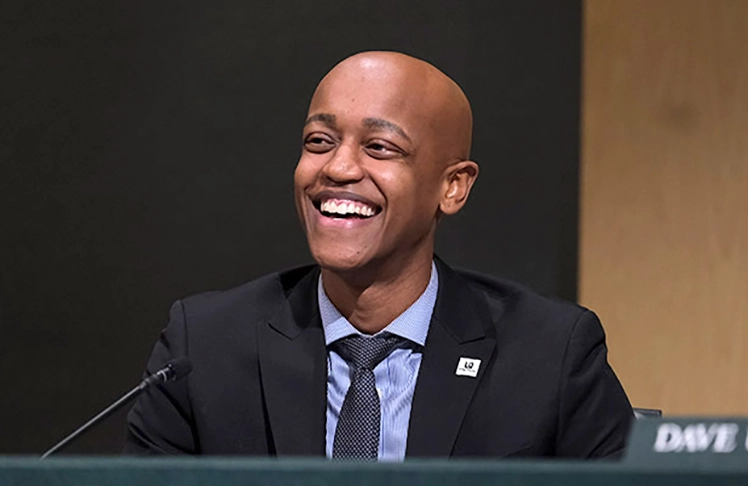
By Aaron Allen, The Seattle Medium
King County is exploring a countywide housing levy that could create a new regional funding source for affordable housing, emergency shelters and supportive services as local leaders prepare for potential federal funding cuts and the expiration of pandemic-era relief funding.
King County Executive Girmay Zahilay recently convened a steering committee of representatives from government, business, labor, nonprofit organizations and housing advocates to study the proposal and recommend whether a regional housing levy should eventually go before voters.
County leaders say the effort comes as demand for affordable housing continues to grow while federal support for programs such as permanent supportive housing faces an uncertain future. They also acknowledge that many residents are concerned about rising taxes, making it critical to identify a funding approach that addresses housing needs without placing an undue burden on taxpayers.
“Everyone in King County deserves a safe, affordable place to call home,” Zahilay said. “With the federal government threatening to disinvest from evidence-based solutions like permanent supportive housing that keep thousands of our most vulnerable neighbors housed, it is more important than ever that we have sustainable local funding sources for housing.”
Unlike many existing local housing investments, the proposal would create a coordinated regional funding strategy rather than relying primarily on individual cities to finance affordable housing projects. County leaders say a countywide approach could help communities across King County respond more consistently to growing housing needs.
Historically, much of the region’s local housing funding has been concentrated in Seattle. A regional levy authorized under RCW 84.52.105 could provide dedicated funding for suburban cities across East and South King County that face growing affordability challenges but have fewer local funding options.
“The Eastside is the most expensive subregion in King County, but right now there is very limited local funding available to make affordable housing pencil here,” said Yi Zhao, president of Imagine Housing. “A countywide levy would change that equation, giving us the local dollars to pair with federal tax credits and close the financing gaps that keep affordable homes from getting built on the Eastside and across the county.”
County officials say they are also exploring progressive tax structures and exemptions to help protect fixed-income seniors and lower-income homeowners. Any proposal placed before voters could include public oversight, independent audits and performance measures to track affordable housing production and shelter outcomes.
King County Councilmember Teresa Mosqueda said the proposal is intended to strengthen regional collaboration around one of the county’s most pressing challenges.
“You can’t have stability, health, or healing without the basic necessity of a place to call home, and too many across our county are facing just that reality,” Mosqueda said. “Today’s Executive Order sets up King County and our partners to act, collaborate, and identify tools at our disposal to create the housing and shelter our communities need. I commend Executive Zahilay for his leadership and vision to initiate this process.”
The housing levy discussion is part of Zahilay’s Executive Order ACO-8-34, known as the “Breaking the Cycle” initiative. The executive order is intended to better align the county’s housing, behavioral health and criminal legal systems in an effort to reduce homelessness and improve long-term outcomes.
Two workgroups are carrying out that effort. One is examining potential revenue options, including a countywide housing levy, while a second systems-coordination workgroup is identifying gaps in how housing, behavioral health and criminal legal agencies work together. The systems workgroup is expected to submit recommendations to Zahilay by Nov. 30, 2026, outlining how future investments could support a more coordinated response to homelessness.
Any recommendation from the revenue workgroup could eventually be presented to voters as early as 2027, providing King County residents an opportunity to decide whether to create a long-term regional funding source for affordable housing and supportive services.