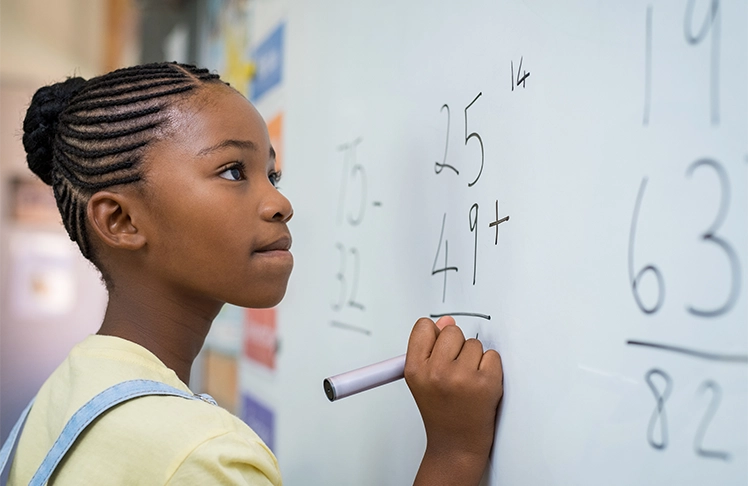
By Kiara Doyal, The Seattle Medium
As students return to classrooms across the country, education advocates say Black and Brown students continue to face stark differences in their school experiences, including heightened surveillance, threats of school closures and budget cuts that can reduce access to counselors, nurses, libraries and other resources.
During a virtual press briefing on the state of Black and Brown education, advocates said decisions about school funding, safety, civil rights protections and access to resources can shape dramatically different educational experiences depending on where students live and the communities they come from.
“As students head back into classrooms this year, they’re doing so under the weight of converging threats. Immigration enforcement is showing up closer to school doors than ever before. Public education systems are facing growing pressure to privatize, and the fight to remove police from school campuses continues in communities across the country,” said Adaku Onyeka-Crawford, Opportunity to Learn Program Director at Advancement Project. “Education has never been race blind, and this school year is no exception.”
Onyeka-Crawford said those disparities can be reflected in how students experience school safety, discipline and their overall learning environment.
“Depending on your zip code and what you or the rest of your classmates look like, that really dictates what kind of experience you have,” said Onyeka-Crawford. “And every child should have a school where they feel valued and welcome and not criminalized. But we see that in schools that are predominantly attended by Black and Latina students, that their school experience looks a lot different than what people in wealthier or more upper-middle-class schools have.”
Lacy Robledo, national co-director of the Alliance for Educational Justice, experienced that contrast firsthand. Robledo described attending a high school that primarily served young immigrants and Latino students, where students encountered fences, barred windows, security guards and police. Students were required to check in and out, wear identification and were regularly monitored.
“I just thought that was high school, and that what you see in high school movies was just something that was an imagination,” said Robledo.
When Robledo later transferred to a predominantly white, middle-class school, she encountered a different environment.
“There was no security. I mean, there was security, but they were walking around on campus. They had a very different role. You didn’t have to wear an ID all the time,” said Robledo.
For advocates, Robledo’s experience illustrates how approaches to school safety and discipline can differ between communities and shape how students experience their schools.
Concerns about disparities extend beyond what happens inside school buildings. Moira Kalida, national coalition director for the Alliance to Reclaim Our Schools and the Free the Future Campaign, said Black and Brown communities experienced some of the most difficult consequences of decisions made during the previous school year, including threats of school closures in predominantly minority neighborhoods.
Advocates said school closures can have consequences beyond the loss of a physical building because schools can also serve as community institutions that provide programs, services and other resources, particularly in neighborhoods they say have historically faced disparities in educational investment.
At the same time, school districts across the country are confronting budget reductions that can affect staffing and services available to students.
“Roughly half of America’s largest school districts were making budget cuts, with layoffs or staffing reductions appearing across districts, meaning larger class sizes, cuts to vital services, assistive technology, things that our students need and thrive on,” said Kalida.
The financial pressures surrounding education can also extend to families. Kalida said parents are expected to spend approximately $4,000 on school-related expenses, including supplies, lunches, clothing and shoes.
“In a country where black wealth is about 15 cents to the dollar compared to white wealth, we know who’s really hit hardest by those policy choices,” said Kalida.
Advocates also raised concerns about federal education policy and the enforcement of students’ civil rights. Kalida said proposed federal cuts could disproportionately affect immigrant children and students with disabilities and raised concerns about the U.S. Department of Education’s Office for Civil Rights and its handling of complaints.
“Last year, OCR resolved less than 1% of the cases that they heard or that were submitted, and that was a 12-year low,” said Kalida.
For Onyeka-Crawford, the debate over education funding and civil rights also raises questions about which resources schools prioritize.
“There’s always money for increased surveillance, but not money for the things that students say that they need, like counselors, nurses, and libraries,” said Onyeka-Crawford.
Alejandra T. Vázquez Baur, Director of Immigrant Students Policy, Advocacy, and Partnerships, EdTrust, said disparities in education also extend to whether schools recognize and value the experiences students bring into their classrooms.
“Instead of leveraging the lived experiences that we bring to the classrooms as assets, education has historically ignored and erased these perspectives, these gifts that our children bring to classrooms, and that issue persists today,” said Vázquez Baur.
While much of Vázquez Baur’s work focuses on immigrant students, she said education policy must consider the needs of students across communities, including those who are Black, low-income, disabled or from immigrant families.
“There are sinister, targeted efforts to restrict education for Black and Brown children from immigrant families. These attacks are explicitly racist and explicitly xenophobic, and they’re not okay,” said Vázquez Baur.
Despite the concerns raised during the briefing, Onyeka-Crawford said families and community members have opportunities to influence decisions affecting their local schools, including attending school board meetings and organizing around school closures and other policy changes.
“There are ways for people to fight privatization,” said Onyeka-Crawford. “Whether that’s fighting school closures happening in your neighborhood, or urging your governor not to opt into this program, or just going to your school board meeting and advocating for your school.”
As another school year begins, advocates say the state of education for Black students cannot be measured solely by whether students have returned to classrooms. They say it must also be measured by whether those classrooms provide students with the resources, safety, trust and opportunities they need to thrive.
“We know that when Black and Brown students, students from low-income families, students with disabilities, students from immigrant families, when they thrive, all children thrive,” said Vázquez Baur.