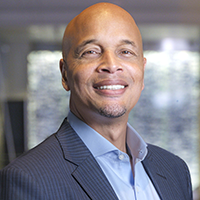
By Aaron Allen, The Seattle Medium
When Dr. Dwane Chappelle talks about education, he doesn’t speak in terms of compliance, spreadsheets or bureaucracy. He speaks about family trajectories, community ecosystems and the deep, often unheralded work of service.

It is that philosophy, and a career dedicated to putting students and families first, that led readers of The Seattle Medium to name Chappelle, director of the Seattle Department of Education and Early Learning (DEEL), the winner of the Best Educational Support Specialist category in the inaugural Best of the Best Northwest Readers’ Choice Awards.
True to form, Chappelle was quick to deflect the individual spotlight.
“I’m just honored to be named, and I’m even more surprised that someone from the community recommended me,” Chappelle said. “The work that I’m committed to, I don’t go into it looking to seek glory of self. The recognition really just reflects the work that we as a department have been doing, and the many partners we have across the city whether it’s Seattle Public Schools, the colleges, preschool programs or community-based organizations that really show up for young people and families every day.”
For Chappelle, seeing his name recognized by the community felt like a milestone, even if personal recognition has never been his goal.
“It’s like the BET Awards,” he joked. “You know how you get nominated, and you see your name come across that screen, and you’re looking in the crowd like, ‘Wait, somebody nominated me?’ Though I’m never seeking personal acknowledgment, the community sees the amazing work that we do for our families, and that feels good.”
While the recognition celebrates Chappelle’s leadership today, he says the values that have guided his career were instilled long before he ever became an educator.
Growing up in Oakland, California, he watched his mother dedicate nearly 40 years to teaching in the Oakland Unified School District while his father quietly supported both her work and the students whose lives she touched.
“Initially, I didn’t understand why we always had to go to her school after school, or why folks were always coming to our house,” Chappelle recalled. “It wasn’t until I got older and started realizing that my mom was a servant leader.”
Watching his mother’s example inspired him to pursue education, but it wasn’t until college that he discovered how he wanted to make his own impact.
At Grambling State University, a historically Black university in Louisiana, Chappelle worked with children through the YMCA and developed a passion for early learning. It was there that he realized education could become more than a profession. It could become his life’s work.
After beginning his career teaching third, fifth and eighth grades, Chappelle experienced what he describes as his defining moment.
“That ‘aha’ moment came,” Chappelle said. “I was like, ‘Now I understand why my mom was always helping and giving back.’ Education changes a family’s trajectory, period.”
As his career progressed, Chappelle earned master’s and principal credentials in Texas before completing his doctorate at Gonzaga University, continuing to build on the philosophy that education is ultimately about opening doors for young people and their families.
That belief shaped every leadership role that followed.
Seattle first experienced Chappelle’s approach as principal of Rainier Beach High School, where he led the implementation of the International Baccalaureate program. Rather than limiting rigorous academic opportunities to a select group of students, Chappelle championed expanding access, believing every student deserved the opportunity to excel.
The results spoke for themselves. Graduation rates climbed, students embraced higher academic expectations and the school became an example of how educational equity and academic excellence could work hand in hand.
“You start seeing the brilliance in kids that look like myself, and you notice the dynamics of how awesome things can be when a community works together,” Chappelle said.
That success established Chappelle as an educational leader capable of turning vision into measurable results, eventually leading city leaders to recruit him to lead the Seattle Department of Education and Early Learning.
Over the past decade, Chappelle has helped guide one of the department’s most significant periods of growth. Under his leadership, Seattle’s preschool program has expanded from serving fewer than 400 children in 2016 to nearly 2,600 today. DEEL has also helped launch Seattle Promise, guaranteeing two years of tuition at Seattle Colleges for graduates of Seattle Public Schools while expanding educational opportunities for thousands of students across the city.
For Chappelle, those accomplishments are not personal victories. They reflect what can happen when schools, government and community organizations work together on behalf of children.
That collaborative approach has earned Chappelle widespread respect among education leaders throughout Seattle.
“As the superintendent of the Seattle school district, I have been thrilled with the support and care of DEEL under the leadership of Dr. Chappelle,” said Seattle Public Schools Superintendent Ben Shuldiner. “They have made everything possible. In terms of supporting our students and supporting our schools, they are the consummate partner, always trying to put students first and finding ways to really help the work of the district as well as the whole city.”
Shuldiner said Chappelle’s leadership style has made collaboration feel natural.
“I have loved every minute of working with Dr. Chappelle,” Shuldiner said. “His passion, his energy and his care around students, he knows our schools and our children so well. From the moment I started as superintendent, he has been incredibly warm and inviting.”
Although Seattle voters overwhelmingly approved the Families, Education, Preschool and Promise Levy, Chappelle said improving educational outcomes requires constant adaptation as enrollment, funding and community needs continue to evolve.
“It’s challenging because data shifts so quickly, and we have to figure out what infrastructure is in place to make the necessary pivots,” Chappelle said. “Our levy wasn’t designed to backfill gaps, but the solution is learning how to collectively work together. When you are consistent on your standards and expectations, it protects the long-term trust between everyone involved.”
Given his leadership and visibility across Seattle, some have wondered whether Chappelle might eventually pursue elected office. He quickly dismisses the idea.
His passion, he said, remains in building systems that create opportunity for children and families.
Looking ahead, Chappelle envisions Seattle becoming a true cradle-to-career city, where every family understands the educational opportunities available from preschool through college or a skilled trade.
“I want a young person expecting a child to know and see the services all the way through until they graduate from college or step into a trade,” Chappelle said. “I want Seattle to continue to be a spotlight model for other cities. My ultimate hope is to see Seattle where a child’s outcome is no longer predictable by their zip code. It starts with us, but it takes a village.”
For Chappelle, the measure of educational success has never been a test score or graduation statistic alone. It has always been about changing the trajectory of families.
From watching his mother’s quiet acts of service in Oakland to helping shape educational opportunities for thousands of Seattle students, Chappelle has remained guided by the same belief that first inspired him as a young teacher: when communities invest in children, they change not only individual lives, but the trajectory of families and future generations.