By Kiara Doyal, The Seattle Medium
Ahead of the June 12 opening of the Seattle Black Panther Party Interpretive Center, the Seattle Black Panther Party Legacy Group is inviting the public into “Prelude,” a community-centered activation designed to explore the history, legacy and enduring influence of Seattle’s Black Panther chapter.
Located on the first floor of the Metropole Building in Pioneer Square, Prelude offers visitors an opportunity to engage with the history and legacy of the Seattle chapter of the Black Panther Party before the interpretive center’s inaugural exhibition.
“Curators are given a lot of power about the point of view, about what information gets shared, what information is withheld, and what is important and what isn’t,” said Gia Hamilton, advising consultant for the Seattle Black Panther Party Interpretive Center. “And so I have had the pleasure of really helping them to think through the Prelude because it is really an opportunity to clarify the party, what it was and what it was not for the public before the wonderful World Cup comes to Seattle.”
Hamilton was referring to the influx of visitors expected during the 2026 FIFA World Cup, when Seattle will host six matches, including a U.S. group-stage match on Juneteenth.
“It’s not an official exhibition, it’s a series of activations within a space that are meant more as educational tools that we’re hoping will give the general public and the Seattle community an opportunity to maybe even debunk some myths that they held about this party before the inaugural exhibition,” added Hamilton.
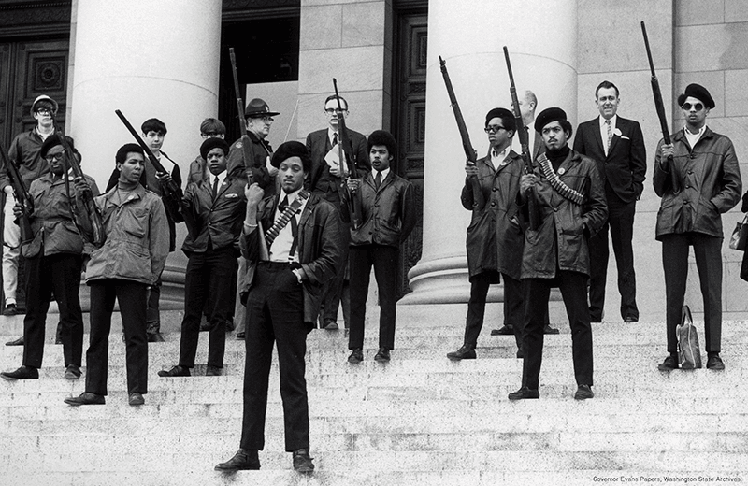
As part of the activation, the group invited Seattle-based visual artists to share works that reflect the legacy, spirit and continued resonance of the Seattle Black Panther Party. Featured artwork will be presented alongside archival materials, a timeline of the Seattle chapter and immersive environments designed to help tell the story of the movement.
Hamilton said Prelude is intended to provide a broader understanding of the Black Panther Party by incorporating multiple perspectives and firsthand experiences.
“When we put things out in community and put things out to the experts and curators themselves, you get a much richer holistic sense of what happened, and that to me is a better point of view than me simply studying secondhand sources when I have the firsthand sources right there,” said Hamilton.
A key component of the activation is its focus on local artists. While Hamilton acknowledged that artists around the world continue to create work inspired by the Black Panther Party’s legacy, she said it was important to center Seattle artists and their connection to the city’s history.
“We want to see what people are talking about here. There is some really incredible work here and what it shows me is that these are not commissioned pieces. These are pieces that artists have already created within their collections,” said Hamilton. “Which tells me that many of the Seattle-based artists have had a profound impact from the Seattle Black Panther Party and that it had nothing to do with receiving a check for a commission, it had to do with something that they wanted to speak to, learn about, and express.”
As Hamilton reviewed submissions, she noticed several recurring themes. One of the most prominent was the enduring impact of Black Panther iconography and aesthetics, which continue to resonate with artists today.
“I am seeing that people really resonate with this aesthetic. There was a strength in the aesthetic, there was a coolness, so it is the rebirth of cool,” said Hamilton. “So it’s kind of like this beautiful pastime of saying if you were in support of the Black Panthers at that time, or you were in support of the Black Power movement, there were very specific set aesthetic things that you did to communicate that to people around you, and I think we’re finding this in the visual artwork.”
Beyond showcasing artwork, Hamilton said the broader goal of the interpretive center is to help visitors gain a deeper understanding of Seattle’s Black Panther history and inspire continued curiosity about its impact.
“The subject matter is centered around revolution, so this idea is almost anti-establishment, right? And it’s almost anti what we may consider, and so there is a bit of a tightrope to balance again aesthetic, or having things beautifully designed to adequately express those points of revolution, and I think that’s what the Prelude is there to do,” said Hamilton. “We want people to learn and be excited, and that’s really what we’re doing in terms of our overarching goals.”
Although the Seattle Black Panther Party was active during a specific period in history, Hamilton said its legacy continues through the work and vision of former members, including Aaron and Elmer Dixon, and other surviving Panthers.
While reflecting on that legacy, Hamilton said former members have consistently emphasized the importance of learning from the past rather than attempting to recreate it.
“To learn from and to do what is necessary for our immediate times, and I think that’s significant because they’re not saying, hey, form the next Black Panther Party. What I think they’re saying is quite the opposite,” said Hamilton. “There’s the legacy to learn and build upon, and I think what we want artists to know is that the interpretive center is there for them. And for those community members who will join us and then see us change from the Prelude into the exhibition, I think that’s going to be really exciting.”