By Aaron Allen, The Seattle Medium
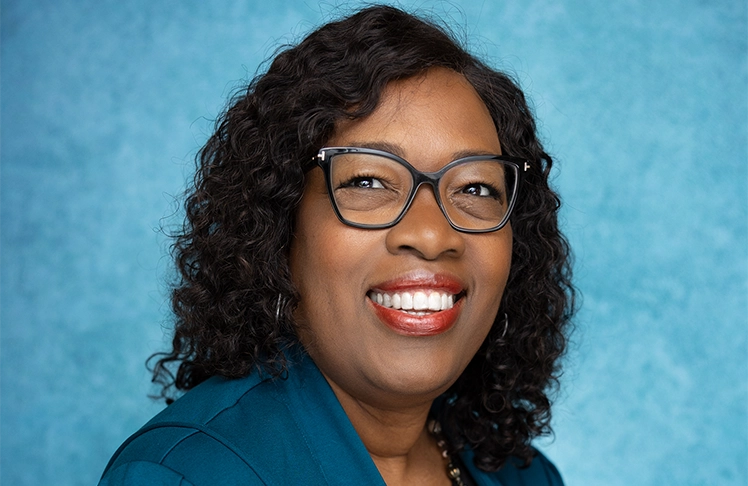
Gentrification is nothing new to the Central area of Seattle. However, Dr. Angela Griffin, CEO of Byrd Barr Place, says the long-term effects of gentrification are starting to become more apparent, especially as it relates to opportunities to build wealth and the cultural development of the African American community.
In addition to Black families losing their homes, the city has also lost Black businesses, Black business districts, and many Black institutions over the years. A significant number of Black churches have either been displaced or, in some cases, are now considering relocation to areas outside the city limits.
“[Gentrification] has had a profound and devastating impact on our Black community and particularly here in the Central District of Seattle because we were the cultural and residential heart of Black life in our city,” says Griffin. “This is where people live, this is where people raised their families, so gentrification was just an uprooting of those families and the displacement of longtime residents was devastating and it also eroded our opportunity for generational wealth in our community.”
“So, it’s not just that people lost their homes, but they lost the sense of community identity,” Griffin continued. “We talk about legacy, so the cultural legacy and the social networks that families had in this community have been lost to a certain extent and I personally don’t think it’s accidental.”
To understand gentrification in Seattle, it’s important to examine the history of redlining, which began in the 1930s and became more prevalent after World War II. Banks and other financial institutions created maps that outlined areas predominantly inhabited by Black residents in red and labeled them high-risk. This categorization led to widespread denials of loans and insurance. The practice reinforced racial segregation and severely limited access to housing and homeownership for marginalized communities. Neighborhoods like the Central District suffered from disinvestment, while predominantly white areas benefited from federal support.
“It was part of decades of disinvestment in the Black neighborhoods,” says Griffin. “Like not putting in resources and the services and needs and then also there was a lot of aggressive redevelopments that takes the prioritization off of people and prioritizing profit.”
“I’m not into capitalism,” added Griffin. “I know we need to make money and be able to purchase things and so forth. But when you put that over the livelihoods of people then you get things like gentrification.”
During the tech boom of the 1990s, Seattle attracted new residents and increased demand for urban housing. This led to increases in property values, and an influx of young professionals making enough money to significantly increase the cost of living beyond what many local residents could afford, which ultimately pushed many long-term residents and families out of the area.
The African American population in Seattle’s Central District has declined steeply over the years—from 70 percent to less than 20 percent, according to available data. This demographic shift has scattered much of the Black community into surrounding areas such as Renton, Federal Way, and as far as Puyallup, pushed out by rising housing costs, redevelopment pressures, and a lack of economic safeguards.
Seattle’s Black community, despite decades of systemic barriers, was able to build strong institutions, churches, and businesses by the 1970s. However, what took generations to build has unraveled under the pressure of skyrocketing rents, unaffordable property taxes, and urban development that prioritizes profit over people.
“I think redlining laid the foundation for what we see today as gentrification,” says Griffin. “So, it wasn’t just about discriminatory lending. The government had sanctioned systems that purposefully denied our Black families from being able to buy homes and build wealth and build their communities.”
Redlining’s long shadow continues to impact wealth, education, and health outcomes for Black residents, and its effects are clearly visible in the pattern of displacement today. The irony, Griffin notes, lies in how the Central District, once labeled undesirable, has become some of the city’s most coveted real estate.
“And so, at one point in time, our neighborhoods were seen as undesirable, right,” Griffin adds. “And then now you got decades later these same areas are considered prime real estate. It [redlining] just laid the foundation and unfortunately there’s been consequences to families here intergenerationally.”
To combat these trends, Byrd Barr Place is working to promote community-driven development and policy reforms aimed at reversing displacement. Their strategies focus on sustainability, inclusion, and economic empowerment:
• Promote affordable housing to prevent displacement of long-term residents.
• Support local businesses to maintain community character and economic diversity.
• Advocate for inclusive policies that prioritize the needs of marginalized communities.
• Encourage community engagement in development decisions to ensure resident voices are heard.
• Collaborate with local organizations to create sustainable solutions for housing and services.
• Raise awareness about the impacts of gentrification on vulnerable populations.
• African Americans in Seattle have a homeownership rate of 24%, significantly lower than the roughly 40% experienced by African Americans nationally. That national rate, which has remained virtually unchanged since 1968, is still a third less than the 70% homeownership rate among white Americans today. Lack of homeownership increases vulnerability to gentrification-induced displacement, drives up rents, shrinks affordable housing inventory, and limits economic mobility for established community members.
• Housing unaffordability, compounded by historically low incomes within Seattle’s Black communities, continues to drive displacement.
To deepen its impact and address historical data gaps, Byrd Barr Place recently launched For the Record—a groundbreaking statewide Community Needs Assessment (CNA) campaign. Designed to better understand the unique needs of Black communities and other underserved populations across Washington State, the campaign centers on culturally responsive data collection and community storytelling.
At the heart of For the Record is a comprehensive public survey, now live and open to all residents. While the CNA focuses on key regions like King, Pierce, Clark, Yakima, Spokane, and Snohomish counties, it welcomes participation from all 39 counties. Responses will guide funding decisions, shape local programs, and influence policy statewide.
Rooted in Seattle’s historic Central District—a longtime hub for Black culture, activism, and resilience—For the Record uses creative outreach, public art, and digital storytelling to elevate community voices. More than a survey, it’s a statewide call to action to speak up, be counted, and drive meaningful change.
To take the survey, visit byrdbarrplace.org/for-the-record.
“I just always like in these conversations to make sure we’re talking about the fact that we need to ensure the dignity and the resilience of Black people persists, right? We’re not just statistics, we’re not just victims of a housing crisis, but we are brilliant, we’re creative, we’re, we’re builders,” Griffin concludes. “And so I think Byrd Barr Place has that legacy for over 60 years of making sure that people, Black people in our community stay together. We’re conducting a community needs assessment so we can better understand what happened, where do people go, how are they doing, what do they need, and what is it that would bring them back to a community like the Central District or wherever they are—are they building something similar?”