By Aaron Allen
The Seattle Medium
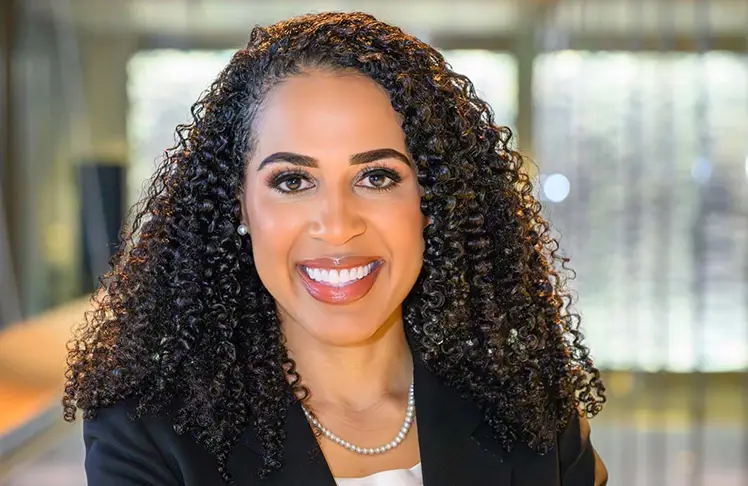
Seattle City Attorney Erika Evans has launched a new diversion court for people charged with low-level, nonviolent misdemeanors while introducing stricter prosecution policies for repeat offenses. The initiatives are part of a broader public safety approach that also includes two specialized prosecutor positions focused on human trafficking and firearm violence.
The new Connection Court provides eligible defendants with access to social services intended to address problems contributing to criminal behavior. At the same time, the High-Priority Repeat Offenses program, known as HiPRO, directs prosecutors to seek tougher penalties in certain cases involving repeated misdemeanor charges.
The initiatives combine diversion for eligible defendants with greater emphasis on accountability for repeated offenses. The specialized prosecutor positions would also expand cooperation with King County on cases that ordinarily fall outside the City Attorney’s Office’s jurisdiction.
Connection Court restores a community-focused diversion option following the 2023 closure of Seattle’s former Community Court. Working through Seattle Municipal Court’s Community Resource Center, the program connects participants with resources tailored to their needs, including medication-assisted treatment for substance use disorders, mental health care, employment opportunities and assistance enrolling in public benefits.
Participants must engage with services and complete a 90-day period without new criminal violations to have their charges dismissed. Defendants who do not successfully complete the program can return to the traditional prosecution process.
The program also establishes eligibility restrictions. Individuals with certain serious criminal histories, including convictions for murder, rape or recent second-degree assault, are excluded from participating.
“Connection Court is all about making sure we are helping folks that are committing nonviolent, low-level misdemeanors and addressing underlying needs,” said Evans. “At the same time, HiPRO is a necessary accountability mechanism to ensure we’re giving folks opportunity, and at the same time, we’re not having folks take advantage of the safety of our city.”
While Connection Court emphasizes services and rehabilitation, HiPRO focuses on repeated criminal activity.
Under HiPRO, defendants charged in three cases within three months or six cases within six months are excluded from diversion programs, including Connection Court. Prosecutors will instead request aggravated jail sentences, although judges determine whether to impose them.
The policy also applies to defendants accused of returning to steal from businesses where they were previously trespassed, as well as defendants charged with car prowling who have recent felony theft, auto theft or robbery convictions.
Unlike the previous high-utilizer initiative, which maintained a list of individuals, HiPRO evaluates eligibility based on recent cases and conduct.
Criminal Division Chief Jenna Roberts said the change is intended to make the criteria more transparent while allowing people to become eligible for diversion again if their circumstances change.
“The last administration had people put on a list. It was called the high utilizer initiative, and it was not very transparent how people were getting on the list and how people would get off the list, and this really gives accountability to people’s particular behavior on a case and still leaves forth the opportunity that when you’re ready we’re still here for you and you will have a diversion opportunity in the future,” said Roberts.
The emphasis on maintaining opportunities for rehabilitation also drew support from Karen W. Murray, a career public defender who stressed the importance of second chances alongside community safety.
“As a lifetime Public Defender, someone who still believes in second chances, and who believes that everyone should feel safe, I believe Seattle City Attorney’s Connection Court is a great start to getting us there,” said Murray.
Seattle police and municipal leaders also expressed support for the changes.
“City Attorney Evans has built a program that pairs compassion with consequences, and the Seattle Police Department is proud to support it,” said Interim Seattle Police Chief Andre Sayles. “Seattle police officers see firsthand how the same individuals cycle through the justice system when the root causes of their behavior go unaddressed.”
Mayor Katie Wilson described Connection Court as a “thoughtful, intentional approach to break that cycle while maintaining accountability.” Councilmember Debora Juarez, who represents District 5, called it a “public safety deterrent generous in both empathy and accountability.”
Beyond treatment and other support services, Connection Court also seeks to create pathways to employment.
A partnership with the Downtown Seattle Association will allow eligible participants to interview for positions with the Metropolitan Improvement District’s Downtown Ambassador program.
“Rebuilding this court is an important step in making sure our system has the right kind of interventions, and we know how critical employment can be for people trying to rehabilitate their lives,” said Downtown Seattle Association President and CEO Jon Scholes.
Alongside the misdemeanor initiatives, Evans announced two specialized prosecutor positions intended to expand the city’s role in addressing human trafficking and firearm violence.
Because the City Attorney’s Office generally prosecutes misdemeanors, felony human trafficking cases and most serious firearms offenses ordinarily fall under the King County Prosecuting Attorney’s Office.
The first position will allow a Seattle prosecutor to be cross-deputized with King County, providing authority to pursue felony human trafficking cases while continuing to handle city misdemeanor cases.
The arrangement is intended to increase prosecutorial capacity for trafficking investigations, particularly those involving the sexual exploitation of children and other vulnerable individuals along Seattle’s Aurora Avenue corridor.
Evans said her experience investigating trafficking cases while working at the U.S. Attorney’s Office helped convince her that Seattle needed additional prosecutorial resources. She noted that King County has two prosecutors assigned to human trafficking cases and that the new position would provide an additional prosecutor focused specifically on Seattle.
“As the city attorney’s office, we are traditionally limited to just misdemeanors, and that means for these sex trafficking cases, that’s just the buyers that are committing misdemeanors,” said Evans.
Evans described the cross-deputization arrangement as an opportunity for city leaders to move beyond traditional jurisdictional boundaries and address a public safety problem requiring cooperation across agencies.
King County Prosecuting Attorney Leesa Manion welcomed the additional resources and emphasized the need to hold people who profit from sexual exploitation accountable.
“The sexual exploitation of children, women, and others from vulnerable communities along Aurora is unacceptable, and prosecutors need every available resource to hold the people who are profiting off of this violence accountable,” said Manion.
The second prosecutor position will focus on extreme risk protection orders, or ERPOs, through a newly organized Firearms Unit within the City Attorney’s Office.
Washington’s ERPO law allows courts to temporarily restrict firearm possession when evidence establishes that a person poses a significant risk of harming themselves or others.
Unlike criminal firearms prosecutions, ERPO proceedings are civil matters and do not require a criminal conviction. Prosecutors must present evidence to a judge, who determines whether to issue an order.
The new position is intended to strengthen coordination among the City Attorney’s Office, Seattle police and King County prosecutors in identifying and pursuing cases where firearm restrictions may prevent serious harm.
“This civil protection order process gives us one more tool in our toolbox,” explained Roberts. “Where cases are hardest to prove in criminal court beyond a reasonable doubt, we can present evidence through law enforcement to prohibit someone posing an extreme risk from possessing firearms.”
U.S. Rep. Pramila Jayapal also expressed support for the city’s focus on trafficking and firearm violence.
“I am glad to see Seattle prioritize tackling gun violence and human trafficking. Everyone deserves to feel safe in our City,” said Jayapal.
Funding for the ERPO prosecutor was included in the city’s midyear supplemental budget. Both specialized prosecutor positions are included in Wilson’s proposed 2027 budget, which remains subject to City Council review and approval.
The initiatives place several responsibilities before the City Attorney’s Office, from connecting misdemeanor defendants with services to pursuing repeated offenses and working with county prosecutors on trafficking and firearm cases. Their effectiveness will depend on whether participants can access needed services, whether repeat offenses decline and whether city and county agencies have the resources to carry out the work.
“Jenna and I are career public safety folks, and that means a lot coming and stepping into these important roles,” said Evans. “We are going to be looking at more things to do to expand, be innovative, and be outcome-driven in the public safety work we do.”