By Aaron Allen, The Seattle Medium
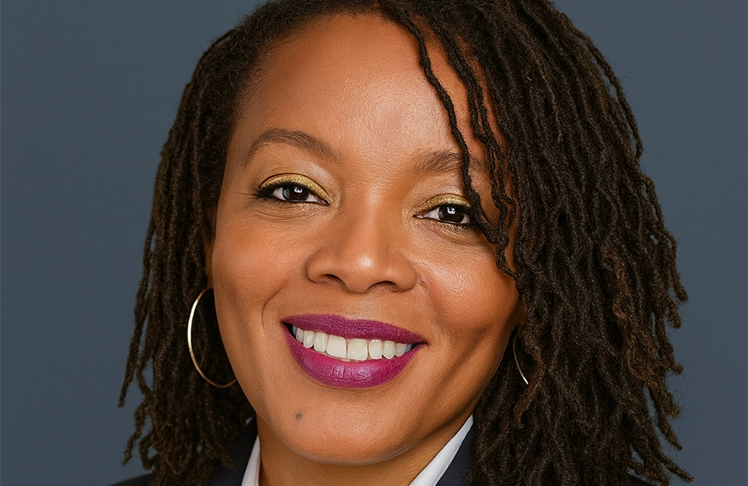
Baionne Coleman, CEO of Rainier Valley Leadership Academy (RVLA), recently stepped down from her role, concluding a transformative tenure at the Seattle charter school. According to Coleman, the decision to step down comes as Coleman takes a position as the chief academic officer for a multi-state education organization focused on advancing equity for Black and global majority students.
Coleman said her decision to pursue a national leadership role is deeply informed by her family’s history of breaking barriers in education—particularly during the era of school integration.
“I’ve come into this work because I come from a legacy of educators,” said Coleman. “My mother, Beverly Minnis Washington, integrated schools after the 1954 Brown versus Board of Education ruling. She was a disabled Black girl with polio and was severely harmed during the process of integrating schools. My grandmother, LeVaughn Seals Minnis, was also an educator. She lost her job during school integration and had to return to school to become a nurse.”
RVLA received approval in 2015 and the doors opened 2017 to empower students through leadership development. The tuition-free public charter school serves the diverse Rainier Valley community, combining rigorous academics with leadership training, social justice, and community engagement.
Coleman joined RVLA in 2019, at a pivotal time in the school’s development.
“I started in 2019, and the building was built and ready to go and started receiving scholars,” said Coleman. “I started the process and was asked by community to come in to rebrand, revision, and do a demerger from Green Dot, the national organization. To make it an independent charter.”
Leading a charter school in Washington has been both challenging and deeply rewarding, according to Coleman.
“It has been a pleasure,” said Coleman. “In the sense of being able to work with community to accomplish something. I think RVLA was slated to close on day one. There have been a lot of wins for the organization. We raised over $17 million for the organization in the past six years. We have supported hundreds of scholars and family members.”
Marcus Harden, Executive Director of the Washington State Charter School Commission, says that Coleman’s leadership and engagement with stakeholders and the community was extremely beneficial to the overall success of RVLA.
“I think she’s been an incredible leader for that community and in the community,” says Harden. “[The school has] grown underneath her leadership, and their ability to serve students and families has been amazing.”
Charter schools are publicly funded but operate independently of traditional school districts. They have more flexibility in setting policies, staffing, curriculum, and discipline. This autonomy, Coleman said, also comes with significant hurdles—especially in Washington state.
“The charter sector in Washington is one of the hardest charter sectors, and one of the hardest education spaces to be in, quite frankly, for public education,” said Coleman. “There’s a lot of folks who are actively working against it. We don’t receive facilities funding. There’s still a fight every single year to get levy funding that families are actually paying taxes into and approving and voting for, but they (charter schools) don’t have access to on any type of consistent level, nor at the same rates that our traditional public schools get so that makes it very difficult in those spaces.”
Fundraising and systemic bias are additional challenges for Black leaders in education, Coleman added.
“There are challenges on the business system side, which is raising money, right?” said Coleman. “And being a Black leader, there are not a lot of people, a whole lot of people who are willing to give Black leaders and especially Black women money if we’re being completely honest, and that’s on a national level.”
Harden says that Coleman, as a woman of color, brought both strength and the ability to connect with the community in meaningful ways.
“She really turned the school around,” said Harden. “When she first took over at RVLA, it was another school. But she was really engaging the community, and in that process she accomplished quite a lot in her tenure.”
Another ongoing challenge, according to Coleman, is addressing persistent public misconceptions about charter schools.
“I think the other thing is debunking the myth that charter schools are alternative schools,” said Coleman.
Coleman’s educational career spans more than 23 years. Coleman began at Howard University, earned a degree from the University of Washington, received a master’s in teaching from City University, and completed principal certification and administrative leadership training at Seattle University. Coleman also holds a superintendency license from Youngstown State University in Ohio.
“I have been in education for over 23 years now and I have done everything from being a teacher, I’ve been an executive director, I’ve been an assistant principal, I’ve been a principal,” said Coleman. “I have opened up two charter districts, and I have a background in special education.”
Although transitioning into a national role, Coleman remains committed to the vision built at RVLA.
“I think charter schools are important because they give space for innovation to happen in a completely different way,” said Coleman. “You hear a lot about micro schools and in essence, charter schools can be micro schools to some degree, and because they have more checks and balances with some more autonomy around how education can be brought into spaces to support community based off their needs.”
“I think that is important and I think that also, it’s a choice for families that is still public,” said Coleman. “I think we get into charter public schools versus traditional public schools, and we really need to be thinking about how do we make it so that public education is so profoundly successful with such a high bar of excellence, ensuring that every single scholar can read at level and every single scholar can do math at level.”