By. Hazel Trice EdneyNNPA Washington CorrespondentWASHINGTON (NNPA) – Four years ago, Ted Shaw, president and director-counsel of the NAACP Legal Defense and Educational Fund, was on top of his game. He was standing before the U. S. Supreme Court, applauding the reaffirmation of affirmative action and preparing to lead the LDF that helped to champion the case. Last week, in an NNPA interview, he was still the same determined civil rights warrior. But, he appeared pensive, almost solemn as he fiddled with the empty wrapper from the crackers he’d just crumbled over his clam chowder. It was a moment indicative of a man reflecting on the last 25 years of his life.”I’m not saying I’m old, but I’m saying I’ve been at the Legal Defense Fund for a long time. That’s a long time in any institution,” he told the NNPA News Service in an exclusive interview. “And the reason that I think that it’s important – at least for me – and I think it’s important for people not to stay in these positions for too long is that change is growth for individuals and institutions.”With that explanation and the fact that he has a family, including a wife, a 14-year-old daughter and 20-year-old son that needs more of his focus, time and attention, Ted Shaw, 53, has told NNPA that he has resigned from the LDF, effective Feb. 1, 2008. The decision has been a long time coming. In a May 15 resignation letter submitted to the NAACP LDF, he writes, “I have served in various capacities at the institution since 1982, during all but three of the last twenty-five years…Compelled by professional and personal reasons, I have concluded that it is time for me to make this change.”The letter continues, “Few organizations have had a more profound impact on changing America for the better than LDF…In the months to come, I pledge to work with you and other members of the board of the Legal Defense Fund to ensure a smooth transition to my successor, who I am sure will continue the pursuit of racial and social justice so resolutely championed by LDF’s previous leaders.” He calls the organization “one of our nation’s great institutions.”Shaw took the helm of the LDF only three years ago, succeeding Elaine Jones, who had served for 32 years. He serves as LDF’s fifth head, having risen from the position of staff attorney in 1982 to associate director-counsel before being selected to lead the organization formed in 1940 by then lawyer Thurgood Marshall to legally challenge racist civil rights laws.Shaw’s legacy – still in the making – has been his vigorous battle against opponents of affirmative action. He represented African-American and Latino students in the University of Michigan cases in which the Supreme court upheld limited use of race in college admissions. The June 23, 2003, ruling in that case was deemed the court’s most important affirmative action decision since 1978’s “University of California v. Bakke which allowed race as a “plus” factor in admissions.In one of Shaw’s first speeches as LDF president, he predicted that even after the Supreme Court’s decision, affirmative action would continue to come under attack.”There’s another storm brewing,” he said after assuming the helm May 1, 2004. “We’re going to fight on every front.”The storm is here.Shaw prepares to leave the organization just as the U. S. Supreme Court is about to announce its decision in two landmark public schools cases that could have the affect of overturning the desegregation mandates set forth in the May 17, 1954, ruling in Brown v. Board of Education of Topeka, Kansas, argued by the LDF. Those cases are Parents Involved in Community Schools v. Seattle School District and Meredith v. Jefferson County Board of Education (Kentucky).He also leaves as right wing activist Ward Connerly aims to overturn affirmative action laws in every state possible by using referenda.Shaw predicts that the future of civil rights is that America will continue to avoid its racial and economic inequities even in the face of incidents that illuminate stark racial divisions, such as the “O. J. moment”, “the Katrina moment” and “the Imus moment,” he says.”Denial has always been there and continues to be there…I think that we’re going to have to use all the tools and weapons that we have at our disposal,” he says. “What I want more than anything else is a movement which addresses continuing racial and growing economic inequality.”But, while vowing to continue fighting vigorously for justice, Shaw, in a rare personal interview in a Washington, D.C. restaurant, says civil rights is not all that’s on his mind these days.”This whole issue of whether the civil rights struggle is relevant now or whether what we have to deal with is what I call our internal demons is an issue that I have a lot more to say about than what I’ve said,” says Shaw. He listed a number of options for his future, including writing and becoming a law school professor. But, mostly he spoke of his family, including his wife, Halona, and his two children by a previous marriage, Winston, 20, and Zora, 14.”I love to read, I like to write. I don’t get the time to write as much as I would like, the time to exercise, to spend time to spend with family and friends,” he says. The interview took place the day after the death of Yolanda King, the eldest daughter of Dr. Martin Luther King Jr., which he says underscored his decision.”It’s like Yokey passing away last night, you think, you assume you’re going to have more time,” he says, calling King by a nick-name used among friends. “That was so unexpected and sudden, but we all know that our bodies betray us sooner or later so you’ve got to be conscience of immortality and use life well. I can’t assume that I’m going to have all the time for my friends and family and with all the other things that I want to do with my life unless I make that happen.”The day after submitting his resignation to the LDF board, Shaw says some board members had encouraged him to stay and some had accepted the resignation.”I’d say that they’ve reacted graciously although I haven’t gotten all their reactions yet,” he says. But, he says, his decision is final: “I’m in full stride right now. This is a good time to make a transition and do something else. I can still have another job or two, which I’m fully engaged as opposed to a sun setting job. I think that’s important for me.”He put it more succinctly in his letter, “While our nation has made great progress, that work continues. I will remain committed to advancing the legacy of LDF’s visionaries in my future endeavors.”
Must Read
Freedom Through Education And Excellence
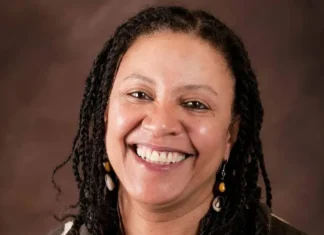
Dr. Debra R. Sullivan, founder of Ashé Preparatory Academy, emphasizes education as a powerful tool for advancing freedom, opportunity, and self-determination. She advocates for every child's right to an educational environment that cultivates excellence, leadership, critical thinking, and personal growth.