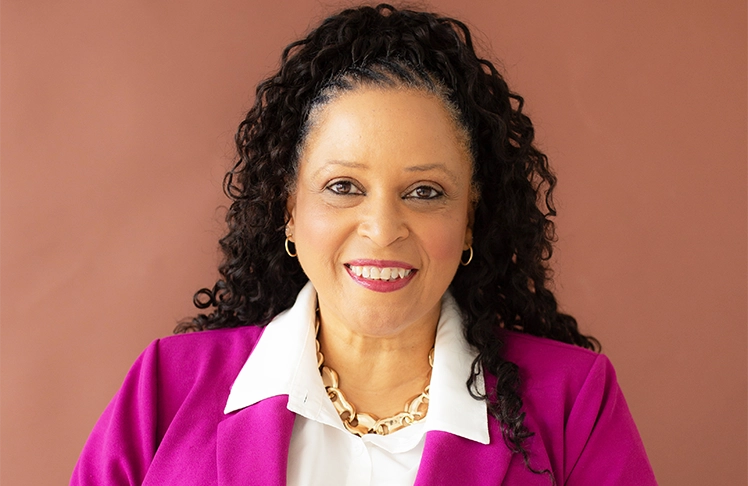
By Kiara Doyal, The Seattle Medium
Janie White has stepped into a new role as president of the Washington Education Association, marking a historic milestone as the first Education Support Professional and the first Black woman elected statewide to lead the organization.
The Washington Education Association represents public school educators and staff across the state, advocating for funding, working conditions and policies that affect classrooms statewide. As president, White will help lead those efforts at a time when schools continue to face challenges related to resources, staffing and equity.
White, who previously served as vice president since 2019, describes the opportunity as an honor and a continuation of the work she set out to do when she first sought leadership.
“I decided to run because I wanted to see change within the organization. I wanted to see the people in leadership, the way that I want to see our educators in leadership. We should not have an organization that has been existing for so long that doesn’t resemble that,” said White. “And knowing that, I took that on, and thanks to God, I won. It was a step that I wanted to make sure I took so that I could make it easier for the next person.”
In her previous role, White said one of her guiding priorities was ensuring that everyone had a seat at the table and a voice in the conversation.
“It is like a movement to a movement. It was about breaking barriers. It was to make it so that we have space for all of our educators, and that it is more diverse,” said White. “That was my focus, and I feel like we have met those needs as vice president, so running for president and winning, I was so excited and thought, ‘let the work begin.’”
Now as WEA president, White anticipates that one of the greatest challenges will be navigating the unknown as shifting circumstances continue to shape the path ahead.
“We don’t know what issues are going to come before us. So there are things that we are going to have to come up against, and I am not doing it by myself, it is all of us together,” said White. “Things like making sure we are fully funded. We have never been fully funded in education.”
White also sees educating people about the importance of diversity, equity and inclusion as a key challenge in her new role.
“We have a tendency to shy away from DEI, but that is what makes us work. And when you ask someone what part do they not want to do, it makes a person think about what they don’t want. Everybody doesn’t want an acronym, but they don’t know what it means,” said White. “Just educating people is the most important part, but it is going to be a challenging part of this job.”
She said she plans to continue advancing diversity, equity and inclusion efforts across Washington.
“I have to just keep doing the work, everybody matters. When it comes down to our students, you can’t tell me that they don’t matter because of their race. Every student matters, and we need to start loving on them,” said White. “Everyone needs to understand that when a student comes into a room outside of their home, we are the next safest place that they have and we have to work to keep that.”
White said collaboration and relationship-building have been central to her leadership approach and have helped prepare her for this role.
“I love building relationships and talking with people, and you can opportunity to see what they want, what they need, and what they’re looking for. I prioritize my students and their voices, and I prioritize my members, and I love that part of my job,” White said. “So, running for president was just to make sure I continue that journey because we have a lot going on in Washington.”
Looking ahead, White said fully funding education remains a top priority and a critical need across the state.
“A lot of the time, some of the things that our students and educators need, we can’t have it because we don’t have the funds for it,” said White. “There is so much that we have to duct tape and make happen because we are not fully funded.”
White pointed to potential policy solutions that could help address funding gaps.
“The millionaire’s tax that probably won’t be in effect for about three years, they aren’t getting taxed on the million, it is what they make after a million,” White said. “And that is how rich we are in Washington, and it would really lean towards fully funding education just by taxing millionaires. It would help our schools, transportation, labor unions and hospitals.”
Despite the challenges ahead, White said she remains committed to the work and the students and educators she serves.
“There is just so much going against getting an education, that we just have to fight really hard to make sure that it is worth it for our babies to stay in school. It is such a tough battle, but I am here to fight,” said White. “I love my job. I love everything about it. It was an honor to be at the ground of being vice president to make sure that everybody has a seat at the table, and I will continue that work as president.”