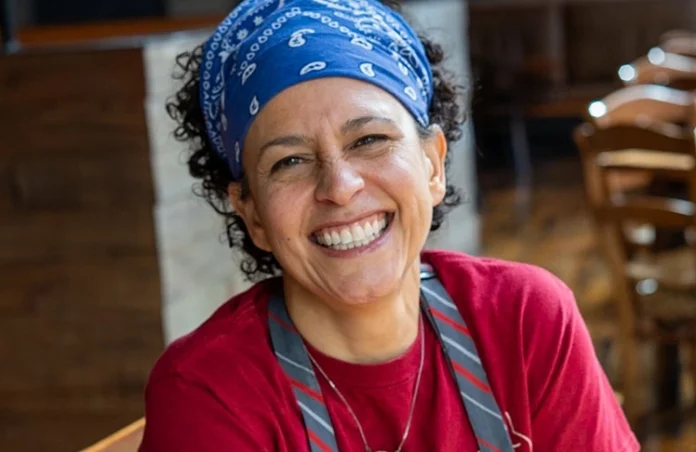
This episode of the Seattle Medium’s Rhythm News Podcast features host Christopher B. Bennett highlighting the Pack the House campaign, which showcases Black chefs and Black-owned restaurants in Seattle. The spotlight is on Osteria La Spiga, a Capitol Hill restaurant that has served northern Italian cuisine since 1998.
The episode introduces Sabrina Tinsley, executive chef and co-owner of Osteria La Spiga, who discusses her more than 25 years bringing northern Italian culinary traditions to Seattle. The restaurant is known for handmade pastas and regional dishes emphasizing comfort, sharing, and community around the table.
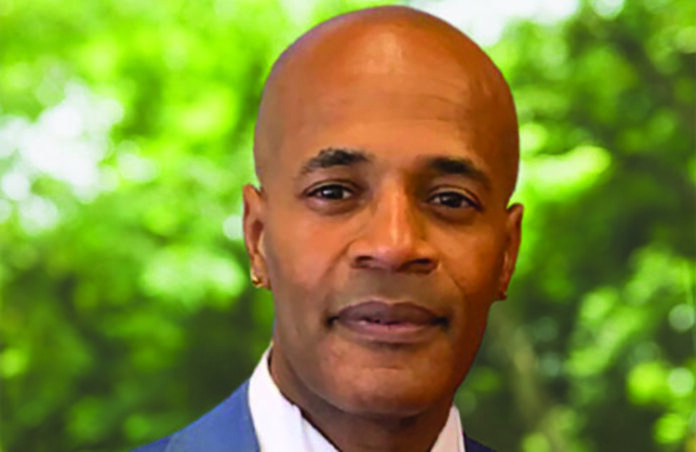
This podcast episode introduces a conversation between host Christopher B. Bennett and B. Maurice Ward, a Navy veteran and community advocate, about youth gun possession. Ward’s commentary, submitted to The Seattle Medium, examines risks that begin when young people decide to carry a firearm, not just consequences from its use.
The discussion connects to the upcoming Judge Charles V. Johnson Youth and Law Forum, which brings together youth and professionals in law and justice to address rights, responsibilities, and decisions that can shape young people’s futures, emphasizing education over fear-driven choices.
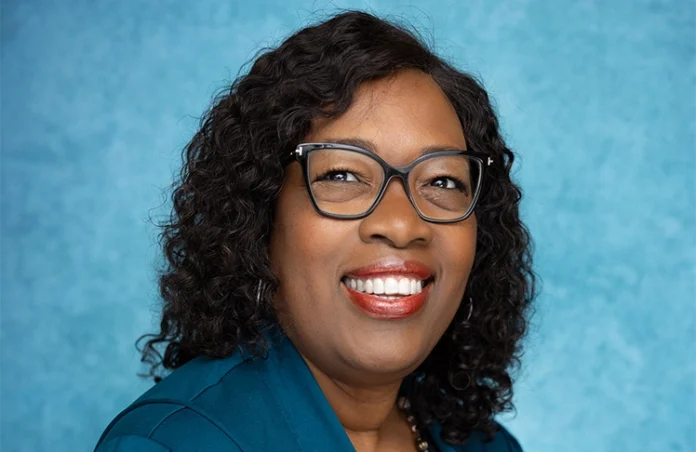
This podcast episode from the Seattle Medium’s Rhythm News Podcast features host Christopher B. Bennett interviewing Dr. Angela Griffin, CEO of Byrd Barr Place, a Seattle organization that has served the Black community for over six decades through essential services and advocacy for racial and economic justice.
The discussion centers on two upcoming October events: the Legacy in Motion Gala, themed “Unity: Rooted. Rising. Revolution.,” featuring a fireside conversation with scholar Dr. Michael Eric Dyson, and the Building Bridges Candidate Forum connecting community members with county and state candidates. Griffin discusses the organization’s mission and the importance of civic engagement.
Nine states will use new congressional maps in the midterms. For Black voters, unfamiliar district lines could mean more than Election Day confusion: they could reshape representation and political influence. Credit: Getty Images
Nine states will use new congressional maps in the midterms. For Black voters, unfamiliar district lines could mean more than Election Day confusion: they could reshape representation and political influence. Credit: Getty Images
When millions of Americans vote in November’s midterm elections, they may find that the district they knew — and the political power they once held — has disappeared.
Congressional maps have changed in nine states since the last federal election, shifting roughly one in 10 voters into newly configured districts, according to The Associated Press. New boundaries will be used in Alabama, California, Florida, Louisiana, North Carolina, Ohio, Tennessee, Texas and Utah.
Redistricting typically is done once a decade, after the census determines where people have moved and how many congressional seats each state receives. This time, however, many changes occurred mid-decade — without a new census, in red states — at the urging of President Donald Trump, who sought an advantage in the battle for control of Congress. Democrats retaliated, prompting a redistricting arms race.
‘Packing’ and ‘Cracking’
Most of the new maps favor Republicans. And in several Southern states, the changes came after the U.S. Supreme Court weakened a central protection of the Voting Rights Act that allowed maps to be challenged if they dilute the political influence of Black voters.
For Black America, this is not simply another fight between Democrats and Republicans. A congressional district determines which communities vote together, which candidates can realistically win, and whether Black voters have enough collective strength to elect someone responsive to their concerns.
What Black voters could lose is not only a seat in Congress. They could lose leverage.
Mapmakers have two reliable ways to diminish Black voters’ influence.
One is “packing”— concentrating as many Black voters as possible into a small number of districts. Those districts may reliably elect Black representatives, but surrounding districts become whiter and less competitive.
A congressional district determines which communities vote together, which candidates can realistically win, and whether Black voters have enough collective strength to elect someone responsive to their concerns.
The other is “cracking”— dividing a Black community among several districts so its voters are a minority in each one. A neighborhood may remain physically intact, yet become politically fragmented and represented by lawmakers whose electoral survival does not depend on listening to those voters.
Locking Out Black Voters
That danger is particularly clear in Alabama. The state’s revised map eliminated one of its two majority-Black congressional districts and reduced the Black voting strength in the district represented by Democratic Rep. Shomari Figures. Rep. Terri Sewell’s district retained a narrow Black majority.
Louisiana offers another warning. The state is nearly one-third Black, but its latest redistricting fight created the possibility that Black voters could end up without a district where they have a realistic opportunity to elect their preferred candidate. Similar battles have unfolded in Florida, North Carolina, Tennessee and Texas.
The changes can affect more than Congress’s racial makeup. Representatives help determine federal spending and policy on Medicaid, public schools, environmental enforcement, voting rights, housing and criminal justice — issues that routinely have a disproportionate effect on Black communities.
A district designed to weaken Black voting power can therefore shape whose hospital remains open, whose neighborhood receives disaster aid, whether a polluted community gets federal attention and which schools receive resources.
Even voters who understand the stakes may not know that their district has changed. They may have a new representative, unfamiliar candidates, or a different polling location. Campaign organizations may have to rebuild voter lists and community relationships. Churches, fraternities, sororities, and civic groups that have spent years organizing in one congressional district may suddenly find their members scattered across several.
That confusion can suppress participation without anyone being formally denied a ballot. A voter who arrives at the wrong precinct, cannot identify the candidates or believes a familiar representative is still on the ballot may decide the process is not worth the trouble.
Don’t Wait. Have a Plan
For Black voters — who have long faced barriers, including strict identification requirements, polling-place closures, voter-roll purges and limits on mail voting — a last-minute map change adds another hurdle.
Black voters should not wait until Election Day to discover whether their district changed. They should check their registration, review an official sample ballot and confirm their polling place through their state or local election office.
Voters also should ask candidates direct questions: Which Black neighborhoods are now in the district? What relationships have they built there? How will they protect voting access? What is their record on health care, schools, environmental justice and economic opportunity?
The courts may describe redistricting as a dispute over lines, procedure and constitutional authority. But those lines determine power.
And when those lines divide Black communities or reduce their ability to elect candidates of their choice, what disappears from the map is more than a familiar district. It measures the political voice Black Americans fought generations to obtain — and now may have to fight to keep.
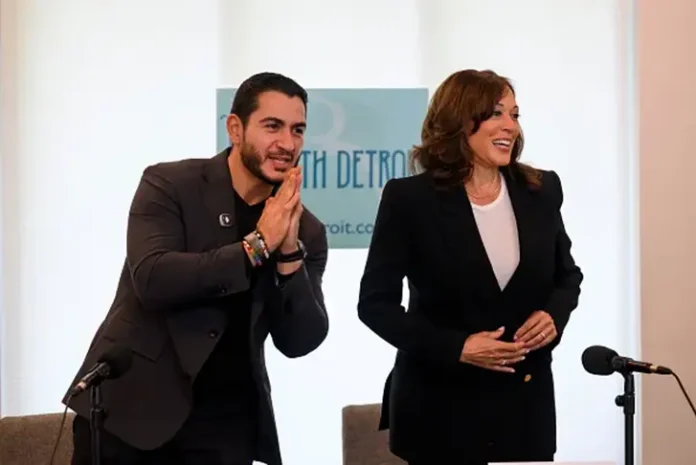
Michigan Democratic Senate candidate Abdul El-Sayed (L) and former U.S. Vice President Kamala Harris participate in a roundtable discussion about reproductive health at Birth Detroit on September 22, 2026 in Detroit, Michigan. Credit: Photo by David Guralnick / Pool/Getty Images
Michigan Democratic Senate candidate Abdul El-Sayed (L) and former U.S. Vice President Kamala Harris participate in a roundtable discussion about reproductive health at Birth Detroit on September 22, 2026 in Detroit, Michigan. Credit: Photo by David Guralnick / Pool/Getty Images
By now, there’s little question that a maternal health crisis is rocking the Black community. The data tells the story: Black moms are dying during childbirth at three times the rate of white moms, a disproportionately high percentage of Black children are born prematurely, and Black infants are about twice as likely to die as white infants in states like Louisiana.
But new data from a handful of pilot projects also suggests a potential solution that could significantly improve outcomes for Black mothers and their babies: cash payments, no strings attached.
Studies show the unrestricted money led to fewer preterm births, higher newborn birth weights, and fewer critical-care infant hospitalizations. It also reduced stress among new moms who would otherwise struggle to attend prenatal check-ups, pay for food and formula, or keep a roof over their heads.
“This makes so much sense to me,” says Tamara Mason, an official with the nonprofit March of Dimes who worked on an Atlanta project distributing money to low-income pregnant women. “Why isn’t everyone doing this?”
Sen. Cory Booker, a New Jersey Democrat, is among several sponsors of legislation that would provide direct financial aid to new mothers, similar to the expanded child tax credit in 2021. The credit sent monthly payments of up to $300 per child straight to most families’ bank accounts; experts credit it with lifting millions of children out of poverty.
When it expired, child poverty rose again.
“I believe that we need to, for moms, flood resources to them through things like the child tax credit,” Booker said during an August press briefing on the Black Maternal Health Momnibus Act. “We were able to cut child poverty virtually in half for our communities, and that actually does affect child outcomes.”
Those positive outcomes in part spurred the March of Dimes to launch trial programs providing universal basic income, or UBI, to pregnant women and new moms in two cities: Atlanta, which Bloomberg ranked as the most economically unequal large city in the country, and New Orleans, which March of Dimes gave an F grade.
No strings attached
In Atlanta, the Guaranteed Basic Income Program gave each participant $1,000 a month during pregnancy and her baby’s first year. Women most likely to live in poverty in that city are Black women of reproductive age; 25 pregnant women in two of the area’s highest-need ZIP codes received the cash.
March of Dimes ran the pilot through an Atlanta collective-impact partnership known as the collaborative. It is modeled on San Francisco’s Abundant Birth Project and, organizers say, rooted in an idea the Rev. Martin Luther King Jr. championed decades ago.
Funders Skeptical at First—Then All In
Mason said she spent months pitching foundations on the idea, which some considered outside her organization’s lane.
“I was honestly surprised that a couple of foundations,” Mason says. “Funders were like, ‘Why is March of Dimes in this space? You all are the birth defects people. You’re the preterm birth people.’”
The nonprofit Center for Black Women’s Wellness handled recruitment, and more than 110 women applied for the 25 spots, Mason said. Applicants had to live in one of the two ZIP codes, earn no more than 200% of the federal poverty level, and be 12 to 28 weeks pregnant.
Cash, Diapers and a Network
Stipends were paid through a prepaid card, letting evaluators track spending without restricting it. Helping Mamas, a nonprofit focused on diaper insecurity, supplied 300 diapers and eight packs of wipes a month, plus a car seat and other essentials. The Georgia Black Doula Network encouraged, but didn’t require, participants to hire doulas.
Early results from Emory’s evaluation, as described by Mason, show a 20% decrease in financial stress and a 66% decrease in hopelessness, a figure she called striking. Prenatal outcomes trended better than average.
Mason was careful not to oversell what $1,000 a month can fix. Several participants lost housing; one or two dealt with domestic violence.
Even though GBI reduced financial stress, “it still is one piece of the puzzle,” Mason said.
New Orleans: Overcoming Crisis
March of Dimes runs a similar program in New Orleans, GBI Rx, offering pregnant patients in their first or second trimester $12,000, as a lump sum or $1,000 a month. Two partner medical clinics enroll patients for healthcare, and the payment card blocks cash withdrawals and spending on liquor and gambling.
In Louisiana, “we have a maternal and infant health crisis — specifically, a Black maternal and infant health crisis,” said Robin Gruenfeld, director of collective impact for March of Dimes in New Orleans. ”And it’s been that way for a long time.”
Black infants there died at about twice the rate of white infants from 2021 to 2023. Gruenfeld said Orleans Parish has the state’s lowest prenatal care utilization rate.
Gruenfeld said the program’s city seed money, federal pandemic relief funds, and foundation funding were “zeroed out” without notice. Most funds were later restored at a lower level, forcing organizers to scale down to 94 participants instead of the 100 planned. They also enrolled on a first-come, first-served basis.
Recipients spent lump sums on housing, cars and insurance. But spending priorities for the participants changed when the federal government stopped paying out SNAP food benefits during last fall’s federal shutdown.
“During that time, more than a quarter of the funds that we gave folks was going to groceries,” Gruenfeld said.
Several New Orleans city government officials are now weighing a program modeled on Michigan’s Rx Kids, which a study credits with nearly halving neonatal deaths in Flint, one of the poorest cities in the state.
“We are seeing policies pushed by the political will of predominantly Black women come into effect, and then also the backlash,” says Danielle Atkinson of Mothering Justice Action Fund, a nonprofit advocacy organization. “In Michigan, we have Rx Kids, which is extremely popular [and] the data on the impact is undeniable.”
But recent changes are endangering the success of such programs, particularly amid President Donald Trump’s hostility towards programs focused on diversity, equity and inclusion.
“We’re getting this pushback around identifying race and parental status as systemic areas of oppression,” Atkinson says. It remains to be seen, she says, “whether or not we are going to be able to prevail with the political power and the popular will of these issues, or the rhetoric and the history of racism in our country.”
Washington Looks Elsewhere
That includes the Republican-controlled Congress, which has shown little appetite for cash aid tied to pregnancy.
The Black Maternal Health Momnibus Act, which Booker reintroduced along with Democratic Reps. Lauren Underwood of Illinois and Alma Adams of North Carolina, bundles 14 bills on housing, nutrition, WIC and the perinatal workforce, but not direct cash.
Still, signs suggest the issue — providing cash aid to low-income mothers and their babies — may stay on the front burner as the midterm elections approach in November.
This month, former Vice President Kamala Harris and Michigan Senate nominee Abdul El-Sayed, both Democrats, hosted a Black maternal health roundtable in Detroit. Danielle Atkinson of Mothering Justice took part.
“Black mamas deserve access to quality healthcare that sees us, listens to us, and understands us at every step of the way,” Atkinson said afterward. “The responsibilities we carry do not end at pregnancy, nor do they disappear when we give birth and want to spend time with our newborn. They stay with us throughout all that we experience.”
(CNN) — Paramount entered the final stages of merging with Warner Bros. Discovery on Wednesday afternoon, when a federal judge approved last week’s settlement of an antitrust lawsuit filed by state attorneys general.
Minutes after Judge Araceli Martínez-Olguín issued an order accepting the settlement, Paramount CEO David Ellison announced that he is hiring Ynon Kreiz to be co-CEO of the combined company.
Kreiz has been the CEO of Mattel for the past eight years.
The media merger will unite Warner Bros. movie studio with the Paramount studio, HBO Max with Paramount+, MTV with Discovery, and CBS News with CNN, creating one of the biggest media companies in the world.
Paramount said the merger is expected to “close,” or take effect, on October 6. The new name of the combined company could be announced as soon as this Thursday.
Ellison, who has been pursuing the mega-merger for the past year, said in a press release he wanted to add a partner to help run the combined Paramount-WBD.
Ellison will remain chairman and CEO, while Kreiz will be co-CEO and will join the combined company’s board of directors.
“It’s a division of labor built on our complementary strengths, with clear reporting lines,” Ellison said, “and it lets me focus where I can contribute most: long-term strategy, the company’s overall creative direction, talent relationships, strategic partnerships, technology and capital allocation.”
That means Kreiz “will focus on the company’s day-to-day management and integration of the combined businesses,” according to the Paramount press release.
Ellison said the combined Paramount-WBD would be “creator-first, tech-forward and built to scale globally.”
Management shakeups are already underway. On Tuesday, Paramount’s streaming chief, Cindy Holland, said she was leaving the company, which signaled to Hollywood that HBO chief Casey Bloys will oversee a merged Paramount-HBO streaming platform.
Ellison’s team is expected to make further announcements about the leadership team in the coming days.
But Paramount needed the judge’s sign-off first.
When the state AGs sued to stop the deal in July, Martínez-Olguín initially ruled in their favor and blocked Paramount from taking control of WBD for a period of weeks that turned into months.
The state AGs, led by California attorney general Rob Bonta, entered into intensive settlement talks in mid-September, and Paramount agreed to several behavioral remedies – like minimum annual film-release targets – but not the structural remedies that Bonta initially said he wanted.
“I think the most important thing that turned the tide was the realization that there wasn’t an antitrust case,” Paramount chief legal officer Makan Delrahim said at a conference hosted by TheWrap on Wednesday.
The state AGs announced the settlement on September 21, so Martínez-Olguín’s approval on Wednesday was the final necessary step.
The timing of the court approval was striking: It came on the last day before October 1, when a “ticking fee” is slated to go into effect, increasing the cost of WBD for Paramount.
One of the terms of the settlement is an “editorial independence board” for CNN and CBS News. The board is meant to “ensure independent, objective, fact-based reporting at CBS News and at CNN,” Bonta said when announcing the deal.
Kreiz’s appointment on Wednesday starts to round out the list of individuals who can appoint the five members of the editorial independence board.
According to the settlement terms, the five board members will be appointed by the merged company’s board of directors and report to its chief compliance officer.
The board will monitor CBS News and CNN’s “adherence to ethical journalism as defined by journalism industry best practices and to editorial independence, including from the combined entity’s ownership and shareholders,” the settlement stated.
So far, the only confirmed members of the merged Paramount-WBD’s board are Ellison and Kreiz.
A statue titled "Rebirth," which depicts former New Orleans Saints safety Steve Gleason blocking a punt against the Atlanta Falcons during the first football game after the Superdome re-opened after Hurricane Katrina, in New Orleans on September 26, 2016. (Jonathan Bachman/Getty Images/File via CNN Newsource)
A statue titled “Rebirth,” which depicts former New Orleans Saints safety Steve Gleason blocking a punt against the Atlanta Falcons during the first football game after the Superdome re-opened after Hurricane Katrina, in New Orleans on September 26, 2016. (Jonathan Bachman/Getty Images/File via CNN Newsource)
By Andy Scholes, CNN
(CNN) — Three weeks into the NFL season, we’re already seeing some familiar storylines, some huge surprises and plenty of history being made.
The Houston Texans are 0-3 – again – while the Las Vegas Raiders are sitting at a surprising 3-0. Joe Burrow and Trevor Lawrence are renewing a rivalry this week that goes all the way back to college; some of the NFL’s biggest stars are putting up ridiculous numbers, and Monday night in New Orleans will mark the anniversary of one of the most memorable games in NFL history.
Here are five things to watch in Week 4.
Texans are 0-3 … again
Well, this is déjà vu for Texans fans. Another 0-3 start.
Last season, the Texans became just the seventh team ever to make the playoffs after starting 0-3, and they’ve actually done it twice — in 2025 and 2018. But no team has ever lost its first three games and then made the playoffs in back-to-back seasons.
And only one team has ever started 0-4 and made the playoffs. That was the 1992 San Diego Chargers, who started 0-4 but then won 11 of their final 12 games.
Do the Texans have that kind of run in them?
Well, they would have to start finding a way to block and run the ball, but their upcoming schedule isn’t that difficult. Their next seven games are against the Dallas Cowboys, Tennessee Titans, Jacksonville Jaguars in London, New York Giants, Los Angeles Chargers, Cleveland Browns and then the Indianapolis Colts at home.
If Houston can go 5-2 during that stretch and get to 5-5, the Texans would be well on their way to salvaging the season. And with the AFC South just 3-9 collectively, chasing down a division title is certainly not out of the question despite another terrible start.
The Raiders are 3-0!
On the other side of things, Raider Nation is riding high after yet another thrilling win.
The Raiders are 3-0 for the first time since 2021 and are actually the first team ever to start a season 3-0 after drafting a quarterback No. 1 overall.
But Fernando Mendoza has had nothing to do with the wins.
Instead, 38-year-old Kirk Cousins has found the fountain of youth!
Cousins has been fantastic, throwing three touchdowns in each of the Raiders’ first three games. Fans were hoping Cousins would play well after he reunited with Raiders head coach Klint Kubiak, who was his offensive coordinator with the Minnesota Vikings when Cousins had some of the best seasons of his career. Right now, Cousins is tied with San Francisco 49ers QB Brock Purdy for the most passing touchdowns this season.
Now, the Raiders’ wins so far have come against the lowly Miami Dolphins, Chargers and New Orleans Saints, so this 3-0 start may turn out to be a bit of a mirage.
But if Las Vegas can beat the 3-0 Kansas City Chiefs at home Sunday, that would be a huge statement win – and give the Raiders their first 4-0 start since 2002.
Burrow vs. Lawrence
We have a showdown between former No. 1 overall picks Sunday in Cincinnati as Joe Burrow and the Bengals host Trevor Lawrence and the Jaguars.
This is a game Lawrence will certainly be motivated for because he has never beaten Burrow — even dating back to college.
Burrow and LSU beat Lawrence and Clemson in the national championship game in January 2020. Burrow has also beaten Lawrence in both of their head-to-head matchups in the NFL.
But if Burrow wants to once again get the better of Lawrence, he’d better already be winning late.
Burrow is 1-34 when trailing in the final eight minutes of regulation.
Just a wild stat.
Stars keep scoring
If you drafted Jahmyr Gibbs, Jaxon Smith-Njigba or Josh Allen in your fantasy league, you’re likely off to a great start because all three are scoring at a historic pace.
Gibbs was the consensus No. 1 overall fantasy pick, and he’s lived up to the hype, scoring six touchdowns in the Detroit Lions’ first three games. He’s just the fifth running back ever to do that to start a season.
JSN, meanwhile, has been incredible for the Seahawks, leading the NFL in both receiving yards and touchdowns. He’s had at least 120 receiving yards and a touchdown in each game, joining Hall of Famer Jerry Rice as the only receiver in NFL history to do that in each of the first three games of a season.
And then there’s Allen.
With two more rushing touchdowns in Sunday’s win over the Chargers, Allen became the first quarterback in NFL history with multiple rushing touchdowns in three consecutive games.
The Buffalo QB already has the most rushing touchdowns ever by a quarterback with 85. That puts him tied for 17th on the NFL’s all-time rushing touchdown list. And Allen is still only 30 years old!
His Bills will look for a 4-0 start when they host the New England Patriots on Sunday.
Katrina anniversary game
Monday night will be an emotional one in New Orleans as the Saints commemorate the 20th anniversary of their return to the Superdome after Hurricane Katrina.
On September 25, 2006, the Saints beat the Atlanta Falcons 23-3 in their first game back at the Superdome following the storm.
Steve Gleason’s blocked punt, which was recovered for a Saints touchdown, remains one of the most iconic moments in franchise – and arguably NFL – history. The moment is now immortalized with a statue outside the Superdome.
That game became known as the “Domecoming” or “Rebirth” game and served as a powerful symbol of recovery and resilience for the city of New Orleans and the entire Gulf Coast region following the devastation of Hurricane Katrina.
Twenty years later, the Falcons and Saints will meet again on Monday night.
Both teams enter the matchup at 1-2.
Full Week 4 schedule
Thursday
Pittsburgh Steelers @ Cleveland Browns, 8:15 p.m. ET
Sunday
Indianapolis Colts @ Washington Commanders (in London, UK), 9:30 a.m. ET
Dallas Cowboys @ Houston Texans, 1 p.m. ET
New York Jets @ Chicago Bears, 1 p.m. ET
New England Patriots @ Buffalo Bills, 1 p.m. ET
Jacksonville Jaguars @ Cincinnati Bengals, 1 p.m. ET
Arizona Cardinals @ New York Giants, 1 p.m. ET
Tennessee Titans @ Baltimore Ravens, 1 p.m. ET
Los Angeles Rams @ Philadelphia Eagles, 1 p.m. ET
Green Bay Packers @ Tampa Bay Buccaneers, 1 p.m. ET
Miami Dolphins @ Minnesota Vikings, 4:05 p.m. ET
Kansas City Chiefs @ Las Vegas Raiders, 4:25 p.m. ET
Denver Broncos @ San Francisco 49ers, 4:25 p.m. ET
Los Angeles Chargers @ Seattle Seahawks, 4:25 p.m. ET
Detroit Lions @ Carolina Panthers, 8:20 p.m. ET
Monday
Atlanta Falcons @ New Orleans Saints, 8:15 p.m. ET
Black teachers are often expected to overcome inequity through dedication and sacrifice. A former New Orleans educator argues that love matters — but it cannot substitute for the systemic change Black students deserve. Credit: Getty Images
Black teachers are often expected to overcome inequity through dedication and sacrifice. A former New Orleans educator argues that love matters — but it cannot substitute for the systemic change Black students deserve. Credit: Getty Images
Reading Nikole Hannah-Jones’s reflection on her daughter’s education, I kept thinking about Emily Paige, the New York City schools administrator she references throughout the article.
I recognized Paige’s efforts and her sacrifices to improve the education system from within. And while the internet uses Hannah-Jones’ article to giddily criticize teachers — especially Black ones — it rarely asks what it costs us to do this work when we cannot give our Black students what they need.
I spent a decade teaching humanities to fourth through eighth graders in New Orleans. The teacher who walked into the classroom on my first day was fundamentally different from the one who left on my last. I hadn’t stopped caring, but I’d learned that people who say they care about the education of poor Black children are comfortable with leaving the teachers of those children to make impossible choices alone.
Crippled System
Every year, I taught between 60 and 120 children. Like Paige, I struggled to focus my energy on all my students because their cognitive, academic, and social needs were immense.
After graduating from Howard University in 2016, I came home to teach with a political science degree and a secondary education teaching certification. I wanted to bring history to life through the stories behind the stories, alternative narratives, and Socratic seminars. I wanted to pair the academic rigor I’d experienced in my education coursework with cultural affirmation and the freedom to teach differently than I’d been instructed as a child.
Instead, I entered a poor, mostly Black school system crippled by a revolving door of educators, administrators, and years of experimentation on Black children and their families. Students and parents had every reason to doubt my promises would change anything
I was determined to prove that mine would. Then I had to figure out how.
I felt less certain that my teaching could give my students what they needed. That loss of confidence is difficult to admit when you are a Black teacher determined to do right by Black children.
Hannah-Jones writes about her daughter’s frustration with teachers who seemed to give achieving students a fraction of the attention, care, and support they needed. I thought about the times I was that teacher — the one who overinvested in the small few, leaving the others to fend for themselves. It is painful to recognize yourself in a student’s disappointment when you know how hard you were trying.
‘Effort is Not Mastery’
Each year I worked harder, but effort is not mastery. I felt less certain that my teaching could give my students what they needed. That loss of confidence is difficult to admit when you are a Black teacher who entered the classroom determined to do right by Black children.
Every classroom decision carried more weight than it appeared to. How could I send a child out of my room for misbehaving when I knew exclusion could push them farther into the school-to-prison pipeline? But how could I ignore disruptive behavior that was interrupting everyone else’s learning?
For a while, I assigned homework because my students needed more time with the material I taught in class. Then I had to confront the truth. Children who struggled to take in lessons at school went home with even less support to understand it there. I could see the academic gap between the achievers and the underachievers widening, even as I tried everything: interventions, combined classes, classroom support, engaging lessons, and incentives.
I earned my master’s degree in Teaching and Educational Leadership, hoping to find answers to the questions that kept me up all night. Instead, I learned about the “invisible tax”: shorthand for the extra demands placed on Black educators who care so deeply about Black students they go above and beyond the job requirements to make sure they don’t fail.
For me, the invisible tax was also the knowledge I carried about an unequal school system into every decision.
I pushed back when a charter school leader wanted to punish students for wearing hoodies in the building. I was cited after reporting “creative spelling” as racially inequitable. I refused to sign off on an oppositional defiant disorder diagnosis for a student.
Each time, I protected a child from a decision I believed could do harm. Then I had to return to my classroom and teach.
Sometimes Black teachers’ commitment to Black children is dismissed as “saviorism.” I blanch at the word because I knew how few people, Black or white, felt responsible for my students. I looked at those children and saw my siblings and cousins. I see them now the same way I see my 4-year-old daughter, knowing that Black children need people willing to fight for them—not out of paternalism, but out of a sense of community.
Work Magic, Stay Humble
Yet society places a heavy burden on teachers, expecting us to save children from illiteracy, poverty, and helplessness. We’re supposed to work magic with what little we have and stay humble while doing it.
I missed vacations and family events because they conflicted with the school calendar. I lived with four roommates my first year because my pay was so low I could not afford my own place. When a student or their caregiver died, I grieved along with their friends and loved ones. And I kept teaching even as I realized the promise I’d made to parents, children, and myself—that one good teacher could be enough—was not true.
By the end of that decade, I understood how the promise that brought me into the classroom let everyone else off the hook. Surely a child will encounter at least ONE teacher who can make the difference. Surely someone else will take care of it.
Aabiana, the other little girl in Hannah-Jones’s story, proves it doesn’t; neither does Hannah-Jones’s daughter, Nayja. Both children show that years of compounded educational neglect corrodes the self-esteem and confidence of both teacher and student—a fundamental requirement for engaging with schooling.
I still believe a teacher can change a child’s life. But I am not a savior. I can work until my eyes are tired and I am burned out, but the intractable structural dysfunction of low-performing, mostly Black public schools means the work may not matter much at all.
The teacher I wanted to be could not do it alone; neither can the teachers who are there now. Black children deserve our deepest care, and they deserve more than the think pieces blaming them for their poor education.
They deserve a country that cares about their success, and that doesn’t depend on one teacher, one administrator, and one parent to do it themselves.
Julienne Louis-Andersonis a former educator and OpEd Fellow who writes about the intersection of culture and politics with education and human development. You can find her on all social media platforms@juliennelouisanderson.
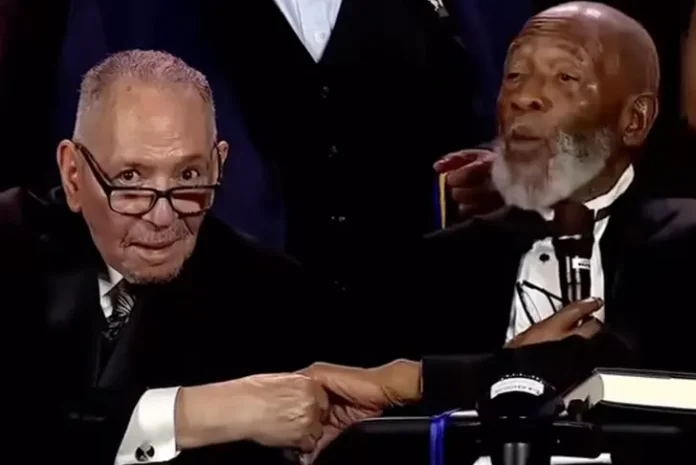
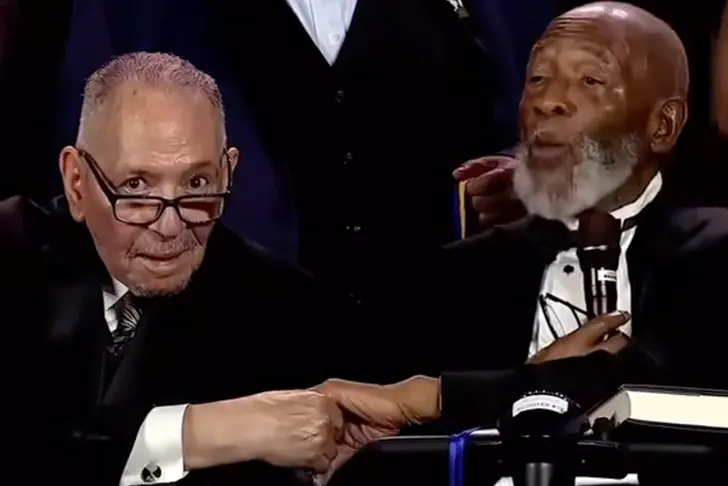
A celebration of the Rev. Jeremiah Wright (left, shown receiving an NAACP award from Rev. Amos C. Brown, Sr.) became something more intimate: a portrait of how one Black pastor’s ministry continues through generations of people he taught, mentored and cared for. Credit: Courtesy of NAACP
A celebration of the Rev. Jeremiah Wright (left, shown receiving an NAACP award from Rev. Amos C. Brown, Sr.) became something more intimate: a portrait of how one Black pastor’s ministry continues through generations of people he taught, mentored and cared for. Credit: Courtesy of NAACP
The Rev. Jeremiah A. Wright Jr. sat quietly as a screen full of his spiritual children told him what his life had meant to theirs.
There was laughter, teasing, testimony and, more than once, tears. Panelists leaned toward their cameras as memories returned. Some rocked in their seats. Others paused to steady their voices. Wright, approaching his 85th birthday, listened.
The Samuel DeWitt Proctor Conference gathered pastors, scholars, educators, an attorney and a consultant for a virtual “Critical Conversation: We Are the Legacy!” This was not a recitation of Wright’s résumé. It was a family conversation about the pastor, teacher, and mentor behind the public figure.
‘You Have Planted a Forest’
The Rev. Iva E. Carruthers, general secretary emerita of the conference, opened the celebration by placing Wright within the continuum of Black prophetic witness. She described him as a living libation whose ministry merged Christian faith, African tradition, and social action.
Carruthers recalled nearly 50 years of shared friendship, work, joy and pain.
“You have planted a forest,” Carruthers told Wright.
That forest filled the screen.
Attorney Natasha Robinson remembered joining Chicago’s Trinity United Church of Christ with her family in 1981. Wright led the church for 36 years until his retirement in early 2008. She was 7 when she joined, and misunderstood the Free South Africa sign outside the church. She thought joining Trinity might win her a free trip to South Africa.
Thank you.Rev. Jeremiah wright, Trinity United church of christ
The room erupted in laughter, but the misunderstanding opened into something deeper. Trinity became the place where Robinson learned who she was in God’s sight and in her own.
When schools miseducated Black children during the week, Robinson said, Trinity recalibrated them on weekends. Scholars, artists and activists introduced children to Africa, Black history, politics and faith.
Consultant Nakia Green saw the same theology embodied in Trinity’s structure. Before diversity, equity and inclusion became corporate language, she said, Wright placed women in executive leadership, created shared leadership between women and men and ensured that people with disabilities could participate.
‘One Final Act of Love’
Then the Rev. Neichelle Guidry, dean of Sisters Chapel at Spelman College, slowed the room down.
Guidry remembered being a young minister assisting Wright at a graveside service. They had been in many rooms together, but this was their first time alone. She was nervous. Wright sensed it and turned the committal service into a teaching moment.
He showed her how to take two roses from the arrangement resting on or near the casket. As the final words were spoken, the roses were placed across one another in the form of a cross.
It was, Guidry recalled, “one final act of love.”
The roses transformed the moment. Wright was teaching more than ritual. He was teaching presence — how a minister remains attentive to a family at the place where language begins to fail.
Guidry said she carries that lesson into her ministry with students at Spelman College. In an era when ministry is often measured by platforms, branding, and visibility, Wright modeled the ministry that matters when people need it most.
Afrocentric Scholar, Faithful Christian
The Rev. Devon Jerome Crawford, senior pastor of Third Baptist Church of San Francisco, first encountered Wright’s preaching as a Morehouse College student. He saw a prophetic giant who held biblical scholarship, Black history, pastoral care, Africa and America together without contradiction.
When Crawford later interned at Trinity, Wright listened to his questions and made him feel seen. Crawford learned that ministry’s power is found not only in what a preacher proclaims but in what that preacher pours into people.
Dr. Greg Carr, former chair of the Department of Afro-American Studies at Howard University, described Wright as a road map for being an African intellectual in the world — a preacher who refused to choose between African-centered scholarship and Christian faith.
The Rev. Bernard L. Richardson, dean of the Andrew Rankin Memorial Chapel at Howard University, focused on Wright’s authenticity and endurance. Ministers, he said, must learn how to keep standing when they are wounded or left alone. Wright modeled that discipline after excerpts from his sermons were used to turn him into a political controversy during Barack Obama’s 2008 presidential campaign.
The Rev. Jamar A. Boyd II, pastor of Kenwood United Church of Christ in Chicago, brought the conversation back to mentoring. After graduating from seminary during the pandemic, Boyd was uncertain about several ministry opportunities. He called Wright, and they talked for three hours.
‘What is God Telling You to Do?’
Boyd expected the elder preacher to give him an answer. Instead, Wright redirected him toward discernment: “What is God telling you to do?”
Years later, when Boyd was preparing to eulogize his predecessor at the Chicago church, he again went to Wright. They worked through three Scripture passages. Wright helped Boyd understand that the eulogy would also be his first defining sermon as Kenwood’s pastor.
Near the end, the Rev. Dr. Frederick D. Haynes III, pastor of Friendship-West Baptist Church in Dallas, who is running for a Texas congressional seat, joined from the campaign trail. He rejected any attempt to let cable news define Wright and spoke instead of the man who helped fill the void when Haynes’ father died during his adolescence.
When Wright finally spoke, he leaned into humor, joking about his unfamiliarity with public speaking. Then he turned toward gratitude.
“Thank you,” he said.
The words were brief, but the emotion in the room was not. Richardson closed in prayer, entrusting Wright, his family and their future to God.
The evening answered its own title. Wright’s legacy is not confined to recorded sermons, a famous congregation or a painful season in national politics. It lives in ministers who know how to stand at gravesides, mentors who make room for young leaders and Black people who refuse to separate faith from intellect, identity or justice.
The forest was on the screen. And it is still growing.
If you’re a parent, you are one of the first and most important sources of financial literacy education for your kids — whether you’re actively teaching them about money or simply letting them watch and learn from your habits.
According to a survey from the American Bankers Association Foundation, 38% of respondents mainly learned about money and finances from their families. Slightly more daunting? Seventy-two percent of them agreed they would be “better off” if they had learned personal finance basics earlier in life.
Financial education might sound daunting, especially if you wish your own learning had started sooner. But there’s good news: You don’t need to be an expert to teach your kids positive money skills, and you don’t need to have all the answers to start early.
Kids Learn Money Lessons at Home
Thirty states require high schoolers to take a personal finance class to graduate, but kids start developing deeply ingrained financial mindsets long before high school as they watch their parents manage money.
That’s why it’s important for parents to model positive financial habits. Children learn from observing their parents talk about and use money, and small moments can have a big impact.
In your household, is money a source of anxiety, or a tool for success? Which of those two outlooks do your children observe in daily life?
A healthy outlook on finances can build security, freedom, and peace of mind, while constant financial anxiety can have the opposite effect. Kids who learn positive financial habits from their parents are more likely to have a good relationship with money in adulthood.
Later in life, children who discussed money with their parents are more likely to:
· Set up a budget
· Have an emergency fund, more savings, and a retirement account
· Have a good credit score
Meanwhile, they’re less likely to spend their money as soon as they earn it, lie about their spending, expect others to buy them what they want, feel ashamed because they have less than others, and experience loan delinquency and home foreclosures.
Photo: milkos via 123RF
How to Talk to Kids About Money
If a child is old enough to ask for a new toy, they’re likely old enough to start learning basic financial skills. Parents might hesitate to broach the subject because they don’t want to pass on any anxiety, but proactive conversations don’t have to be stressful.
The American Bankers Association shares these examples of how to add little lessons about money into everyday activities:
Read together. Incorporate books into family reading time that include lessons about money (or that can spark conversations about financial responsibility).
On payday, talk with your kids about the types of bank accounts, what it looks like to budget a paycheck for essentials like housing, food, and clothing, and how you think about saving for goals and future expenses.
While shopping with your kids, explain the difference between “needs” and “wants.” Talk about the benefits of comparison shopping, coupons, sales, and store brands.
When you pay your electric or water bill, show your kids what you’re doing and discuss the different options adults have for paying bills (credit card, auto-withdrawal, etc.).
Explain how debit and credit cards work, and what you might use each card for. Next time you pay with a credit card, take a minute to explain the importance of building credit without going into debt.
Give kids the opportunity to practice what they learn. Let them earn their own money by doing household chores and receiving an allowance. Encourage them to save their money for something they want to buy.
When it comes to building positive financial habits, the apple doesn’t fall far from the tree. Parents who take some time to understand their own philosophies toward money will be in a better position to make a positive impact on their kids.