59.1 F
Seattle
Friday, April 3, 2026
Home Blog Page 3

Historic ‘People’s Wall’ In Seattle’s Central District Considered For Landmark Status

The People’s Wall reflects that legacy, combining national and local history through images and symbolism that capture the spirit of resistance, community and political activism of the time.

By Aaron Allen, The Seattle Medium

A mural known as “The People’s Wall,” a powerful visual tribute to the Black Panther Party and the broader Black liberation movement, is being considered for historic landmark designation by the City of Seattle’s Department of Neighborhoods Landmarks Preservation Board in Seattle.

Painted on a concrete retaining wall at the corner of 20th Avenue and Spruce Street in the Central District, the mural was completed on Oct. 6, 1970, by artist Dion Henderson. The site sits along the eastern edge of what was once the second official headquarters of the Seattle chapter of the Black Panther Party, which operated there from 1969 to 1971.

Founded in 1966, the Black Panther Party quickly became one of the most influential and controversial political organizations in the United States. The Seattle chapter, established in 1968, was the first branch outside of California and remained active for a decade, leaving a lasting impact on the Puget Sound region.

The Central District, once the heart of Seattle’s Black community, served as a hub for organizing, activism and community-based services during that era.

Locally, the organization played a significant role in shaping community services, including the establishment of the Pacific Northwest’s first free medical clinic. That clinic continues to operate today nearby as the Carolyn Downs Family Medical Center, the only remaining health care clinic out of 13 founded by the Black Panther Party nationwide.

The People’s Wall reflects that legacy, combining national and local history through images and symbolism that capture the spirit of resistance, community and political activism of the time.

The mural features portraits of prominent Black figures such as Angela Davis, Malcolm X and Black Panther Party co-founder Huey Newton, alongside imagery inspired by the Black Panther Party’s Minister of Culture, Emory Douglas. Scenes depicted on the wall reference major moments in the movement, including political trials and clashes with law enforcement, illustrating both the struggle and resilience that defined the era.

Beyond its national symbolism, the mural also carries deep local meaning. It includes the names of several Seattle chapter members who were considered “fallen,” memorializing individuals who died young under circumstances the Panthers viewed as tied to systemic inequality, including violence, illness and incarceration.

Among those remembered are Sydney Miller, for whom the Seattle Black Panther Party’s original free medical clinic was named, and Carolyn Downs, a key figure in the clinic’s early operations. The clinic was later renamed in her honor and continues to serve the community today.

Elmer Dixon, co-founder of the Seattle chapter of the Black Panther Party, said the mural represents both a specific moment in time and a broader movement.

Dixon recalled a time of heightened tension, when Black Panther Party offices across the country were under surveillance and attack.

“The wall was actually outside of our probably most notorious office,” Dixon said. “We moved in there in the fall of 1969, and we had it painted in 1970. The fall of ’69 was when Fred Hampton was murdered in Chicago, and shortly after, offices in other cities were attacked. Even then, we continued doing the work.”

Local artist Al Doggett, a friend of Henderson, described the mural as “reflecting the story of Black American struggles and injustices the Black Panther Party was fighting to overcome.”

Royal Alley-Barnes, a former director of the city’s Office of Arts and Culture and a nationally recognized artist, said preserving sites like The People’s Wall is essential to telling a more complete history.

“The nomination is absolutely timely because we really need to save our historic spaces,” Alley-Barnes said. “The wall itself, while it doesn’t have a huge physical presence, carries a presence of purpose, of time and opportunity. When we see those kinds of historic places, we are able to acknowledge and document more precisely our full history.”

“That space represents what used to be an African-centric Black community in Seattle,” Alley-Barnes said. “It represents the era of the Panthers and the work that was done there, including programs that helped save children’s lives.”

The Landmarks Preservation Board will consider the nomination of The People’s Wall, located at 1919 E Spruce St., during a meeting scheduled for April 15, 2026, at 3:30 p.m.

Members of the public may attend the meeting in person at the Boards and Commissions Room at Seattle City Hall, 600 Fourth Ave., or participate remotely using information provided in the meeting agenda, which will be posted on the Seattle Department of Neighborhoods website approximately one week in advance.

The public is invited to provide comment on the nomination. Individuals may sign up to speak for up to two minutes beginning two hours before the meeting start time. Written comments will also be accepted through April 14 at 3:30 p.m. via email at erin.doherty@seattle.gov or by mail to the Seattle Landmarks Preservation Board, Seattle Department of Neighborhoods, P.O. Box 94649, Seattle, WA 98124-4649.

A copy of the landmark nomination is available on the Seattle Department of Neighborhoods website.

The nomination comes at a time when conversations about historical preservation and representation continue to evolve, particularly as communities seek to recognize sites tied to civil rights and social justice movements.

For Dixon, the mural’s preservation is about more than history. It is about ensuring that future generations understand the struggles and contributions that shaped the community.

“It was a very significant moment in time when Dion Henderson painted the wall in 1970. And to have it nominated just goes further to preserve our legacy,” Dixon said. “That we were a group of freedom fighters standing up to fascism, and it’s important today that people realize that if we could stand up against Tricky Dick Nixon and J. Edgar Hoover and his henchman George Mitchell, that people today can stand up against the bullies and paper tigers in the White House.”

Washington Native Kyla Marks Crowned Miss Meharry, Uses Title To Promote Representation And Service

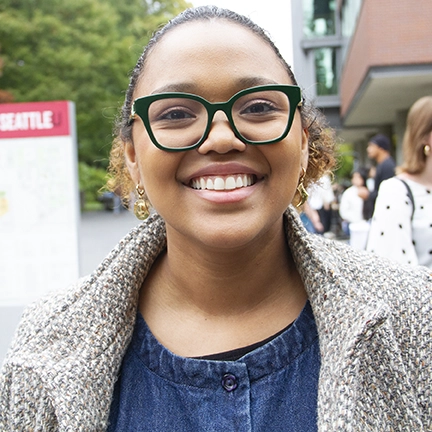
Kyla Marks

By Kiara Doyal, The Seattle Medium

Kyla Marks, a fourth-year dental student at Meharry Medical College in Nashville, Tennessee, was crowned Miss Meharry in April 2025, becoming the first student from Washington state to earn the title.

A graduate of Raisbeck Aviation High School in Tukwila, Marks said the recognition reflects more than just an achievement. For her, it represents growth, resilience and a willingness to step outside her comfort zone.

Moving from the Pacific Northwest to attend Meharry Medical College, where she is completing her Doctor of Dental Surgery degree, marked a significant leap of faith. The experience challenged her to leave behind what was familiar while pursuing her passion for serving communities and growing as a future dentist.

“Holding this title reminds me that sometimes the greatest opportunities come when you’re willing to take that leap,” said Marks. “Growing up in Washington state, I was often one of the only African Americans in my classes and many times the only Black girl. That experience taught me resilience, confidence and the importance of showing up authentically even when you feel different. It also shaped my passion for representation because I understand how powerful it can be for someone to see themselves reflected in leadership and in healthcare.”

Marks, who previously ran for Miss School of Dentistry during her sophomore year and did not win, said being crowned Miss Meharry in 2025 reminded her of the growth that can come from stepping outside of her comfort zone.

“Believe it or not, I struggle with social anxiety, so putting myself out there in such a visible role felt intimidating, especially after experiencing a loss,” said Marks. “Being crowned Miss Meharry was truly an honor. It means so much to me because it allows me to continue the legacy of strong leaders who have represented this institution with pride.”

During her time at MMC, Marks has been actively involved in initiatives that strengthen community ties, including collaborative service projects such as Oral Health Day, which provides free dental care to individuals across Nashville, Middle Tennessee and surrounding areas, helping reduce barriers to oral health care.

Serving underserved communities has been especially meaningful to Marks and has allowed her to build trust with patients who may have had negative experiences in the past.

“Oftentimes, [patients come in] and they have neglected their teeth because they had an encounter with a provider that was not the best, or maybe they did not have access to health care. So, I take the time to understand them and honestly sometimes they just need someone to talk to,” said Marks. “It’s amazing to see how a simple 5-10 min conversation can take a patient from being anxious, nervous and scared to someone who is calm, relaxed and hopeful for what is to come.”

“By the time we are finished completing their treatment, patients are hugging me and saying this is the first time I have had a positive experience at the dentist in years,” Marks continued. “I think that’s the most rewarding part because I am just starting my dental career, and to have that much of an impact right now truly makes it all worth it.”

Marks’ approach to patient care has also left a strong impression on those who know her best.

“I was her first patient as a dental student, and I think that is when it really clicked with me on how much [she cares for others],” said her mother, Trinity Chandler. “She is the gentlest dentist I have been to, and I am not just saying that because I am her mother, and now whenever people compliment her she tells them that she just treats every patient like she would care for her mother.”

“I learned that she creates different playlists for her patients, which I haven’t ever seen before,” Chandler added. “I think that she is certainly doing what she’s called to do, and now she is a doctor at 25, so we are very proud parents on so many levels.”

In addition to her clinical work, Marks created the “White Coat Experience,” an initiative designed to inspire young students to pursue careers in health care. The program allows students to try on a white coat and take photos, helping them envision themselves in professional roles.

The idea stems from a moment nearly a decade ago, when Marks attended a college fair at the University of Washington and was invited to take a photo wearing a white coat and a stethoscope.

“At the time, I didn’t think much of it, but my parents kept that photo on our refrigerator. I packed that photo with me when I left for college, and although it stayed tucked away for several years, it symbolized something bigger,” said Marks. “Throughout my undergraduate journey, I explored several career paths, including pre-med, pre-PA and eventually pre-dental, but that photo continued to represent the idea of not giving up on the dream of one day earning my own white coat.”

Giving back and helping others has always been a core value in Marks’ family. As she approaches her graduation in May, Chandler hopes her daughter will continue serving others and stay true to her sense of purpose.

“I want to see her living in her purpose with whatever she is called to do, and which for her is to give back and serve others, and I think she has done that for eight years straight with literally no break,” said Chandler. “She really wants to give back to those who gave to her. Giving is just a big part of our family. In 2020, we started our own family scholarship, and we give two different scholarships for students who are pursuing education.”

Marks credits her family, especially her mother, for shaping her path and supporting her along the way.

“My family [and friends] have played a tremendous role in my success, and I credit so much of who I am today to my mother. For a long time growing up, she was a single parent. Despite that, she always made sure I stayed active and engaged, whether it was sports, summer camps or after-school programs. Her unwavering support made me believe that I was capable of becoming anything I wanted to be,” said Marks. “My stepdad came into my life when I was in middle school. I always joke that he’s the more relaxed parent, but he’s also the one who will push me when he thinks I’m capable of more. Without both of them, I would not be the woman I am today.”

“My grandmother also played a huge role in my life and is one of the main reasons I ultimately chose dentistry. No matter how tired, stressed or overwhelmed I felt because of an upcoming exam, she always managed to ground me. She was truly a prayer warrior,” Marks continued. “Before her passing, I had gone through several career changes. But after losing her, I had what I like to call my ‘coming to Jesus moment.’ I realized that the pre-med and pre-PA paths were not truly for me.”

Marks said being part of Meharry Medical College’s legacy continues to inspire her as she prepares to enter the field.

“It is also meaningful to recognize the role that Meharry plays in addressing disparities in health care representation. Today, approximately 3.8% of dentists in the United States are African American, and nearly 40% of those dentists were trained at Meharry,” said Marks. “Being part of that mission and knowing that I will soon contribute to those numbers is something that I am very proud of.”

“Equally rewarding has been the relationships I’ve built along the way. The people I met here started out as classmates, but over time they’ve truly become family,” added Marks.

Bellevue College Names Alumna Michelle Flowers-Taylor To Board of Trustees

Dr. Michelle Flowers-Taylor

Bellevue College has appointed Dr. Michelle Flowers-Taylor to its board of trustees, bringing an accomplished media executive, educator and alumna into a leadership role that reflects both professional experience and a deep personal connection to the institution.

For Dr. Flowers-Taylor, returning to Bellevue College as a member of its board of trustees marks a full-circle moment decades in the making.

Appointed by Gov. Bob Ferguson, Flowers-Taylor officially joined the board in March 2026, offering a perspective shaped not only by her career, but by her own journey as a student at the college.

“My desire to serve on the Bellevue College Board of Trustees stems from a deep sense of gratitude and a profound commitment to paying forward the transformative experience I had as a student,” Flowers-Taylor said. “As a proud alumna, I am not just an observer of the college’s mission; I am a living testament to it.”

Flowers-Taylor attended the college in the early 1990s, when it was known as Bellevue Community College, after deciding against attending a larger university.

“When I graduated from Mercer Island High School in 1988, I was accepted to the University of Washington,” she said. “However, I visited and felt overwhelmed by the campus size and the classrooms.”
Encouraged by her father to consider a different path, she visited Bellevue Community College and immediately felt at home. That experience gave her the confidence to navigate college life and helped shape her future. She later described the college as “the crucible” where her professional identity was formed.

That foundation led to a career spanning business, media and social impact. Flowers-Taylor now serves as chief media and communications officer at LegacyFirst, a firm focused on transforming underutilized commercial real estate in gateway cities.

Flowers-Taylor is also a filmmaker whose work centers on social justice and community storytelling. Her documentary Reimagining Freedom West, narrated by Danny Glover, received recognition at the UN Habitat Better Cities Film Festival. She also serves as a consulting producer on Sign My Name to Freedom, a documentary about Betty Reid Soskin, expected to be released in 2027.

Her leadership experience includes serving as interim CEO of Base 11, a nonprofit focused on expanding STEM opportunities for women and students of color. During her time at the USC Viterbi School of Engineering, she helped develop partnerships with organizations such as Google and NASA’s Jet Propulsion Laboratory.

The appointment comes at a time when colleges across the region are working to expand access, strengthen workforce pathways and deepen connections with the communities they serve. Trustees play a critical role in shaping those priorities, particularly as institutions respond to changing student needs and economic conditions.

Stepping into the role, Flowers-Taylor said her focus is on strengthening Bellevue College’s connection to the community and expanding opportunities for students.

“Bellevue College exists in a dynamic relationship with the community it serves, and I am passionate about strengthening that bond,” she said. “I aim to serve as a bridge, using my voice as a trustee to deepen these connections.”

She said her goal is to ensure students have access to the same opportunities that shaped her own journey.

“I understand the student experience at a granular level because I have lived it,” she said. “My goal as a trustee is to ensure that every student who walks through our doors has access to the same high-quality instruction, mentorship, and opportunities that empowered me.”

Flowers-Taylor holds a doctorate in educational leadership for social justice from Loyola Marymount University and degrees from the University of Washington and Bellevue College. Her term runs through September 2028.

Vernon AME Church Absorbed the Terror of the Tulsa Race Massacre. Now It Will ‘Teach Truth.’

Kristi Williams speaks during The Vernon Witness interpretive center groundbreaking at Vernon AME.

By Shaunicy Muhammad, The Oklahoma Eagle

More than a century after the 1921 Tulsa Race Massacre, members of Greenwood’s Vernon AME Church are determined to tell their own stories.

Archivists, archeologists and elected officials lined the pews of the church Thursday for the unveiling of The Vernon Witness, a multi-year project to preserve the church’s basement and turn it into a museum and cultural center.

Survivors found refuge by hiding in the basement as the upper floors of the church were destroyed. 

Church officials say Vernon is the last remaining Black-owned structure still standing in the area after it was rebuilt in 1925.

“Vernon absorbed the trauma, the terror, the smoke and the fear and stood as a witness. Now, the church that absorbed trauma will teach truth,” Kristi Williams, a member and massacre descendant, said Thursday. 

Williams, who founded community education program Black History Saturdays, spearheaded the preservation initiative. She sees the space as “not just history but inheritance.” 

The initial phase of the preservation project is expected to take about 18 months. It is made possible, in part, due to $1.5 million in funding from The Mellon Foundation. 

Alicia Odewale, a Tulsa native and one of the archeologists working on the project, said at its completion, visitors will see over 5,000 artifacts from the church and Greenwood.

“Everything our ancestors left behind to tell that story will be restored,” Odewale continued.

Odewale was teaching college courses in Texas when she first got the call from Williams to work on the project. She told The Eagle she believes it was God’s divine timing to bring her back home to join the team.

She sees the preservation of the church as a call “to bring our artifacts home and bring our people home.” Odewale and others on the team of preservationists said one of their primary concerns is ensuring artifacts are properly preserved — something they say has not always happened in the past.

“I was angry about how some artifacts were, frankly, thrown away,” Odewale told The Eagle following the ceremony. “It’s crazy how our history keeps being literally thrown away because we don’t have a place to store our artifacts, we don’t have a place to display them and keep them from being thrown away. These are the things that our ancestors left behind for us.”

The museum space will also illustrate the church’s founding, highlight members of the congregation and tell the story of how they rebuilt.

Williams envisions an exhibit where visitors will hear some of the sounds people heard during the massacre as they hid from the violence. “I want people to really feel it,” she said. 

Ultimately, Williams wants Tulsans young and old to embrace where they come from.

“Our history is being taken from us. It’s being deleted as we speak,” Williams said. “Knowing your history, there’s a power in that. It helps with identity and knowing who you are.”

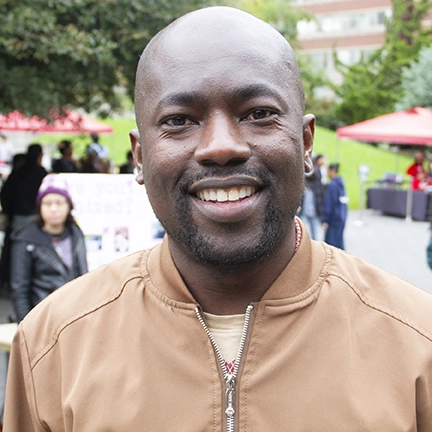
What Are Your Thoughts About The Potential Return Of The NBA To Seattle?

Najmo:
“I think if they were a good team and were scoring a lot, then maybe it would be good for us to have them return to Seattle. But I honestly have no opinion. I’m not somebody who’s really into sports like that.”
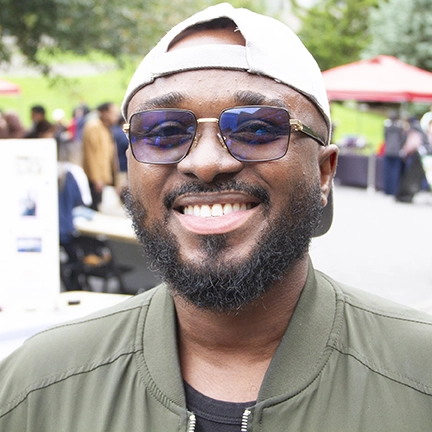
Sha’Niya:
“I feel like it would be good for them to have a different team, so to speak. I feel like this would kind of help open doors for other people in the community as well, to kind of be more involved. This might be bad to say, but, you know, predominantly Black people are in the sport of basketball, so this might be a good way for us all to come together in a way.”
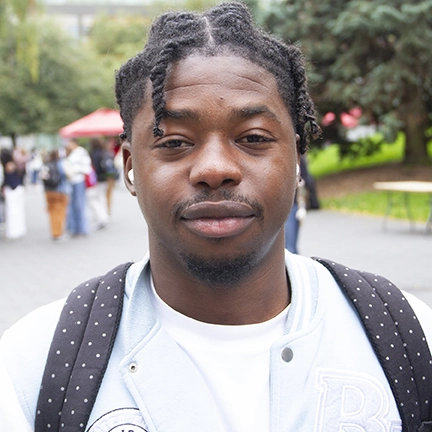
Prince:
“I think it’s a great thing for the city because a lot of basketball fans here in Seattle would be happy to attend the matches and spend time there. And also, it creates a lot of employment.”
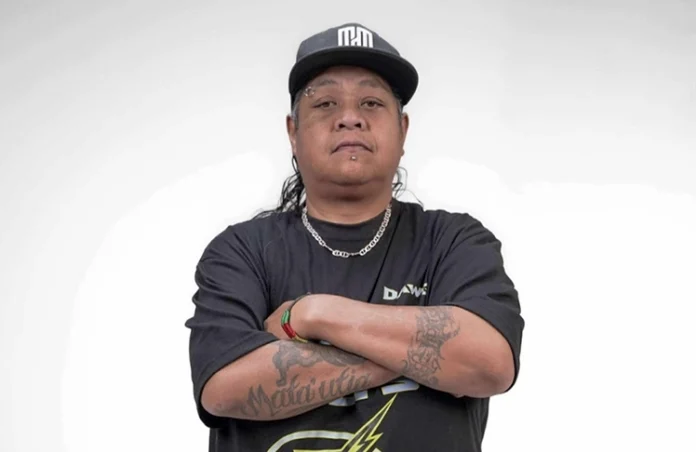
Kenny:
“We need the Sonics back. It’s a shame that they left in the first place, but I think everything’s set up for them to come back. So now we’re just waiting on the league to do the final go-ahead. We already have climate pledge arena ready to go, and with the Mariners’ season last year, and then also the Super Bowl win, we’re all set in terms of that sports culture here. It’s been almost 20 years. We have a big basketball culture, with Rainier Beach High School, especially, and O’Dea, and those schools have really talented people. So I’m just excited for when they do come back. I know those lines are going to be long. I know the light rail is always going to be packed, but I rather have that then not have the Sonics here. But I think it’ll really help put Seattle on the map even more now.”
Jennifer:
“I feel like having an NBA team in Seattle again would bring back a good amount of energy that we need. I feel like we need something more than football. I feel like we have so much pride, and it would bring so much joy to Seattle.”
Gabriella:
“The Sonics are a big part of the culture of Seattle. I’ve grown up here my whole life, so I have heard about it. It is like a Seattle legend. To have them back would be a big deal for the basketball culture and the people here.”

Here’s Who Is Getting Paid At DHS And Who Isn’t

A FEMA employee works at the National Response Coordination Center at the headquarters for the Federal Emergency Management Agency in Washington, DC, in January. (Olivier Douliery/Abaca/Sipa USA/AP/File via CNN Newsource)

By Tami Luhby, CNN

(CNN) — Tens of thousands more Department of Homeland Security workers are now being paid during the record partial government shutdown after President Donald Trump ordered the agency to send Transportation Security Administration employees their back pay.

But tens of thousands of other DHS staffers — including Federal Emergency Management Agency workers, civilians in the US Coast Guard, and Cybersecurity and Infrastructure Security Agency employees — are still reporting for work without being compensated.

Nearly 92% of DHS’ 272,000 employees are continuing to work during the shutdown, which began February 14 after Congress failed to fund the agency for the remainder of the fiscal year. There’s no end in sight to the impasse. Lawmakers are on a roughly two-week break for Easter and Passover, after the Senate and House passed conflicting funding bills late last week.

Many of those DHS employees are being paid during the lapse, though the precise number is unclear. CNN has reached out to the agency for more details.

DHS is using money from last summer’s “big, beautiful bill” to continue compensating certain employees — particularly those involved in immigration enforcement, one of Trump’s top priorities.

The department received a $165 billion infusion from the sweeping GOP domestic policy agenda package, which funneled $75 billion to Immigration and Customs Enforcement alone and $64 billion to Customs and Border Protection.

Paychecks for sworn law enforcement officers in ICE, CBP and the Secret Service, as well as for Coast Guard military personnel, are being funded by the “big, beautiful bill,” according to a senior administration official.

Other positions that work on the Trump administration’s immigration enforcement and border security priorities, such as technology specialists and attorneys, are also being paid through the president’s domestic policy package, the official said.

Former DHS Secretary Kristi Noem said last fall that 70,000 law enforcement personnel, including in CBP, ICE and other divisions, would receive their paychecks during the last shutdown thanks to funds from the “big, beautiful bill.”

On Monday, money started flowing into the bank accounts of the roughly 61,000 TSA employees who have missed two full paychecks and one partial paycheck during the shutdown. DHS is likely drawing on a $10 billion pot of funds it received from the “big, beautiful bill,” experts told CNN.

The agency is still working on sending the TSA workers the balance of their pay from the partial check they received in late February, DHS said in a statement Monday. Workers, however, are waiting to hear whether they’ll receive their next paycheck in two weeks, as scheduled.

The American Federation of Government Employees, which represents many DHS staffers, is calling attention to the fact that Trump’s directive did not cover all of the agency’s workers.

“Though TSA officers will be paid, FEMA workers, Coast Guard, CISA, and other DHS employees are waiting on their back pay,” Everett Kelley, AFGE’s national president, said in a statement Saturday. “No check. No relief. No apology as Congress packed their bags and left these American families to struggle alone.”

DHS spokesperson Lauren Bis said the “shutdown is impacting the DHS employees working tirelessly to protect the Homeland during the Word Cup and Freedom 250 celebration,” blaming Democrats for the lack of a funding deal.

Democrats say the impasse now stems from House and Senate Republicans being unable to agree amongst themselves.

This article has been updated with additional information.

The-CNN-Wire
™ & © 2026 Cable News Network, Inc., a Warner Bros. Discovery Company. All rights reserved.

New Superintendent Ben Shuldiner Looks To Reshape Seattle Schools’ Budget Priorities Amid Deficit

Ben Shuldiner

By Aaron Allen, The Seattle Medium

Seattle Public Schools is navigating a financial and staffing overhaul under new Superintendent Ben Shuldiner, who began his tenure Feb. 2, as district leaders weigh difficult decisions about resource allocation while working to prioritize student needs and rebuild public trust.

While the district has managed to keep schools open for the 2025-26 academic year, officials acknowledge that the financial outlook remains uncertain. Enrollment has declined from more than 52,000 students in 2020 to about 49,000 today, creating funding challenges under a state model that does not align with the district’s current structure.

According to Beverly Redmond, chief of staff to Superintendent Ben Shuldiner, district leadership is focused on addressing the budget deficit, supporting students and rebuilding trust in the community.

“[Superintendent Shuldiner’s] priorities are visiting schools and being present to listen to students, families and educators, re-establishing community trust, ensuring academic rigor, answering our structural deficit and reorganizing central office in a way that is best to serve students,” Redmond said. “Our goal is to be the best urban school district in America. Looking at our current data, Seattle Public Schools is doing well overall and is a strong district and a leader in the state. Where we continue to have work to do is with students experiencing poverty and systemic barriers connected to race.”

One of the central challenges facing the district is how to manage resources across a system with many small schools. The state funding model is based on an elementary school size of about 400 students, while Seattle has nearly 30 schools with fewer than 300 students. That gap makes it more expensive to maintain staffing and programming at current levels.

A proposal last year to close up to 21 elementary schools sparked widespread community backlash and was ultimately withdrawn. While no closures are planned for the 2025-26 school year, the district is still facing a projected $100 million shortfall.

Superintendent Ben Shuldiner said addressing that deficit will require a combination of cost reductions and strategic reallocation of resources.

“It’s both. We’re $100 million in deficit. We have to be thoughtful and critical about that, and we have to make sure that if we are going to reduce costs, we’re going to do that with as little effect on schools as possible,” Shuldiner said. “That’s not possible, but less effect in the schools and more effect in central office and then being thoughtful about taking the resources that are at central office and pushing them into schools.”

District leaders say one of the key strategies moving forward is shifting funding and staff from central office roles into school-based positions, with the goal of increasing direct support for students.

“The most important thing for a superintendent and a school district is to make sure that the most amount of money can be in schools,” Shuldiner said. “We want to make sure that our people are in schools, our staff are in schools, and the money is in schools. We are a school district in service of children, and I always want to make sure that we’re putting our students first.”

Redmond said the district is reviewing how central office functions are organized and whether those roles are effectively supporting schools.

“What the superintendent has asked us to do at this time is look carefully at how central office work is organized and whether it is truly serving schools as effectively as it should,” Redmond said. “We need to be present in schools in a greater way so our work is grounded in what students and educators experience every day. That includes looking for inefficiencies and considering whether some staff are better based in schools rather than downtown.”

As part of that shift, some central office staff and remote employees may be reassigned to work more directly in schools, where district leaders believe their impact will be greater.

“There’s twofold. One is certainly reducing the number of folks in central office because for every $1 saved in central office, first that has to make up the deficit. But then if we have extra money, all of it would go to the schools,” Shuldiner said. “The second, is to think critically about people that work in central office. Let’s say it’s a coach, let’s say it’s a curriculum manager. Let’s say it’s somebody that’s working with teachers or working with students rather than have them in a central office, we want them to be in schools. We want them there day to day. To be spending more and more time with students really moving them towards success.”

Redmond agreed with the district’s assessment for change and the importance of being more present in schools.

“We recognize this is a significant change. Different moments have called for different ways of working, and each has supported our district in important ways. At this time, working in-person offers the greatly needed opportunity to collaborate across departments, levels and buildings. We are also committed to being more present in schools. With nearly 50,000 students learning in schools each day, we must remain connected to their experiences,” Redmond said.

In addition to financial challenges, district leaders said improving outcomes for historically underserved students remains a top priority.

“Superintendent Shuldiner has reviewed our data and believes we have significant work ahead to ensure every student, including Black students, especially Black boys, is appropriately challenged, supported and prepared for success beyond Seattle Public Schools,” Redmond said.

Shuldiner acknowledged that the district has not consistently met the needs of all student groups.

“The first thing that I want to be very direct about is our student success needs to get better, and particularly we have populations that Seattle Public Schools has not served, and one of those populations is students of color,” Shuldiner said. “There is no question that when you look at our success criteria by any way you look at it, be it graduation, be it proficiency rates, be it attendance rates, we are not serving our Black students, particularly Black boys or all of our students of color well. We also are not serving our ELL students, so English language learners, we have to do a better job with our students.”

Looking ahead, the district’s long-term financial stability may depend on decisions made at the state level. The 2026 legislative session in Olympia is expected to play a key role in determining whether additional funding becomes available or if more difficult decisions, including potential school closures, return to the table.

What $4-A-Gallon Gasoline Means For You And The Economy

Gas prices are seen at a gas station on Capitol Hill, amid the U.S.-Israeli war with Iran, in Washington, DC, on March 19. (Nathan Howard/Reuters via CNN Newsource)

By Alicia Wallace, CNN

(CNN) — The national average price for a gallon of regular unleaded gasoline has topped $4 for the first time since 2022.

That price level is relative: A $4 gallon of gas would be welcome in California, Washington state or Hawaii, where the state averages run north of $5 per gallon; while residents of others states where the cost of living is lower are paying under $3.50 a gallon at the pump.

Regardless of the locale, no one’s really a fan of sharply rising gas prices.

Still, the $4 national average serves as a notable threshold – one that carries psychological, mathematical and mechanical implications for the US economy.

“This is worrisome, especially for those who have the least ability to weather the storm,” said Diane Swonk, chief economist at KPMG.

The math behind the estimates

Before diving in to the economic effects of $4-per-gallon gas, it’s important to show one’s work.

Joe Brusuelas, chief economist at RSM US, laid out some of the building blocks of the gas price quantification:

Every $10 increase in the barrel of oil…

  • Creates a 0.1 percentage point drag on real GDP growth (the broadest measure of economic activity)
  • Increases inflation by 0.2 percentage points
  • Raises prices at the pump by 24 cents
  • Causes a $450 annual hit to household income through related costs like gas, heating and utilities
  • Leads to higher costs for transportation and food

Oil prices have risen by more than $30 a barrel since the war.

A gallon of regular unleaded gasoline averaged $2.98 before the war started.

Economic activity

A $30 increase in oil prices equates to about a 0.3 percentage point knock on real GDP growth (which was 0.7% at the end of last year). While that’s not very big, it tends to add up over time, Brusuelas said.

It’s not easy to topple a $30 trillion economy – a “dynamic and resilient beast,” Brusuelas said.

“However, even a $30 trillion beast has its pain points,” he added.

And the point where things could start getting dodgy isn’t too far away.

When oil prices go above $125 (and gas prices top $4.25 per gallon, and inflation goes above 4%), that’s when conversations grow louder about “demand destruction,” Brusuelas said. In other words, prices get so high that people change behaviors and don’t buy as much.

And some consumers already are changing their behaviors, taking fewer trips if they can and shifting or cutting out spending, said Swonk.

A drop-off in demand can lead to falling prices; however, the supply of oil has been constrained by disruption and destruction, he said.

Inflation

In trading Monday WTI, the US oil benchmark, settled at $102.88, closing above $100 per barrel for the first time since 2022. Oil futures are up $35 from their pre-war levels, which should roughly equate to a 84-cent gas price hike. However, average prices at the pump were up more than $1 a gallon.

“So, what that tells us, is the risks on inflation are a little bit higher,” Brusuelas said.

US prices were increasing at an annual rate of 2.4% in February, before the war started, according to the latest Consumer Price Index data.

That could easily jump to 3.5% when the March data is released next Friday, and the April rate could top 4%, Brusuelas said.

That 1.1 percentage point estimated jump from February seems to blow past the $10 increase = 0.2 percentage point rise; however, it’s also reflective of the sweeping energy-related price increases (such as in diesel and jet fuel) as well as other war-impacted inputs, such as fertilizer.

Those “second- and third-order” effects will be passed along to American households in the months to come – even if the war were to end soon, he said.

“The American public is going to bear the burden of adjustment of this,” Brusuelas noted, adding, “something that’s going on now will still be impacting them come December.”

The economic environment and the Fed

History can sometimes prove helpful when evaluating potential economic impacts of rising gas prices; however, this economy is a different animal than it was even four years ago.

“Back in 2022, the unemployment rate was plummeting, we were generating hundreds of thousands of jobs a month, and a majority of Americans were believing we were in a recession,” said Swonk.

“Now, we’re on the other side of that where we’re generating hardly any jobs in a month – though you don’t need to generate many jobs to hold the unemployment rate steady – but it’s a higher unemployment rate than it was back then.”

Pay gains have slowed, as have opportunities in the labor market. Plus, five years of high inflation have compounded, straining many households in the process. Rising debt levels are increasingly becoming unwieldy, particularly for lower-incomes Americans.

“The level of prices is already too high for too many,” Swonk said.

There are fears that the Federal Reserve could face a “stagflationary-esque” environment (economic downturn coupled with high inflation); however, interest rate shifts can only do so much, she added.

“Uncertainty has just been unprecedently high for a very long time, and that is its own tax on the economy,” she said. “I don’t know how you eliminate uncertainty, unless there’s an abrupt end to the war in the Middle East. Interest rates alone can’t stimulate demand for workers.”

The-CNN-Wire
™ & © 2026 Cable News Network, Inc., a Warner Bros. Discovery Company. All rights reserved.

Merit-based Promotions Should Also Be About Fairness

By David W. Marshall

(Trice Edney Wire) – The fight for fairness will never be easy. Fairness is the quality of making impartial, just, and equitable decisions, free from bias, discrimination, or dishonesty. It involves providing equal opportunities and adhering to fair rules, often balancing individual circumstances to ensure just outcomes. It means making decisions by being open-minded and objective. When people say they are anti-DEI, they are telling us they do not believe in fairness. They are exposing themselves as individuals who do not believe everyone deserves an equal opportunity to succeed.

They are revealing the degree to which they are willing to accept dishonest tactics that are developed to hold back women and people of color. The anti-DEI initiative has proven to be an effective offense ploy waged in the culture war against the Black community. Secretary of Defense Pete Hegseth, who serves as the principal defense policy advisor to the President, knows he sits in a perfect position to dismantle all racial fairness throughout the military ranks. Before his appointment by the Trump administration, Hegseth wrote books critical of the U.S. military as “woke” while suggesting that diversity throughout the ranks had weakened the force.

Having such a person, lacking character and integrity, in a high-ranking position of power is dangerous. As a result of the policy influence given to Hegseth and others like him, the culture war has become a war without end. It is an everlasting conflict meant to reshape societal norms in ways that will negatively impact the careers of future service men and women. Hegseth has said repeatedly that he is determined to change a culture corrupted by “foolish,” “reckless,” and “woke” leaders from previous administrations. We are constantly told that the Department of Defense, sometimes referred to as the Department of War, is now controlled by meritocracy. While meritocracy is a system in which power and positions are assigned based on individual ability, talent, and achievement rather than social background, wealth, or nepotism, it still requires a fair promotion system. Meritocracy, in the true sense, still means that everyone has an equal chance to succeed regardless of background, race, and gender. Today, about 43% of the 1.3 million troops on active duty are people of color. But those leading the military are overwhelmingly white and male.

The New York Times reported that Defense Secretary Hegseth blocked the promotion of two Black men and two female Army officers who were on track to become one-star generals. According to the Times article, Hegseth pressed senior Army leaders, including Army Secretary Daniel Driscoll, to remove the four names from the list of about three dozen officers, most of whom are white men. Driscoll refused, citing the officers’ decades-long records of exemplary service. It is customary that after a service board approves a list of colonels to be promoted to general, the defense secretary is not supposed to intervene, military officials say. Despite standard procedures, Hegseth removed the four names from the list and announced that President Trump had approved his new list of 29 Army colonels for promotion.

“If these reports are accurate, Secretary Hegseth’s decision to remove four decorated officers from a promotion list after having been selected by their peers for their merit and performance is not only outrageous, it would be illegal,” Sen. Jack Reed said in a statement. What message does this send to the public about the military’s ability to remain apolitical and free from society’s cultural wars? What message does this send to minorities and women currently in the military who have hopes of moving up the career ladder based on merit? And will there ever be another Gen. Colin Powell or Gen. Charles Q. Brown? Both were Black officers appointed as chairman of the Joint Chiefs of Staff, the highest-ranking military officer in the U.S. Armed Forces. Gen. Brown was abruptly fired from that role by Hegseth without explanation.

Brown Jr. is an example of Black excellence. He is now a retired U.S. Air Force general who served as the 21st chairman of the Joint Chiefs of Staff and, prior to that appointment, served as the 22nd chief of staff of the Air Force. Like so many other Black service men and women, Brown came from a proud military family. His father, Charles Sr., served for 30 years in the Army, rising to the rank of colonel. His paternal grandfather, Robert E. Brown, was drafted into the U.S. Army during World War II and served in the Pacific Theater, including Hawaii and Saipan. For many Black households, the military was not just a job but a family tradition handed down from one generation to the next. It also served as a pathway to Black prosperity and the middle class.

When Hegseth denied four officers their rightful promotion, it was a painful and personal reminder to the two Black men and two women that discrimination within ranks and the Pentagon is still alive. It also serves as an unwelcome message to young Blacks from JROTC students to college graduates who believed the military glass ceiling was already broken. It is clear with this current administration that promotion to the highest ranks will never be about merit or fairness. It’s all about white males.

David W. Marshall is the founder of the faith-based organization TRB: The Reconciled Body and the author of the book God Bless Our Divided America.