46 F
Seattle
Friday, December 5, 2025
Home Blog Page 6

Nancy Pelosi’s Leadership: A Legacy of Advocacy for Vulnerable Communities

by Marc Morial

(Trice Edney Wire) – “When I left home to run for Congress, I had to know why I was doing that. My why was one in five children in America lives in poverty, goes to sleep hungry at night. That was my why.” – Nancy Pelosi

If the measure of public service is how deeply one fights for the most vulnerable among us, then Nancy Patricia Pelosi stands among the most consequential leaders of our era. From her early days in elective office to becoming the first woman Speaker of the House she carried the hopes of working families, children, communities of color, and low-income Americans into the halls of power. She carried them into those halls not as tokens but as rightful partners in shaping America’s future.

Her record of legislation is impressive, but what makes her stand out is her willingness to navigate hard moments. When the financial crisis struck in 2008, she led a divided House to approve the rescue package that helped stabilize the economy and protect jobs and incomes in neighborhoods long underserved. When health care reform seemed stalled she marshaled her caucus to pass what became the Affordable Care Act, extending coverage to tens of millions of Americans and laying the foundation for better economic and health outcomes in communities that too often lacked both.

But beyond those landmark laws her leadership in defending democracy was equally unyielding. When the right to vote and fair representation came under threat, she refused to accept that silence or delay was an option. She guided her caucus to take on efforts to restore protections for voting rights and ensure that barriers to the ballot were resisted. She said publicly that our democracy is strongest when every voice is heard and every vote is counted. She traveled to schools and colleges and urged young people to exercise their civic power and to believe fully in the promise of equality.

In the realm of diversity, her impact was equally clear. Under her leadership the Democratic Caucus in the House grew substantially more reflective of America’s rich mosaic. She remarked with pride that her caucus was “about seventy percent women, people of color, LGBTQ.” She helped ensure that women and people of color gained not only seats but leadership roles, shifting the composition of leadership from a narrow group into a broader reflection of the nation. This was not about optics. It was about making sure the people who have bore the burdens of inequality are included in designing the solutions.

What makes Pelosi’s legacy powerful for the National Urban League is that she fused all three pillars we champion: democracy, diversity, and economic opportunity. She treated the fight against poverty not as separate from the fight for justice and equality. She treated access to health care, wages that lifted families, education that opened doors, and representation that broadened power as interconnected pieces of the same mission.

As she steps away from Congress she leaves us with a living blueprint. Democracy is not self‐executing. Inclusion is not automatic. Opportunity is not guaranteed. It requires leadership that refuses to stand down, that believes every child deserves a fair start, and that lifts up people and communities often unseen.

Nancy Pelosi’s service reminds us that leadership is judged not by the offices held but by the lives improved. She looked at the long lines of children hungry for opportunity and chose to act. For the National Urban League, legacy is a call to carry on. To defend voting rights, to broaden participation, to open doors of access and to sustain inclusive democracy that works for every American.
Seattle’s New Mayor Gains National Attention As House Passes Resolution Condemning Socialism 

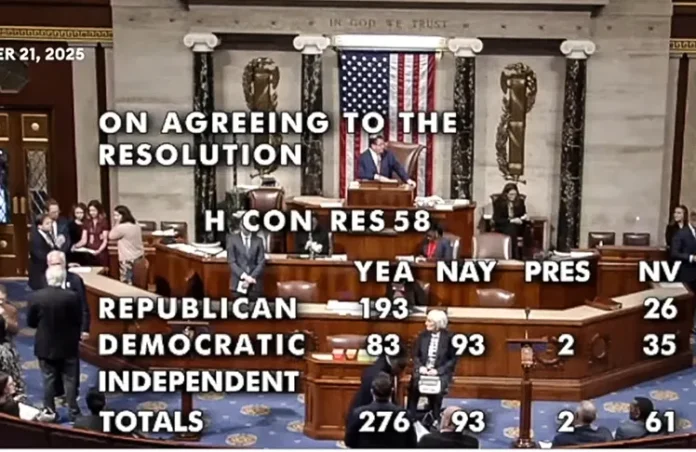
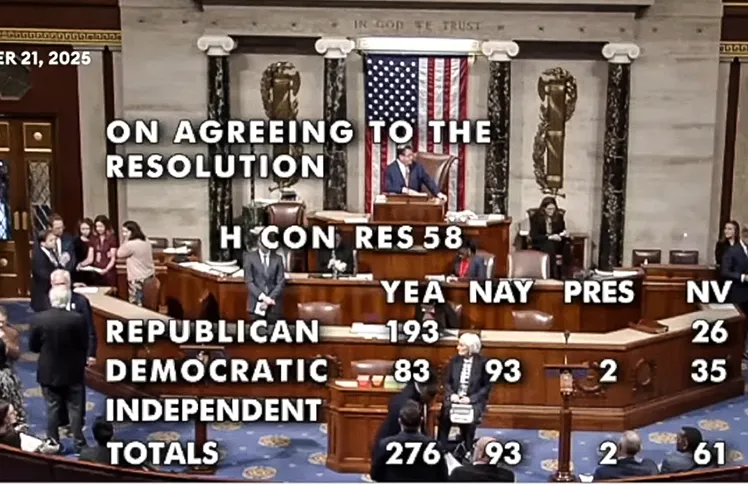
The U.S. House of Representatives approved a Republican-led resolution on Friday morning that condemns the “horrors of socialism.” This vote occurred just hours before President Donald Trump was set to meet with New York’s incoming democratic socialist mayor, Zohran Mamdani. Seattle’s mayor-elect Katie Wilson also identifies as a democratic socialist. Earlier this week, Trump described Wilson as “more than socialist,” labeling her “very, very liberal-slash-communist.” 

House GOP leaders, including Speaker Mike Johnson, have been vocal critics of Mamdani, who is poised to take the helm of the nation’s largest city. They argue that Mamdani’s political stance signifies a shift towards a “radical” direction for the national Democratic Party, intending to spotlight him in their campaign strategies leading into the 2026 midterm elections.

Democratic members of Congress have dismissed these criticisms, claiming the resolution is misleading and overly generalized. They asserted that it “selectively lists certain despotic leaders and the harms of totalitarian regimes self-labeled as ‘socialist,’” though they refrained from formally urging their members to oppose it. Some moderate Democrats, particularly from New York, have expressed concerns regarding Mamdani’s rising influence within the party.

Tensions flared briefly during the debate when Florida Republican Rep. Maria Salazar accused California Democrat Rep. Maxine Waters of being a “friend” of Fidel Castro, referencing her past travels to Cuba and claiming she had firsthand knowledge of the regime’s abuses. Waters objected and requested that Salazar’s comments be removed from the record. Ultimately, Salazar withdrew her remarks, allowing the discussion to continue before the vote.

The resolution passed with a vote tally of 285-98, reflecting a blend of election-year politics and significant divisions within the Democratic caucus. Notably, 86 Democrats joined Republicans in supporting the measure, while two others voted “present.” No Republicans opposed it, with Democrats like Rep. Marie Gluesenkamp Perez and Rep. Marilyn Strickland from Washington state among those who voted in favor.

How Much Is Too Much Alcohol Over The Holidays? A Doctor Explains

By Katia Hetter, CNN

(CNN) — The holidays are here, as are the parties, happy hours and other get-togethers that often offer abundant mixed drinks, beer and wine.

We all know that too much alcohol is bad for us, but how much is too much? Is it better to drink a lot on one day and then not drink the rest of the week, or to space out the drinks? What are signs that someone has a problem with drinking? And what should people do who want to moderate alcohol intake over the holidays?

To guide us through these questions, I spoke with CNN wellness expert Dr. Leana Wen. Wen is an emergency physician and clinical associate professor at George Washington University. She previously was Baltimore’s health commissioner.

CNN: Why is too much alcohol considered a health hazard?

Dr. Leana Wen: There is abundant research showing that excessive drinking on a regular basis is associated with many chronic illnesses, including heart diseasecancer and early death. In the US, liver disease associated with alcohol is the leading cause of liver transplants. Alcohol use is estimated to cause approximately 178,000 deaths each year. The height of the Covid-19 pandemic saw an average of 488 deaths per day due to excessive alcohol use.

CNN: How much alcohol is too much?

Wen: According to the US Dietary Guidelines for Americans, adults of legal drinking age should not drink more than one drink a day for women and two drinks a day for men on days that they are drinking. The guidelines also emphasize that drinking less alcohol is better than drinking more and that those who do not currently drink alcohol should not start drinking.

Someone who regularly drinks more than this amount should know doing so increases your risk of chronic illnesses and premature death.

In addition, people consuming alcohol should be aware that there are separate, additional risks associated with binge drinking, which is consuming large amounts on one occasion. According to the Substance Abuse and Mental Health Services Administration, binge drinking is defined as four or more drinks on one occasion for women and five or more drinks on one occasion for men.

CNN: Is it better to drink a lot on one day and then not drink the rest of the week, or to space out the drinks?

Wen: Drinking a lot on one day could end up with someone meeting the threshold for binge drinking. Those who binge drink face two sets of additional risks compared with those who space out their drinks. First, a large amount of alcohol places stress on your organs. Second, those who binge drink are at higher risk of injuries like falls, drownings and car accidents.

CNN: Are there benefits to trying to stop alcohol for sober challenges such as Dry January or Sober October?

Wen: Yes. Individuals who regularly drink could benefit from abstaining or reducing their drinking for a period of time. This could help them in a variety of ways: They can take stock of how much they are drinking and better understand the circumstances that make them turn to alcohol. Some people also experience positive effects on their well-being by having better sleep or losing excess weight.

CNN: What are some signs that someone has a problem with drinking?

Wen: Someone who regularly exceeds the recommended weekly intake and/or is binge drinking should be aware that their drinking could have negative health impacts. People should also be aware that there is a condition called alcohol use disorder. Nearly 29 million adult Americans have this condition, which is the most common form of substance use disorder in the US.

Substance use disorder is characterized by loss of control. Once someone starts drinking, they cannot stop, or they get cravings that they feel they must act on. Many people with the disorder find themselves experiencing difficulties with fulfilling work, caregiving and daily life responsibilities due to their alcohol intake. Some individuals with the disorder who try to stop drinking may also experience physical symptoms such as restlessness, sweating and severe nausea.

CNN: What do you advise for people who want to moderate alcohol intake over the holidays?

Wen: I advise people to begin by identifying and setting personal goals. Is your goal to avoid alcohol altogether, to reduce intake on an ongoing basis or to stop drinking large amounts in one setting? How you go about your planning will depend on your goal.

If you want to avoid alcohol altogether and alcohol is a major temptation for you, you may wish to look for social settings where alcohol will not be served. If you have to go to events where alcohol is served, consider telling people close to you to help you with your goal. Ask ahead if there are nonalcoholic drinks that you like; if not, bring your own. Perhaps you could go with a friend or family member who is also abstaining.

If your goal is to cut back on the number of drinks you are consuming on a weekly basis, I recommend that you begin by keeping track of how much you are drinking. There are a number of apps that can help, or you can keep a paper diary.

If, say, by Friday, it looks like you are coming close to exceeding your goal amount, you could work to cut back over the weekend. You could also plan ahead. If you know that next weekend, there will be a few occasions where you plan to drink, you could plan to drink less earlier in the week.

If your priority is to stop binge drinking, the advice above of writing down drinks and planning ahead also applies. In addition, try to identify triggers: What kind of occasions have led you to drink large amounts in the past? If it’s certain parties, consider avoiding them or going in with a goal to have one or two drinks instead of five or six. If it’s when you are depressed or anxious, you may consider seeking help from a mental health professional to address underlying concerns.

I want to add one more note here, which is that people who experience symptoms when they stop or reduce drinking should seek medical assistance. In addition, those who find themselves unable to cut back should contact their primary care provider. There are effective treatments for alcohol use disorder, and no one should be ashamed to seek help.

The-CNN-Wire
™ & © 2025 Cable News Network, Inc., a Warner Bros. Discovery Company. All rights reserved.

Family Member Say Something Rude During Dinner? Here’s What To Say Back, According To Experts

By Madeline Holcombe, CNN

(CNN) — The table is set, friends and family draw near, and you already know what comments or questions are going to come your way.

Maybe the remarks are about food, your weight, money, relationships, career or kids — whatever the topic may be, the position you’re in isn’t unusual.

For many people, the holidays aren’t necessarily the most joyous time — often because we are anticipating conflict or inappropriate interrogation, said Dr. Roseann Capanna-Hodge, a psychologist based in Connecticut.

But instead of silently seething or lashing out, she recommends setting boundaries, she said.

Setting boundaries might seem like the start of a fight, but it’s just a way to communicate what your needs are and what you are OK with, said Kami Orange, a boundary coach based in southern Utah.

Boundaries are hard, though, and it takes some preparation to know how to respond instead of reacting to protect your feelings, Orange added. Here’s how to get started this holiday season.

Plan ahead for gatherings

Step one is to make a plan, said therapist Jennifer Rollin, founder of The Eating Disorder Center in Rockville, Maryland.

Before the get-together, think about what your needs are and what a friend or relative might say that would trigger you, she added.

“Decide in advance, these are comments that are triggering for me, and these are some things that I would say back to it,” Rollin said.

It can also be helpful to identify your goals for the evening, Capanna-Hodge said. You might not be able to help everyone get along, but you can succeed in spending time with your aunt whom you don’t see often or playing with your nephew, she added.

“You’re not going to solve 30 years of family problems on the Thanksgiving table or the Christmas table,” Capanna-Hodge said.

But you can still curb conflict by coming up with a list of safe topics ahead of time to redirect to when the conversation turns to a subject that could be fraught, Capanna-Hodge said. And a preholiday conversation about what you will or won’t talk about can be helpful, too.

Try to be gentle, using “I” statements, like “I can’t talk about this subject when we get together because I get uncomfortable” — that way your response sounds less accusatory, she added.

And don’t be afraid to have a little fun with it. Maybe make a jar that people have to put money in when the taboo topics are mentioned or make a bingo board with your partner or siblings that you can check off with a laugh when someone says something inappropriate, Capanna-Hodge said.

You can download a bingo board here and fill in the blanks with the comments you are anticipating. Or you can screenshot and mark it up on your phone.

‘Should you be going for seconds?’

Whether critical or well meaning, comments about weight or what’s on your plate can be triggering, Rollin said.

“It’s important to reframe it for yourself and to recognize that the comments people make about food and weight says a lot more about the person commenting than it does about you,” she said. “Often people who themselves are focused on their own bodies and eating patterns are the ones more likely to comment on others.”

You can be direct by saying something like “I get that you’re excited about your diet, but I am working on healing my relationship with food so I’d rather we not talk about it,” Rollin said.

Or you can be more playful when it comes to questions about weight loss with “I’m just thankful that my body does so much for me every day” or “I don’t know. I don’t focus on my weight.”

And if the body-shaming talk continues or you don’t feel comfortable saying something, feel empowered to excuse yourself from the conversation, Rollin said.

‘Why are you still single?’

With comments about your love life — or lack thereof — Orange said she likes to give two chances to the person inquiring. The first time, she suggests redirecting the conversation to something they like talking about.

The second time, you can use a response like “When I figure it out, I’ll let you know” to indicate indirectly and gently that you don’t want to continue to conversation, Orange said.

If you are talking to someone one-on-one (don’t try this in front of a group), you can attempt to curb future talk on the topic by addressing it directly, she said.

Orange suggests setting a boundary with a phrase like, “I know that your intention was (X) but unfortunately the impact of (Y) made me feel really uncomfortable so in the future can you please not do that.”

For bonus points, redirect them to what they can do instead that is helpful, Orange said.

‘When are you (getting married/having kids)?’

Remarks about marriage or growing your family can really amp up the pressure, but often they come from a place of love and excitement, Orange said.

Start by redirecting with a nice comment and a new conversation like: “I love how much you love love and you want everyone to be as happily partnered as you are. Remind me, how did you meet Uncle Gary?” she said.

But sometimes, even if the intention is good, the impact hits on a painful point — like if someone asks a person with infertility issues about growing their family.

If you are trying to conceive, start by talking with your partner about how open you want to be and with whom, said Rachel Gurevich, a nurse and fertility writer.

Then you can either stop the conversation short with a direct statement like “I actually don’t want to talk about that” or some humor like “Well, I’m sure you don’t want to know about something that personal,” she said.

Or, if you trust those who are asking, you can open up and ask for the support you need, Gurevich said.

‘Can you believe that election?’

Some people can talk diplomatically about politics, religion and other sensitive topics — some cannot. But how do you shut down talk that takes it too far?

Sometimes people are looking for an argument, but that doesn’t mean you have to join in, Orange said. When possible, ignore the comments or redirect by breaking out the pie, Capanna-Hodge said.

If you need to address a zealous stance, you can take it head-on with something like “We’re not on the same side of this and I’m sure neither of us is going to change our minds tonight, so why don’t we talk about something else?” Or keep it short: “I see that differently.”

When it’s time to go

What about if you’ve tried all those statements and you still find yourself not having a good time?

“Sometimes the physical removal of yourself from a situation is the best boundary,” Orange said.

It doesn’t have to be a blowup — you might even decide before to make up an excuse that allows you to leave once it stops being fun, she added.

“Holidays are about connection, and if that connection feels awful, it doesn’t have to happen,” Capanna-Hodge said.

The-CNN-Wire
™ & © 2025 Cable News Network, Inc., a Warner Bros. Discovery Company. All rights reserved.

A Black Friday Of Resistance As Americans Push Back

By Stacy M. Brown, NNPA Senior National Correspondent

Black Friday arrives this year in a country wrestling with the weight of policies that have stripped stability from millions of Americans and placed Black communities at the edge of economic ruin. Storefront lights shine as if the nation were whole, yet in living rooms across the country, families count the losses of a political agenda that has torn apart the federal workforce and shattered the financial security of those who once depended on it. Hundreds of thousands of Black federal workers have been removed from their positions since Trump returned to office, and the effect on neighborhoods, schools, and generational wealth has been immediate.

The crisis facing Black women is even deeper. The National Partnership for Women and Families reports that 265,000 Black women have been pushed out of the labor market since January, and the unemployment rate for Black women has climbed to 7.5 percent, which is the highest in years.  “These numbers are damning and confirm what we’ve long known to be true,” said Democratic Congresswoman Ayanna Pressley.  “Under Donald J. Trump, Black women continue to face a crisis of disproportionately high unemployment. Their systematic pushout not only has dangerous consequences for Black women, Black families, and Black futures. It is also a glaring red flag for the entire U.S. economy.”

This is the country entering Black Friday. It is why the Mass Blackout movement and the We Ain’t Buying It coalition have stepped forward to reclaim the weekend that once symbolized celebration. Their message calls for shoppers to keep their money, their labor, and their attention away from the companies they believe profit from silence while Black households are battered by economic loss. “No spending. No work. No surrender,” the Mass Blackout coalition announced in its call to action, which accuses the nation’s corporate power structure of thriving while ordinary people struggle to survive.

The second coalition focuses its attention on retailers like Amazon and Home Depot. Activists accuse these companies of cooperating with or benefiting from Trump’s political agenda. LaTosha Brown, cofounder of Black Voters Matter and a member of the We Ain’t Buying It coalition, delivered her remarks in the coalition’s public statement. “We ain’t buying this foolishness. We’re not buying this racism. We’re not buying the abandonment of DEI. We’re not buying that the wealthiest country in the world cannot take care of its own citizens,” she stated. “If they want to call it Black Friday, let’s show them what a Black Friday really looks like.”

Home Depot issued its response after activists accused the retailer of working with immigration authorities during enforcement actions. The company stated that it is not notified before such actions occur and that it is not involved in them. Organizers remain unconvinced and continue to include the retailer in holiday boycott plans.

Amazon has faced scrutiny for working conditions and for the $1 million it contributed to Trump’s inauguration, which boycott leaders cite as evidence of political alignment. The coalition argues that Amazon has benefited from federal policy while workers across the country face tightening hours and declining wages, and its owner, Jeff Bezos, has fully capitulated to Trump.

Behind all these confrontations sits a larger truth. Black Americans are living through an economic emergency that has been shaped by federal policy decisions targeting the jobs, protections, and historical pathways that built the Black middle class. Analysts at the Center on Budget and Policy Priorities report that Trump’s agenda has attacked food assistance, health care, and family income supports at the very moment when unemployment among Black women is rising, and Black communities are losing stable federal careers that once offered a route out of poverty.

Organizers say this Black Friday is not about discounts. It is a line drawn by people who are tired of being told to spend in a country that is stripping away their ability to live. It is a refusal to pretend that holiday lights can hide the harm done to families who have been pushed to the margins of the economy.

The final word from organizers cut through the noise of the season. “We’re not buying from companies that won’t stand with us,” LaTosha Brown stated. “Our dollars will go elsewhere.”

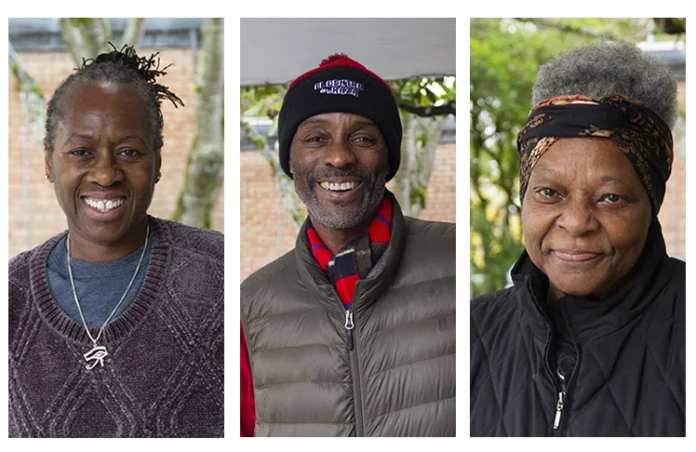
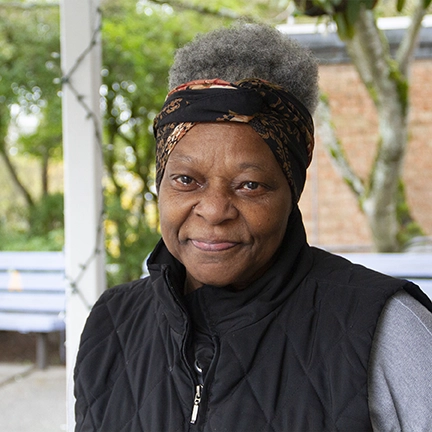
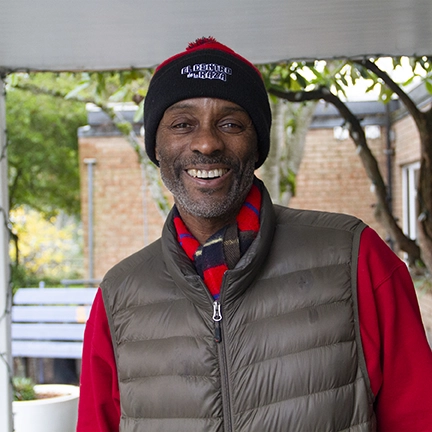
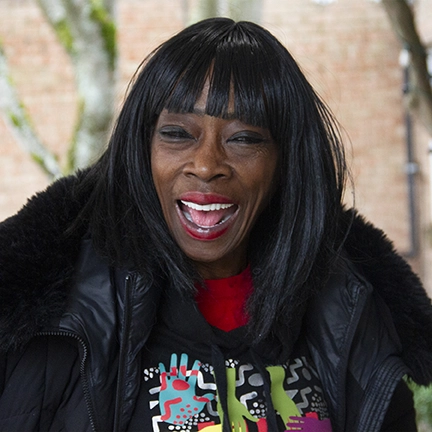
What Are You Thankful For This Holiday Season?

Alice:
“At the age of 76, I am thankful for life and having God in my life.”
Alvin:
“This 2025 holiday season, I am just thankful for my friends, my family, my faith, my health, and the loved ones in my life.”
Marva:
“There are so many things that I am thankful for, but number one on my list is my health.”
Marceline:
“That I am still breathing. I am 68 years old, 68 and great, and I am still breathing. I am thankful that God has given me an opportunity to live another day and that my life has turned around. I have had several years of uninterrupted recovery, and I know that God has my back.”
Naby:
“I am from West Africa, so I am thankful to be here every week in Seattle on Mondays teaching African dance and drumming with my brother.”
Ousmane:
“I am so grateful to be here in the nice city of Seattle. I just came from Africa only three months ago. There is nice weather here, and I am enjoying teaching contemporary African dance to people here in Seattle. I have been having fun and am thankful to be able to show my daughter around here.”

Don’t Let Predatory Debt Traps Rob The Holiday Season’s Joy

By Charlene Crowell

The holidays are coming, and many financially strapped families are considering how to responsibly manage their use of credit while still enjoying seasonal gatherings, presents, feasts and toasts of glad tidings for all. The yuletide season is also a time to especially avoid predatory lenders that offer workers quick access to cash via loans with triple-digit interest rates and hidden fees that can wreck their finances for months.

The convenience of mobile phones and personal computers removes the need to visit storefront lenders to access easy cash Two fast-growing loan products, Buy Now, Pay Later (BNPL), and Earned Wage Access (EWA) have emerged as new business models that deceive consumers into debt.

App-based payday lenders have co-opted the language of financial inclusion in an effort to disguise the ancient grift of exploiting underpaid workers with usurious loans,” said Monica Burks, policy counsel at the Center for Responsible Lending (CRL). “These companies promote a legal fiction that their loans are not loans, pretend the standard measurement for interest rates doesn’t reflect their loans’ costs, and push borrowers to pay fees deceptively called ‘tips.’”

In a new policy brief, Nickel and Dimed: How Payday Loan Apps Drain Workers’ Pay and How to Stop Them, CRL shows that these lenders’ business models are designed to drive repeat borrowing and extract high fees.

EWA often lures underpaid workers into high-cost, small dollar loans that are repaid from forthcoming paychecks. The danger in this direct debit is that it reduces the money a borrower has available to repay the loan and manage other household bills. BNPL loans let purchasers of a variety of goods and services break payments into smaller installments usually paid over a few weeks.  

CRL’s research also found that:

• Borrowing escalates over time, with monthly loan use doubling in the first year from two loans per month on average in month one, to four by month 12.

• Overdrafts on consumers’ checking accounts increased 56 percent on average after use of an advance product, demonstrating how these products directly exacerbate financial instability rather than alleviate it.

• A high incidence of “loan stacking,” where multiple payday app lenders extend advances against the same paycheck. Over time, most borrowers are in debt to multiple lenders during their first year of tracked use, creating a built-in monthly financial shortfall that worsens – not improves financial stability. This cycle of increased borrowing exacerbates the monthly financial shortfall that drives users into their first payday app loan

In 2025, at least 20 states proposed legislation to address EWA’s growth and consumer concerns, according to the National Conference of State Legislators, including but not limited to: Arizona, Connecticut, Maryland, Mississippi, Missouri, New York, Oregon and Washington

Similarly, BNPL plans also lead to debilitating, long-term debt that enable cash-strapped consumers to access monies without a hard credit inquiry. Unlike the now-extinct retailer layaway plans that offered installment payments with no interest charges, these installment loans are offered through a lender that in turn gains access to checking accounts or debit cards to make installment payments. Exact loan terms and conditions vary among lenders, leaving consumers to be directly responsible for the fine print terms that often go unread.

Since its emergence during the COVID-19 pandemic, BNPL’s still-growing popularity is tied to its promise of zero-interest, and multiple – often four – installment purchase payments that typically range from $50-$1,000. Payments, directly deducted from bank accounts, debit cards, or credit cards, are typically due every two weeks, roughly half the billing length for most consumer payments like rent, utilities, or credit cards.

As a result, BNPL consumers tend to encounter rippling negative financial effects like repeated insufficient funds, overdraft fees, other late fees, or savings withdrawals. These lenders are largely non-depository institutions with no standard form for consumer redress and scant consumer protection in the face of the easy and built-in temptation to incur multiple BNPL loans. 

Advocates called for strong consumer protection when the State of New York’s Department of Financial Services solicited comments on BNPL earlier this year.

“Strong rules are especially important in light of the facts that subprime and deep subprime consumers take out most BNPL loans and that BNPL credit is disproportionately used by Black and Hispanic consumers, who already face disadvantages in the credit marketplace,” advised the National Consumer Law Center.  “BNPL lenders tout “interest-free” loans, implying that the loans are free.”

“It is the responsibility of public officials to stop predatory loan apps from breaking the law and from nickel and diming workers,” said Yasmin Farahi, deputy director of state policy at CRL. “To protect consumers, states should enforce – or, where needed, adopt – strong interest rate caps for all payday loans, no matter how companies sell them.”

Scammers Don’t Take Holidays: How To Help Protect Your Money This Holiday Season

iStock

By Aaron Allen, The Seattle Medium

As holiday shoppers book flights, buy gifts, and prepare meals, experts warn that scammers are preparing as well. They are targeting consumers with increasingly sophisticated schemes that could rob them of both money and holiday cheer. In 2024 alone, nearly one-third of U.S. consumers reported falling victim to an online scam during the holiday season. Washingtonians lost more than $302 million to fraud and scams last year.

According to Quincy Crawford, a JPMorganChase Branch Manager, “scams are becoming increasingly more sophisticated, making them harder to detect than ever before.”

“The holidays are scammers’ busy season. From fake travel websites and false package delivery messages to phony charity donations, scammers take advantage of people’s spirit of generosity and bustling holiday schedule,” said Crawford. “Your best defense to protect yourself and loved ones is to stay educated on common and emerging scam tactics.”

“Scammers will go to great lengths to take advantage of generous holiday shoppers. People may notice unusual texts about missed packages or massive discounts on their favorite websites. Chase is here to educate consumers on popular scam tactics so they can help protect their money year-round, not just during the holidays,” he added.

To address the growing threat of scams, Chase hosts more than 1,000 fraud and scam education workshops annually across over 5,000 branches, aiming to educate the public and arm consumers with tools to safeguard themselves and their assets. These resources are designed to reduce risks that could dampen family celebrations.

Crawford advises families to stay alert.

“They’re only getting more sophisticated. I think the general thought is, yes, there are a lot more sophistication. There are a lot more scams,” says Crawford. “Unfortunately, there are a lot more people losing their money. But I also feel like a lot of the money that’s lost is really people falling for newer ways to do things. Things that aren’t really done by more known, larger companies. And if people focus on just a few habits or behaviors around the Internet, they could avoid a lot of this.”

He offered several key tips for staying safe:

Beware of Unrealistic Deals:

“When you have so many gifts to buy, you’ll want to look for bargains. However, make sure that the discounts you’re offered are legitimate. Scammers often lure buyers with massive discounts, especially on popular and sold-out items, often using fake websites or social media ads. If you think, ‘this deal is too good to be true,’ listen to your gut. It’s likely a scam,” said Crawford.

Shop with trusted retailers

When shopping online or on social media, make sure to only buy from trusted websites and vendors. Review the website’s URL and ensure that it starts with https:// (the ‘s’ stands for secure) as scammers can create fake websites to look like legitimate retailers. If you’re unfamiliar with a store, search for the name with terms like “scam,” “complaints,” or “reviews” to uncover any red flags.

“Be especially cautious when making purchases from social media marketplaces,” says Crawford. “Always verify the product exists before purchasing and use payments with purchase protections, like a credit card, to pay. Gift card scams typically begin with outreach from a scammer, often pretending to be someone else, who urgently pressures victims into buying specific gift cards and sharing the card numbers and PINs.”

According to Crawford, scammers use various stories, such as pretending to be government officials, tech support, friends or family in emergencies, prize promoters, utility companies, or online romantic interests. Remember: Legitimate organizations will never demand payment by gift card, and requests for gift card payments are a sign of a scam.

How you pay matters

“Not all payment methods offer purchase protection,” says Crawford. “When buying gifts for the holiday season, consider using your debit and credit cards, as they may provide protections that allow you to dispute a charge if you don’t receive what you paid for or it’s not as you expected. If you purchase something using payment methods like Zelle®, wire transfers, gift cards, or cash, and it turns out to be a scam, it’s unlikely you’ll get your money back. Only use Zelle® to pay others you know and trust.”

Seek out free resources

Give yourself peace of mind while shopping by using digital tools to monitor your personal information. For example, Chase Credit Journey offers free credit and identity monitoring. This includes alerts to let you know if your data is exposed in a data breach or on the dark web. You don’t have to be a Chase customer use it. Learn more about how to help protect yourself from scams this holiday season, visit Chase.com/Security.

Darcy Donahoe-Wilmot, Executive Director of Media Relations with JPMorganChase, assures people that Chase is in the business of educating customers and the public at large on first, navigating the dangers of scams and avoiding the shame that can come with it.

“There’s a certain level of like shame involved [being a victim of a scam],” says Donahoe-Wilmot. “We just want people to not feel ashamed and to come talk to us. We may not be able to stop what’s already happened, but hopefully there’s some education that can take place,”

“We can work with these individuals, we have community managers who are out doing these fraud and scam prevention workshops all the time to just bring groups of people together, whether it be a community center, a senior center, a school, where we can bring these large groups of people together and just try and help people become more comfortable with the fact that this is happening and what to do if it does happen,” she added.

When The Holidays Don’t Feel Joyful: How To Manage Seasonal Depression

By Aaron Allen, The Seattle Medium

As the holiday season approaches, many look forward to celebrations, family gatherings and joyful traditions. But for others, this time of year can trigger difficult emotions including anxiety, depression and loneliness. Current events and personal circumstances may amplify these feelings, making it harder to experience the joy and connection that the season often promises.

While some embrace the festivities with loved ones, others find themselves reflecting on loss, enduring family conflicts or coping with feelings of isolation. For many, depression becomes a constant threat during this season. Although winter has historically posed challenges for human well-being, individuals facing emotional struggles during the holidays do not have to navigate them alone.

Psychologists describe holiday depression as a condition that mirrors regular depression but is specifically triggered by seasonal events such as holiday gatherings, family visits or the pressure to socialize. It may resemble the winter blues, but its onset can be more abrupt and tied to the rhythm of celebrations. It may come in short waves as events approach and pass, or it may linger for weeks before and after the holidays.

“As a psychologist, there are a couple of ways in which depression affects people. One of the ways that depression affects people is behaviorally, and that it tends to make people less interested in going out and meeting with people and it results in you feeling less excited about things that were once exciting for you,” says Adam Kuczynski, PhD, a clinical psychologist with UW Medicine. “It makes social interaction more difficult, and so one of the effects that we see of depression is that people just do less. They withdraw.”

Depression can be highly disruptive, affecting relationships, mental health and the ability to maintain daily routines. Its causes vary, and the impact of the holidays depends greatly on each person’s life circumstances.

“Another major way that depression affects people is less behavioral, more cognitively, so it affects the way that we think about ourselves, it affects the way that we think about our world, it affects the way we think about other people’s intentions,” says Kuczynski. “We’re more likely to have develop thoughts related to lower self-esteem, an inability to do something. So, another way that psychologists or mental health clinicians in general work with people with depression. is to help them challenge those negative thoughts that they have about themselves, about other people, and about the future.”

Common triggers of holiday depression include stressful schedules, separation from loved ones, unresolved family dynamics, social anxiety, past trauma and the emotional toll of the season itself. People may not always recognize when their feelings go beyond typical seasonal sadness.

Whether someone is familiar with holiday depression or is experiencing it for the first time, mental health professionals recommend watching for signs that suggest more serious emotional distress:

• Feeling depressed and hopeless for more days than not

• Loss of interest in things once enjoyed

• Constant anxiety, nervousness or tension

• Difficulty sleeping for an extended period

• Intrusive thoughts that feel unmanageable

• Thoughts of self-harm or suicide

If any of these symptoms are present, reaching out to a primary care provider or a mental health professional is an important first step. For those at risk of harm, help is available through resources such as the 988 Suicide & Crisis Lifeline, which offers support by phone, chat or text, or through emergency services including hospitals and 911.

Diane Mayes, MA, LMHC, MHP, CWPC, Clinical Director of 988, explains what individuals can expect when they contact the Lifeline.

“Anyone experiencing emotional distress or mental health concerns such as suicidal thoughts, depression, anxiety, or substance use related support, or who has a loved one in crisis, can call, text, or chat 988 and reach caring support,” says Mayes. “The person who contacts 988 defines their crisis, we accept all contacts 24/7. When connecting with 988, help seekers reach a crisis specialist who will ask about their safety, listen to their concerns to understand how their problem is affecting them, provide support, and share any resources that may be helpful for additional support if needed once the contact ends.”

Managing holiday depression can feel overwhelming, but Kuczynski encourages individuals to begin with manageable actions.

“I think that’s going to be your biggest step, get out there, lean on your social supports, be active, do things that are personally valuable to you,” says Kuczynski. “That brings you a sense of purpose and direction, those are going to be one of your longer-term coping skills for depression.”

“I would really emphasize the nature of doing the small steps,” Kuczynski continued. “It does not need to be big. Big tends to be overwhelming, especially when you’re depressed, and so starting small.”

Experts suggest a variety of strategies to manage emotional well-being during the holidays. Remembering a lost loved one at a holiday gathering can help acknowledge grief in a healing way. Setting boundaries with difficult relationships can prevent emotional harm, especially when family dynamics are strained. Staying connected with others, even outside one’s immediate family, helps reduce isolation. Participating in charity work or volunteering can create a sense of community and purpose. Limiting social media use can also reduce the negative impact of comparing oneself to idealized holiday images.

Even when taking these steps, some people may continue to experience stress, depression or anxiety. Seeking professional help can make a significant difference. For those experiencing mild to moderate depression, therapy is often the first recommended treatment. In more serious cases, a combination of therapy and medication may be most effective.

“In terms of the most effective treatments for depression, there’s the lifestyle stuff, lifestyle changes. Formal treatments for depression, the gold standard is antidepressant medications in combination with psychotherapy,” says Kuczynski. “For people with mild to moderate forms of depression, the first line treatment, it’s often psychotherapy alone. If somebody is amenable to taking medications, it, the research suggests that both in combination are best.”

While the holidays may stir mixed emotions, no one has to struggle in silence. Recognizing the signs of holiday depression and taking small steps toward support and connection can make a meaningful difference. Whether through personal action, community engagement or professional care, there are ways to cope, and to find hope.

Girmay Zahilay Sworn In as King County Executive, Marking Historic Leadership Transition

Girmay H. Zahilay

Girmay H. Zahilay was sworn in Tuesday as the seventh elected King County Executive, becoming the youngest, the first millennial, the first immigrant, the first refugee, and the first resident from outside Seattle to hold the position. The inauguration, held in the King County Council chambers in Seattle, marked the first transition of county executive leadership in 16 years.

Administered by U.S. District Court Judge Richard A. Jones, the oath of office signaled a new chapter for King County government. Zahilay now leads more than 18,000 employees and serves over 2.3 million residents in the 12th largest county in the United States. He was elected earlier in November with a nearly 10-point victory.

Zahilay was joined by outgoing Executive Shannon Braddock and former Executive Dow Constantine for the official swearing-in ceremony. Gratitude was extended to both leaders for their years of public service.

During his inaugural address, Zahilay laid out the central framework of his administration, guided by what he called the “Four B’s”: Breaking the Cycle, Building for Affordability, Boots on the Ground, and Better Government.

“We will seek to break the cycle of homelessness, addiction, crime and incarceration that is harming too many people in our region,” Zahilay said. He emphasized infrastructure investment and streamlined permitting to improve affordability, stating, “We believe more supply will lead to more affordability. That means increasing the supply of housing, childcare, transit, and business opportunities.”

Zahilay promised a more community-centered approach to governance. “I want you to see us outside, connecting and solving problems in a very tangible way: doing community cleanups, stocking food banks, knocking on doors in low-income communities, activating physical spaces through the arts, setting up more customer service centers, and more,” he said.

On government performance, he added, “We want to deliver government services more effectively, more equitably. We want to make our government more accountable and more transparent.”

Earlier in the day, a ceremonial event at NewHolly Gathering Hall in South Seattle brought together more than 200 community members. Zahilay addressed the crowd alongside Redmond Mayor Angela Birney and Port of Seattle Commissioner Sam Cho. The site was personally significant, as Zahilay lived in the NewHolly neighborhood as a child while his family experienced homelessness and moved through affordable housing in the region.

At the ceremony, Zahilay was joined by his wife, Joyce Bruce, and daughter, Jazzy, before taking a ceremonial oath with Judge Jones.

Zahilay has already begun staffing his administration, naming Karan Gill as Deputy Executive and Jasmin Weaver as Chief of Staff. Weaver’s appointment will take effect in January. The hires reflect a strategy of blending seasoned county governance experience with new talent to drive innovation. Zahilay’s transition will continue into early 2026 as he and his leadership team finalize the executive office structure.

Two weeks before taking office, Zahilay named the co-chairs of a 100-member Transition Committee. The group includes representatives from government, business, nonprofits, and philanthropy, each aligned with one of the Four B’s. A final report is expected in December. The committee is led by Katie Garrow, MLK Labor; Esther Lucero, Seattle Indian Health Board; Brad Smith, Microsoft Corporation; and Doug Baldwin, Vault89 and Family First Community Center.

Before becoming Executive, Zahilay served nearly six years as the King County Councilmember for District 2. One of his first executive actions will be to submit three names to the Council to fill the District 2 seat. He has committed to nominating only caretaker candidates who will not run in the next election.

In a letter to constituents, Zahilay announced a Regional Day of Service to take place Wednesday, focusing on food banks across the county. “This day isn’t just about volunteering, it’s about showing who we are when we come together,” Zahilay wrote. He encouraged residents to volunteer, donate, or support local food resources, linking to www.kingcounty.gov/food-resource-map for more information.

King County Councilmember Claudia Balducci, who ran against Zahilay for County Executive in the general elections, issued a statement honoring the leadership of outgoing Executive Braddock and Councilmember De’Sean Quinn, praising their service. Balducci also welcomed Executive Zahilay and new Councilmember Steffanie Fain, expressing commitment to collaborative governance on issues such as housing, homelessness, transportation, public safety, and government accountability.