The Tacoma City Council is seeking residents to fill five vacancies on the Community’s Police Advisory Committee, an advisory panel that provides input on Tacoma Police Department policies, procedures, training and programs.
Applications are due by noon Oct. 12. The vacancies include representatives from City Council Districts 1, 2 and 3, an Emerging Leader position and one at-large position open to Tacoma residents.
The committee, commonly known as CPAC, advises the City Council, city manager and police chief on matters involving police policies, procedures, rules, training and programs. At the request of the City Council or city manager, members may also review completed investigations and other department matters.
Another part of the committee’s role is connecting residents with the city’s police accountability process. CPAC promotes awareness of the public complaint process and receives and reviews policy complaints from community members.
The committee also works to foster communication between the Tacoma Police Department and the community and can convene community conversations about public safety, police services, programs, policies, procedures and training.
Applicants must live in Tacoma, cannot hold another elective public office and cannot currently serve as a member of the Tacoma Police Department or be an immediate family member of a department employee.
The city is encouraging residents from a range of backgrounds to apply, including people of color, LGBTQ+ residents, people with disabilities, seniors, young people, immigrants and refugees, as part of its effort to have city committees, boards and commissions reflect Tacoma’s population.
Those appointed to CPAC will be required to complete training on Washington’s Open Public Meetings Act and Public Records Act within 90 days of their appointment.
Applications can be submitted through the City Clerk’s Office at tacoma.gov/cbcapplication. More information about CPAC is available at tacoma.gov.
Questions about the application process, requests for an application in an alternate format or requests to submit additional documents can be directed to the City Clerk’s Office at servetacoma@tacoma.gov or 253-591-5178.
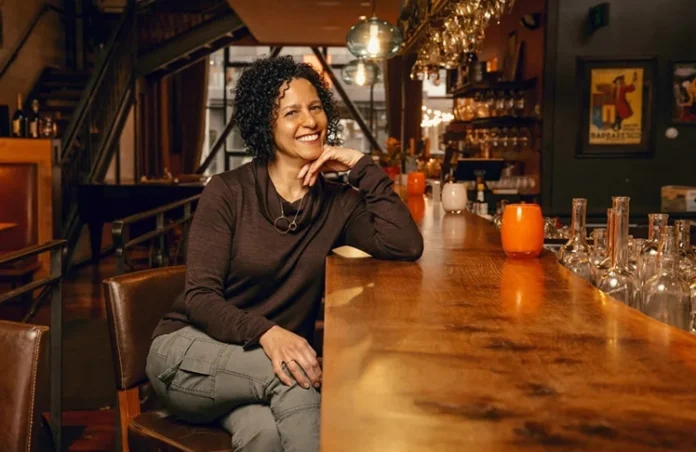
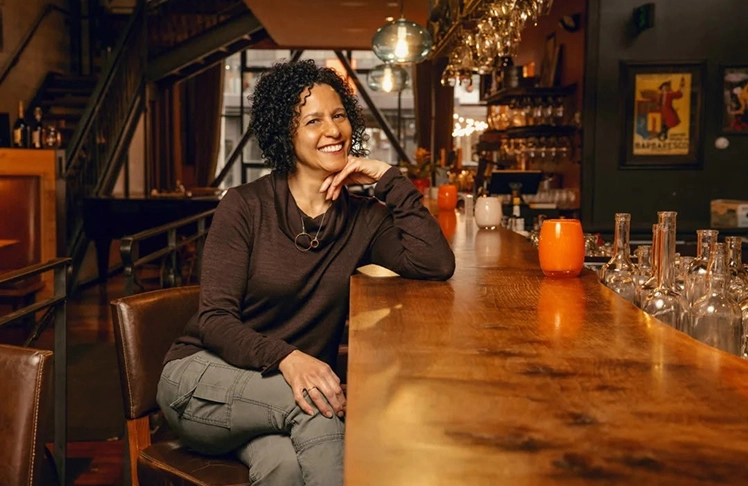
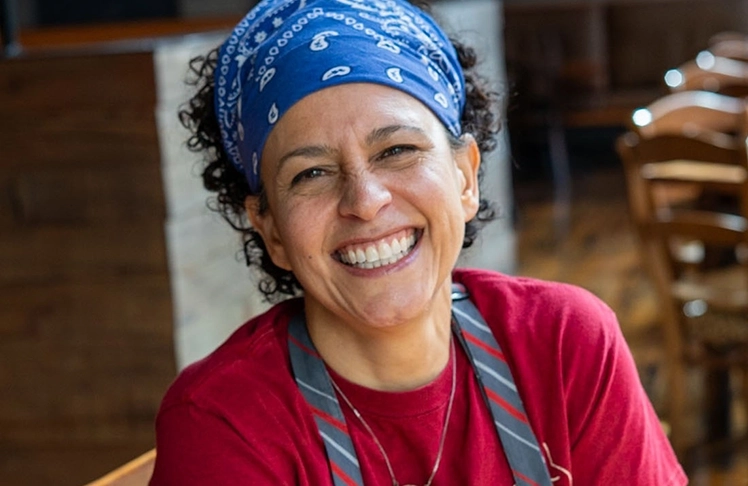
Osteria la Spiga executive chef and co-owner Sabrina Tinsley.
By Aaron Allen, The Seattle Medium
There are plenty of foodies in Seattle’s Black community who are always on the lookout for great dishes prepared by Black chefs. One of the more unexpected finds in that search for Black culinary excellence is Osteria la Spiga, where executive chef and co-owner Sabrina Tinsley has spent more than 25 years bringing the food traditions of Italy’s Emilia-Romagna region to Seattle.
Raised in Alaska, Tinsley’s path to restaurant ownership took her through France, Austria and eventually Italy. She met her husband and La Spiga co-founder, Pietro Borghesi, in Salzburg, Austria, before the couple moved to Italy, where they lived for five years and operated businesses together.
“I spent some time in France, a year in Salzburg, Austria, and that’s where I met my husband to be, who’s Italian,” said Tinsley. “We lived in Italy for five years and had businesses there, so that was kind of the start of my business career. I’ve always had a passion for eating and then later a passion for cooking. [After living in Italy], I just wanted to come back home stateside, so we opened a full-scale restaurant after that.”
When it came time to decide where they would build that restaurant, Seattle emerged as the place where both could see themselves putting down roots.
“My sister had moved here from Alaska,” said Tinsley. “We came and did a grand tour of the United States, all the different places that I had lived, and we both agreed that if we were going to move back, Seattle was the only place that we would put down roots.”
The couple opened Osteria la Spiga in October 1998, building the restaurant around the cuisine of Emilia-Romagna, the northern Italian region where Borghesi is from and where Tinsley developed a deep appreciation for the food and traditions that would eventually shape her cooking in Seattle.
“The food is inspired by the region of Emilia-Romagna, famous for Parmesan cheese, prosciutto di Parma and balsamic vinegar. It’s really considered the culinary cradle of the world, so we focus our cuisine around that region, and it’s probably the apex of comfort food,” said Tinsley. “We do handmade pastas and classic shared appetizers that encourage community and sharing. People leave happy and pleasantly full.”
Those traditions can be found throughout La Spiga’s menu.
Among its popular dishes is Pesca Arrosto, featuring a roasted local peach with fresh burrata cheese, prosciutto and gnocco fritto, the fried bread puffs of Emilia-Romagna. Tagliatelle al Burro di Tartufo pairs handmade tagliatelle with white Alba truffle butter, while Lasagne Verdi layers spinach lasagna noodles with ragù Bolognese, béchamel and Parmigiano Reggiano.
As the restaurant transitions into its fall menu, diners can also find Tortelli di Zucca, stuffed with butternut squash and house-made fruit mostarda and served with Sangiovese vellutata, along with Maiale al Latte, milk-braised pork cheek medallions with butternut squash vellutata and sautéed escarole.
For Tinsley, those dishes remain closely connected to her role in the kitchen. Although La Spiga has grown considerably from its beginnings, she continues to oversee the recipes and seasonal direction of the menu.
“I’m really just executive chef at this point,” said Tinsley. “I write all the recipes, I teach and train for all the recipes, I come up with the seasonal menus, 100% yes, I do all that.”
As the restaurant grew, it eventually moved from its original smaller space on Broadway to a much larger location on 12th Avenue. The restaurant now occupies approximately 6,000 square feet in a converted former automotive space, with high wooden beams, steel elements and large glass panels that can open the dining room during warmer weather.
In 2022, Tinsley and Borghesi expanded the business with La Dispensa, an adjoining marketplace where customers can purchase items including house-made pasta, cured meats, cheeses and other culinary products.
Beyond her work at La Spiga, Tinsley has also focused on mentorship and advocacy within the restaurant industry, mentoring emerging culinary professionals, hosting guest chefs and supporting efforts to increase diversity in the field.
As La Spiga grew, Tinsley’s role remained largely behind the scenes. For many years, customers experienced her cooking without necessarily knowing much about the chef behind it.
“For the first many, many years of La Spiga I was just stuck in the kitchen, so I didn’t really have a presence at La Spiga,” said Tinsley. “But once I started coming out of the kitchen and being more visible publicly, people were very pleasantly surprised.”
As Tinsley became more visible outside the kitchen, she also began hearing directly from Black diners who wanted to support Black-owned businesses.
Tama Smith, who first came to know Tinsley as a customer and later became a friend, said Tinsley’s background is part of what makes La Spiga distinctive.
“Chef and owner Sabrina Tinsley has created an Italian gem in the heart of Seattle’s Capitol Hill neighborhood, Osteria la Spiga,” said Smith. “The food is centered around a region in Northern Italy that is dear to Sabrina, and that has been interpreted through her lens as a Black chef.”
Smith points in particular to Tinsley’s lasagna, one of the restaurant’s longtime favorites.
“If you’re looking to take home a meal or cater a party, you must include Sabrina’s renowned lasagna in your order,” said Smith.
For Tinsley, becoming more visible has brought another reward: hearing from Black customers who want to intentionally support Black-owned businesses like hers.
“I hear a lot of Black folks really wanting to support Black-owned businesses,” said Tinsley. “I personally have just felt so much love and support from the community, just share the love, spread the word.”
Osteria la Spiga is a participating restaurant in the Pack the House campaign, a 10-week community initiative presented by The Seattle Medium, the Urban League of Metropolitan Seattle, Byrd Barr Place and the Central Area Collaborative to encourage the community to intentionally support local Black-owned restaurants. For more information about the campaign, participating restaurants and weekly schedule, visit PackTheHouseSeattle.com.
Tacoma, United States - January 8, 2012: Skyline of downtown Tacoma consisting of office buildings, condominiums, the Washington State History Museum, the Museum of Glass and Union Station.
Tacoma, United States – January 8, 2012: Skyline of downtown Tacoma consisting of office buildings, condominiums, the Washington State History Museum, the Museum of Glass and Union Station.
Pierce County voters will begin receiving ballots in October for the Nov. 3 general election, which includes congressional and state legislative races, county offices, judicial contests and a number of state and local ballot measures.
The Pierce County Auditor’s Office is preparing to mail ballots Oct. 13, a few days earlier than usual, and county ballot drop boxes are scheduled to open the same day. Voters can return their ballots as soon as they receive them. Pierce County Washington
The ballot includes races for U.S. representative, state Senate and state House positions, as well as Pierce County auditor, prosecuting attorney and County Council Districts 1, 5 and 7. Judicial positions on the Washington Supreme Court, Court of Appeals, Pierce County District Court and Tacoma Municipal Court will also appear on ballots. Pierce County Washington
Voters will also decide a range of local measures involving cities and towns, school districts, fire protection and emergency medical services, and transit-related taxes. Three statewide initiatives, several Pierce County charter amendments and a City of Tacoma initiative are also on the ballot. Pierce County Washington
Washington conducts elections primarily by mail, and registered voters are automatically sent ballots. Pierce County election officials are encouraging voters to cast their ballots early and use official ballot drop boxes when possible. Pierce County Washington
The deadline to register or update voter information online or by mail is Oct. 26. Eligible residents may also register or update their information in person through 8 p.m. on Election Day at the Pierce County Elections Office. Pierce County Washington
Ballots returned to an official drop box must be deposited by 8 p.m. Nov. 3. Mailed ballots must be postmarked by Election Day. WA Secretary of State
The Pierce County Auditor’s Office has posted an “Election at a Glance” guide along with a voters’ pamphlet, sample ballot, drop box locations and other election information through Pierce County Elections.
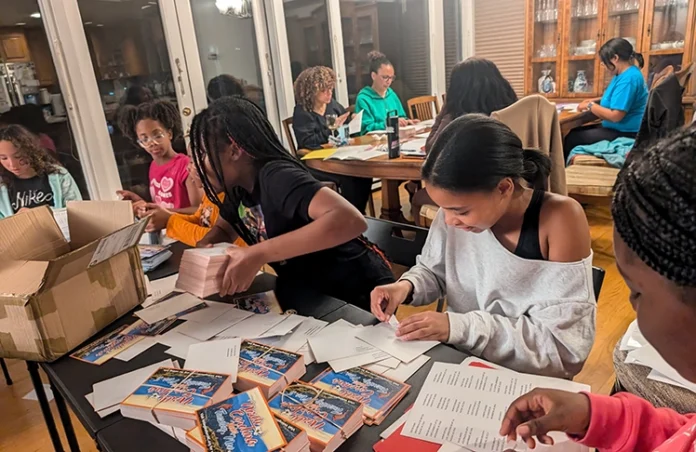
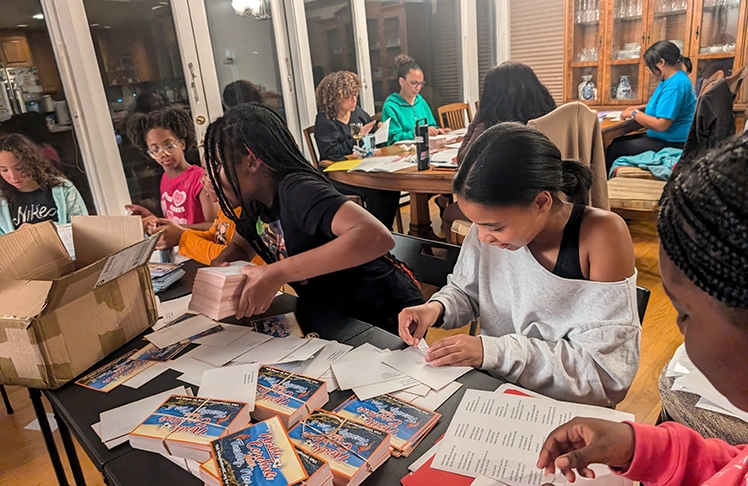
Volunteers with the Seattle Chapter of Jack and Jill prepare postcards to send to infrequent voters in other states.
By Aaron Allen, The Seattle Medium
When Nicole Alston-Abel looks at a stack of blank postcards, she sees more than paper. She sees a connection to her family’s history and an opportunity to encourage thousands of people across the country to vote.
Alston-Abel, vice president of the Seattle Chapter of Jack and Jill of America, Inc., is helping organize an Oct. 17 community postcard-writing drive in Kent with a goal of sending 5,000 handwritten messages encouraging registered, infrequent voters in Alabama, Florida, Georgia, North Carolina and Texas to vote.
For Alston-Abel, the effort is deeply personal.
“I am a child of someone who was on the Edmund Pettus Bridge on Bloody Sunday,” said Alston-Abel. “My father was on the Edmund Pettus Bridge on Bloody Sunday. The very idea that the things that he was bitten by dogs for are being systematically deconstructed is appalling to me. That is the anchor that is rooting me in this.”
That history shapes how Alston-Abel views current debates over voting access, particularly in states where members of her own family live.
“Slavery hasn’t changed, but the mechanism—they just call it something different. This is James Crow, Esquire,” said Alston-Abel. “My family in North Carolina is impacted by gerrymandering. My mom is 89 years old. Why does she have to request a ballot every single time… and then have that ballot notarized in order to vote? They don’t want her to vote. And that’s wrong.”
Alston-Abel said Washington’s vote-by-mail system shouldn’t keep residents here from paying attention to the voting experiences of people in other states.
The chapter plans to send 1,000 of its 5,000 postcards to registered, infrequent voters in Alabama’s 2nd Congressional District, with the remaining cards going to voters in Florida, Georgia, North Carolina and Texas. Alston-Abel said the outreach is focused on districts with significant Black populations and historically low voter turnout. She said increased participation in those communities could influence key races in the upcoming midterm elections and, collectively, the balance of power in Congress.
The chapter is working with voter outreach initiatives including Postcards to Swing States and collaborating locally with organizations including the Urban League, National Council of Negro Women, Divine Nine Greek-letter organizations, League of Women Voters and local senior centers.
The handwritten cards carry a simple message: “Thank you for being a voter. Who you vote for is private, but whether you vote is public record.”
Alston-Abel said the campaign is intended to encourage people who might otherwise sit out an election to vote.
“The reason we are where we are as a country is because people decided to stay home,” said Alston-Abel. “The people who are orchestrating the destruction of the Voting Rights Act are counting on the fact that Black folks won’t get out and vote. They only win if we don’t fight.”
The campaign also reflects the civic tradition of Jack and Jill of America, which was founded in January 1938 in Philadelphia by Marion Stubbs Thomas and 20 other African American mothers. The organization began as a way to provide social, cultural and educational opportunities for Black children at a time when segregation excluded Black families from many mainstream social and recreational spaces.
The Seattle Chapter was established in 1958 by 22 local mothers as the organization’s 98th chapter. Its programs serve families and young people across King and Snohomish counties, with an emphasis on leadership, cultural enrichment, community service and civic engagement.
For Alston-Abel, the connection between that history and the postcard campaign is also playing out within her own family. Her 15-year-old daughter, Claire Abel, is helping mobilize another generation.
Claire, a student at Raisbeck Aviation High School and a member of her school’s Black Student Union, is encouraging other young people to participate in the postcard effort. She is also creating the playlist for the chapter’s organizing sessions.
“I don’t want my rights to ever be in jeopardy as a young person growing up in America,” said Claire. “It’s like what Sheryl Lee Ralph said: Just because I have rights today, it doesn’t mean I’ll have rights tomorrow. And I do want to have my rights tomorrow, so this is really important to me.”
Claire also sees the campaign as part of a larger responsibility for her generation.
“I think I would like to be a revolutionary, but not in the way that people think,” said Claire. “I think that more people are trying to pit us against each other than we actually are. My solution is we come together and just battle this as a collective, because we’re stronger together than we are apart.”
The chapter’s goal of writing and mailing 5,000 postcards comes with a significant logistical and financial challenge. During its 2024 presidential election drive, organizers say the chapter completed 4,500 cards before running out of postage. This year, the chapter is asking community members to help it reach the 5,000-card goal by contributing postcard stamps, helping with postage costs or lending their time to write and address cards.
Organizers estimate postage for the campaign will cost about $3,000.
Community members can participate in the Seattle Chapter’s Community Postcard Writing Drive on Saturday, Oct. 17, at New Beginnings Christian Fellowship in Kent. Organizers are inviting young people, elders, local organizations and other community members to help write messages to voters before the postcards are mailed by the Oct. 21 deadline.
“Come on out, bring postcard stamps with you, and help us write these postcards,” said Alston-Abel. “Just because we’re here in Washington and we have the luxury of voting by mail doesn’t mean that other people do… Every card that we write and every voter that we reach is one step closer to getting us to the place where we want to be.”
Tacoma residents will have an opportunity to help restore parks and natural areas across the city on Oct. 10 as the City of Tacoma and Green Tacoma Partnership host the annual Green Tacoma Day.
The citywide volunteer effort will include projects at seven sites, where participants will plant native trees and shrubs, remove weeds, pick up litter and complete other work aimed at improving Tacoma’s parks, neighborhoods and natural areas.
Organizers are inviting community members of all ages and abilities to participate, and no previous experience is required. Tools, gloves and guidance will be provided at the volunteer sites.
“Thank you to all the volunteers, organizations, and City staff that make this day possible every year,” said Tacoma Mayor Anders Ibsen. “Our green spaces are the biggest legacy we leave to the next generation, and we commend the amazing Tacomans who make that possible.”
Green Tacoma Day is organized by the City of Tacoma and the Green Tacoma Partnership as an annual day of service that gives residents a hands-on role in caring for green spaces throughout the city.
Descriptions of the volunteer projects, site locations and registration information are available at greentacomaday.org.
Families in Tacoma, Lakewood and Federal Way will have additional options for free preschool as Washington expands its Early Childhood Education and Assistance Program by approximately 2,400 slots statewide for the 2026-27 school year.
Gov. Bob Ferguson and the Washington State Department of Children, Youth, and Families announced 42 new ECEAP sites across the state, along with additional openings at 105 existing sites. The expansion includes new locations at Birth to Five Learning Center in Tacoma, Just Like Home Daycare Center and Pierce College Milgard Child Development Center in Lakewood, and several sites in Federal Way.
Federal Way locations identified as part of the expansion include College for Kids, Planting Flowers and Green Gables Elementary School.
ECEAP is Washington’s state-funded prekindergarten program for eligible low-income families with children ages 3 and 4. In addition to preschool education, the program provides family support intended to help children prepare for school.
The expansion is being funded through a partnership between Washington state and Ballmer Group. More than $251 million in state and Ballmer Group grant funding will be awarded to early learning providers during the 2026-27 school year, according to the state.
“As we’re facing budget challenges, our public-private partnership is expanding access to high-quality early education for thousands of kids across our state,” Ferguson said. “This expansion means more children, including our most vulnerable, will get the support they need to thrive in school and beyond.”
The partnership was announced in November 2025 by Ferguson, DCYF Secretary Tana Senn and Ballmer Group representatives. Under the agreement, Ballmer Group is expected to provide approximately $1 billion over 10 years to support as many as 10,000 additional seats in ECEAP’s school-day program.
The approximately 2,400 new openings exceed the state’s original first-year goal of serving 2,000 additional children, but fall slightly below the number previously announced.
According to DCYF, some providers that initially accepted funding later returned it because of workforce shortages and other challenges associated with opening new classrooms. The department said it continues to work with applicants to address barriers to providing services.
The expansion comes as access to early learning remains dependent not only on funding but also on whether providers have enough workers and facilities to accommodate additional children. The experience of providers that returned funding illustrates some of the challenges involved in translating new investments into available classroom seats.
Families interested in ECEAP can find information about eligibility and programs through the Washington State Department of Children, Youth, and Families.
For more than 35 years, the Judge Charles V. Johnson Youth and Law Forum has helped Seattle-area young people understand their legal rights, learn about the justice system and explore careers in law. This year, organizers are extending that conversation into a place where young people increasingly encounter questions about privacy, safety and responsibility: their phones and other digital devices.
Security architect and former Microsoft engineer Rodney Moseley will introduce a three-part series on artificial intelligence, social media and cybersecurity during the forum on Saturday, Nov. 14, at Church by the Side of the Road and Tukwila Municipal Court in Tukwila.
Moseley’s AI & Social Media Youth Security: What’s Next series will use real-world scenarios to help students think through artificial intelligence, social media, privacy, cybersecurity and their digital identities. Students will consider what they would do in different situations before examining the technical, legal and security issues involved. AI_Social_Media_Security_Youth_…
The approach reflects the forum’s longstanding emphasis on giving young people information before they encounter situations that could have legal consequences.
“One of the worst things we can do is wait until the problem reveals itself and then complain about it,” said King County Superior Court Judge LeRoy McCullough, one of the forum’s founders.
“This forum is significant for young people to be absolutely confident in their legal rights,” said McCullough.
Moseley’s involvement grew out of his relationship with McCullough and his own experience bringing his children to the program.
“I got to meet the other judges there and was extremely excited to have been able to work with them,” said Moseley. “Judge McCullough is still an outstanding judge to me, and I definitely appreciate all the guidance he brought to me and allowing my kids to participate in the Youth and Law Forum.”
Moseley said he has seen young people’s attitudes toward the forum change as they participate.
“When they start in the program, they’re all in a different state of ‘do I want to be here, do I not want to be here?’ But around lunchtime, they are engaged and excited about all the different information they receive. You see that transformation in them, and how they use that knowledge beyond the program,” said Moseley.
One of Moseley’s scenarios begins with a student watching a single sneaker video and then finding the student’s social media feed filled with sneakers, athletes, shopping clips and influencers. Moseley asks students to consider whether they chose the feed or whether the feed learned how to choose them.
Students will examine how recommendation algorithms, notifications, watch time and personal data can influence what appears on their feeds, along with questions about what information platforms collect and how efforts to verify a user’s age can raise additional privacy concerns. AI_Social_Media_Security_Youth_…
Another scenario asks students to consider what happens when someone uploads a face to an AI image generator, provides a voice clip to an app or pastes schoolwork into a chatbot. Where does that information go? Who can use it? And what happens when AI gets something wrong? AI_Social_Media_Security_Youth_…
“Using AI can be very addictive because it helps fill the gaps around things you don’t already know,” said Moseley. “When used properly, it helps you with math, writing, and reading because it can answer questions in a way a teacher might not be readily available to do once you leave the classroom. Those are the positive things AI brings.”
But Moseley also cautions against allowing AI to replace independent research, schoolwork or personal relationships.
“If improperly used, it can allow you to go down a rabbit hole making it write your papers, causing you not to do the research you properly need to do, or allowing you to cheat. Another danger is overutilizing it as a social friend, it is not a real person. You have to trust it as a tool and not trust it as a living, breathing friend,” said Moseley.
The forum was founded in 1990 by Black legal leaders including the late Judge Charles V. Johnson, retired Judge Norma Smith Huggins and McCullough. Conceived at First African Methodist Episcopal Church in Seattle amid concerns about inequities in the justice system and strained relationships between law enforcement and minority youth, the forum has since introduced thousands of Black pre-teens and teenagers to the legal system and careers in law.
Moseley’s sessions extend that legal education to online conduct. Through “You Be the Judge” scenarios, students will consider whether forwarding a fake image can make someone part of an incident, whether an anonymous account can be investigated and what a screenshot can and cannot establish as evidence. Discussions will also address deepfakes, nonconsensual synthetic images, privacy and potential legal consequences. AI_Social_Media_Security_Youth_…
Moseley also introduces students to a six-step framework for responding to suspicious, threatening or potentially harmful online activity: STOP, SAVE, VERIFY, TELL, REPORT, SECURE. The framework encourages students to stop before reacting, preserve information, verify what they are seeing, involve someone they trust, report the situation and take steps to secure themselves or their accounts. AI_Social_Media_Security_Youth_…
Moseley takes a similar approach to concerns about screen time.
“That is the same thing they said about television when it first came out, and about computers when they first came on the scene,” said Moseley. “I wouldn’t say screen time itself is the primary concern compared to managing how you turn the computer off and interact with a real person. You need to govern that.”
For Moseley, the goal isn’t to make young people afraid of emerging technology, but to teach them how to use it responsibly.
“I believe AI is going to be our future, it’s that next tool that allows us to leapfrog, just like the personal computer did,” said Moseley. “I want to let students know that you will thrive if you use the internet in a secure and responsible way. Do it in a safe, mindful way, and allow the internet to let you leapfrog into your career, self-knowledge, and avenues of technology you might never be exposed to otherwise.”
The Nov. 14 forum will feature educator and TED Talk presenter Erin Jones as keynote presenter. Honorary co-chairs include King County Executive Girmay Zahilay, Seattle City Attorney Erika Evans, King County Department of Public Defense Director Matthew Sanders, General Counsel to the King County Executive Chelsy Opher Sanders and retired Seattle Police Department Capt. John Hayes.
The free event will run from 8:30 a.m. to 3 p.m., with the formal program beginning at 9:15 a.m. Additional information and registration are available at youthandlaw.com.
For those unable to attend, Moseley’s final advice offers a practical starting point.
“Don’t be afraid of AI but make sure you are aware of the consequences of misuse in your cybersecurity world. Manage your passwords, manage your usage, and don’t do things that will hurt or harm another person. Protect your cyber presence, do your due diligence, be respectful to the technology, and be respectful to your neighbor,” said Moseley.
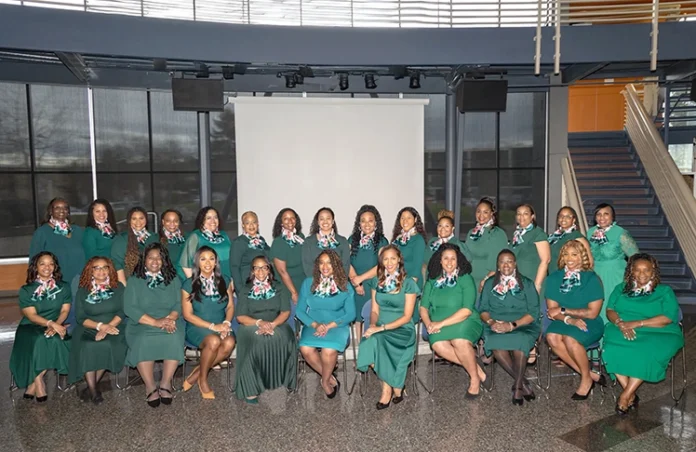
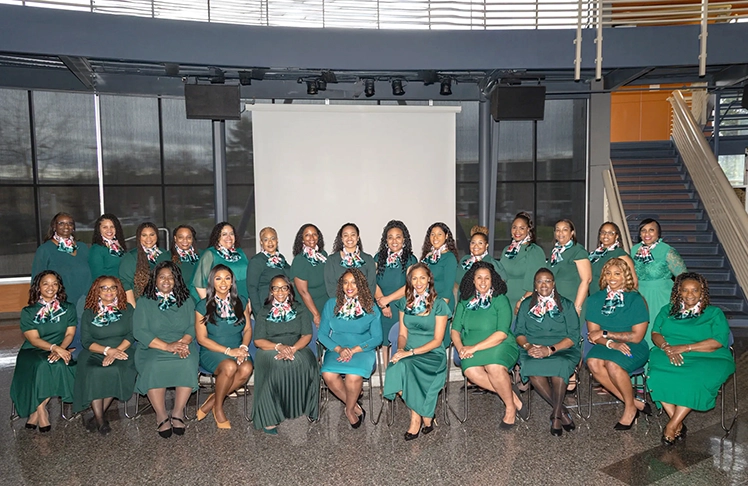
The Delta Upsilon Omega Chapter of Alpha Kappa Alpha Sorority, Inc.
By Aaron Allen, The Seattle Medium
Alpha Kappa Alpha Sorority, Incorporated® will bring state officials and community members together Oct. 17 for a free public policy forum focused on voter education, civic engagement and state and local issues affecting Washington residents.
The Delta Upsilon Omega Chapter of Seattle and Zeta Omega Omega Chapter of Tacoma will host the joint forum at Highline College in Des Moines. Doors will open at 9 a.m. with light breakfast refreshments, followed by the program from 10 a.m. to noon in Building 7, 2400 S. 240th St.
Organizers say the forum is intended in part to encourage residents to remain engaged with government outside of presidential election years.
Dr. Saunjah S. Brantley, president of the Delta Upsilon Omega Chapter, said decisions made by state and local elected officials can have a direct impact on people’s everyday lives.
“People get super excited about the presidential elections,” said Brantley. “And what we’ve learned over the years as a community is that when you are informed about those who are at the state level and at the local level, you get more clear that their decisions impact your local experience, people who are elected to school boards, etc.”
Brantley said the chapters want to encourage people to remain informed and involved even when a presidential race isn’t dominating the political conversation. She pointed to public policy forums and the sorority’s participation in African American Legislative Day in Olympia as ways of maintaining that engagement.
“We feel like that was a gap that needed to be closed,” said Brantley. “Because when it’s not a major presidential election, we’ve seen that people are not as consistent with staying informed. They’re not as consistent with their voting. And so, it’s more important to create some form of a steady drumbeat, even if it’s something like a public policy forum that becomes a prompt that says I need to pay attention.”
For Brantley, the goal is to make civic participation something residents incorporate into their lives rather than an activity reserved for major election cycles.
“Our goal is to help people become informed, engaged, and empowered to participate in the civic process on a regular basis. To make it just a part of how they live and operate,” said Brantley.
The forum is being organized under the direction of the Delta Upsilon Omega Chapter’s Connection and Social Action Committee and will include presentations and discussions about state government, public policy and voting.
RoTonya Carr, chair of the Connection and Social Action Committee and event co-chair, said understanding how government policies are developed and whom to contact about them can help residents communicate their priorities to public officials.
“It’s important for our community because there are so many policies that impact all of us every day, and we are all impacted by policies in different ways, quite frankly,” said Carr. “So the more people know about how to advance policies that matter to them, who to reach out to for questions about policies that they care about, and how to express their voice be it through conversation, communication, or by ballot, the better I think our whole society can be in reflecting those various viewpoints.”
According to organizers, Washington Gov. Bob Ferguson is scheduled to welcome attendees through prerecorded video remarks. Washington Attorney General Nick Brown is scheduled to appear in person and provide an overview of his office’s work and legal and policy issues affecting state residents.
Sarah Spikes, representing the Washington Secretary of State’s Office in voter education, is scheduled to discuss Washington’s election process and federal developments related to voting. State Reps. Jamila Taylor of the 30th Legislative District and Edwin Obras of the 33rd Legislative District are scheduled to participate in the legislative portion of the program, which will include a community question-and-answer session.
“A successful day would look like people getting to know who their public officials are and all the various ways that they serve us,” said Carr. “We hope that people leave feeling a sense of empowerment that the public officials are here to work for all of us Washingtonians.”
Founded in 1908 at Howard University, Alpha Kappa Alpha Sorority, Incorporated® has a long history of community service. The Seattle and Tacoma chapters continue that work locally through social action, education and voter engagement initiatives.
The Oct. 17 forum is free and open to the public. Advance registration is encouraged to help organizers plan for attendance. Doors open at 9 a.m. for light breakfast refreshments, with the formal program running from 10 a.m. to noon at Highline College, Building 7, 2400 S. 240th St. in Des Moines.
“If people want to learn more about how they can become more civically engaged and if they want to learn more about the various parts of our state that influence their lives, this would be a wonderful forum to attend,” said Carr. “It’s a wonderful way to spend a Saturday morning with the ladies of Alpha Kappa Alpha Sorority, Incorporated.”
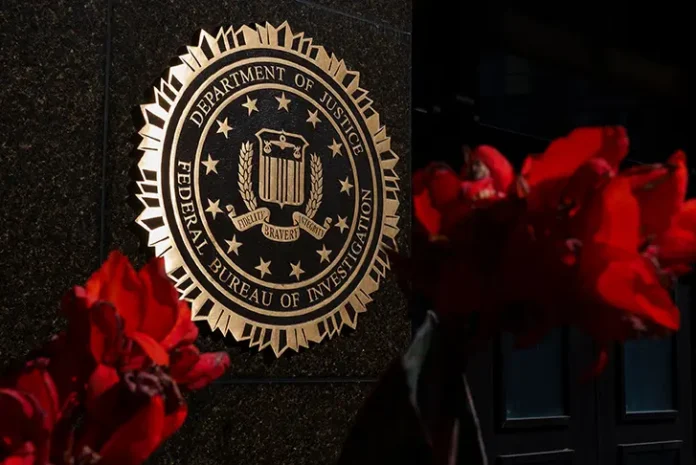
The seal of the Federal Bureau of Investigation, displayed at the J. Edgar Hoover Building in Washington, DC, on August 8. (Kevin Carter/Getty Images/File via CNN Newsource)
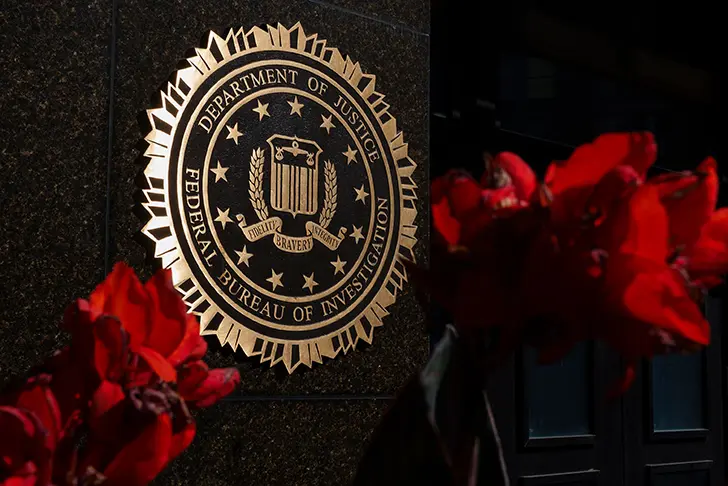
The seal of the Federal Bureau of Investigation, displayed at the J. Edgar Hoover Building in Washington, DC, on August 8. (Kevin Carter/Getty Images/File via CNN Newsource)
By Sean Lyngaas, Evan Perez, CNN
(CNN) — A week after a cybercriminal group claimed to steal sensitive personal data on thousands of current and former FBI employees, the bureau is still assessing the extent of the damage while facing internal criticism about the agency’s handling of the incident.
It’s one of the most serious breaches of agency data in years, but some FBI employees have felt left in the dark about whether they’re affected and underwhelmed by the security resources being offered to victims, according to current and former officials.
“Management is lost,” one ex-FBI agent in touch with their former colleagues told CNN. “They’re not providing any clear advice to agents.”
The issue began a week ago, when hackers broke into an online portal hosting information on FBI job applicants. Social Security numbers, emergency contact information and personal addresses were in the stolen data.
The hackers demanded that the FBI amend a previous advisory issued about the group, saying it was “offended” over how the agency described its alleged tactics for extorting victim organizations.
Many at the FBI and within the cybersecurity industry took the demand as a tacit threat that the hackers would leak the stolen data. (The cybercriminal group now claims that it never planned to publish any of the stolen data, but they have a history of doing so with other victims.)
The hackers responsible, known as ShinyHunters, have previously targeted “major companies across tech, finance, and retail, often stealing millions of customer records at once,” according to the FBI’s advisory on the group.
In this case, the stolen data includes information on FBI personnel working in sensitive units focused on China and Russia, among other topics, according to sources who have seen the data.
On Tuesday, the FBI announced that Dutch authorities arrested “one of the alleged leaders of ShinyHunters.”
“Dutch authorities were ready to act. With our full support, they moved quickly to protect victims and preserve critical evidence,” Brett Leatherman, assistant director of the FBI’s cyber division, said in an Instagram video. He said the alleged leader and his co-conspirators breached over 140 organizations since last year.
Dutch authorities said in a statement that the alleged leader is 24 years old and was arrested on September 15, after which authorities found additional information on his laptop.
He will remain in pretrial detention for at least another 90 days, according to the authorities.
Breach raises concerns
An FBI spokesperson said the bureau has communicated with employees throughout the incident response process.
“FBI employees potentially impacted have received communication and notification multiple times within the last week, as recently as Saturday,” the spokesperson said.
After discovering the hack, the FBI “immediately responded through a multi-division effort, all meant to prioritize incident response, pursuing the alleged actors and data, engaging employees and partners, etc,” the spokesperson said. “The teams have been working 24/7 on all of it.”
The breach was alarming news for the FBI agents who rely on relative anonymity to work the front lines of counterintelligence, terrorism and cybercrime. Some agents are worried that their home addresses could be made public, potentially posing a safety issue for their family while they are traveling, according to sources familiar with the matter.
The far-reaching extent of the breach has also raised serious counterintelligence concerns. Officials fear that detailed personal data stolen by the hackers could be used along with other information compromised in earlier breaches to identify agents in sensitive jobs, according to multiple people briefed on the investigation.
Foreign government adversaries or drug cartels could use the information — were they to acquire it — to try to identify agents who are working undercover or are assigned specific roles that are of interest to them. The FBI will have to try to mitigate safety risks to those employees, the sources say.
Adversaries have weaponized FBI data before. A Mexican drug cartel hired a hacker to surveil the movements of a senior FBI official in Mexico City in or around 2018, gathering information from the city’s camera system that allowed the cartel to kill potential FBI informants, according to a Justice Department inspector general report made public last year.
On Friday, the FBI sent an email to the workforce about the incident emphasizing the bureau’s commitment to the safety of employees and their families, according to people familiar with the message. It encouraged employees to report any safety or security concerns to FBI security personnel. The bureau is operating under the assumption that the hackers have stolen data on all FBI employees, the message said. (The New York Times first reported on the email.)
It’s a blow to one of the nation’s premier cybercrime-fighting organizations, which is often called to help clean up hacks at Fortune 500 companies.
The FBI’s cyber, security and victim services divisions are all involved in the response to the hack, according to people familiar with the matter. The goal is to give each employee the resources they need to deal with any threats from the hackers.
But, at least initially, some in the workforce didn’t feel they had access to those resources. FBI agents have turned to agency rumor mills to try to find answers about the breach that leadership haven’t provided, one source said.
This story has been updated with additional information.
Medications are stored on shelves at a pharmacy. (Eric Thayer/Getty Images via CNN Newsource)
Medications are stored on shelves at a pharmacy. (Eric Thayer/Getty Images via CNN Newsource)
By Tami Luhby, CNN
(CNN) — President Donald Trump’s order to levy 100% tariffs on certain patented pharmaceutical products and ingredients takes effect on Tuesday.
But experts question the extent to which the move will achieve its goal of spurring more drug manufacturing in the US. That’s because the burden will fall most heavily on small and midsize companies that generally don’t have the wherewithal to shift or expand production in America.
Instead, experts say, the tariffs could force these drugmakers to close or merge with larger rivals, which could in turn reduce the number of medications that they provide to patients and could lead to higher prices – which is the last thing Trump says he wants.
What’s more, the tariffs could dampen the discovery of new medicines since these smaller firms tend to be more innovative, some experts argue.
The tariffs were announced in April, but the president had long signaled that he would target the industry, which had largely escaped such levies for decadesdue to a longstanding international agreement designed to keep essential medicines flowing freely across borders.
However, there are many provisions and exceptions that will limit the tariffs’ impact. Notably, the levies won’t apply to the larger pharma companies that have signed “Most Favored Nation” agreements. These manufacturers have promised to beef up their domestic production, as well as provide their medicines at lower prices to Medicaid and TrumpRx, the administration’s direct-to-consumer clearinghouse. They make the vast majority of brand-name drugs.
Also, generic medications, orphan drugs for rare diseases and certain specialty medicines are largely exempt. Patented pharmaceutical products from the European Union, Switzerland, Japan and South Korea, which have existing bilateral trade deals, will be subject to a 15% tariff rate, while those from the United Kingdom will not be subject to the levies. And companies that have an agreement to produce more in the US will face a 20% tariff.
That leaves a small share of pharmaceutical manufacturers and their products that will be subject to the 100% tariff rate, industry analysts said when the levies were unveiled.
Who gets hit
There are more than 100 drugmakers that make at least one drug that is not exempt, according to a preliminary analysis from the Brookings Institution. A majority of these companies do not have any production facilities – instead, they use contract manufacturers to make their medications, said Marta Wosinska, a senior fellow at Brookings.
There is a “crazy level” of competition for contract manufacturing capacity in the US, so it would be very expensive for these drugmakers to make more of their products domestically, she told CNN.
“Their pockets are not as deep,” she said of the smaller companies.
Many may have no choice but to sell themselves to larger players in the industry if they can’t negotiate deals with the White House, Wosinska said.
Patients with conditions that aren’t treated by major pharmaceutical manufacturers could feel the biggest impact since they often depend on medications made by smaller companies. The prices of these medicines will likely rise, said Mollie Sitkowski, an international trade lawyer with Faegre Drinker. Plus, she expects there will be fewer new drugs released in coming years.
The Biotechnology Innovation Organization, which represents smaller and mid-sized drugmakers, wrote to the Commerce Department earlier this month warning that “tariffs that punish U.S. innovators are counterproductive and risk slowing the investment and innovation needed to be successful.”
“The reality is that tariffs on America’s medicines will raise costs, impede domestic manufacturing, and divert scarce resources away from research and development critical to maintaining American biotech leadership,” wrote John Crowley, BIO’s CEO.