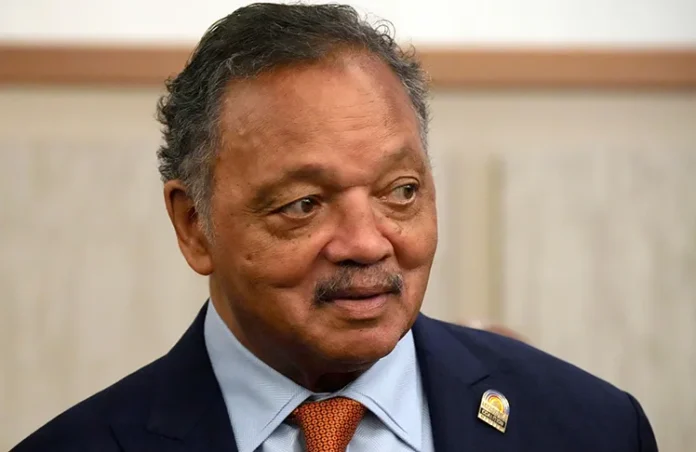
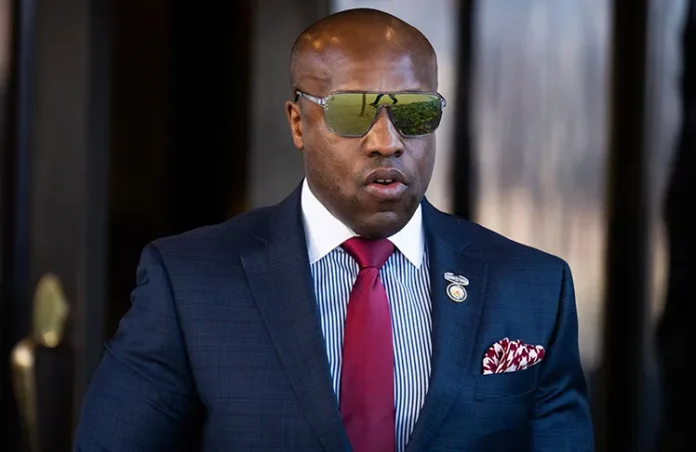
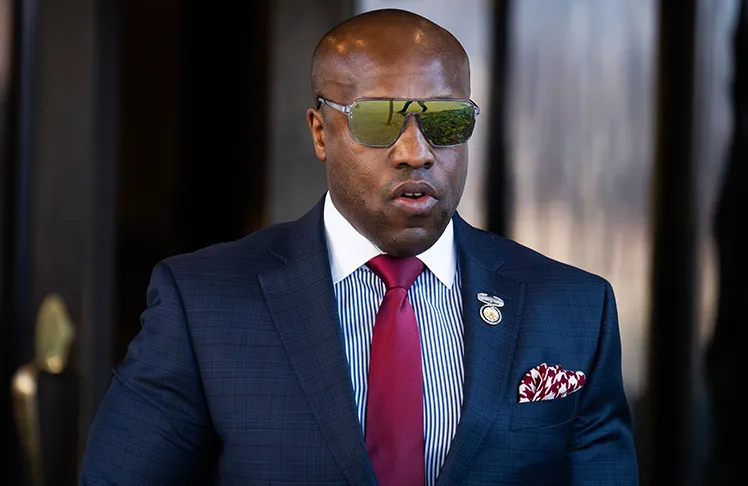
The Rev. Jesse Jackson speaks to attendees at the inaugural Sunday Dinner event in March 2022. (Meg Kinnard/AP/File via CNN Newsource)
The Rev. Jesse Jackson speaks to attendees at the inaugural Sunday Dinner event in March 2022. (Meg Kinnard/AP/File via CNN Newsource)
By Taylor Romine, Abby Phillip, CNN
(CNN) — Civil rights leader Rev. Jesse Jackson was released from Northwestern Memorial Hospital Monday, the Rainbow PUSH Organization said, after sources said he was receiving care to manage his blood pressure.
Jackson, 84, a protégé of the Rev. Martin Luther King Jr., has been under observation for progressive supranuclear palsy (PSP), the Rainbow PUSH Coalition said in a previous statement. He is currently in stable condition, the organization that Jackson founded said Monday.
Jackson is returning to a residence, a source said.
“Our family would like to thank the countless friends and supporters who have reached out, visited, and prayed for our father,” said Yusef Jackson, son and family spokesperson.
“We bear witness to the fact that prayer works and would also like to thank the professional, caring, and amazing medical and security staff at Northwestern Memorial Hospital. We humbly ask for your continued prayers throughout this precious time.”
A November 16 statement from Jackson’s organization said he was breathing on his own without the assistance of machines and not on life support. A separate source added earlier he had been receiving medication to raise his blood pressure, which is a form of life support.
Further details about his condition have not been released.
The disease typically begins in a person’s 60s and has some symptoms similar to Parkinson’s disease, it adds. Most people with PSP develop severe disability within three to five years.
Jackson “has been managing this neurodegenerative condition for more than a decade,” the organization previously said in a statement. “He was originally diagnosed with Parkinson’s disease; however, last April his PSP condition was confirmed.”
During his time in the hospital, Jackson was eager to get back to work, according to a previous family statement that said he had “called for 2,000 churches to prepare 2,000 baskets of food to prevent malnutrition during the holiday season.”
Jackson rose to national prominence in the 1960s as a close aide to King. After King’s assassination in 1968, Jackson became one of the most transformative civil rights leaders in America.
In 1971, he founded Operation PUSH as a way to improve Black communities’ economic conditions across the US. Jackson later launched the National Rainbow Coalition, in 1984, with the goal of obtaining equal rights for all Americans, according to the Rainbow PUSH Coalition.
Twelve years later, the two organizations merged to form Rainbow PUSH Coalition.
This story has been updated with additional information.
Dozens of studies have found no link between autism and childhood vaccines.
(iStock)
Dozens of studies have found no link between autism and childhood vaccines. (iStock)
By Asuka Koda, CNN
(CNN) — Until last week, parents who looked at the US Centers for Disease Control and Prevention’s website on autism and vaccines would see a few key points: Studies have not found links between vaccines and autism, nor have links been identified between any vaccine ingredients and autism.
At the direction of US Health and Human Services Secretary Robert F. Kennedy Jr., a longtime anti-vaccine activist, the CDC page now has a different message: “Scientific studies have not ruled out the possibility that infant vaccines contribute to the development of autism.”
HHS said the change was made to “reflect gold standard, evidence-based science.” But it drew a swift and sharp rebuke from doctors, scientists and advocates for people with autism, who say the website now includes misinformation and outdated and disproven ideas.
“Medical researchers across the globe have spent more than 25 years thoroughly studying this claim. All have come to the same conclusion: Vaccines are not linked to autism,” according to a statement from more than 60 organizations, including the American Academy of Pediatrics, the American Medical Association and the Autism Science Foundation.
Here’s what to know about what’s changed and what hasn’t.
What does research into autism and vaccines show?
Independent researchers across seven countries have conducted more than 40 studies involving over 5.6 million people to conclude that there is no link between vaccines and autism, said Dr.Sean O’Leary, a professor of pediatrics and infectious diseases at the University of Colorado Denver Anschutz Medical Campus and Children’s Hospital Colorado.
Links between vaccines and autism have “been debunked many times,” O’Leary, who chairs the Committee on Infectious Diseases for the American Academy of Pediatrics, said at a news briefing last week. “It is considered settled science.”
Dr. Alycia Halladay, the chief science officer for the Autism Science Foundation, noted that experiments in countries including Denmark, Sweden, Finland, Israel and Japan collected data from large groups of people and tracked their vaccination patterns and whether they had an autism diagnosis.
“All of those studies have shown no link between vaccines and autism,” she said. “It remains the number one studied environmental factor in autism, and there is no link whatsoever.”
More research is needed on many of the other purported causes of autism, she said, “but vaccines have 1,000% been exonerated” as a factor.
On Monday, 30 autism and disability organizations said linking autism and vaccines confuses parents. They called on the CDC “to revert the website to its previous version, commit to vaccine education initiatives around the country that emphasize the high-quality, scientific evidence that vaccines do not cause autism, and invest in research projects and initiatives that are responsive to the needs of autistic people and their families.”
Where did claims about autism and vaccines start?
The pervasive myth linking vaccines and autism largely grew out of a 1998 study by a British gastroenterologist named Dr. Andrew Wakefield that tied the measles, mumps and rubella shot to autism.
But the paper had major flaws: It included only about a dozen children and no control group; financial conflicts of interest; and fabricated data. Wakefield has long pushed back on criticisms of the study, but the paper was retracted in 2010 and Wakefield’s medical license was revoked.
Many parents want to find an explanation for what was causing their children’s autism and to have “someone to blame,” Halladay said — and shots quickly became a scapegoat.
“The reality is that getting vaccinated isn’t exactly a fun procedure to begin with. You take your child to a pediatrician’s office, and they get a shot. They’re crying. It’s loud. It’s not a pleasant experience,” Halladay said.
If parents can believe that there is “something that they might be able to do to stop [their child’s autism], and also get to avoid those visits, they’ll do it. It’s really preying on the fears of parents and the idea that parents can do something to prevent their child’s autism. It’s taking advantage of parents who are vulnerable in that way.”
After Wakefield’s paper was published, a flurry of research was conducted around the worldto try to replicate the results, but the research came to much different conclusions than Wakefield’s paper.
“It was retracted, but at the same time … the bell had been rung,” Halladay said: The claims of a link between autism and vaccines had taken hold.
What causes autism?
The autism diagnosis rate has increased among US children, continuing a long-term trend that experts have largely attributed to better understanding of and screening for the condition. About 1 in every 31 children was diagnosed with autism by age 8 in 2022, up from 1 in 36 in 2020.
Autism is complex, encompassing a spectrum of people who “are able to communicate and also have cognitive abilities and live independently, all the way to those needing 24/7 care,” Halladay said. This diversity is reflected in how there “can’t possibly be one cause for autism.”
Autism is highly genetic, and more than 250 genes have been found to be associated with it. “In about 15% to 20% of cases, we can find a single gene that causes autism, and in other cases, there may be multiple genetic mutations interacting to cause autism,” O’Leary said. “Genes that are associated with autism are highly expressed during fetal brain development and pregnancy, and they converge on biological pathways that involve how nerve cells communicate with each other.”
Some environmental factors, including maternal illness during pregnancy, can also “increase the probability of an autism diagnosis,” Halladay said. This is one of the reasons it’s important for pregnant women to stay up to date on recommended vaccines.
“If you have measles, you have a full-body rash. You have a fever that runs for days and days. You feel sick from being exhausted to having a fuzzy head to having respiratory problems to nausea for days and days, not just a few hours,” Halladay said. “ So this is much more serious than any reaction that you might have to the vaccine, which isn’t universal. Some people may have a fever for a few hours, but it’s nothing like getting actually sick with these diseases.”
Other factors that have been associated with autism include premature birth, parents who are older at the time of conception, fever during pregnancy and metabolic disorders such as gestational diabetes.
Where can families get vaccine information?
The update to the CDC’s website was not science-based, Halladay said, and that can be confusing.
“We’ve been telling families for years to go to the CDC website, the CDC website has the information that you need, and now, all of a sudden, the information that was posted did not come from the CDC,” Halladay said.
“This current information was not vetted by any of the scientists from the Centers for Disease Control. It was shared by administrators at the Department of Health and Human Services, so it really isn’t scientific information.”
Peer countries in Europe and the UK, Canada and Mexico all “have stood by the statement that vaccines do not cause autism,” Halladay said.
Halladay’s other advice to parents: “Trust your pediatrician. These are the people that know you. These are the people that see you in person and you know and can give you the best advice.”
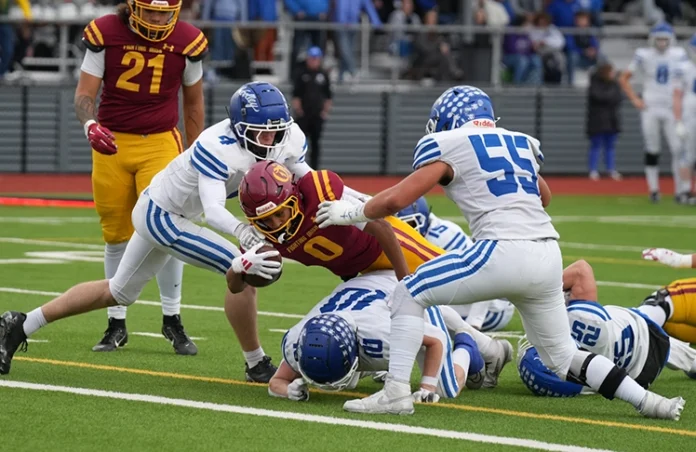
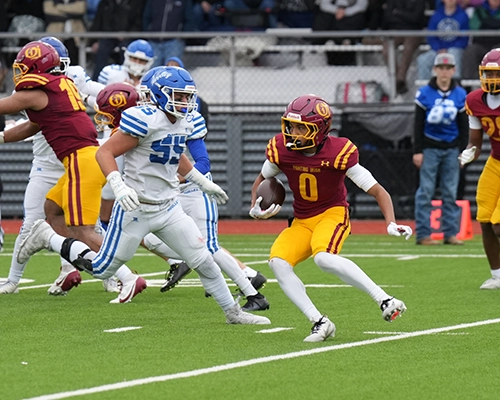
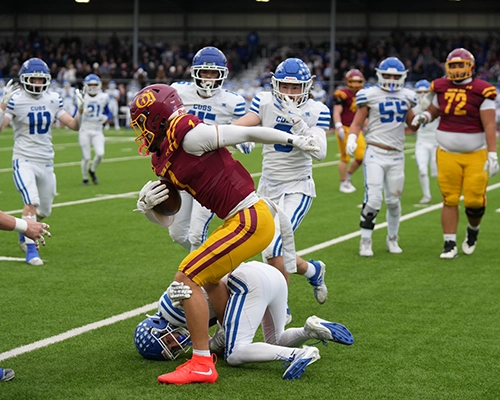
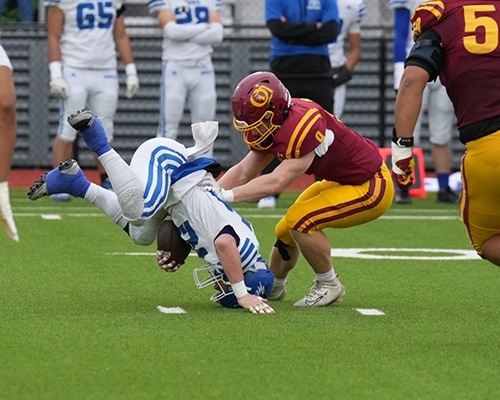
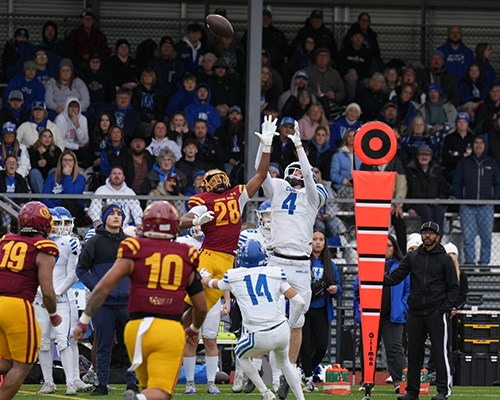
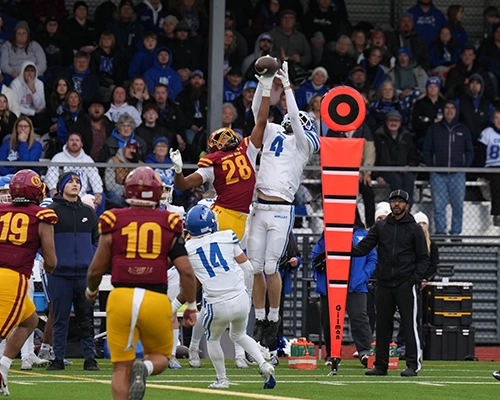
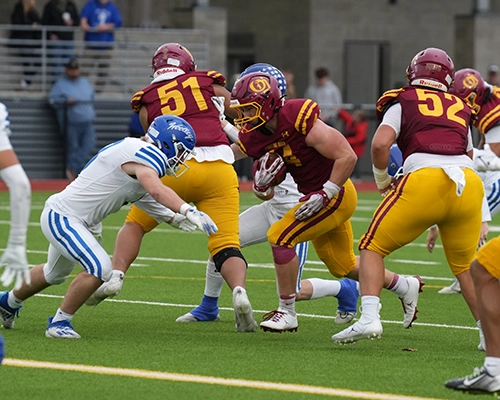
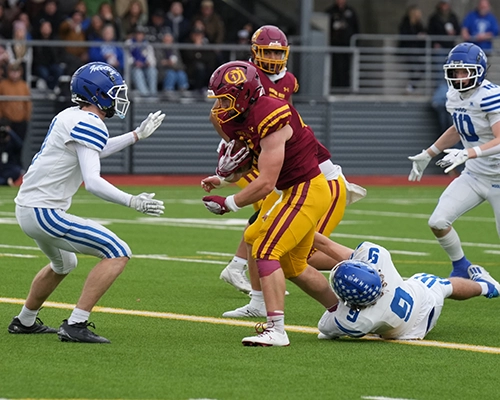
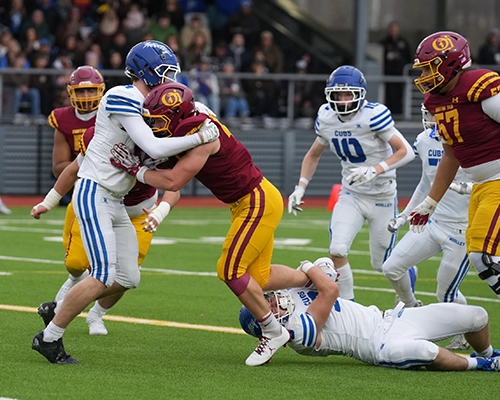
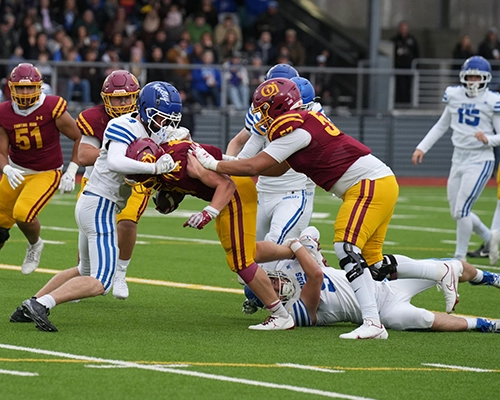
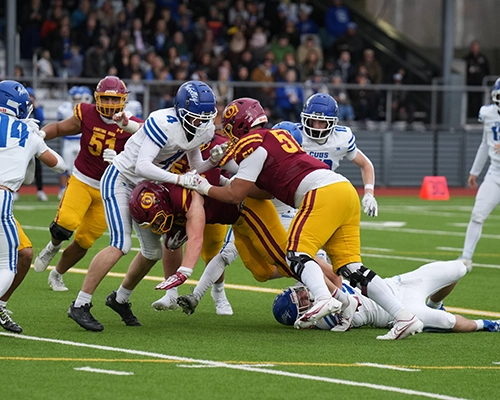
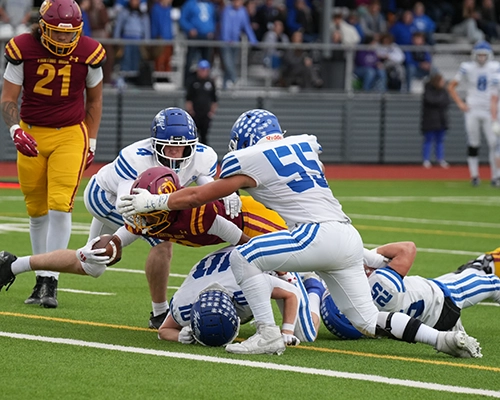
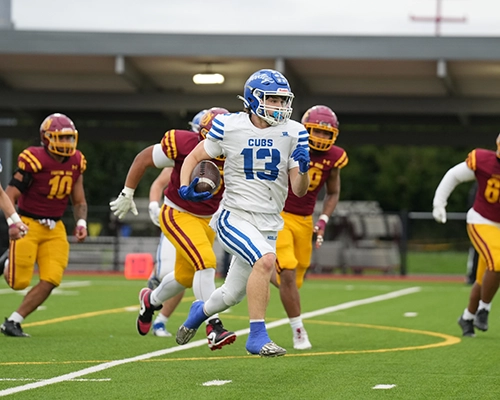
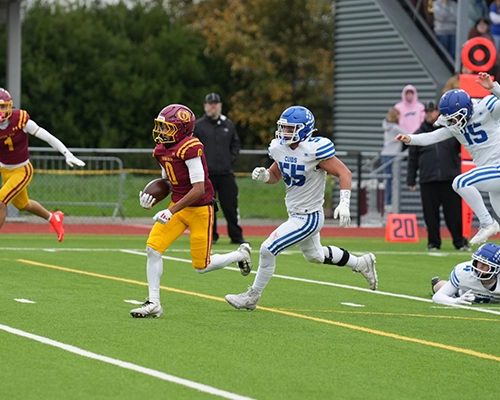
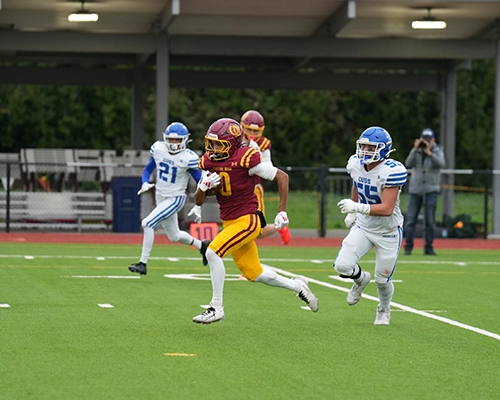
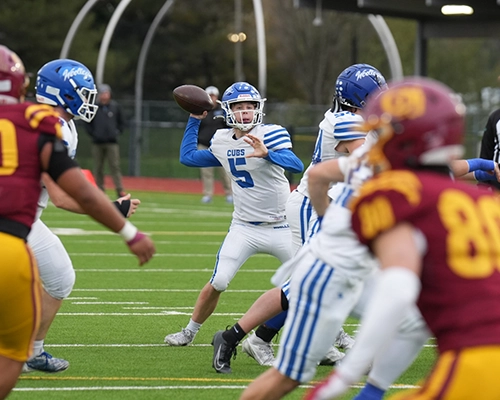
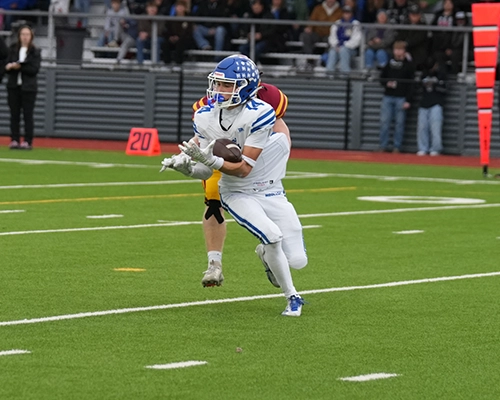
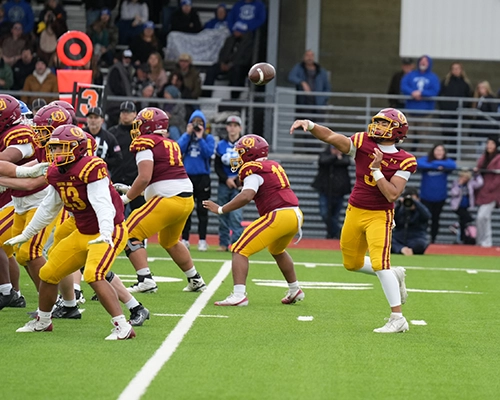
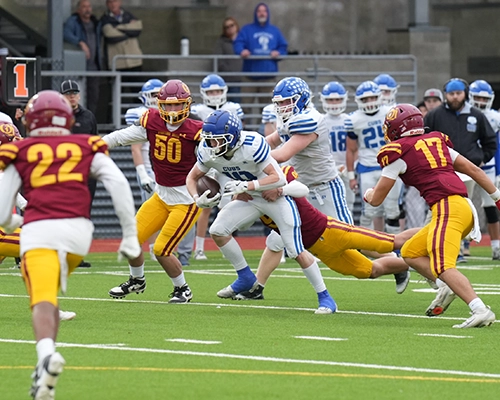
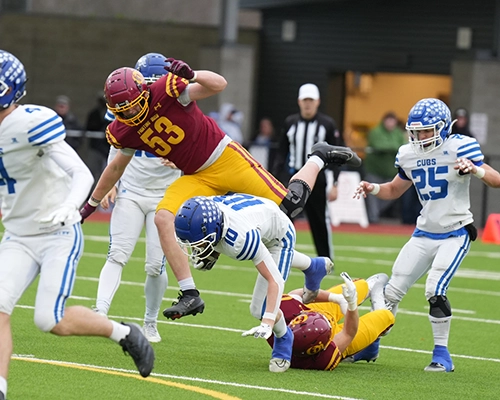
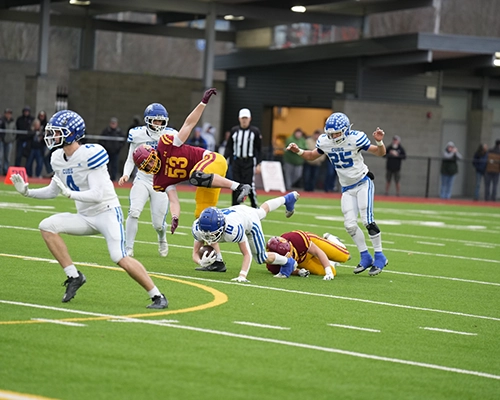
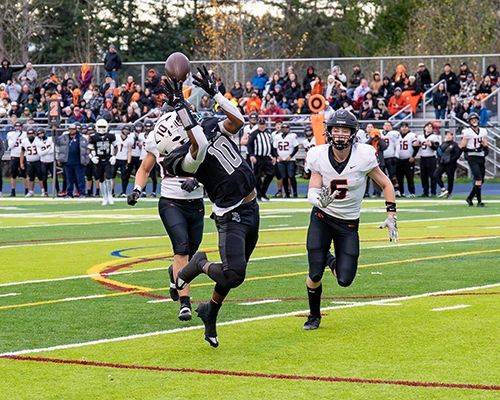
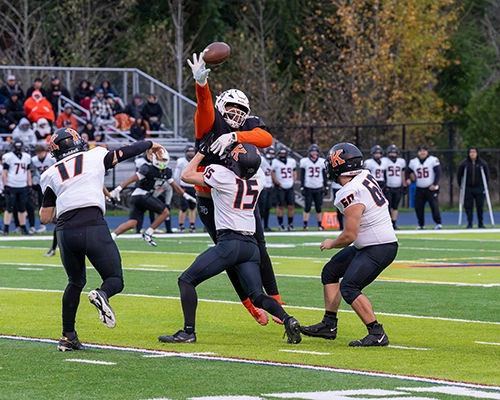
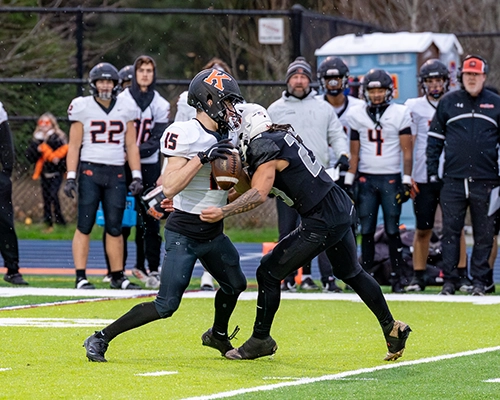
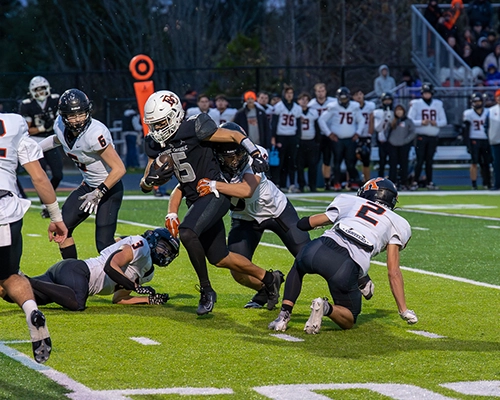
Yesterday afternoon, the O’Dea Fighting Irish took on the Sedro-Wooley Cubs in a quarterfinal matchup in the state 3A football playoffs.
O’Dea received the opening kickoff and wasted no time making their presence known on the field.
O’Dea’s Max Speller ran for 6 yards, then J Shaun Wilson broke loose for 19 yards, quickly pushing O’Dea deep down the field. Speller added another 9-yard dash, but back-to-back penalties stalled the drive and set up a 3rd-and-long. On the next play, quarterback Hutton Leverett’s pass was intercepted by Jaxon Silver. However, Silver fumbled the ball, which was recovered by O’Dea’s Wilson at the Kennewick 8-yardline.
O’Dea would immediately capitalized as Speller picked up 4 yards, and then Micah Lazo ran it in from 4 yards out for the game’s opening touchdown. The kick was good, and O’Dea led 7–0 with 8:46 left in the first quarter.
Sedro-Wooley tried to answer, but after a short run and a broken play, their third-down pass fell incomplete, forcing the Cubs to punt.
O’Dea would strike again as Wilson ripped off a 52-yard run, igniting the crowd. Two plays later, Speller practically bulldozed his way into the endzone for a 6-yard touchdown, extending O’Dea’s lead to 14–0 with 5:44 remaining in the opening quarter.
Sedro-Woolley managed to gather themselves on the next drive. After O’Dea was flagged for pass interference, Cliff Tadema connected on a 25-yard pass to Riley Bowen, then he found Tyler Holt for a touchdown, as the Cubs cut the lead in half, 14–7, with 3:24 left.
Sedro-Wooley attempted an onside kick but touched it illegally, giving O’Dea great field position. The Irish would once again quickly take advantage of the miscue, as Wilson ran for 15 yards, Lazo followed with a 17 yard run of his own, Nino Moksivong rushed for 10 yards, and finally, quarterback Allias Moimoi scrambled 7 yards for the touchdown that gave O’Dea a 21-7 lead with 2:07 remaining on the clock.
The Cubs tried to respond, but penalties challenged their drive. On 2nd-and-20, Tadema was sacked and fumbled the ball, which was scooped up and returned by O’Dea’s Keelan Thomas for an 18-yard defensive touchdown. With 49 seconds left in the first quarter, O’Dea led 28-7, and the quarter closed with Sedro-Wooley gaining 7 yards on the kick return.
Sedro-Wooley opened the second quarter with a pass to Briley Eastwood and another to Bowen, but penalties and incompletions forced yet another punt on their 4th down.
O’Dea took over and started quickly worked their way downfield. Speller ran for 12, Egan for 23, Speller again for 15, and then Prince Witcher powered his way into the endzone from 8 yards out, pushing O’Dea’s lead to 35-7 with 5:26 left in the second quarter.
The Cubs’ next drive went nowhere, and O’Dea immediately answered with another electric play. This time is was a 30-yard touchdown run from Moksivong to make it 42–7 with 3:41 remaining in the first half.
However, Sedro-Woolley wasn’t done fighting. A roughing-the-passer and an unsportsmanlike penalty on O’Dea moved the Cubs deep into Irish territory. Still, O’Dea’s defense held firm until Sedro-Wooley’s offense had a big spark of energy. Tadema found Briley Eastwood for 24 yards, then again for a 3-yard touchdown pass with 30 seconds left. The extra point was blocked by O’Dea’s defensive line, and the score was now 42-13 with under a minute left.
Even with little time left on the clock, O’Dea wasn’t going to let the clock just run out as they entered the half. On the very next series, Leverett’s incompletion set up 2nd-and-10, and Elijah Cabrera took a handoff 49 yards to the endzone, pushing O’Dea’s lead to 49-13 as they entered halftime.
O’Dea kicked to start the second half, and Sedro-Wooley made their way across midfield with the help of short passes and runs. But their drive stalled at the 46-yard line, turning the ball over on downs.
The Irish immediately lit up the crowd and the sidelines again with explosive plays. Peyton Egan chipped in 20 yards, and after a short gain and penalty, Leverett connected with David Schwerzel for 8 yards. On the next play, Moksivong ran untouched for a 22-yard touchdown. With 6:00 remaining in the third quarter, O’Dea led 56-13, triggering a running clock.
Sedro-Wooley punted again on the next drive, and O’Dea closed the third quarter with a completed to Ray Clark III.
With the running clock now in effect, and backups rotating in, the game began to slow down. O’Dea moved the ball with short gains before punting on 4th down.
Sedro-Wooley had one final burst of energy. Tadema connected with Holt for 11 yards, Durfee chipped away a few yards on the ground, Rochester converted a 3rd down, and with time ticking away, Tadema threw one more deep pass to Rochester for a 34-yard touchdown with 16 seconds left. Sedro-Wooley converted the two-point attempt, and on the next series, O’Dea kneeled out the remaining seconds of the final quarter, securing their 56-21 victory over Sedro-Wooley.
After the game, O’Dea head coach, Monte Kohler, said he was proud of how hard his guys worked, and for punching a ticket to the Final Four.
“I am proud, we worked hard and I enjoyed it,” said Kohler. “It is not easy making it to the final four, but we did it. We still have to be better. We are good enough, but mentally, physically, and socially, we just have to put it all together, and I know we can do it.”
Reported by Karrington Kincaid, The Seattle Medium
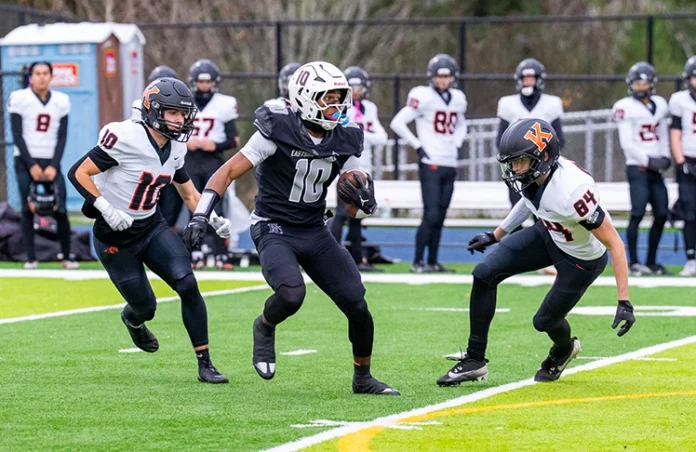
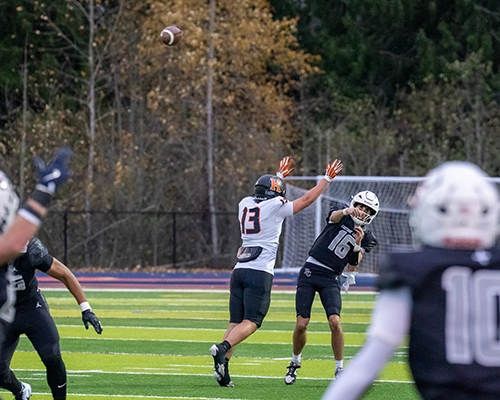
In a complete team performance that combined explosive special teams, efficient offense, and lockdown defense, the No. 3-seeded Eastside Catholic Crusaders overwhelmed No. 6 Kennewick 41–0 in the WIAA 3A state quarterfinals on Saturday night.
The Crusaders struck early and often, erupting for 27 points in the first quarter alone. The tone was set on Kennewick’s opening possession when the Lions went three-and-out, and Eastide Catholic’s Asa Thompson returned the ensuing punt 73 yards for a touchdown. Just minutes later, Eastside Catholic quarterback Luca Villasenor launched a 58-yard touchdown strike to Tytan McNeal to make it 13–0. Eastside’s defense forced another quick punt, and the Crusaders capitalized again, with Villasenor connecting with Thompson for a 33-yard touchdown. Before the quarter ended, Villasenor found Nepo Fareti from 25 yards out, giving the Crusaders a commanding 27–0 lead.
Kennewick struggled to move the ball against Eastside’s disciplined and fast defense. Quarterback Dominic Driver was active both on the ground and through the air but faced constant pressure and tight coverage. While Rivion Brooks broke free for a 13-yard run in the second quarter and Driver added a 9-yard scramble, the Lions lost momentum after an untimely fumble. Eastside Catholic quickly turned that into more points with a sharp offensive series capped by a 6-yard touchdown pass from Villasenor to running back Cayden Pili.
Eastside Catholic led 34–0 at halftime.
Kennewick’s defense came out with more urgency in the third quarter, and Jose Campos III intercepted a pass to give the Lions their best field position of the night. But Eastside’s defense responded by forcing a turnover on downs. On the next drive, Nick Jones churned out yards on the ground, and Villasenor found Fareti once again, this time for a 23-yard touchdown — his fifth of the night.
Kennewick’s final push came in the fourth quarter with Driver connecting with Alexander Pursley for a 20-yard gain and adding a 15-yard scramble. But Eastside again shut the door, as Madden Vestman intercepted Driver’s last deep attempt to secure the shutout.
The Crusaders’ defense stifled every Kennewick threat, forcing three interceptions and holding the Lions to under 50 passing yards on the night. Their pass rush forced errant throws, and their secondary broke up key attempts in crucial moments.
Offensively, Villasenor completed 16 of 22 passes for 255 yards, five touchdowns, and one interception. He connected with six different receivers, spreading the ball with poise and accuracy. Fareti hauled in four catches for 65 yards and two scores, while McNeal had four receptions for 101 yards and a touchdown. Thompson added 60 receiving yards and a punt return touchdown. On the ground, Nick Jones carried 13 times for 70 yards to pace the run game. Pili added 10 yards rushing and a touchdown reception.
After the game, Eastside Catholic head coach Dom Daste praised his team’s consistent preparation and focus.
“One of the things we’re always trying to do is get better,” Daste said. “I think we’re starting to really do that, and it shows in our preparation week in and week out.Whether it’s film, workouts, or practice, the guys have bought in.”
The victory propels the Crusaders (10-1) into the 3A semifinals, where they’ll face No. 2-seeded Mount Tahoma next weekend.
Eastside Catholic Offense:
• Luca Villasenor: 16/22, 255 yards, 5 TDs, 1 INT
• Jordan Meas: 0/2, 0 yards
• Nepo Fareti: 4 receptions, 65 yards, 2 TDs
• Asa Thompson: 3 receptions, 60 yards, 2 total TDs (including 73-yard punt return)
Rep. Wesley Hunt leaves a meeting of the House Republican Conference at the Capitol Hill Club in January. (Tom Williams/CQ-Roll Call, Inc./Getty Images via CNN Newsource)
Rep. Wesley Hunt leaves a meeting of the House Republican Conference at the Capitol Hill Club in January. (Tom Williams/CQ-Roll Call, Inc./Getty Images via CNN Newsource)
By Manu Raju, Sarah Ferris, CNN
(CNN) — GOP leaders in Washington are ramping up pressure on Republican Rep. Wesley Hunt to drop out of the Texas Senate race, warning that his candidacy could cost their party tens of millions of dollars and even upend their midterm map.
But a defiant Hunt told CNN in an interview that he is “absolutely” staying in the heated three-way race against long-time incumbent Sen. John Cornyn and firebrand Texas Attorney General Ken Paxton, even as senior Republicans accuse him of being a “spoiler” in the race that is now all but certain to lead to a costly runoff.
Hunt, a 44-year-old combat veteran and two-term House member, revealed that he planned to officially file for the race this week, setting aside weeks of GOP speculation about whether he would continue with his insurgent Senate campaign or opt to stay in his Houston-area seat instead.
“If Senate leadership does not like me being in this race, you know what I say? Good, because Senate leadership does not pick the leadership in Texas,” Hunt said, insisting that he is the only candidate who can win both the primary and the general election without costing “hundreds of millions of dollars.”
“This is like a David and Goliath kind of story. I have a couple of smooth stones to throw at him, but guess what? They are very effective,” Hunt said, arguing the base is not with the 73-year-old Cornyn, who has held his seat since 2002.
“The people of Texas are looking for an alternative, and it’s absolutely my job to give them one,” Hunt said.
Like Paxton, Hunt is a MAGA loyalist and courting the endorsement of President Donald Trump, who has been lobbied hard by Senate Majority Leader John Thune and other top Republicans to clear the field for Cornyn. But multiple people familiar with the matter have said Trump is unlikely to endorse in the coming weeks – and could wait to choose a candidate until a clear favorite emerges ahead of the March 3 primary.
But that would amount to a huge gamble for Trump. If no candidate wins an outright majority in the primary, then the top finishers would battle in another expensive clash two months later: A May 26 runoff election.
With Hunt in the race, the chances of one candidate winning an outright majority in March are much dimmer.
Plus, there’s real fear that the candidates would be badly battered through months of a grueling primary and runoff – and could give Democrats a shot to pull off an upset in Texas, something the party hasn’t done in a statewide race since 1994. And Democrats are salivating at the prospect of facing Paxton, who has weathered scandals in the state including an impeachment effort just two years ago.
Cornyn warns that the additional months of a campaign would siphon away tens of millions of dollars that could be spent in other states Republicans must win in order to keep the majority.
“He can’t win, so this could well be the end of his political career if he decides to make this race, and he may be thinking about that,” Cornyn told CNN, referring to Hunt’s decision to run for his seat.
Hunt, for his part, brushed off his opponent’s criticism. “I have survived combat. I flew 55 combat air missions in Baghdad. The end of my political career – I’m still alive and well.”
And, Hunt added, “at the end of the day, I am not going to be a 30-year guy that’s hung around the hoop for this long and not pass the mantle on to somebody else when it’s time for you to go.”
“The United States Senate is not a retirement community,” he said.
The increasingly nasty barbs between Hunt and Cornyn have created an unusual dynamic in the three-man race. Paxton — who remains in a virtual tie with Cornyn in a recent poll — has largely stayed on the sidelines while Hunt and Cornyn largely begin to pummel each other. Paxton has spent only $1 million on the race through September 30, compared to Cornyn’s $3.5 million and Hunt’s $2.3 million, according to fundraising data filed for the most recent quarter.
And Hunt sidestepped criticisms of Paxton, who has made headlines over issues like a messy divorce and for reportedly claiming three houses as his primary mortgage.
“I’m not getting in people’s personal lives because that’s just not how I roll,” Hunt said when asked about Paxton.
Paxton declined an interview with CNN through a spokesman.
The stakes of the Senate battle are high, with GOP leaders planning to spend as much as it takes to back Cornyn through both a primary and a runoff, according to multiple people familiar with the internal discussions.
Pro-Cornyn groups have dominated the air waves so far: Cornyn-aligned outside groups have spent roughly $40 million out of the $52.5 million total spent on ads in the GOP primary as of last week, according to figures compiled by the ad-tracking service AdImpact.
Many Cornyn allies are furious at Hunt’s refusal to bow out, arguing that money spent to boost Cornyn so far could be much better spent in battleground contests like North Carolina or Michigan in a midterm environment that’s likely to favor Democrats. For Democrats to win the Senate, they’ll need to pick up four seats, meaning they’ll have to hold every one of their own seats while picking up at least two in red states – with one of them potentially Texas, where they have their own messy primary to navigate.
One Cornyn supporter involved in the race said their allies see Hunt as a “spoiler” adding unnecessary stressors to the race. The person added that Hunt has been told repeatedly, “including by very senior Republicans,” to bow out of the race because, they say, he has no path to victory.
But Hunt says that communication has never come from inside Trump’s orbit. Pressed on whether he has ever been discouraged from running by someone in the White House, Hunt said: “Nobody has told me a word.”
The audience of one
Trump remains the biggest factor in the race.
Behind the scenes, Cornyn and top GOP Senate leaders have stepped up efforts in recent weeks to win over Trump and convince him to endorse as soon as possible. At a recent breakfast at the White House, Cornyn and Thune again made the case to Trump that he has closed the gap in polling after initial polls showed the incumbent senator trailing Paxton by wide margins in the primary, according to multiple people familiar with the exchange.
During his last conversation with Trump, Cornyn echoed what GOP leaders have also stressed to Trump: it could save a lot of money for other key races.
“We’ll spend a lot of money that could be spent more productively elsewhere,” Cornyn said, when asked about his message to the president. “If I’m at the top of the ticket in November, chances are that it will help down ballot races including these congressional seats that are now in litigation. So I think it’s in the president’s best interest, and that’s what I’ve explained to him.”
It’s not Cornyn’s only overture to the president. He also recently made a huge break in his own long-time stance on eliminating the filibuster to align more closely with Trump’s views. Cornyn, so far, has made the most outward efforts to secure that Trump endorsement, with weeks of flattering tweets and shifting of some positions that have caught the attention of many Trump’s allies.
Thune and the Senate campaign chief, Sen. Tim Scott, have also repeatedly made Cornyn’s case to Trump, according to people familiar with the discussions. And Thune has personally helped with Cornyn’s fundraising operation, traveling to Texas last week and phoning donors to secure more support, another person said.
Multiple people close to Paxton, however, believe he is in the strongest position for Trump’s endorsement, if, or when, the president decides to choose a side.
“It ends the race for us the moment it comes out. But him staying out of the race is good for us too. And it’s pretty fatal for Cornyn,” one person close to Paxton told CNN.
Allies of both Hunt and Paxton told CNN that their campaigns are keeping in close touch with the White House. Both campaigns are regularly sending internal polling to Trump’s advisers, according to multiple people familiar with the outreach. This summer, Paxton even flew to Scotland for a brief interaction with Trump at his new golf course, as CNN previously reported.
“He’s following the polling very closely,” Cornyn said of Trump, after speaking with the president in late October about the race.
“I just confirmed what he already knew, which is that we were now essentially in a tie with Paxton. And now with Wesley Hunt in the race, he’s looking for us to continue the trend and to show that we’re likely going to be the winner in the primary,” Cornyn said. “As he and I have discussed, if he were to make an endorsement, the primary would be over. But he’s not ready to do that yet.”
Asked if he would drop out of the race if Trump endorsed Cornyn, Hunt made clear he wasn’t going anywhere.
“Donald John Trump’s endorsement is absolutely incredible in any Republican primary in this great nation, but I’m sorry you cannot revive that dead campaign,” Hunt said of Cornyn’s bid. “Not even Donald Trump can do that, in my humble opinion. So that’s why I got in this race, to give him an option.”
Hunt and Paxton have both sharply criticized Cornyn for his complicated relationship with Trump. The GOP incumbent has rarely broken with Trump on a key vote and — as the former Senate GOP whip — helped pass Trump’s marquee tax cuts bill during his first term.
In recent years, however, Cornyn has angered MAGA loyalists for certain remarks about Trump, including his reaction to the January 6, 2021, riot at the US Capitol when Cornyn called the president’s language that day “reckless.” (Cornyn ultimately voted to acquit Trump during the Senate’s impeachment trial on the matter, unlike his fellow GOP senator facing a brutal primary next year, Sen. Bill Cassidy.)
The senior Texas senator patched up ties with Trump during his 2024 reelection bid. But many hard-right Republicans took notice when Cornyn cut deals with then-President Joe Biden over a pricey bill designed to shore up the US chip-making industry over foreign rivals, as well as a gun safety bill that Cornyn personally shepherded through Congress after a deadly elementary school shooting in Uvalde, Texas, in 2022.
Hunt has repeatedly hit Cornyn for those past votes. Cornyn, meanwhile, has attacked Hunt on another matter: Missing votes in Congress altogether, accusing him of missing more than a quarter of House votes just this year.
The junior House member chalked up his absences, in part, to his son’s time in the NICU when he first came to Congress and, later, his time as a Trump surrogate, criss-crossing the country to speak at rallies and meet with voters in the 2024 race.
Asked about his missed votes this year, Hunt pushed back.
“Are we going to really talk about missed votes? I mean, what is this elementary school? I mean, what do I get a certificate for showing up to work and voting on naming another post office after Sacagawea?” a fiery Hunt said.
His retort to Cornyn: “Maybe you should have missed more votes,” criticizing his voting record.
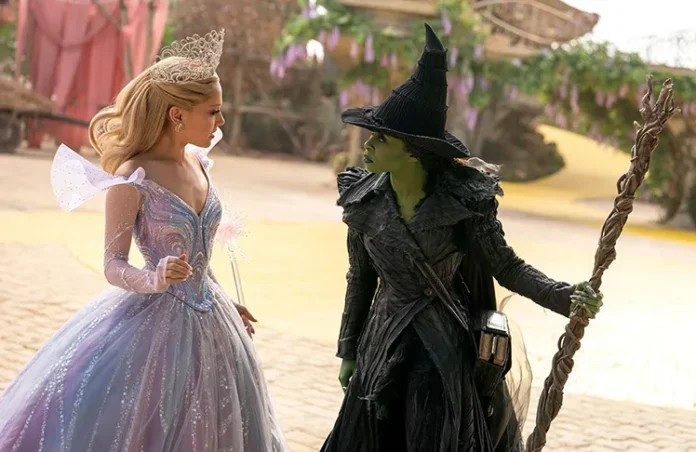
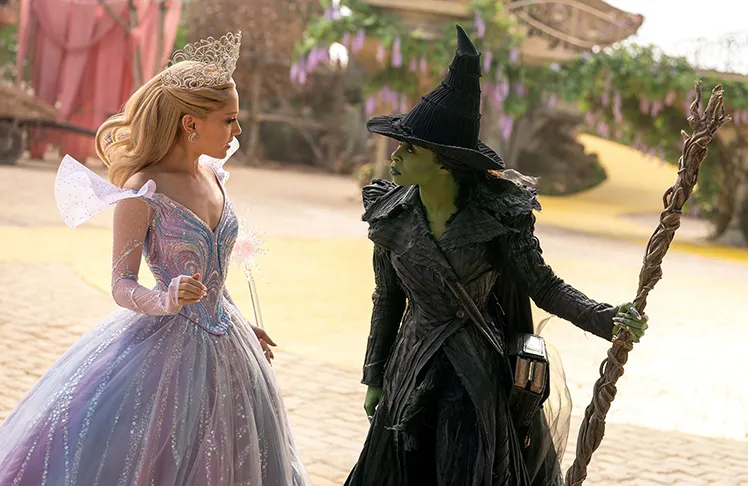
"Wicked: For Good," the second act to last year's musical adaptation "Wicked," broke records with its $150 million domestic opening. (Giles Keyte/Universal Pictures via CNN Newsource)
“Wicked: For Good,” the second act to last year’s musical adaptation “Wicked,” broke records with its $150 million domestic opening. (Giles Keyte/Universal Pictures via CNN Newsource)
By Auzinea Bacon, CNN
(CNN) — There was no place like the movie theater for fans of “Wicked” this weekend.
Universal’s “Wicked: For Good” soared to No. 1 at the weekend box office, earning $150 million domestically and $226 million worldwide — far outpacing its predecessor, “Wicked,” which opened to $114 million domestically during last year’s pre-Thanksgiving weekend.
“It’s never a guarantee that a second installment will outperform an original, especially on the opening weekend,” said Paul Dergarabedian, head of marketplace trends at Comscore. “The first film, and now this movie … created a cultural phenomenon. This was not an overnight success.”
The musical fantasy film,which is a retelling inspired bythe 1900 children’s novel “The Wonderful Wizard of Oz,”became the second-highest domestic opener of the year, behind Warner Bros. Pictures’ live-action “A Minecraft Movie” ($162.75 million) and ahead of Disney’s “Lilo & Stitch” ($146 million). Warner Bros. Discovery is the parent company of CNN.
“Wicked: For Good” also broke a record for a fantasy-adventure sequel opening, according to David A. Gross, who publishes industry newsletter FranchiseRe. Such movies average an opening of $46 million, according to Gross.
“The fact that ‘Wicked’ is up there in the conversation is a triumph … it’s not very long ago when a lot of musicals were not performing well at the box office,” said Shawn Robbins, director of analytics at Fandango and founder of analytics firm Box Office Theory.
Also opening this weekend was Searchlight Pictures’ “Rental Family” ($3.3 million), which was No. 5 overall, and Sony Pictures’ “Sisu: Road to Revenge” ($2.6 million), which was No. 6. The two films failed to share the same success of “Gladiator II,” which had a domestic opening weekend box office of $55.5 million when it opened alongside “Wicked.”
Last weekend’s competitors, Lionsgate Films’ “Now You See Me: Now You Don’t” ($9.1 million), Disney’s “Predator: Badlands” ($6.25 million) and Paramount Pictures’ “The Running Man” ($5.8 million) finished No. 2, No. 3 and No. 4, respectively.
It’s a good sign for Hollywood, which is coming off a historically slow October. The overall box office is now 3.3% ahead of last year’s earnings from January 1 to November 23, according to Comscore data. The domestic box office has grossed roughly $7.5 billion this year, according to Comscore.
Dergarabedian noted that the box office could hit or exceed the $9 billion mark when the year ends. That milestone was previously reached in 2023, the first post-pandemic year to do so.
More of a boost can come on Thanksgiving weekend with Disney’s “Zootopia 2,” which hopes to see similar success from last year’s “Moana 2,” an animated film that grossed over $460 million at the domestic box office.
“Zootopia 2” and “Wicked: For Good” could complement one another at movie theaters, says Daniel Loria, editorial director at Box Office Pro.
“This is really a one-two punch in terms of earning potential for the whole opening weekend picture,” Loria said.
Disney is also expected to dominate the pre-Christmas weekend with “Avatar: Fire and Ash.”
And there is a broad set of movies opening before and during Christmas that could earn as much as $30 million, says Loria. The slate includes Paramount Pictures’ “The SpongeBob Movie: The Search for SquarePants,” Sony’s “Anaconda,” Lionsgate’s “The Housemaid” and Angel Studios’ “David.”
Confident African American female STEM student gives an oral report in front of her classmates. She is standing in front of a chalkboard. Math problems are written on the chalk board. Credit: SDI Productions
Confident African American female STEM student gives an oral report in front of her classmates. She is standing in front of a chalkboard. Math problems are written on the chalk board. Credit: SDI Productions
A new study is sounding the alarm: Even when Black students are at the top of their class, they’re still being shut out of Algebra 1 — the early gateway to every advanced math, college, and STEM opportunity that comes after it.
A study by the Northwest Evaluation Association (NWEA) analyzed data from 162,000 eighth-graders across 22 states and found significant racial disparities in access to Algebra 1.
Only 58% of schools in the sample even offered Algebra 1 by the eighth grade. That percentage dropped to 46% in high-poverty schools and 52% for rural schools. In schools with a large share of Black and Latino students, access gets even more limited: just 45% of them offered the course at all.
Even when Algebra 1 is available, Black students are still far less likely to be enrolled compared to their non-Black peers. Only 17% of Black students enrolled in an Algebra class when it was offered compared to 55% of Asian American students, 36% of white students, and 22% of Latino students.
The study makes it clear: a lack of academic preparation isn’t the problem. Even among the nation’s high-achieving fifth-graders, only 60% of Black students later took an Algebra 1 class. That’s compared to 68% of white and Latino students, and 84% of Asian American students.
According to the researchers, the real problem is how schools decide which kids are “ready” for Algebra 1. “When algebra access depends on subject or inconsistent criteria, even students who are ready for advanced math can be left out,” the study’s authors wrote.
Most schools use a mix of standardized test scores, teacher recommendations, and parent requests to decide who gets placed in Algebra 1. But research shows that those methods can make it harder for Black and Latino students who are well-prepared for advanced mathematics to access Algebra 1.
“Early Algebra is a launchpad – it sets students up for advanced coursework in high school and opens doors to STEM in college and beyond,” Dr. Daniel Long, a senior research scientist at NWEA, said in a statement. “Our analysis shows many students, including high-achieving Black students, are being shut out of that launch because of how placement decisions are made. The good news: there is a practical fix through universal screening.”
Universal screening sorts students into Algebra 1 classes based on demonstrated readiness instead of referrals and resources. States that use this model, such as North Carolina and Texas, which automatically place top scorers on state math tests into advanced classes, have seen gains in the number of Black students participating in advanced math classes.
Researchers say policymakers can begin to close the racial gaps in who takes Algebra 1 in middle school by backing universal screening, particularly in rural and high-poverty school districts. That may require using more resources to hire math teachers and expanding professional development.
Meanwhile, school and district leaders can also expand tutoring services or double the amount of instruction time in a class, strategies proven to improve students’ ability in learning new Algebra 1 concepts.
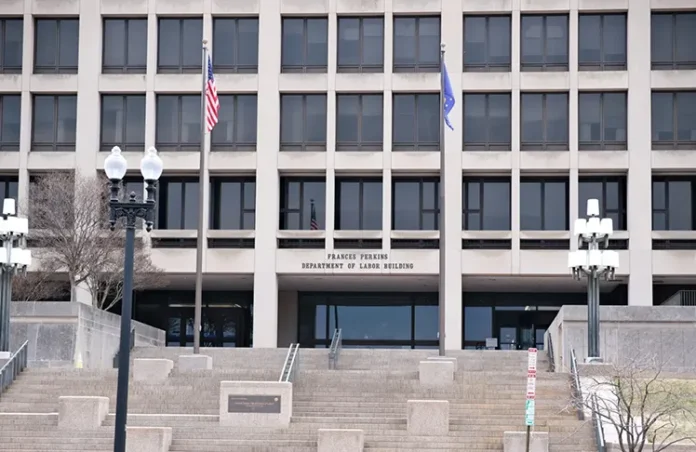
A sweeping federal reshuffle hands control of key K-12 and college programs to agencies with little education expertise — a move experts warn could destabilize funding for low-income students and deepen existing inequities. (Credit: Amy Sparwasse)
A sweeping federal reshuffle hands control of key K-12 and college programs to agencies with little education expertise — a move experts warn could destabilize funding for low-income students and deepen existing inequities. (Credit: Amy Sparwasse)
When it announced earlier this week that the Department of Education would hand over several core functions to the Department of Labor and three other federal agencies, the Trump administration took a giant step toward dismantling the Department of Education.
But critics warn that outsourcing the management of more than $31 billion in school funding for low-income districts and college programs to agencies with no education expertise is a recipe for chaos. The Labor Department, they say, has neither the bandwidth nor the expertise to administer programs such as Title I school funding, which is critical for Black and brown K-12 students.
Angela Hanks, former acting assistant secretary of the Labor Department’s Employment and Training Administration during the Biden administration, says the sweeping move by the White House is rife with unforeseen pitfalls. The White House, she says, likely “[hasn’t] contemplated the scale of what they’re doing.”
The Labor Department Isn’t Built for This
The Trump administration is “doing something this massive to a group of students who, by the nature of the programs that they’re enrolled in, are coming disproportionately from low-income backgrounds,” says Hanks, who is now chief of policy for The Century Foundation, a progressive think tank. “Doing anything to disrupt their education without really grappling with what that could mean for them is just terribly reckless.”
The office doesn’t have the manpower to handle $28 billion in grants to K-12 schools or the $3.1 billion allocated to help students finish college, she says. While the Labor Department administers some educational programs, she says, they are primarily geared toward adults looking to advance in the job market.
The Labor Department will now control the Title I program, which funds high-poverty public schools. Over a third of Black students attend these schools, yet their parents and teachers were not notified of this decision and have little insight into how the shift will impact their learning.
A Restructuring That Critics Call ‘Nonsensical’
In announcing the move on Tuesday, the White House says it is “[breaking] up the federal education bureaucracy” by handing over education programs to the Labor Department and different agencies. President Donald Trump campaigned on dismantling the Education Department and signed an executive order to do so in March. But only Congress — which established the cabinet-level department in 1979, in part to help guarantee racial equity in public education — has the power to close it permanently.
Other Education Department responsibilities, including the Office for Civil Rights and the federal student aid program, weren’t affected by Tuesday’s changes. But the White House is reportedly exploring options for those functions.
In a statement, Secretary of Labor Lori Chavez-DeRemer said her department is “committed” to ensuring that “our K-12 and postsecondary education programs prepare students for today and tomorrow’s workforce demands.” Together with Education Secretary Linda McMahon, Chavez-DeRemet said she will “continue advancing President Trump’s vision to deliver effective, streamlined resources, so every student has a clear pathway from education to opportunity.”
But Randi Weingarten, president of the American Federation of Teachers, called the move “an abdication and abandonment of America’s future,” that will “create more confusion, more mistakes and more barriers for people who are just trying to access the support they need,”
Although the AFT has long favored decentralization of Education Department duties, Trump’s approach “is a deliberate diversion of funding streams that have helped generations of kids achieve their American dream. And it will undermine public schools as places where diverse voices come together and where pluralism, the bedrock of our democracy, is strengthened,” he says.
The Department of Labor will administer K-12 programs and most of the postsecondary education grant programs authorized under the Higher Education Act. The Labor Department will combine the Education Department’s programs with its own.
Meanwhile, the Department of the Interior will oversee Native American education programs; Health and Human Services will evaluate whether foreign medical schools meet U.S. accreditation standards and will manage on-campus child-care support for student parents; and the State Department, which administers the Fulbright Program — the government’s foreign exchange program — will align foreign education programs with U.S. national security and foreign policy goals.
Denise Forte, president and CEO of EdTrust, a nonprofit that advocates for educational equity, called the Trump administration’s move “nonsensical.” Forte added that the decision wouldn’t improve students’ preparation for college or the workforce, and would undermine laws that guarantee an equal education for all students.
“Does anyone think burying family engagement and community schools programs in another agency and starving them of expert staff and resources is going to ‘“fix’” the educational system?” she asks. “This administration insults the intelligence of America’s families in implying that it will,” she says.
A sudden reversal on vaccine–autism guidance sparks outrage from scientists and advocates who warn the move gives credibility debunked claims. (Credit: Peter Dazeley)
A sudden reversal on vaccine–autism guidance sparks outrage from scientists and advocates who warn the move gives credibility debunked claims. (Credit: Peter Dazeley)
During his confirmation hearings earlier this year, Health and Human Services Secretary Robert F. Kennedy Jr. downplayed his reputation as a vaccine skeptic and promised to “follow the science” about a debunked theory linking childhood vaccines to autism.
But the Centers for Disease Control and Prevention, part of Kennedy’s HHS portfolio, reversed years of guidance by declaring this week that a link between vaccines and autism can’t be ruled out — despite years of high-quality research disproving the theory.
Roughly 20% of children diagnosed with autism spectrum disorder are Black.
The change alarmed pediatricians, autism experts and the science community. They worry that, besides elevating one of Kennedy’s pet theories, the CDC statement could drive down childhood vaccination rates, adding fuel to an ongoing resurgence of dangerous childhood diseases like measles and whooping cough.
Scientists Call “Ideological” Shift Dangerous and Lacking Evidence
In a statement, Dr. Susan Kressly, president of the American Academy of Pediatrics, said the CDC’s change in vaccine policy is an “assault on science, public health and evidence-based medicine.”
“We call on the CDC to stop wasting government resources to amplify false claims that sow doubt in one of the best tools we have to keep children healthy and thriving: routine immunizations,” Kressley said.
The change, announced Wednesday, is the latest in a series of moves by Kennedy to implement or create policies that clash with established science on the safety of vaccines and other medicines.
Since taking office, Kennedy has dismissed long-standing vaccine advisory committees, fired the CDC director, and reversed recommendations on COVID-19 vaccination for children and healthy pregnant women. His decisions have triggered lawsuits from medical organizations as well as bipartisan calls for his resignation.
Rather than point to new research as justification for the change, the updated page vaguely refers to previous studies it claims linked autism and vaccines and were ignored by health authorities.
In a statement, the Autism Science Foundation said it was “appalled” by the change, and blasted the CDC for a webpage that “is now filled with anti-vaccine rhetoric and outright lies about vaccines and autism.” ASF noted that multiple studies conducted by scientists in several countries have determined there is no link between childhood vaccines and autism.
Alison Singer, Autism Science Foundation president, told the Associated Press that “the facts [about autism] don’t change because the administration does.” She said Kennedy should be “willing to accept what the existing study data clearly show.”
“You can’t just ignore data because it doesn’t confirm your beliefs, but that’s what the administration is doing,” she said.
Medical Groups Warn of Rising Childhood Disease Risks
In September, RFK Jr.’s handpicked federal vaccine panel, most of whom are known anti-vaxxers, changed its guidance about the combined measles, mumps, rubella and chicken pox vaccination for children under age 4. The panel said children under 4 years should receive separate MMR and varicella vaccines and not the combined MMRV vaccine.
However, the AAP “continues to recommend giving families a choice of vaccines to protect toddlers against measles, mumps, rubella and varicella (MMRV)” despite a calling for removal of one option…”
“Vaccines used in the United States are rigorously tested and monitored for safety. There is no evidence that vaccines cause autism. This issue has been studied thoroughly for many years by experts around the world,” the state of New York’s public health department said.
“What is clear is that vaccine-preventable diseases cause serious illness, hospitalization and death. These outcomes are particularly tragic because they are preventable. As a pediatrician, public health expert, and New York State Health Commissioner, I strongly support the current childhood vaccine schedule.”
The theory that vaccines, particularly the measles, mumps, and rubella vaccine, cause autism first appeared almost 30 years ago, when British physician Andrew Wakefield published a small study in The Lancet.
Wakefield claimed his research pinpointed a link between vaccines and developmental delays in children. But additional scientific investigations involving hundreds of thousands of children thoroughly debunked Wakefield’s claim.
In 2010, The Lancet fully retracted Wakefield’s paper, calling it “utterly false,” and Wakefield’s medical license was revoked. Yet despite overwhelming evidence, the false claim that vaccines cause autism continues to influence vaccine hesitancy and misinformation worldwide.
Michael T. Osterholm, director of the University of Minnesota’s Center for Infectious Disease Research and Policy, called the change to the CDC’s website “a tragic day for public health, for the U.S. government.”
“Ideology has replaced science as the means for addressing life-saving research and best practices that save lives,” he says.
Earlier this year, in response to the CDC’s changing approach to vaccines, Osterholm’s department launched its Vaccine Integrity Project.
Dr. Paul Offit, an infectious disease specialist at Children’s Hospital of Philadelphia and co-inventor of the rotavirus vaccine, says the CDC has abandoned its role as a global leader in science and devolved into “a propaganda machine for RFK Jr.’s fixed, immutable, science-resistant theories.” said , MD,
“The CDC is being weaponized to promote RFK Jr.’s anti-vaccine point of view,” he said. “So why should you trust it?”
Anyone who drives a car understands the sting of having to fill up their tank and pulling into the gas station, only to discover that gas prices have skyrocketed. Paying extra for gas means you have less to spend on other things, which, over time, can really put a crimp in your budget.
Cheap Insurance explored some of the reasons behind major changes in gas prices, and compiled a list of the cheapest gas stations in Seattle using data from Gas Buddy.
Gas prices fluctuate based on several factors, including the cost of the key ingredient, crude oil, as well as the available supply and demand for gasoline. If the price of oil rises, a major refinery goes offline, or more drivers are hitting the road, for example, then the cost will increase.
In the first half of 2022, a unique confluence of events led to a surge in gas prices. The increased demand stemming from the COVID-19 pandemic, Russia’s invasion of Ukraine, and a slowdown in oil production all contributed to a national all-time high of $4.93 per gallon on average in June 2022.
Seasons also affect gas prices. Demand tends to drop in winter, but the cost also falls because gas stations switch to a different blend of gasoline that’s optimal for lower temperatures—and has cheaper ingredients.
Location also matters. The South and Midwest tend to have the lowest gas prices, while the West, including Hawai’i, has the highest. Californians, in particular, pay more for gas on average than any other state. That’s because of its high state excise taxes; its isolation from the country’s major pipelines, which causes supply issues; and its requirements that mandate a more environmentally friendly blend of gas that costs more to produce and adds to the price per gallon.
No matter where you live, read on to see if you can get a deal on gas near you.
#1. Costco – Address: 2219 S 37th St, Tacoma, WA – Price: $3.46
#2. River Rock Tobacco – Address: 21125 Smokey Point Blvd, Arlington, WA – Price: $3.47
#3. Love’s Travel Stop – Address: 1501 33rd Ave E, Fife, WA – Price: $3.49