51 F
Seattle
Friday, May 15, 2026
Home Blog Page 9

What Is Mifepristone?

Mifepristone was approved by the US Food and Drug Administration decades ago and has been shown to be safe and effective. (Evelyn Hockstein/Reuters via CNN Newsource)

By Jen Christensen, CNN

(CNN) — The abortion pill mifepristone is the subject of ongoing lawsuits, as anti-abortion advocates have claimed that the drug is not safe and that the US Food and Drug Administration didn’t study it enough to approve it.

Mifepristone was approved by the FDA decades ago and has been shown to be safe and effective.

How mifepristone works

Along with misoprostol, mifepristone is one of the drugs used for an abortion via medication, as opposed to surgery.

Mifepristone is marketed under the brand names Mifeprex and Korlym, and it’s sometimes known as RU-486.

Mifepristone blocks a hormone called progesterone, which helps the body maintain the inside of the uterus so a pregnancy can continue. A healthy uterine lining is what supports a fertilized egg, embryo and fetus.

Without progesterone, the uterus will expel its contents.

Someone having a medication abortion takes mifepristone and then, after 24 to 48 hours, takes misoprostol. That drug helps empty the uterus through heavy bleeding and muscle contractions.

The medications can be taken as soon as someone learns that they are pregnant and up to 70 days or less since the first day of their last period.

This method is effective 99.6% of the time when used to end a pregnancy, studies show.

How safe is mifepristone?

Data from hundreds of studies and 23 years of approved use has shown that mifepristone is highly safe and effective, according to 12 of the country’s most respected medical associations, including the American College of Obstetricians and Gynecologists and the American Medical Association.

This medicine combination for abortion is also available in more than 60 other countries.

Since its approval in the US in 2000, there have been 5 deaths associated with mifepristone for every 1 million people who used it, according to the FDA. That means the death rate is 0.0005%.

Mifepristone’s safety is on par with those of common over-the-counter pain relievers like ibuprofen and acetaminophen, studies show.

Data analyzed by CNN shows that mifepristone is even safer than some of the most common prescription medications. The risk of death from penicillin, an antibiotic used to treat bacterial infections like pneumonia, for example, is four times greater than it is for mifepristone. The risk of death after taking Viagra – used to treat erectile dysfunction – is nearly 10 times higher.
Side effects of mifepristone

Mifepristone usually doesn’t have many side effects, doctors say, but as with any drug, there can be short-lived ones.

Side effects of mifepristone may include dizziness, weakness, vomiting, headache, diarrhea, nausea, and fever or chills, according to the FDA.

Major adverse events like blood loss, hospitalization or a significant infection are “exceedingly rare,” happening in less than 0.3% of patients, according to the medical associations’ amicus brief.

How often is mifepristone used?

The mifepristone-misoprostol combination is the most common abortion method in the US.

Data from the Guttmacher Institute, a research and policy organization focused on sexual and reproductive health that supports abortion rights, shows that this option has become steadily more common over the two decades it’s been available, rising from less than 10% of all abortions in the US in 2001 to 53% in 2020 and 63% in 2023.

Misoprostol on its own

No matter the status of mifepristone, misoprostol would still be available and could be used for a medication abortion on its own.

The only use of misoprostol that’s approved by the FDA is for the prevention and treatment of gastric ulcers. But some doctors use it “off-label” by itself for an abortion; it can also have other off-label obstetric or gynecologic uses such as inducing labor.

Studies show that misoprostol alone is effective and safe for an abortion and is a “reasonable” option for people who want an abortion in the first trimester, according to a 2019 review of multiple studies, but the two-drug regimen is considered more effective.
This review said that across all studies of people who took only misoprostol, about 78% had complete abortions, and a viable pregnancy was terminated in more than 93% of the cases. At most, 0.2% of cases had serious complications that required a transfusion or hospitalization.

People who take misoprostol on its own for an abortion typically need to take more for it to work, and the side effects can be more intense, Dr. Melissa L. Wong, an obstetrician/gynecologist and a fellow with Physicians for Reproductive Health, previously told CNN.

“Misoprostol still works very well and is very safe,” Wong said. “Mifeprestone typically does not cause any side effects as it stops the pregnancy hormone. With misoprostol, some people may tolerate it a bit less because of some side effects like nausea, vomiting, sometimes things like diarrhea or a transient fever. Those are still safe and expected side effects, but they are still uncomfortable for anyone.”

CNN’s Devan Cole and Ariane de Vogue contributed to this report.

The-CNN-Wire
™ & © 2026 Cable News Network, Inc., a Warner Bros. Discovery Company. All rights reserved.

Gunman Raised Shotgun As He Stormed Security At Press Dinner

Judge Moxilla A Upadhyaya sits in the courtroom during a hearing for Cole Tomas Allen, on Thursday, April 30. (Emily Goff/Reuters via CNN Newsource)

By Katelyn Polantz, Michael Williams, Thomas Bordeaux, CNN

(CNN) — A federal judge privately admonished prosecutors for attempting to grandstand Thursday at a detention hearing for the White House Correspondents’ Dinner gunman, according to a transcript first obtained by CNN.

“I don’t know what’s going on here. I know that you want to present your case, I guess, to some audience other than the Court,” Magistrate Judge Moxila Upadhyaya told three prosecutors in the courtroom on Thursday out of earshot of the public and press. “I don’t want this to turn into a circus.”

Upadhyaya’s comments highlight a dynamic that has arisen in the six days since Cole Tomas Allen allegedly tried storming the press dinner, with Trump administration officials aggressively describing their theory of the alleged attempted assassination of the president — the third in two years — in news interviews and unsolicited court filings.

Several times, DC US Attorney Jeanine Pirro and others in television interviews have gone much further and given more definitive descriptions of the shooting than the detail that’s been represented in court from the FBI and Justice Department line prosecutors. They’ve also emphasized the law enforcement response as a success.

A CNN analysis of hotel surveillance video released by the DC US Attorney’s Office on Thursday, coupled with audio taken from inside the ballroom during the shooting, does not definitively conclude when or if Allen fired a shot. But the audio analysis does indicate that six shots total were fired during the incident, which aligns with initial statements by law enforcement that Allen fired one shot, while a responding officer fired five more.

Secret Service Director Sean M. Curran on Thursday said Allen shot an officer at point-blank range. Pirro said Thursday on Fox News that he fired at the Secret Service officer.

Court filings describing the events have been less definitive, and in some cases have contradicted the initial claims from top administration officials.

The latest available court filing describing what happened reads: “A USSS officer observed the defendant fire the shotgun in the direction of the stairs leading down to the ballroom.”

While Allen faces an initial charge of discharging a firearm during a crime of violence, his charges could expand or be changed as a grand jury investigation progresses toward an indictment.

The investigation into the shooting remains in its early stages, the Justice Department has said repeatedly. The Justice Department didn’t respond to specific questions related to the video evidence released Thursday.

Questions about Allen’s intent as he ran toward the ballroom Saturday night are likely to linger over his legal case, and the Justice Department’s initial representations could become more important in court proceedings down the road.

His defense attorneys have already attempted in court filings to sow doubt about whether Allen intended to commit a mass shooting.

CNN video analysis

CNN’s analysis of video of the Saturday incident does, however, provide more insights into how the shooting unfolded at the event and raises questions about whether the officers were at an appropriate posture when the gunman entered the space.

In the video, Allen is seen entering a door about 35 feet away from where law enforcement officers were breaking down the magnetometers, one level above the ballroom where the dinner was taking place. The door Allen entered led to an elevator bank.

Inside the ballroom, President Donald Trump, Vice President JD Vance, several Cabinet officials and thousands of attendees were being served the first course of the dinner.

The video shows a law enforcement K9 and its handler looking inside the door that Allen, who was wearing a long coat that prosecutors say he hid his shotgun under then discarded, entered. The dog briefly enters the door, though it remains unclear what exactly they saw.

Next, the video shows Allen coming back through the door and sprinting toward a group of several law enforcement officers at the security checkpoint.

The officers were in the process of breaking down the magnetometers at the time. One officer, a uniformed member of the Secret Service, appears to notice Allen several seconds before the others.

That officer, who was standing on Allen’s right, near two more members of law enforcement, drew his pistol and aimed it toward Allen. Almost instantaneously, Allen ran through a remaining magnetometer and leveled his shotgun at that Secret Service officer.

The video shows dust near a ceiling light becoming unsettled as Allen levels his shotgun at officers, but before a muzzle flash — a visual light emitting from the barrel of a gun which indicates it has been fired — is seen from a responding Secret Service officer who first noticed Allen.

That dust could have been dislodged by a shot from Allen’s shotgun, even if a muzzle flash from the gun is not visibly apparent due to the quality of the video. Six shots are heard on the audio taken from the ballroom in total, according to Robert Maher, an audio forensic expert at Montana State University, who reviewed the audio for CNN.

It took Allen less than three seconds from the point where he reemerged from the door leading to the elevator bank to when he was through the magnetometer.

The video clearly shows four muzzle flashes from the Secret Service officer who initially noticed Allen. Other members of law enforcement and the Transportation Security Administration, who assisted with security screening at the dinner, appear to react to those gunshots.

As officers rush to restrain Allen, two small objects — apparently knives that law enforcement says he was carrying with him at the time — can be seen sliding back into the frame from the direction which Allen ran.

Law enforcement has said that the officer who fired the shots toward Allen was struck by gunfire in his protective vest. Specifically, a letter the Justice Department sent to Allen’s attorneys on Wednesday says, “at least one fragment was recovered from the crime scene that was physically consistent with a single buckshot pellet,” noting it backs up the Justice Department’s belief he fired at the agent.

Allen’s defense team is still questioning, however, whether Allen actually fired his shotgun — loaded with buckshot that would have sprayed a heavy blast — to hit the agent, according to a letter they wrote to the prosecutors on Wednesday.

Early public statements

Despite limited early information, top Trump administration officials rushed to provide a more definitive account of the incident than the available evidence has so far shown.

Shortly after the shooting, Blanche said Allen was “promptly tackled and detained by law enforcement,” only to be contradicted by prosecutors who said Allen “fell to the ground.” Pirro has said the agent wasn’t hit by friendly fire.

Another photo Pirro’s office released on Thursday shows Allen’s shotgun lying at the bottom of a landing in the stairs to the ballroom, a half floor down from where he was running. In that photo, it is marked with an evidence flag.

At the hearing on Thursday, prosecutors were prepared in court to show the new video and photos they had of the shooting, Allen’s weapons and of the hotel crime scene. Upadhyaya stopped them from doing this in court, because it was not needed after Allen’s lawyers said he agreed to remain detained while he awaited trial, she ruled.

Appearing annoyed, the judge then called the prosecutors and defense team to the bench to speak with them privately, where the judge continued to call out the Justice Department’s approach.

The court released a transcript of the exchange after the hearing following a request to the judge from CNN.

Serving as the backdrop to the admonishment is the political circumstances that some of these officials find themselves in as Trump has signaled an increased openness to replace those — like former Attorney General Pam Bondi — whom he believes do not react quickly and publicly enough to sensitive investigations.

The exchange also highlights how early and incomplete the investigation still is.

“We’re five days into this investigation,” prosecutor Jocelyn Ballantine responded to the judge, according to the transcript. “As soon as we have finalized reports and discovery” — meaning evidence that the defense team can review — “that we’re in a position to be able to accurately provide to counsel, we will be doing that. We take our discovery obligations seriously.”

Ballantine then says the US Attorney’s Office wasn’t ready to discuss in open court the documents they have so far from the investigation.

Following the hearing, the US Attorney’s Office put into the court record and posted on social media the videos and photos they had prepared.

They said, in a letter to the judge, the Justice Department “now formally completes the record.”

This story has been updated with additional details.

CNN’s Aleena Fayaz and Holmes Lybrand contributed to this report.

The-CNN-Wire
™ & © 2026 Cable News Network, Inc., a Warner Bros. Discovery Company. All rights reserved.

‘We Are Killing Them All Over Again’: Critics Say History Is Being Erased As Trump Reshapes Narratives At National Parks

When tourists see a statue of Gustavus Cheyney Doane, a 19th-century explorer, at a Grand Teton National Park visitor center this spring, a marker beneath it that used to be there will now be missing. (Photo Illustration by Alberto Mier/CNN via CNN Newsource)

By Kaanita Iyer, Piper Hudspeth Blackburn, Aleena Fayaz, CNN

(CNN) — When tourists see a statue of Gustavus Cheyney Doane, a 19th-century explorer, at a Grand Teton National Park visitor center this spring, a marker beneath it that used to be there will now be missing.

It had asked visitors: “How do we acknowledge the good and bad of a figure?” pointing out that Doane’s expedition led to the designation of the first national park – but also that he helped lead a massacre of at least 173 members of the Piegan Blackfeet – an act he bragged about throughout his life.

Its removal was cited in a lawsuit against the Department of the Interior, which manages the country’s national parks, as one of many changes wrought by President Donald Trump’s March 2025 executive order directing the agency to “take action” against public content that “inappropriately disparage Americans past or living.”

The Trump administration argues the order ensures that American history is portrayed in a positive light. But critics say it is erasing elements of the nation’s past.

“We are killing them all over again,” said Tom Rodgers, a member of the Blackfeet Nation who is known as One Who Rides His Horse East, referring to victims of the massacre, which he called one of the “most despicable historical experiences” for Native Americans.

“I think we’re at a point in our country where people think that if you tell half the truth, you’ve told all the truth, and that in itself, is a lie,” he said. “It’s Orwellian.”

As the country heads into peak tourist season, evidence of the administration’s unprecedented cultural overhaul will be on display at national parks around the country. The removal of the words at Grand Teton is one of at least 45 changes that were carried out under the executive order, according to Save Our Signs, an advocacy group that tracks changes to National Park Service displays.

For example, in California’s Muir Woods National Monument, signs on the contributions of Native Americans and women have been removed, including a note informing visitors that John Muir once referred to indigenous people using racist language in his diaries and ignored “the genocide they survived.”

“This contributes to an idea that indigenous people don’t belong in parks,” the sign once said.

The administration has also taken aim at warnings about climate change, a factor that impacts monuments placed in natural landscapes.

At South Carolina’s Fort Sumter National Monument, a sign that included details on the looming impacts of climate change, including information on how “rising seas could inundate most of the fort’s walls and flood the historic parade ground” has been removed in its entirety.

The Interior Department told CNN that at Fort Sumter, it “acted to replace materials that were not grounded in real science with information that is accurate, evidence-based, and aligned with how the world actually works.”

Meanwhile, in Washington, DC, a display on George Mason, a founding father, has removed references to him “paradoxically” owning slaves despite being a champion of “individual rights.”

The removals come as America enters a moment replete with opportunity to reflect upon its history, with celebrations to commemorate its 250th birthday throughout this year.

The Trump administration’s efforts have drawn backlash from some lawmakers and advocacy groups, including the February lawsuit from a coalition of conservationists and advocates citing the Doane and other sign removals. It accused the administration of “mounting a sustained campaign to erase history and undermine science.” The case in Massachusetts is still pending.

The Interior Department told CNN: “This effort is not about removing history. It is about ensuring taxpayer-funded displays present history in a balanced, factual and appropriate manner that reflects America’s full story, including its extraordinary achievements and its challenges.”

Experts and local park leaders were consulted “as appropriate” for removal decisions, it said, and argued that the directive “strengthens public trust and helps visitors better understand the complexity of America’s story.”

Widespread removal

Following Trump’s executive order, the Interior Department ordered a review of content such as exhibits, films, pamphlets and signs at national parks.

The department also directed NPS to encourage national park visitors to submit comments on signs, including whether they notice any “negative” messaging about “either past or living Americans.”

If an item was deemed to be “inconsistent” with Trump’s executive order, it could be removed or replaced.

According to an internal NPS database seen by CNN, hundreds of displays were flagged for review.

The array of content flagged included a diverse set of items deemed as potentially disparaging to Americans “past or living.”

Items marked for review include books for sale about slavery, displays about the forced internment of Japanese Americans during World War II, and a film about 19th century mill workers in Massachusetts.

While it does not say which were removed, it contains notes that reflect how widely department guidance was interpreted.

One flagged display recalled abolitionist Elijah Parish Lovejoy’s killing. “This document states a ‘mob murders’ an abolitionist. Does this denigrate the murderers?” the comment asks. It suggests rewording the inscription to “Abolitionist editor Elijah Lovejoy is murdered for his views.”

A panel at a National Park in St. Croix is flagged with a note saying it “discusses the slave trade and its connection to the sugar industry which some may find disparaging or inappropriate.”

The sign below Doane’s statue was flagged with a comment noting that it was “temporary” and could be removed “as necessary.”

The Interior Department contended that the database was “edited before being inappropriately and illegally released to the media in ways that misrepresented the status of this effort,” but did not specify what was changed.

“Employees who altered internal records and leaked in an effort to hurt the Trump administration will be held accountable,” the agency said in a statement.

A source familiar with the database confirmed the accuracy of its contents to CNN, and that the changes were only in formatting.

Kym Hall, a former NPS regional director who retired in October 2024, told CNN that she has heard from current agency staff that they are burned out and demoralized after being required to carry out sign changes and removals.

“That’s the recurring theme … ‘This isn’t what I signed up for because this isn’t who we are as an organization,’” Hall said of her conversations with friends and former colleagues.

Advocates push back

Since the removals began last summer, several national park advocates have been pushing back against the administration’s claims that it is restoring the truth.

“We do great damage to ourselves, our own souls when we seek to control a narrative that is not true,” Rodgers told CNN.

Rodgers — who was part of the effort that renamed Mount Doane in Yellowstone National Park to First Peoples Mountain — accused the administration of attempting to “spin” Doane’s legacy with the sign removal at Grand Teton.

The administration is “erasing half of the narrative” Elizabeth Villano, a co-creator of the Muir Woods sign, wrote in a LinkedIn post in response to the sign changes there.

Pushback has brought mixed success.

Last month, a federal court blocked the NPS from going forward with plans to replace slavery-related exhibits at the President’s House Site in Philadelphia. Critics said that the new panels sanitized the exhibition, which was erected to recognize individuals enslaved by George Washington.

Democrats in the House and Senate have sent letters to Interior Department leadership as recently as April, asking for further clarity about the agency’s review.

The Interior Department has not responded to letters from Democrats in Congress, according to the offices of Sen. Martin Heinrich and Reps. Sharice Davids and Jared Huffman.

The meaning of history

Huffman also expressed alarm at the cultural overhaul taking place just months ahead of the 250th anniversary of the country’s founding. “Actual history is getting whitewashed and censored from national parks and museums,” Huffman said at a February hearing, “We should honor the 250th anniversary of America by telling the truth.”

Alan Spears, a senior director at the National Parks Conservation Association, told CNN: “This notion of needing to restore truth and sanity to American history is one of the largest red herrings in American history. It’s trying to resolve a problem that doesn’t really exist, that never really existed.”

The White House defended the removals. In a statement, White House spokesperson Taylor Rogers told CNN that Trump “is honoring our country’s extraordinary heritage and restoring a sense of national pride.”

“The President has put an end to the radical left’s divisive and inaccurate characterization of our nation’s history, which infiltrated our national parks and museums, and is restoring truth and sanity,” she said.

But the course of history changes, Rodgers, the Blackfeet Nation member, noted: Those in charge now won’t be in power forever, “and there will be a time and a place of our choosing to rectify this,” he said.

The-CNN-Wire
™ & © 2026 Cable News Network, Inc., a Warner Bros. Discovery Company. All rights reserved.

How ChatGPT Conversations Became ‘A Treasure Trove’ Of Evidence In Criminal Investigations

Investigators are looking closer at what people tell ChatGPT, and what ChatGPT tells them in return. (Matthias Balk/picture-alliance/dpa/AP via CNN Newsource)

By Eric Levenson, CNN

(CNN) — Days before two University of South Florida graduate students went missing last month, a roommate of one of the students allegedly asked the AI chatbot ChatGPT an unusual question.

“What happens if a human has a put (sic) in a black garbage bag and thrown in a dumpster,” Hisham Abugharbieh asked on April 13, according to an affidavit filed by Florida prosecutors.

ChatGPT responded it sounded dangerous, the document states, and Abugharbieh then asked another question: “How would they find out.”

Those alleged entries to ChatGPT, included in court documents charging Abugharbieh with two counts of first-degree murder, are just the latest instance of investigators using AI chat histories as evidence in criminal investigations. A ChatGPT conversation was similarly used in the Los Angeles wildfires arson case, and a Snapchat AI conversation was key evidence in a 2024 murder trial in Virginia.

For investigators, these chat logs can provide valuable insights into a suspect’s mindset and motive.

“I think any communications with AI chatbots is like a treasure trove for law enforcement agencies,” said Ilia Kolochenko, a cybersecurity expert and attorney in Washington, DC. “(Suspects) believe their interactions with AI will remain confidential or will at least remain undisclosed or undiscovered, so they frequently ask very straightforward, very direct questions.”

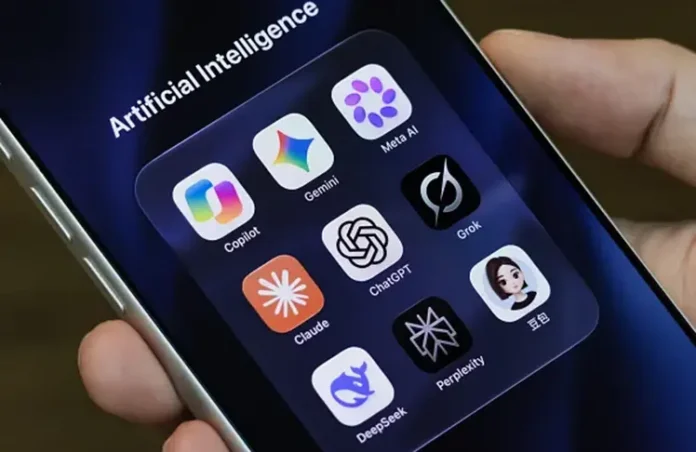
The criminal cases underscore the growing use of AI chatbots for personal advice and the lack of privacy protections for those conversations. While AI chatbots have rapidly become a go-to source for legal advice, medical diagnoses and therapy, those conversations are not legally protected the way they would be with a licensed lawyer, doctor or therapist.

OpenAI CEO Sam Altman has said this lack of privacy is a “huge issue.”

“People talk about the most personal sh*t in their lives to ChatGPT,” Altman said last July on a podcast with the comedian Theo Von. “People use it, young people especially, like use it as a therapist, a life coach, having these relationship problems. ‘What should I do?’

“And right now, if you talk to a therapist or a lawyer or a doctor about those problems, there’s like legal privilege for it. There’s doctor-patient confidentiality, there’s legal confidentiality, whatever. And we haven’t figured that out yet for when you talk to ChatGPT. So if you go talk to ChatGPT about your most sensitive stuff and then there’s like a lawsuit or whatever, we could be required to produce that.”

Several legal experts who spoke to CNN agreed with that analysis and said there was no expectation of privacy on AI chat apps.

“In my firm, we’re treating it as: Anything that somebody’s typing into ChatGPT is something that could be discoverable,” said Virginia Hammerle, an attorney based in Texas.

As investigators closely examine what users tell ChatGPT, they have also begun looking more closely at what ChatGPT tells users.

Last week, Florida’s attorney general launched a criminal investigation into OpenAI, alleging ChatGPT gave “significant advice” to the Florida State University mass shooting suspect. In Canada, the families of victims in a February school shooting sued OpenAI and Altman on Wednesday, alleging the company and its ChatGPT chatbot were complicit in the attack.

OpenAI laid out its “commitment to community safety” in a lengthy statement Tuesday. “We will continue to prioritize safety⁠ while balancing privacy and other civil liberties so we can act on serious risks,” the company said.

Of course, the vast majority of people won’t be implicated in a gruesome murder case. Still, legal experts told CNN that people should be cautious of what they tell AI chatbots, given these privacy issues and its growing role in people’s lives.

“It’s only going to get more relevant, more timely, (and) more contentious as people continue to look for ChatGPT and other forms for information about what they’re doing,” CNN legal analyst Joey Jackson said.

Chat logs in the courtroom

The use of AI chat conversations in criminal cases is new, but legal experts said it’s similar to how the law treats Google searches.

In general, this type of electronic evidence can reveal a person’s motive, actions and state of mind, Jackson said.

For example, Brian Walshe was found guilty last year of the murder of his wife, Ana, after prosecutors showed the jury his macabre Google searches, such as “10 ways to dispose of a dead body” and “can you be charged with murder without a body.”

Separately, Karen Read’s murder trials – in which a Boston police officer was found dead in the snow – focused on the meaning and mindset of a witness who had typed the Google search “(how) long to die in cold.” Read was ultimately acquitted of the most serious charges.

Queries to AI platforms revealing a suspect’s mindset have similarly come into play in several significant cases.

Last October, federal prosecutors charged Jonathan Rinderknecht with arson for allegedly starting a fire that later developed into the destructive Palisades Fire in California. Part of the evidence included his requests to ChatGPT. He asked the app to produce an image of people running from a fire, and he said that he once burned a Bible and “felt so liberated,” according to an affidavit in support of a criminal complaint.

After he called 911 to report the fire, he asked ChatGPT, “Are you at fault if a fire is lift [sic] because of your cigarettes,” according to the affidavit. However, prosecutors allege he started the fire “maliciously,” likely with a lighter, and say his question to ChatGPT was an attempt to create a more “innocent explanation” for the cause of the fire.

Rinderknecht has pleaded not guilty to the charges. His attorney, Steve Haney, told CNN his client was not responsible for the Palisades Fire and said he has filed motions to exclude some of the ChatGPT evidence.

“It is our position that ChatGPT logs are neither a confession nor a crime scene,” he said in an email. “The government is asking a jury to read a man’s mind through a search bar, and neither science nor the law has ever permitted that kind of leap.”

In the case of the USF killings this month, the suspect’s questions to ChatGPT were noted in a criminal affidavit.

In addition to the question about putting a human in a garbage bag, Abugharbieh asked ChatGPT whether he could legally keep a gun at home without a license and whether a car’s Vehicle Identification Number could be changed, the affidavit states.

In the days after the disappearances of Zamil Limon and Nahida Bristy, the alleged searches continued. On April 19, Abugharbieh asked ChatGPT, “Has there been someone who survived a sniper bullet to the head,” “Will my neighbors hear my gun” and “Is there a water temperature that burns immediately,” the affidavit states. On April 23, he searched, “What does missing endangered adult mean,” according to the filing.

Limon’s body was found in a garbage bag, officials said. Another set of human remains were found in a second garbage bag, but they have not yet been confirmed to be Bristy’s, officials said.

Abugharbieh has been charged with two counts of first-degree premeditated murder. He has not entered a plea on the charges and was ordered held without bond. The Hillsborough County Public Defender’s Office was appointed to the case but declined to share details, citing Abugharbieh’s right to a fair trial.

Privacy concerns and the next frontier

So should AI conversations have greater privacy protections?

In his conversation with Von, Altman pushed for privacy protections for AI conversations, saying he was “very afraid” the government would use chat logs to surveil people.

“I think we really have to defend rights to privacy,” he said. “I don’t think those are absolute. I’m like totally willing to compromise some privacy for collective safety, but history is that the government takes that way too far, and I’m really nervous about that.”

Other tech figures have made similar arguments. Nils Gilman, a historian and senior adviser for the Berggruen Institute think tank, advocated in a New York Times op-ed last year for laws creating a legal privilege for AI.

Speaking to CNN, he argued that policymakers created legal privileges for doctors, lawyers and therapists because the social benefit of having honest conversations outweighs the state’s interest in accessing that information.

“Insofar as people are using (large language models) the same way, they should be afforded the same kinds of privileges,” Gilman said.

In the eyes of the law, though, AI chatbots don’t have any such expertise or protections. Conversations with AI are equivalent to any other electronic data, such as a credit card swipe or phone call logs, legal experts said.

“You’re inputting data into an actual application, and as a result of that, you don’t have any particular protections associated with that data,” Jackson, the CNN legal analyst, said. “It would be like me making a phone call and then arguing you can’t use the phone call against me.”

There may be some protections in specific situations. For example, if your attorney puts your private case file into a chatbot’s database, would that be discoverable evidence? What if you are representing yourself in court and ask ChatGPT for help drafting a document?

“The law is still trying to catch up with the real world right now,” Hammerle said.

But as the law stands now, those AI conversations can find their way from a computer into the courtroom.

“ChatGPT is not your friend, is not your lawyer, is not your doctor, is not your spouse,” Gilman said. “Stop talking to them as if they are.”

The-CNN-Wire
™ & © 2026 Cable News Network, Inc., a Warner Bros. Discovery Company. All rights reserved.

The King And The Would Be King

By Dr. E. Faye Williams

(Trice Edney Wire) – King Charles of the UK came to the US a few days ago, apparently to fix the frayed ties with the U. S. Since the King had a brother involved in the Epstein crimes, he was asked to speak to the women who were the victims of the crimes. Such a small ask, but the King turned the invitation down, probably as a courtesy to Trump. To his credit, the King has already dealt with the problem in the U.K. He did it by quickly taking privileges from his brother, including his royal status! Still nothing like that has happened to the men involved in the U.S. As a matter of fact, no action has been taken by the Trump Administration—not even a verbal apology.

Before I go on, let me mention the Queen and the First Lady. They deserve a line in my assessment of this visit to America during these turbulent times. My observance may be nothing more than trivia, but the two are prominent in this royal visit. Queen Camilla, as British women often do, wore a beautiful hat, that turned upward on one side just in case King Charles wanted to throw a little kiss her way. Now our First Lady, Melania, on the other hand, took another approach. She stood as tall and frozen as military personnel do, with her hands firmly holding her sides so that the person beside her could not grab them and pretend they just can’t keep their hands off each other! She wore that hat, as usual, that basically said, “Don’t touch me. Keep your distance or my hat will hit you in your mouth!” I love the way she protects herself from having to endure a kiss in public.

Now, back to those over whom he rules, Trump must be wondering why he gets no applause for this war against Iran. It hasn’t gotten him the positive attention he had hoped he would get.It hasn’t made high gasoline prices any cheaper, nor lowered food costs, nor won any friends from other nations,nor helped Ukraine in any way, nor gained support from the citizens over which he rules, no compliments for his position on downgrading funds in the budget for childcare, housing, food, education, his argument with the Pope, his ballroom, attempts to place his picture on the money, on our passports or trying to build statues of himself. He has begun firing his staff that he selected because they aren’t getting positive results for him and his unconstitutional actions to succeed.

Of course, that didn’t stop his pal, Senator Lindsey Graham, from cheerleading for him by supporting a $400 million dollar contribution of our tax dollars to his White House Ballroom. He said it even while the Would Be King was telling us it wouldn’t cost taxpayers anything! I guess they forgot to share their notes on that matter!

It must have been a little stinger from a U.K. Ambassador about what he said a few years ago. As King Charles spoke and received a lot of applause from both sides of the aisle with no compliments to Trump, some will say, they didn’t clearly hear what he said, and they were just trying to be polite!

The real King granted the Would Be King no slack. He was gracious, but told no lies about what a “great job” the Would Be King is doing when he tries to put NATO down for not helping Trump with his unapproved, unprovoked war against Iran. His War Secretary admits to spending over $25 billion dollars and growing when President Barack Obama’s Administration already had a working deal with Iran about nuclear weapons! Sorry Would Be King, but maybe you should take a lesson from a real King, Charles, and a real President,Barack Obama!

Dr. E. Faye Williams is President of The Dick Gregory Society.

WATCH: Breaking Down Video Of The White House Correspondents’ Dinner Shooting

CNN’s Josh Campbell breaks down newly released video of gunman Cole Tomas Allen in the lead-up to the White House Correspondents’ Dinner shooting.

Podcast: Seattle Public Schools Adopt Cell Phone Policy To Boost Student Focus

Seattle Public Schools is set to implement a new district-wide cell phone policy next week, mandating that students keep their devices powered off and out of sight throughout the school day. The initiative aims to enhance student focus, minimize classroom distractions, and establish uniform expectations across all district campuses. The policy introduces more stringent regulations for younger students, while high schoolers will be permitted limited usage. Seattle Public School’s Superintendent Ben Shuldiner shares more details about the new policy on this episode of the Rhythm & News Podcast.

Interview by Chris B. Bennett.

Podcast: Black Panther Park Opens In Skyway, Fostering History, Identity, And Healing

Black Panther Park has officially opened in Skyway, Seattle, marking a significant community achievement dedicated to preserving the legacy of Seattle’s Black Panther Party. The new space, spearheaded by Nurturing Roots and founder Nyema Clark, aims to commemorate the Party’s historical contributions to community empowerment, food justice, and self-determination. It features public art, community resources, and designated areas for gathering, reflection, and healing, reflecting a long-standing community effort to honor this impactful heritage.

Interview by Chris B. Bennett.

Podcast: Washington State Report Details Workplace Harm Against Black Women

A new report from Washington state reveals a pervasive issue of workplace harm affecting Black women. Conducted by the Washington State Women’s Commission and Blacks United in Leadership & Diversity, the survey found that nearly every Black woman reported experiencing microaggressions, exclusion, and barriers to advancement, despite their qualifications and commitment to public service. This finding emerges amidst a period where over 300,000 Black women nationwide have lost their jobs, often coinciding with the rollback of diversity, equity, and inclusion initiatives. Ayanna Colman, Chief Human Resources Officer for the Office of Administrative Hearings, shares more about the report on this episode of the Rythm & News Podcast.

Interview by Chris B. Bennett.

White House Correspondents’ Dinner Shooting Yields Debates Over Security, New Ballroom — But Not Guns

A construction crane is seen above the White House on April 28. (Anna Moneymaker/Getty Images via CNN Newsource)

By Eric Bradner, CNN

(CNN) — Forty-five years before a gunman attempted to storm the Washington Hilton’s ballroom during President Donald Trump’s appearance at the White House Correspondents’ Dinner, another would-be assassin stood on the sidewalk and shot President Ronald Reagan in the chest as he exited the same hotel.

The location, and the presence of a Republican president, is likely to be where the comparison ends.

In 1981, gunman John Hinckley Jr. also shot White House press secretary James Brady, leaving him partially paralyzed. Brady would go on to become a leading gun control advocate — and the namesake of 1993’s Brady Handgun Violence Prevention Act, which introduced mandatory background checks and waiting periods for handgun purchases. It was backed by Reagan, who publicly supported the measure in a 1991 speech despite being a lifelong National Rifle Association member.

Today, the gun control debate is likely to remain in neutral, even after a shooting near the ballroom where Trump, Vice President JD Vance and many of the nation’s top leaders were dining with the Washington press corps. The GOP remains entrenched, younger generations who have fought unsuccessfully for new restrictions for years are frustrated and the solution generating the most discussion is a more secure ballroom for the nation’s elite.

The gunfire Saturday night occurred in a much different political climate — after decades of failed attempts to ban assault rifles and high-capacity magazines, expand background checks on gun purchases and more following mass shootings. Those efforts have been championed largely by Democrats and mostly opposed by Republicans.

“This isn’t about, in my mind, changing the law or making the laws more restrictive around possession of firearms,” Acting Attorney General Todd Blanche said in an interview earlier this week with CBS. “This is about law enforcement who are doing their jobs and a suspect who tried to do something and failed miserably.”

Blanche on Wednesday stood with gun industry leaders as he announced the Justice Department would seek to further roll back gun control measures, proposing a slew of new rules aimed at helping gun sellers more easily abide by the law. Blanche said the administration is “cutting unnecessary red tape, and we are replacing confusion with clear, straightforward language so that everyday Americans don’t need a law degree just to understand their rights.”

Entrenched positions in gun debate

Kris Brown, the president of Brady, the gun violence prevention organization the former press secretary helped to found, said in an interview that parents across the United States fear that their children “are going to a White House Correspondents’ Dinner every day when they go to school” because of those legislative failures.

Brown argued that “even in challenging circumstances, something can always be done.”

“If you look at every major federal gun law that has passed in America, it’s passed on the heels of horrific violence — and in some cases, against elected officials,” she said.

In 2022, Congress approved the first major gun safety measure in nearly 30 years with the Bipartisan Safer Communities Act, which passed in the wake of mass shootings in Uvalde, Texas, and Buffalo, New York. It expanded background checks for gun buyers under age 21 and closed the so-called “boyfriend loophole” that restricts firearms purchases for those convicted of domestic abuse.

But Brown also said she is not “naive about the politics in place at the moment,” and contrasted Reagan’s support for Brady’s gun control push with Trump’s calls for a White House ballroom.

“It also does take leadership,” she said,

John Commerford, the executive director of the National Rifle Association’s Institute for Legislative Action, maintained in an interview that gun restrictions are not the solution.

The accused gunman was armed with a .38-caliber semi-automatic pistol and a 12-gauge shotgun, authorities told CNN – firearms that have not been targeted by recent legislative efforts to restrict the sale of semi-automatic rifles with high-capacity magazines.

Commerford noted that, according to officials, the alleged shooter traveled by train to Washington from California – two deep-blue jurisdictions.

“This individual lived in California, acquired firearms under their extremely restrictive standard, traveled to Washington, DC, which has very similar, extremely strict gun control, and then was stopped by what I would call adequate security measures,” he said, praising the Secret Service’s actions.

“Their layer of security worked. Watching the videos, was it pretty? No. But real time isn’t pretty,” Commerford added. “Everyone went home safe or is able to recover.”

He noted that some mass murderers have carried out their plans without firearms — pointing to the 2025 New Year’s Day attack in New Orleans in which a man drove a pickup truck through a crowd on Bourbon Street and killed 14 people.

“An individual hellbent on committing harm is going to find a way to commit harm,” he said.

A fight over ballroom

There were few new conversations about ways to prevent gun violence following Saturday’s gunfire.

Instead, this week in Washington, a debate erupted over Trump’s proposal to build an ultra-secure White House ballroom, where bullets couldn’t pierce windows and the Secret Service would handle security.

The National Trust for Historic Preservation in December sued to block construction of the ballroom. A federal appeals court this month gave the Trump administration the green light to continue construction of what the president has said will be a ballroom that holds 999 people, overturning a lower court that had blocked the above-ground construction of the project. (Roughly 2,600 people attended Saturday’s dinner.)

House Speaker Mike Johnson told reporters Monday that “obviously we do need to look at security measures.”

“This is why we need the ballroom. It really is. The president’s right about that. We need a facility that is secure enough to host events like this without having major national security concerns,” the Louisiana Republican said.

House Minority Leader Hakeem Jeffries of New York called Trump’s proposed ballroom a “vanity project” and sought to turn attention to the war with Iran.

“I mean, there’s obviously a lot of questions about how much it costs, how many people will be accommodated,” the Senate’s No. 2 Democrat, Dick Durbin of Illinois, said of the ballroom.

Trump administration officials and Republicans who control the House and Senate indicated no new appetite for laws aimed at reducing the threat of gun violence.

Secretary of State Marco Rubio said Monday on Fox News that one individual disrupting “what is one of the bigger nights in Washington, especially when the president attends” is “kind of the world we live in right now.”

Generational differences

When the shooting took place Saturday night, some observers noted that younger attendees in the Washington Hilton’s ballroom — people who had grown up with school shooting drills — quickly ducked under tables.

The response by young attendees at the dinner in the moment was “not surprising,” said Jaclyn Corin, the executive director of March For Our Lives — the pro-gun control group founded in the wake of the 2018 mass shooting at a high school in Parkland, Florida, where Corin was a student.

“A lot of young people are forced to live with this alertness, and so when something actually does happen, their instincts take over, and they know what to do,” she said. “And I interpret that as adaptation to a reality that should not exist.”

Polls in recent years have found about three-in-five Americans support stricter gun laws — and young Americans are largely in line with the overall population. A 2023 poll of 18- to 29-year-olds by the Institute of Politics at Harvard Kennedy School found that 63% support stricter gun laws. It also found that 40% said they worried about falling victim to gun violence.

Mass shootings such as the 2012 killing of 26 people at Sandy Hook Elementary School and the 2018 slaying of 17 at a Parkland high school have been followed by campaigns for federal gun control measures, but those have largely failed despite the lobbying efforts of groups like March For Our Lives.

While the 1981 Reagan assassination attempt was a “understood by everyone as a complete shock and something that demanded a response,” what unfolded at Saturday’s dinner “was just another day of grim recognition of a pattern and not surprise at all,” Corin said.

“Today, we are living through a pattern that is both more frequent and also more lethal, and yet our political system has become more capable of absorbing these moments without consequence,” she said.

The-CNN-Wire
™ & © 2026 Cable News Network, Inc., a Warner Bros. Discovery Company. All rights reserved.