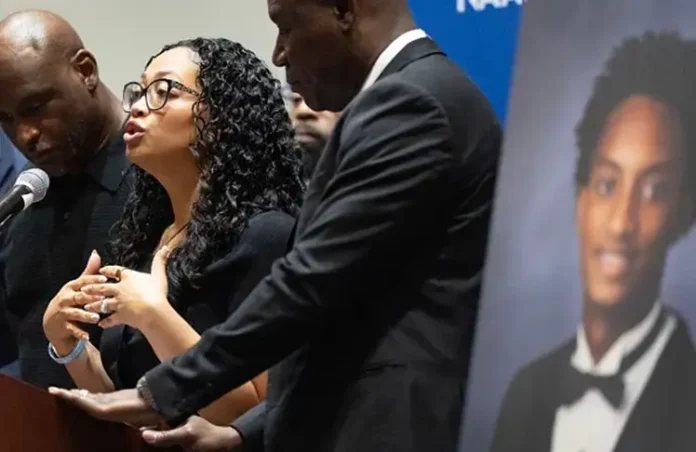
The Central District Community Preservation and Development Authority will hold its 2026 Annual Town Hall this Saturday, Sept. 26, giving Central District residents an opportunity to participate in board elections, hear an update on the organization’s work and discuss priorities affecting the community.
The town hall will take place from 11 a.m. to 1 p.m. at the McKinney Center for Community & Economic Development, 2120 S. Jackson St. in Seattle.
During the meeting, CDCPDA will hold elections for currently seated board positions and open nominations for new board members. Chief Executive Officer Shaudé Moore will also provide an update on the organization’s progress, priorities and community needs.
The gathering will include a question-and-answer session and an open community discussion, providing residents with an opportunity to speak directly with organizational leaders and participate in conversations about CDCPDA’s future and its work in the Central District.
“This is your opportunity to hear directly from our team, participate in board elections, and help shape the future of the CDCPDA and the Central District,” Moore said in announcing the town hall.
The annual meeting is designed to bring community members together to share ideas, ask questions and learn more about initiatives being undertaken by the organization. Board elections and nominations also provide a formal opportunity for community participation in CDCPDA’s leadership.
The CDCPDA Annual Town Hall 2026 will be held Saturday, Sept. 26, from 11 a.m. to 1 p.m. at the McKinney Center for Community & Economic Development, 2120 S. Jackson St., Seattle. Attendance information and registration are available through CDCPDA’s event listing.
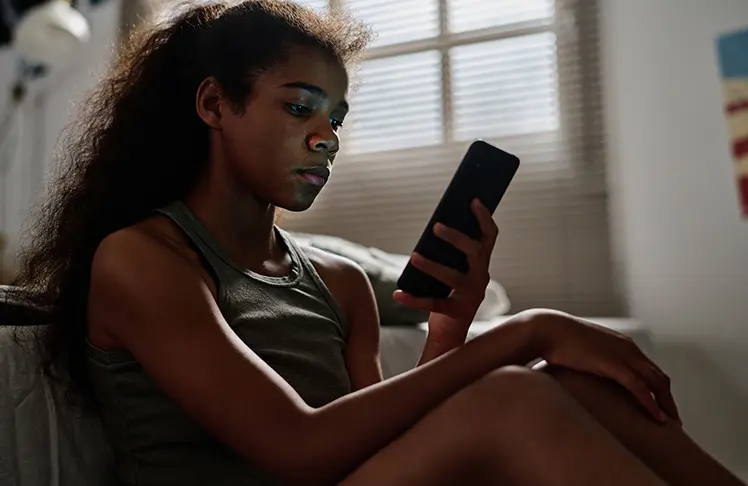
Experts recommend parents establish ground rules about phone use when entrusting preteens with the devices. (iStock)
Experts recommend parents establish ground rules about phone use when entrusting preteens with the devices. (iStock)
By Amanda Schupak, CNN
(CNN) — Kids who have their own smartphones at age 12 are more likely to develop eating disorder symptoms than their peers without the devices, according to a new study.
The research, published Friday in the medical journal JAMA Network Open, comes from a wide-ranging survey of nearly 9,000 adolescents across the United States.
“A smartphone can put a world of appearance-focused content in a young person’s pocket,” exposing them to images and messages that may foster unhealthy eating behaviors, said Dr. Jason Nagata, the study’s lead author. “It’s important for parents to be aware that getting a smartphone isn’t just about the device. It can change a child’s access to different content and exposures in the digital world.”
It may matter not just whether you get your kid a phone, he said, but when you do it.
Most earlier studies have looked at how much time young people spend on their devices, said Nagata, an associate professor of pediatrics at the University of California, San Francisco. For the new paper, he wanted to focus on the age at whichchildren start using them and how doing so might affect the development of disordered eating down the road.
Around 22% of children and adolescents worldwide show signs of disordered eating, according to research estimates. The distinction between disordered eating and an eating disorder essentially comes down to the level of severity and whether or not a person meets the criteria for a diagnosis. Both may include a fixation on food and weight, distorted feelings about body shape and size, restricted eating, or compensating for calorie intake by throwing up or exercising.
Using data collected from the Adolescent Brain Cognitive Development Study, a large, long-term study of brain development and health in American children, Nagata and his team found that 70% of 12-year-olds owned their own phone. Of those, 24% reported at least one eating disorder symptom at age 14. By comparison, less than 16% of teens who did not have a smartphone at age 12 reported disordered eating two years later.
Being 12 is tough — how parents can help
The tween years are a crucial time in development, both physically and emotionally. Puberty comes with major changes in body and body image, and it’s natural, Nagata said, for kids to compare themselves withone another.
Before smartphones and social media, those comparisons happened mainly among peers. “But when you’re comparing yourself to influencers whose images are curated, edited and filtered,” he said, “that can lead to more body dissatisfaction and poor self-esteem, and then that can be a risk factor for eating disorders.”
Kids who had smartphones at 12 were twice as likely to tie their self-worth to their weight and 1 ½ timesmore likely to have tried controlling their weight by, for instance, eating low-calorie foods or exercising a lot, according to the study.
Holding off on smartphones might spare adolescents from body image issues — at least for a while, said Dr. Mitch Prinstein, the John Van Seters Distinguished Professor of Psychology and Neuroscience at the University of North Carolina at Chapel Hill and codirectorof the Winston Center on Technology and Brain Development. Prinstein, who was not involved in the current study, said new research is beginning to find that delaying access to phones and other devices by six months or a year seems to benefit kids’ mental health.
When kids do get their own phones, he recommends parents let them “slowly, gradually get more exposure to social media over time. We don’t want to give them a completely unlocked phone with all the opportunities to visit whatever they want for as long as they want.”
Most major social media platforms set 13 as the minimum age to create an account, Nagata said, yet his past research has found that nearly two-thirds of 11- and 12-year-olds have accounts on platforms such as TikTok and Instagram.
This latest study doesn’t provide the “magic answer” as to when the ideal time is to get your kids a smartphone, he said. But if parents do entrust preteens with their own phones, they may want to consider “additional guardrails,” such as limiting the apps kids can download and keeping phones out of the bedroom, so it is easier to monitor their activity.
“It’s so important for parents to stay involved with their children’s digital lives,” Nagatasaid. He recommends establishing ground rules about phone use, having open conversations about what children are seeing online, and paying attention to any changes in how kids eat or how they talk about their bodies.
You might not allow phones at the dinner table, but that could be a good time and place to discuss them.
Aircrafts are seen on the flight deck of USS Abraham Lincoln while docked at Laem Chabang Port, Thailand, on September 3. (Anthony Wallace/AFP/Getty Images via CNN Newsource)
Aircrafts are seen on the flight deck of USS Abraham Lincoln while docked at Laem Chabang Port, Thailand, on September 3. (Anthony Wallace/AFP/Getty Images via CNN Newsource)
By Zachary Cohen, CNN
Editor’s note: This story contains discussion of suicide. Help is available if you or someone you know is struggling with suicidal thoughts or mental health matters. In the US, call or text 988 for help. The International Association for Suicide Prevention and Befrienders Worldwide have contact information for crisis centers around the world.
(CNN) — Eight US Navy personnel assigned to the USS Abraham Lincoln carrier strike group attempted suicide during a period that included when the ships undertook combat operations against Iran and the carrier set a modern record for its time at sea, according to a letter from the service’s acting secretary, which was obtained by CNN.
Acting Navy Secretary Hung Cao revealed the number, which has not been previously reported and covers crew members from several ships that travel together, including the carrier, in written responses to questions posed by Sen. Kirsten Gillibrand about the morale and mental health of the USS Abraham Lincoln’s crew. Cao wrote that no service members had killed themselves during the deployment.
The rate of suicide attempts among the Lincoln strike group’s sailors was roughly consistent with that of the entire active duty Navy in 2024, the most recent year for which the Pentagon has released suicide data. That year, the Navy saw 356 suicide attempts among its estimated 337,000 active duty sailors.
“Since the beginning of Lincoln’s deployment, there have been a total of eight suicide attempts across the strike group,” Cao wrote to Gillibrand, a Democrat and member of the Senate Armed Services, in a letter dated Tuesday. “This number includes the Lincoln crew and sailors from the carrier airwing, strike group and destroyer squadron staff, escorting destroyers and all embarked aviation squadrons.”
Between 6,000 and 7,000 US Navy sailors were deployed as part of the Lincoln strike group across roughly a half dozen ships — with the carrier kept out of port for over six months while conducting a high rate of combat operations against Iran.
“Eight attempted suicides is incredibly high,” one US military official told CNN, noting recent carrier strike group deployments have had one or two per year. “The strain of combat ops is much higher than normal deployments. No port calls, constant alerts, etc.”
The Navy did not respond ahead of publication to a request for comment about the letter.
“What Trump and Secretary Hegseth dismissed as ‘fake news’ turned out to be serious and deteriorating conditions for our service members,” Gillibrand said in a statement Wednesday to CNN. “Our troops and their families make immense sacrifices every single day, yet the president dismissed them with open disrespect. That this administration can find endless taxpayer dollars for bombs, ballrooms, and billionaires, but cannot take care of our service members, is completely unacceptable.”
The Lincoln deployed with various mental health resources onboard, including five chaplains, one embedded integrated prevention counselor, one psychologist, one clinical social worker, three behavioral health technicians and one expeditionary facility dog, according to Cao’s letter.
CNN previously reported that two sailors assigned to the Lincoln strike group, one from the carrier and one from another ship, had jumped overboard in recent months. Both were rescued, US officials said. Others were prevented from jumping, according to reports from the Navy Times and Stars and Stripes.
In his letter to Gillibrand, Cao also confirmed that a sailor assigned to the airwing went overboard from the ship in early August but was “quickly recovered” and treated by the Lincoln’s medical department. “Additionally, one sailor attempted to go overboard in March and was stopped by his shipmates. That sailor was also provided immediate medical care and subsequently returned to homeport.”
The Navy previously said in a statement to CNN, “We have not observed an increase in suicidal ideations or attempts aboard the ship. We take every service member’s well-being seriously and have religious, medical and mental health professionals available to assess and address concerns as they arise.”
A US official also previously told CNN that the Navy does not believe there is a correlation between deployment length and thoughts of self-harm, and that man overboard incidents are not unique to this group.
A crew member serving on the Lincoln previously described to CNN that morale on the carrier was very low and said they had heard repeatedly about suicidal ideation by fellow crew members. And there were regular strains on essential amenities — toilets and water fountains around the ship frequently closed, and hot water was often unavailable, the crew member said.
“Everyday we wake up and listen to our captain speak, we are desperately hoping and anxious for updates on our return,” the crew member, speaking before the ship had been ordered to return to its home port in San Diego, told CNN. The ship left the Middle East in August and is expected back in San Diego in the coming weeks.
Other sailors aboard the Lincoln who spoke with CNN described conditions unlike their prior deployments, largely due to the combat that has kept the carrier from making stops at friendly ports. Ships can take on new supplies and allow their sailors to rest and relax during those port calls.
This story has been updated with additional details.
CNN’s Davis Winkie and Pamela Brown contributed to this report.
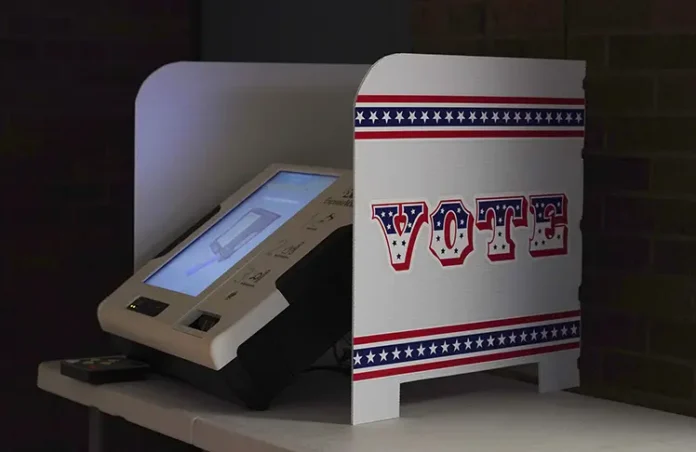
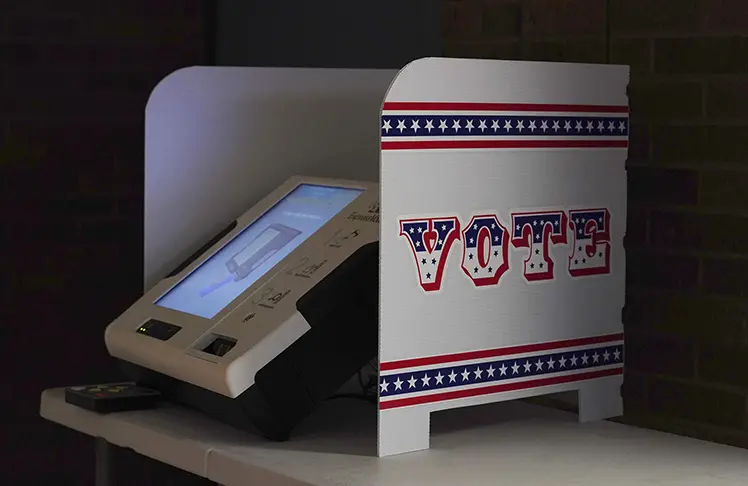
A voting booth sits at a polling station in Milwaukee, Wisconsin, in April 2020. (Thomas Werner/Bloomberg/Getty Images/File via CNN Newsource)
A voting booth sits at a polling station in Milwaukee, Wisconsin, in April 2020. (Thomas Werner/Bloomberg/Getty Images/File via CNN Newsource)
By Gabe Cohen, Tierney Sneed, CNN
(CNN) — President Donald Trump and his allies inside and outside his administration are aiming to blanket polling places with an expanding network of party and federal election monitors this November, intensifying scrutiny of the nuts and bolts of voting as Trump hunts for what he claims, without evidence, is widespread cheating and fraud in US elections.
Trump’s Justice Department says it will dispatch more than 1,000 monitors on Election Day in what Assistant Attorney General Harmeet Dhillon has called the “biggest DOJ election observer effort in history” — hundreds more than the Biden administration deployed in 2024. New records reviewed by CNN suggest that several DOJ monitors deployed during this year’s primaries helped challenge Trump’s 2020 election loss. Another pleaded guilty to illegally accessing a government elections website in 2016.
While most jurisdictions that hosted DOJ monitors during the primaries reported no issues with their presence, federal observers sent to Wyoming were accused of disruptive behavior by Republican officials in the state.
Critically, there is no evidence that the monitoring efforts will disrupt polling places or prevent anyone from voting in November. Justice Department monitors and partisan observers have long been part of Election Day.
Separately, the Republican National Committee is training new “special monitors” to scrutinize voting machines — recording serial numbers, inspecting security seals and photographing results tapes — and report any concerns or discrepancies to the party’s legal team through a special hotline, according to RNC training materials from Wisconsin that have not previously been reported on.
The effort comes as Trump and his allies intensify claims that voting machines are vulnerable to hacking and fraud, with some seeking to ban them altogether.
“Having you all on the ground, notifying us of issues, allows us to take direct action,” an RNC official told a group of special monitors in Wisconsin on a July training call. “And this leads to real outcomes that benefit Republicans across the state.”
It marks the latest expansion of a Republican election monitoring apparatus that has grown dramatically since 2020 and helped generate anecdotes, allegations and legal challenges questioning whether recent elections were run properly and transparently.
But some fear the widening web of party and federal monitors could mean far more incidents — even minor errors or baseless claims of fraud — are elevated and could be used by Trump and his allies to reinforce claims that US elections are not secure, or even rigged against Republicans.
“All of this sounds typical, but these are not typical times,” said Tammy Patrick, chief program officer for the National Association of Election Officials. “In the past few years, election officials have said to me, ‘It’s like they’re showing up looking for the body.’”
Both the RNC and DOJ have defended their observation initiatives, saying they will follow the law and reject concerns that the efforts will fuel unwarranted disputes or unfounded challenges.
“DOJ staff are expected to do their job consistent with all legal and ethical obligations. No exceptions,” DOJ spokesperson Kiersten Pels told CNN in a statement. “To imply that our team will act improperly based on nothing more than speculation would be dishonest.”
Plans to surge DOJ election monitors
The second Trump administration has undertaken a dramatic overhaul of the Justice Department and particularly its Civil Rights Division. The division’s voting section — where nearly all career attorneys were pushed out early into Trump’s second term — has shifted its focus to identifying non-citizen voters and other potential evidence of fraud.
The administration’s plans to flood November’s election with monitors has dovetailed that message. During this year’s primaries, some monitors deployed by DOJ to states like Arizona and Virginia were recently hired attorneys who previously helped challenge or try to overturn Trump’s 2020 loss, according to communications obtained by Democracy Forward and shared with CNN. Here’s what we know about those individuals:
The administration also dispatched David Levin to Arizona and Minnesota as a monitor during the primaries. Levin, a conservative attorney hired at DOJ earlier this year, was accused in 2016 of carrying out a cyberattack to obtain credentials and enter restricted sections of a county elections website in Florida. He pleaded guilty to two misdemeanors and served 20 days in jail, calling the episode a “silly political stunt” intended to expose weaknesses in the election office’s cybersecurity.
Reached by phone this week, Levin told CNN he has “no comment” on his work at DOJ or whether he will be deployed on Election Day. Gardner, Voiland and Matheis did not respond to requests for comment.
“This is alarming,” Dan McGrath, Special Counsel, Oversight at Democracy Forward told CNN in a statement, adding that the choice of some election monitors “raises concerns that people’s right to vote will not be respected by the administration.”
Election officials in a half-dozen jurisdictions that were sites of DOJ monitoring this primary cycle told CNN that, despite the hype around this year’s observation program, the government attorneys’ conduct at their election locations was professional, non-disruptive, and, as one local election chief put it, “business as usual.”
In several places, the monitors were focused on confirming jurisdictions were meeting requirements to offer language assistance for voters – in line with how federal observers have typically operated.
Election officials also noted that some of the observers had extensive experience, and that the DOJ official overseeing the monitoring program has spent decades in the department’s voting section.
“Every monitor will go through the same standard election monitor training which was given by DOJ for every election under previous administrations,” Pels told CNN in a statement. “The Department hired qualified individuals to serve our country in a non-partisan manner.”
But the plans to dispatch several hundred DOJ observers on Election Day have raised questions about whether all those attorneys will adhere to the department’s traditional standards – particularly as thousands of career attorneys have left the Department since the beginning of Trump’s second term.
The episode in Wyoming highlights how even in a red state, tensions can flare.
According to Laramie County Elections Director Debra Lee, her office got no heads up the two DOJ attorneys would be observing the Cheyenne-area polling sites — emails obtained by CNN show that DOJ initially sent notice of its plans to election officials in Wisconsin instead of Wyoming.
Local and state officials say that the DOJ attorneys quizzed election staff about their protocols and demanded information about the voting machines. They’re also accused of seeking to interview voters at the polling place. (DOJ election monitors have historically asked voters to voluntarily discuss their experiences at election sites, but according to a former official in the voting section, such interviews did not happen within the polling places.)
“If anything, their presence may make voters think twice about voting at the polls on Election Day,” Lee, a Republican, said in a statement last month. “My advice to my fellow county clerks in Wyoming and to election administrators in other ‘red’ states is don’t think this won’t happen to you.”
Records from Laramie County indicate the monitors were John Casali and Jake Bachand, both of whom joined the department under this administration.
Casali had served as an attorney at the Trump-aligned America First Policy Institute. Bachand previously worked for Republican Reps. Troy Nehls of Texas and Matt Gaetz of Florida, two staunch Trump allies.
Casali and Bachand did not respond to CNN’s requests for comment. Dhillon met with Wyoming’s governor after the incident, according to DOJ, which has defended its monitors’ actions.
“We ask questions to ensure polling locations are complying with federal law, including those related to language and disability access,” Pels told CNN.
She added: “Attempting to spin these questions to make our team appear fixated on the integrity of voting machines is dishonest and does not accurately portray our monitoring efforts.”
An RNC push to monitor the machines
The interest in Wyoming’s voting equipment comes as Trump and his allies have launched other efforts to scrutinize voting technology. Machine-related conspiracy theories dominated Trump-world beliefs that the 2020 election was rigged against him.
Gathering information about voting machines has now become a priority for the RNC’s election observation activities as well.
Party observers play a different role from federal monitors. They represent a political organization and report back what they observe. Depending on state law, they may also be authorized to raise or formally challenge irregularities.
The RNC has spent the last several years aggressively rebuilding the infrastructure for the monitoring of the voting process, after a decades-old consent decree that limited observation activities expired in 2018.
This year, the party is organizing an effort to monitor how the operation of voting equipment works as well, according to materials obtained by CNN.
The RNC training materials cast the party’s new “special monitors” — who are separate from the Justice Department monitors — as the “bookends” of the voting process, concentrating on what happens to voting machines from preelection testing through Election Day.
The records, which include training documents and recordings of calls in July and August with “special monitor” volunteers in Wisconsin, were obtained by Fair Fight Action, a non-profit voting-rights organization founded by former Democratic state lawmaker and gubernatorial candidate Stacey Abrams, and shared exclusively with CNN.
Attendees of the Wisconsin training were told that their information-gathering operation during the state’s August primary was a pilot program that the RNC hoped to expand to other states during November’s general election.
“The audit trail and security: This is something new that we are going to be focusing on this cycle,” said the Wisconsin RNC official conducting the training. “We’re kind of testing and piloting this operation in our state for the primary so that we can launch this more fully for the November general election.”
In Wisconsin, the observers were told to record machine serial numbers, confirm each tabulator starts with zero votes, and inspect seals designed to reveal tampering. After polls close, they’re told to photograph vote totals and check whether the number of ballots cast matches the number of voters who checked in.
The party has also prepared public-records request templates for volunteers to use if local clerks refuse to provide logs documenting the machines’ chain of custody.
“There may be a little bit of pushback from these clerks, but we’ll make sure you have all of the documentation that you need to reasonably obtain these results,” said Jenna Banfield, Election Integrity Director for the Wisconsin GOP, who helped lead the training calls.
Volunteers are instructed to report any concerns or discrepancies through a new party hotline to help RNC lawyers swiftly identify potential challenges against state or local election officials.
The RNC materials said their state teams contributed to more than 175 lawsuits in 2024 and that the party is on track to surpass that figure in 2026.
“This is the first real evidence we’ve seen that the RNC intends to aim their national grassroots poll operation directly at voting machines,” Fair Fight Action CEO Lauren Groh-Wargo told CNN in a statement. “A steady stream of machine-centered clips and complaints is designed to leave voters unsure the count can be trusted, which is exactly the ground they need to contest a race they lose.”
The volunteers will also scrutinize absentee ballot processing, which Trump and his allies have claimed is rife with fraud. They’ve been told to keep interactions with voters and workers measured, avoid any appearance of harassment and even “get to know” their local clerks.
“That is how we gain more access and trust and transparency,” Banfield said.
‘Eyes and ears’ on the ground
The RNC told CNN its Election Integrity operation is active in 22 states and will “serve as eyes and ears, helping us quickly identify and respond to issues to ensure smooth Election Day operations and to protect the ballot box.”
It will concentrate observers in places with narrow Republican margins or a history of alleged procedural problems.
“All these notes that you’re taking,” Banfield told a group of volunteers, “if they are handwritten with timestamps, that’s the gold standard because that’s something we can use as evidence.”
That infrastructure, the RNC training manual says, will allow the party to “deploy real-time legal and political resources that are critical to successful election outcomes for our top-ticket and down-ballot candidates.”
The RNC defended its operation, telling CNN that its election integrity teams previously identified testing errors in Virginia that were later corrected and flagged preelection testing delays across dozens of Texas counties.
During and after the 2020 election, the RNC, Trump campaign and allied activists mobilized a network of partisan observers, lawyers and activists who collected a trove of allegations of voting irregularities and pursued many in court.
Claims about “suitcases” of fraudulent ballots in Georgia and Arizona poll workers using Sharpies to invalidate Trump votes became pillars of the election-fraud narrative pushed by Trump and his allies. Investigations, court proceedings and probes by election officials found little evidence to support these allegations. Yet some continue to circulate today.
“On the on the one hand, having trained observers might cause fewer misinterpretations, but on the other hand, you have more people – especially if they have an orientation that the election is being stolen – that could create some additional narratives,” former Kentucky Secretary of State Trey Grayson, a Republican, told CNN.
(Trice Edney Wire) – Standing up to a bully requires more than slogans, press releases or carefully staged outrage. It requires looking power in the face, refusing intimidation and saying, plainly, no. Congresswoman Joyce Beatty has that courage.
The Ohio Democrat and former chair of the Congressional Black Caucus is standing virtually alone inside the Kennedy Center’s governing structure against Donald Trump’s attempted seizure of a national cultural institution. Trump has installed loyalists, pushed aside dissenters and tried to plaster his name onto a building Congress designated as a living memorial to President John F. Kennedy.
Beatty sued. And she won—not once, but twice. She did not merely issue a statement; she used the law, reminding Trump and his enablers that public institutions are not presidential playthings and that a board vote cannot erase an act of Congress.
Trump answered with insults and threats. During a virtual board meeting, he reportedly called Beatty “destructive,” claimed she had “never built anything,” and threatened to hold her responsible if the deteriorating building caused a death. That was not argument. It was intimidation dressed up as authority.
Beatty did not fold. She has been pepper-sprayed while protesting police violence and arrested while demanding voting rights. She knows what it means to put her body—not merely her name—behind a principle. Now she is defending a public institution from a president who thinks anything touched by government belongs to him.
Audacity means boldness—nerve, even temerity. It is neither virtue nor vice until we ask: audacity in the service of what?
Trump’s is criminal audacity: the brazen nerve to privatize public memory and turn a national memorial into a vanity project. It is audacity in the service of ego, domination and theft.
Beatty’s is righteous audacity: the moral nerve to confront illegitimate power and refuse to be muted. Accepting the Nobel Peace Prize in 1964, Dr. Martin Luther King Jr. declared, “I have the audacity to believe,” then spoke of food, education, culture, dignity, equality and freedom for people everywhere. That was audacity in the service of justice. That is the tradition Joyce Beatty claims.
Coming out of Congressional Black Caucus week, her example provokes a larger question: What is Black political power for?
The CBC was founded in 1971 by 13 members who understood that representation without collective action was insufficient. They boycotted President Richard Nixon’s State of the Union address and demanded a meeting about Black America. They were not invited to power’s table because the powerful developed good manners. They organized, insisted and disrupted.
Today the CBC is larger and more institutionally powerful than its founders could have imagined. Black members hold seniority, key committee positions and party leadership. Hakeem Jeffries could become the first Black Speaker of the House. But proximity to power is not power, and titles are not transformation.
CBC week brings urgent policy debates about voting rights, economic justice, health, education and Black political power. It gathers ambitious young people, seasoned public servants, advocates and entrepreneurs—along with more receptions than any human can reasonably attend. Yet we must not confuse access with action or networking with movement-building. The measure of the gathering comes after the ballroom lights go dark.
Will voting rights be defended and predatory redistricting challenged? Will Black unemployment, Black maternal mortality and the racial wealth gap be treated as emergencies rather than perennial panel topics? Will elected officials confront authoritarianism when it is risky?
Joyce Beatty has answered with her actions. Her fight is about more than a building. Cultural institutions tell us whose history is honored and whose names endure. Trump’s desire to rename the Kennedy Center is part of his effort to rewrite history, punish dissent and place himself at the center of every American story. He does not simply want power. He wants tribute. Beatty refuses to pay it.
Black women have often supplied the labor and backbone of American democracy while others received the credit. They organize voters, steady institutions, defend the Constitution—and are told to lower their voices. Beatty’s voice was literally muted during a Kennedy Center meeting. She found another microphone: the federal courts.
Resistance is not always a march. Sometimes it is a lawsuit, a vote or a refusal to consent. Sometimes it is one woman in a hostile room saying, “You may have the votes, but you do not have the law.”
Courage deserves to be named. We saw it in Barbara Lee, standing alone against the sweeping 2001 Authorization for Use of Military Force and warning against a blank check for endless war. We saw it in Barbara Jordan, a freshman on the House Judiciary Committee, making the Constitution thunder during Watergate. We see it in Maxine Waters, using her financial leadership to confront predatory lending, discriminatory finance and attacks on consumers. And we see it now in Joyce Beatty.
The CBC has long called itself the conscience of the Congress. Conscience is not a ceremonial title. It is a duty. At a moment when too many people accommodate the outrageous, normalize the abnormal and calculate the cost of speaking, Beatty has chosen to fight. Her righteous audacity is not simply that she challenged a president. She refused to let public memory become private vanity.
Fans have been clamoring for "A Different World" reboots for years and it is finally here, with old characters and new. (Courtesy of Netflix via CNN Newsource)
Fans have been clamoring for “A Different World” reboots for years and it is finally here, with old characters and new. (Courtesy of Netflix via CNN Newsource)
By Lisa Respers France, CNN
(CNN) — When “A Different World” premiered on September 24 back in 1987, the president was a lame-duck conservative Republican who was dealing with Middle East issues.
Thirty-nine years later, a Netflix sequel to the hit NBC series set at the fictitious historically Black Hillman College is premiering on the same date and while some things remain the same, much more has changed.
“A Different World,” like “The Cosby Show,” which it spun off from, was hailed for centering Black characters and culture as part of the American dream, not as victims of it.
Looking to build on the love of the original series, the new iteration features many returning cast members and introduces a new generation of characters, including Deborah (the daughter of Dwayne Wayne and Whitley Gilbert) and Shaquille (the son of Dwayne’s bff, Ron Johnson).
Over ten episodes, they navigate a world where diversity, equity and inclusion have been under attack and the rights for people of color have been rolled back amid a rise in incidences of racism and xenophobia.
“Because of the extreme unfairness, the extreme racism, extreme cruelty, the odds stacked against us, how overwhelming it can be, it’s so easy to feel bad and scared,” Cree Summer, who reprises her role as Winifred “Freddie” Brooks, said in an interview. “And to look at a TV show where you have young Black people invested in their future, it gives you, dare I say, almost a dirty word: hope.”
The first episode features Kadeem Hardison, who reprises his role as Dwayne Wayne, noting that the new generation is living in a “watershed moment” in which “this country that we built is trying to erase our Black history, our gains, our culture.”
“They want to demoralize us. They want to deport us, they want to jail us, they want to shoot us down in the streets,” Dwayne says in the show. “But you, you all are their greatest threat. You future leaders who care about justice and community and each other. I know you will stand up, I know you fight, build and you will change the world.”
The new show centers on Deborah (pronounced “Duh-bore-ah,” played by Maleah Joi Moon) and her journey at her parents’ beloved alma mater.
“I think it’s pressure and excitement at the same time,” Moon said about audience expectations of a show that plays a storied role in Black American culture. “The pressure to live up to expectation and this subconscious thing that you want to satisfy what the original viewers want to see, but then at the same time, just being excited to share what I have to offer as a new person to the role as part of the family and the legacy. It’s iconic.”
The original series was enormously successful over its six seasons, drawing in millions of viewers weekly, particularly after Debbie Allen took over as a producer and director after the first season. (Allen also serves as an executive producer and cast member of the new series and directs the first episode).
The 1990s version tackled difficult issues head on: racism, domestic violence, HIV awareness.
“The reason ‘A Different World’ has remained evergreen is because it dealt with issues that are still present today,” said Darryl M. Bell, who returns as the character Ron Johnson. “Our classic episodes, from racist student protests, financial troubles, relationships, all those things are the same,” he said. “For a long time the only thing that was really different was social media, then the internet. Now it’s AI that’s taking it up a notch more so it’s just a brand new world for these young folks trying to navigate not only college life, but what the future looks like.”
Felicia Pride, the show’s creator, executive producer and showrunner said she wants the new series to both elicit nostalgia for fans of the original as well as excitement for a new audience to culminate in what feels like “a warm hug.”
“I want young people to feel seen and I want people to be able to watch with their parents, their friends, your crew and your boo,” she said. “I want young people to feel like what they’re going through matters, and I want older people like myself to feel seen and to feel like coming of age never ends.”
The White House Briefing room podium, on September 19, after reporters from MS NOW, CNN and Politico were barred from the White House. (Graeme Sloan/Getty Images via CNN Newsource)
The White House Briefing room podium, on September 19, after reporters from MS NOW, CNN and Politico were barred from the White House. (Graeme Sloan/Getty Images via CNN Newsource)
By Holmes Lybrand, Brian Stelter, Katelyn Polantz, Alex Stambaugh, Haven Orecchio-Egresitz, CNN
(CNN) — CNN has been allowed back into the White House after a federal judge ordered the Trump administration to temporarily reinstate press badges for the network, along with MS NOW and Politico.
After multiple attempts to enter the building in the morning, CNN reporter Betsy Klein and a photojournalist were let into the premises on Thursday at noon. A reporter for MS Now was also granted access, according to the network.
It came after the news organizations filed an emergency request for a hearing Thursday morning when the reporters hadn’t been allowed in.
In the early morning hours Thursday, Federal Judge Timothy Kelly ordered the Trump administration to temporarily reinstate CNN, MS NOW and Politico’s access to the White House after they were banned from the premises by President Donald Trump.
In his ruling, Kelly found the revocation of reporters’ press badges was done without “constitutionally adequate due process.”
The ruling — which came just hours before Trump is welcomed Chinese leader Xi Jinping to the White House — meant journalists should have been able to return to work at the White House complex, but some staffers from all three outlets were initially refused entry.
Klein and the photojournalist were first denied access to the White House grounds at 9 a.m. ET. One CNN producer was able to enter the White House using their pass after 6 a.m. It was not immediately clear why the person had been able to access the building.
Reporters from MS NOW and Politico were also barred from entering the building early Thursday morning, according to the outlets.
Kelly ordered the Justice Department to respond by 12:30 p.m. ET.
Kelly said overnight that the government’s arguments “offer little to back up their asserted national security interest.” After the ban went into effect, Trump and his lawyers said the outlets had their access revoked because their past reporting raised national security concerns.
“For one thing, nothing in the record that predates this suit suggests that the revocation of Plaintiffs’ hard passes was motivated by national security concerns,” Kelly wrote. “Certainly, that is not what President Trump said when he announced that he was ‘banning’ Plaintiffs from the White House —instead, he focused on the alleged lack of truthfulness and negativity of Plaintiffs’ reporting.”
“And even the justifications provided to Plaintiffs after this case was filed are ambiguous about the true purpose of the revocations: while Defendants’ letters to Plaintiffs mention national security concerns, they purport to identify reporting that ‘threatened national security and/or spread falsehoods,’ leaving open the possibility that all the stories fall into the later bucket, rather than the former.”
As for due process, the Trump administration didn’t notify the reporters of an opportunity to appeal his decision until after the passes were confiscated, the judge noted.
“The ‘general rule’ is that ‘individuals must receive notice and an opportunity to be heard before the Government deprives them’ of a constitutionally protected interest,” Kelly wrote in his ruling citing case law.
Kelly’s temporary restraining order is in effect for 14 days.
His decision isn’t immediately able to be appealed, the judge noted. In the opinion, the judge set up a plan over the next two weeks for the news outlets and the Trump administration to continue making arguments and submitting to him evidence.
That plan — for which the judge hasn’t yet specified specific deadlines or other hearings — would likely result in a more robust opinion than the emergency decision Kelly made early Thursday morning.
Trump announced the ban of the three outlets in a social media post Friday, writing that he was kicking the news outlets out “as a result of their constant ‘reporting’ FAKE NEWS!” and adding “Other Fake News Media Outlets to follow.”
The three news outlets sued, requesting the ban be paused or blocked entirely. In court filings and during a hearing Wednesday, an attorney for the outlets argued the ban contradicted prior court rulings, violated due process and was issued merely because of Trump’s disdain for the journalists.
Attorneys for the administration countered, saying that Trump’s decision did include an appeals process, pointing to the letters that were received by the outlets after the ban went into effect.
Responding to Thursday’s ruling, Ted Boutrous, the lawyer representing the news outlets, told CNN: “This is a strong ruling vindicating freedom of the press, due process and the rule of law. We greatly appreciate the court’s swift action.”
CNN has reached out to the Justice Department and White House for comment.
During Wednesday’s hearing on the motion for a temporary restraining order, Justice Department attorney Michael Velchik argued that CNN, MS NOW and Politico had endangered national security with their reporting and that Trump has the right to decide who can have access to the White House.
Boutrous said during the hearing that “the first mention of national security in this case” occurred days after the announced ban and following the current lawsuit against the administration. Boutrous said it seemed as if “a light bulb went off” in the administration to adopt the national security argument to justify the ban post hoc.
Boutrous also argued the news organizations were only provided letters from the White House outlining why they had been banned days after the ban was announced and following their lawsuit.
In the ruling, Kelly acknowledged that the outlets “did not receive notice and an opportunity to be heard” before their hard passes were revoked.
He wrote that the record was bereft of any relevant “formally articulated standards” in place before any of the conduct for which the hard passes were revoked.
“One standard Defendants appear to offer—reflected in letters they sent to Plaintiffs on September 22, 2026, identifying their objectionable reporting—is so vague it hardly does the trick,” Kelly said, referring to Trump administration’s allegation that one of the outlets “exhibited behavior in violation of the standards of professionalism and decorum expected of those given access to the White House Complex.”
Boutrous also noted during Wednesday’s hearing that only one CNN story cited by the administration to highlight why the outlets were being kicked out was written by a reporter with access to the White House and that the stories cited “are just garden variety reporting.”
Kelly, in his ruling, made note of this, and that the CNN story cited as a national security concern — a report about the planned rebuilding of a bunker under the East Wing — was published months before reporter Klein’s press pass was renewed this summer.
“None of Defendants’ arguments convince the Court that Plaintiffs are not likely to succeed on their due process claim,” Kelly wrote.
Moreover, Kelly wrote that the plaintiffs had shown “that they are likely to suffer irreparable harm absent a temporary restraining order,” and that it would be in the public’s interest to reinstate reporters’ press badges.
“Plaintiffs—and the public—have an abiding interest in maintaining the status quo ante given the importance of the free press, which ‘stands as one of the great interpreters between the government and the people,’” the ruling said.
At the start of Wednesday’s hearing, Kelly noted that he had presided over a similar case in 2018, when Trump booted then-CNN correspondent Jim Acosta after a heated exchange between he and the president, and had to abide by past precedent in the court.
“There is a due process claim and a due process issue that seems to me the first stop in figuring out how to resolve the motion,” Kelly said at the hearing.
Kelly’s ruling Thursday said that the circumstances here “are not so ‘extraordinary’ as to permit deviation” from the principles of due process “that a deprivation of liberty ‘be preceded by notice and opportunity for hearing.’”
TV networks stand with CNN
Thursday’s ruling means the television pool, of which CNN is one of five members, could choose to resume live and taped coverage of presidential events — though the organizers have yet to share any updated guidance.
Under a longstanding arrangement, the five networks take turns filming the president and providing live footage to one another and the wider press corps. Local TV stations, newspaper websites and media outlets worldwide rely on that coverage.
In a show of solidarity, the five major networks said they would not be covering the president’s speeches and appearances, after Trump barred CNN from fulfilling its assigned White House pool duties on Monday.
“The public has a vital interest in receiving accurate, independent information about its government. No administration should restrict a news organization because it objects to its reporting,” ABC, CBS, CNN, Fox News and NBC said in a rare joint statement.
On Wednesday, nearly 50 news organizations also signed a friend-of-the-court brief urging Kelly to reverse the CNN, MS NOW and Politico ban.
The White House Correspondents’ Association said the brief, compiled by the Reporters Committee for Freedom of the Press, made clear “what the law has long established: the government cannot remove journalists from the White House because it dislikes their reporting. That is viewpoint discrimination, and a clear violation of the First Amendment.”
This story has been updated with additional developments.
Three months after Wells disappeared during a Fourth of July outing, a grand jury has declined to charge anyone with his death. His mother, Christine Wonsley (center), along with her husband, Elmore Wansley (left), and attorney Ben Crump, are calling for federal investigators to take another look. Credit: Scott Olson/Getty Images
Three months after Wells disappeared during a Fourth of July outing, a grand jury has declined to charge anyone with his death. His mother, Christine Wonsley (center), along with her husband, Elmore Wansley (left), and attorney Ben Crump, are calling for federal investigators to take another look. Credit: Scott Olson/Getty Images
Christine Wonsley has spent nearly three months publicly asking the same agonizing question: What led to the drowning of her 18-year-old son, Nolan Wells, after a Fourth of July boat outing with a group of teenage friends on a Mississippi island park?
On Tuesday — after a grand jury heard witness testimony and reviewed autopsy reports that noted he had injuries on his body, yet declined to charge anyone in Wells’ death — Wonsley said she is no closer to an answer.
“How can a jury come to the conclusion of drowning, despite knowing that there was trauma to his body, and despite hearing many inconsistencies?” Wonsley said at a news conference.
A Jackson County, Mississippi, grand jury unanimously found insufficient evidence of criminal wrongdoing in Wells’ death, ending — at least for now — a closely watched investigation that has drawn national attention, including the involvement of civil rights leaders and relentless speculation online.
But the decision did not resolve the central mystery lingering over the case since Wells’ body was recovered July 6: what were the exact circumstances of his death?
Friends Left Him Behind
The grand jury concluded the location, condition, and position of Wells’ body were “consistent with drowning.” Yet both Mississippi’s chief medical examiner and an independent forensic pathologist hired by Wells’ family classified his cause and manner of death as undetermined.
For Wells’ family, that distinction is everything.
The grand jury’s verdict “was a reminder that our son’s life does not matter to those who hold positions that are supposed to serve and protect the public,” Wonsley said through tears. “Nolan is loved. He is cherished. He is honored. And he did not deserve to have his life taken away so suddenly.”
Wells, an incoming college freshman and former high school football player, traveled to Horn Island off the Mississippi Gulf Coast on July 4 with white friends. Wells, who is Black, did not return with them.
[The grand jury’s verdict] was a reminder that our son’s life does not matter to those who hold positions that are supposed to serve and protect the public.
Christine wonsley, mother of nolan wells
His friends have said Wells chose to remain on the island to socialize after the boats carrying the group departed. His cellphone returned to shore without him. Wells’ parents have questioned that account, saying it was out of character for their son to be separated from his phone.
After his family reported him missing, searchers found the teenager’s body two days later.
Dozens of Subpoenas and Witnesses
The grand jury issued 132 subpoenas and considered testimony, sworn statements or recorded interviews from 43 witnesses. The evidence also included cellphone and GPS data, videos, forensic reports, and the Jackson County Sheriff’s Office investigative file.
Jurors found no credible evidence that Wells’ death resulted from criminal conduct or was racially motivated.
Though Wells was the only Black person among the group of friends that day, Jackson County District Attorney Angel Myers McIlrath rejected speculation that Wells’ death was racially motivated. She said there is “not a shred of evidence” to support it.
Nevertheless, questions about Wells’ injuries remain.
Dr. Roger Mitchell Jr., the former chief medical examiner for Washington, D.C., performed a second autopsy at the family’s request. He found blunt-force injuries to the back of Wells’ head and other areas of his body. Their significance remains unclear.
The grand jury acknowledged the head injury but concluded it was not fatal. A witness said Wells had slipped awkwardly from the side of a boat earlier that afternoon but continued socializing and appeared unhurt. Jurors said they could not determine whether that fall caused the bruising.
‘The Pursuit of Truth’
Civil rights attorney Ben Crump, who represents the family, said those unanswered questions are precisely why the investigation should continue.
“We don’t know how Nolan died, and neither does the State of Mississippi,” Crump said.
Crump and the family are again calling for a federal Justice Department investigation into his death and the release of the complete investigative file, including the state’s autopsy report.
Others are also trying to ensure the grand jury decision does not become the final word.
Houston rapper and commentator Willie D, a member of the legacy hip-hop group Geto Boys who has repeatedly called attention to Wells’ death, announced Tuesday that he is launching a UniteGive campaign to help answer questions about Wells’ death.
The goal is a $1 million reward to anyone with information that could lead to the arrest and conviction of anyone found criminally responsible. The campaign is specifically seeking verifiable evidence — including original video, photographs, messages, location data or firsthand information — rather than rumors and online speculation.
“The grand jury reached a decision based on the information currently available, but the pursuit of truth remains ongoing for Nolan’s family,” Willie D said.
Because Mississippi has no statute of limitations for murder, any credible new evidence could matter years from now. The grand jury itself left that possibility open. If new evidence suggests Wells’ death was not accidental, the case can be presented again.
A fitness app or watch can tell you how many steps you took, how long your heart rate stayed elevated, and whether you hit your weekly cardio target.
It can’t tell you how good it felt to climb the last few stairs of a lighthouse and look out over the water, enjoy a long walk with a friend, or hit the dance floor at an event instead of watching from your seat.
That difference matters, especially for older adults. The Centers for Disease Control and Prevention recommends that adults 65 and older aim for 150 minutes of moderate-intensity aerobic activity each week, along with muscle-strengthening and balance activities.
But the CDC also notes that some activity is better than none, and that movement can be broken into small chunks throughout the day.
Numbers can offer useful guidance, but you don’t have to build your entire movement routine around them. A goal based only on weight, steps, or minutes may feel like another obligation, while a goal tied to an experience, an everyday task, or a joyful occasion gives you a reason to get moving.
Train for Something You Want To Do
Instead of promising to walk 10,000 steps every day, choose a place you’d like your legs to carry you. Maybe you have a vacation hike, a garden path, or a walking tour through a historic neighborhood in mind.
Once you’ve chosen a destination, it gets easier to visualize your plan. Start with a comfortable walk around the block. Add a little distance each week. Practice on gentle hills or take a few flights of stairs when you feel ready.
The goal isn’t to beat yesterday’s number; it’s to enjoy the view when you get there.
Travel plans can offer other ideas. If you’re hoping to explore a museum without searching for a bench every few minutes, you might work on standing and walking for longer stretches. If you’re planning a family beach trip, you could practice walking on grass or another slightly uneven surface before stepping onto sand.
Build Strength for Daily Life
Strength training doesn’t have to involve lifting heavy weights in a crowded gym. It can mean making everyday life feel less demanding.
Carrying groceries, lifting a grandchild, getting up from a low chair, and moving a suitcase all require strength. Those tasks can become fitness goals of their own.
Sit-to-stand exercises from a sturdy chair can help you practice rising more easily. You can use light dumbbells, resistance bands, or even pantry cans for curls and presses. Carrying a light bag across the room can prepare your body for hauling groceries.
Your progress may not look dramatic on an app, but noticing that a laundry basket feels lighter is a meaningful win.
Photo: wavebreakmediamicro via 123RF
Make Room for Fun
Some of the best movement doesn’t feel like a workout. Dancing in the kitchen, taking a water aerobics class, gardening, bowling, or playing with the dog all offer reasons to get up and move.
A wedding can help you set a fitness goal, too. Rather than focusing on fitting into a certain outfit, you might aim to dance through several songs at the reception without needing a long break. Practice could be as simple as putting on two favorite songs at home, dancing for as long as feels comfortable, and gradually adding another.
Social goals can also make it easier to maintain your movement practice. Meet a friend for a walk, sign up for a beginner dance class, or plan a monthly outing to explore a new area of town with your bestie.
Measure What Actually Matters
There’s nothing wrong with tracking steps or workout time. Those tools can show patterns and help you stay consistent. Still, they’re only one way to notice progress.
Try asking different questions when you’re measuring your physical progress: Can I walk farther before I need a rest? Do stairs feel less intimidating? Am I steadier when I step off a curb? Did I carry my own bags, keep up with the grandchildren, or stay on the dance floor a little longer than usual?
A good fitness goal should support the life you want to live. For many older adults, the most motivating finish line won’t appear on a scale or smartwatch — it’ll show up at the top of a lighthouse, halfway through a walking tour, or in the middle of a crowded dance floor.
In a recent Boys & Girls Club survey, 40% of youth said they were bullied on school property in the past year. Despite some surveys saying that the rates of bullying are falling, it remains a high concern for students, teachers, and parents. The impacts of bullying are scary and include mental health issues, poor school attendance and performance, and increased risk of substance abuse.
So, what can you, as a parent, do to help ensure your child isn’t bullied at school and provide support if they are? Awareness of the signs of bullying, vigilance in watching for changes in your child, and open communication are all keys to supporting your child.
Verbal bullying, such as name-calling, teasing, and threats.
Social bullying, such as spreading rumors, alienating, or publicly embarrassing.
Physical bullying, such as kicking, hitting, pushing, taking or breaking belongings, and threatening or rude gestures.
Cyberbullying includes:
Being called an offensive name
Having false rumors spread about them online
Being sent explicit images they didn’t ask for
Someone other than a parent constantly asking them where they are, what they’re doing, or who they’re with
Being physically threatened
Having explicit images of them shared without their consent.
Risk Factors
Stop Bullying Now reports that some groups experience bullying more often. For example, females tend to experience bullying more than males for specific types, such as verbal and cyber. Meanwhile, males experience more physical bullying. Bullying is generally more prevalent in the middle school years than in high school. Ethnic minorities, youth with disabilities, and lesbian, gay, bisexual, queer, or transgender (LGBQT) students experience higher rates of bullying. They also describe other risk factors such as being perceived as different or weak, having low self-esteem, experiencing depression, having few friends, and being seen as annoying or provoking. You may want to be more vigilant if your child has one or more of these risk factors.
Warning Signs
Changes in your child’s behavior, such as avoiding social situations, losing interest in school or activities, unhealthy eating habits, or difficulty sleeping, may be signs of bullying. Unexplained bruises, declines in self-esteem, and feelings of depression or anxiety can also be warning signs. Parents who are aware of these changes in their children can be prepared to open up a dialogue.
Attitudes about school: The student wants to do well in school and believes their parents have high school performance expectations.
Social skills: The student has competent social skills and positive relationships with peers and adults.
Parent/Child relationships: The student shares activities with parents, feels comfortable discussing problems, and has parents present during critical times such as mornings before school, after school, mealtimes, and when going to bed.
School environment: The student attends a school with clear rules, supervision, firm disciplinary policies, and engaged parents and teachers.
Confidence: The student is involved in activities and hobbies that build their self-confidence.
Photo: milkos via 123RF
How to Support Your Child
Supporting your child begins before any incidents of bullying occur. Review the protective factors and evaluate if there are any areas of improvement for your child and family. Simple steps like eating dinner together can build bonds and open opportunities for your child to share about their day and experiences at school.
If you suspect your child is being bullied, work to provide an environment conducive to open communication. This includes listening to your child’s concerns without judgment and validating their feelings. When your child tells you they or a friend are being bullied, document the details of the incident and the results if you report it to the school. Learn about their school’s policies and their efforts to create an anti-bullying environment.
School environments play a significant role, so advocating for changes if you feel that leadership didn’t appropriately address your child’s incident can be impactful.
You may need to help your child’s school understand the importance of anti-bullying measures. For example, schools can teach about the critical role of upstanders, individuals who intervene in bullying by interrupting, reporting, or reaching out to the target for support. Studies show that when an upstander intervenes or interrupts, the bullying behavior stops within 10 seconds 57% of the time; additionally, bullying decreases by up to 25% after implementing school-wide bullying prevention programs.
Anti-bullying efforts typically involve both family involvement and school commitment, but the results are heartening when everyone works together.