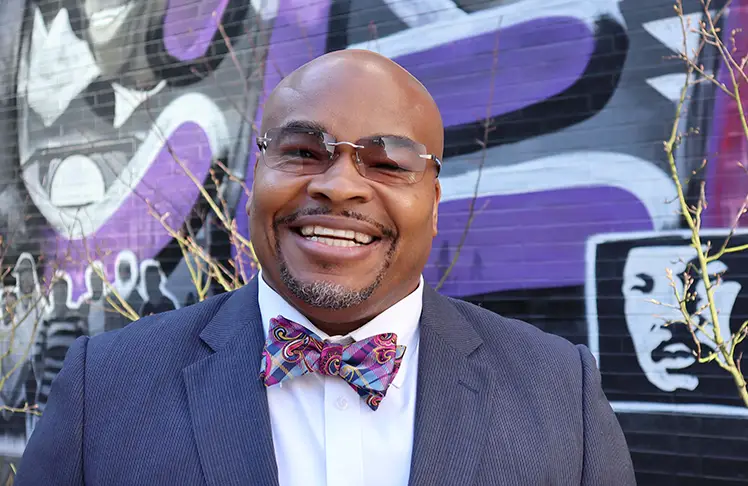
By Derrick Wheeler-Smith, Director, Seattle Office for Civil Rights
“Those who love peace must organize as effectively as those who love war.” Dr. Martin Luther King Jr. didn’t offer these words as poetry, but as instruction—and today, this feels especially urgent. Across our country, families are struggling to meet their basic needs. Food costs continue to climb while wages lag. Healthcare access narrows while anxiety widens. Yet time and time again, national leadership finds clarity and speed when it comes to militarized solutions, often without democratic consent. Everyday people are told to wait, endure, or adapt. History shows us what happens when power is exercised through force rather than accountability. When governments assert control over land, resources, or people in the name of “security” or “interest” at home and beyond our borders, the outcome is rarely stability or peace. This is reflected in the use of federal agencies like ICE to intimidate and harm communities, causing displacement, trauma, and destabilization that will reverberate for generations. And while some may celebrate the assertion of dominance, like the removal of Venezuelan President Maduro, we cannot ignore the broader costs of normalizing empire as policy.
Militarism does more than hurt those on the receiving end of bombs, sanctions, deportation, and family separations. It reshapes democracy in our country. It shifts public resources away from schools, housing, healthcare, and community infrastructure. It concentrates decision-making power upward and outward, while everyday people here and abroad absorb the consequences. This is not accidental, it is structural—and silence in moments like this will allow it to continue.
If we accept that peace is not passive, then we must also accept that peace requires organization. Too often, peace has slogans without structure while war has institutions, budgets, pipelines, and the dominant narrative. Dr. King warned us against this imbalance. Loving peace is not enough. It demands strategy, coordination, and sustained participation—especially from those who will inherit the long-term consequences of today’s decisions. That’s why we launched a youth civic engagement program at the Seattle Office of Civil Rights. Civic systems were built without them in mind, often against their interests. Young people see institutions that respond quickly to corporate pressure and military escalation, yet move slowly when communities ask for dignity, safety, and opportunity. And still, youth organize. They build mutual aid networks. They mobilize online and in the streets. They imagine free and thriving futures that don’t rely on domination to feel secure.
Our responsibility as a City is not to “invite” youth and broader communities into civic life on our terms, but to build platforms that resource, respect, and sustain their leadership. This is the intention behind not only our Youth Civic Engagement Program, but also our new Chamber of Belonging—a civic and economic space grounded in collaboration and shared stake. It’s a place where leaders, workers, artists, entrepreneurs, and organizers can shape policy ideas, economic pathways, and community-driven solutions rooted in dignity rather than disposability. Belonging is not just a feeling; it’s a structure. It’s what happens when people can see themselves reflected in decision making and benefit from the outcomes of their participation.
Alongside this, we’re planning a People’s Power and Belonging Summit this fall. This gathering will bring people together to build momentum on racial, social, and economic justice through practical organizing principles. It’s not about abstract values or panels that end in applause. Instead, this gathering is about alignment. Skill-building. Shared language. Cross-sector coordination. It’s about connecting young leaders with elders, policy thinkers with grassroots organizers, and vision with infrastructure. The goal is durable people power, not performative resistance. If those who profit from war can convene summits, coordinate strategies, and shape global narratives, then those who believe in peace, equity, and democracy must do the same with discipline and imagination. But we must
be clear: peace is not the absence of conflict—it’s the presence of justice. And justice does not emerge spontaneously, it is organized into existence.
Dr. King understood that the greatest threat was not only overt violence, but the quiet acceptance of systems that normalize it. He called for moral clarity matched with collective action, and that call still stands.
The question before us is simple and demanding: Will those who love peace finally organize like it matters? Together, we can drive change.