By Aaron Allen, The Seattle Medium
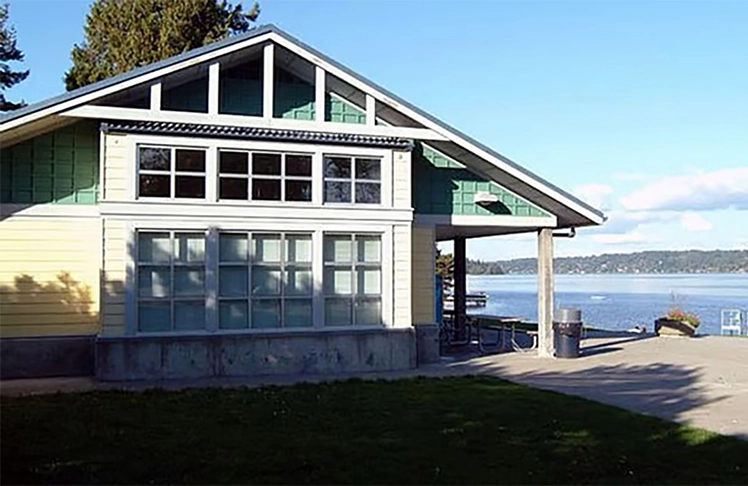
A community-led effort is underway to reimagine the future of Pritchard Beach Bath House, with local leaders working to transform the historic waterfront site into a space centered on youth engagement, cultural connection, and equitable access to water-based activities.
Located along the southeast shore of Lake Washington in Seattle’s Rainier Valley, Pritchard Beach Bath House sits in a quiet cove with a history rooted in both Indigenous heritage and the impacts of displacement. The area was once home to Coast Salish people known as the Xacuabš, or “people of the large lake,” and is also the birthplace of Kikisoblu, the eldest daughter of Chief Sealth.
Following treaties that forced Indigenous communities out of Seattle in the 19th century, white settlers moved into the area, eventually constructing a Bath House in 1930. The city later assumed control of the site, and the current building was completed in 1996.
Today, a steering committee made up of community leaders, artists, athletes, and educators is working to envision how the space can better serve the public moving forward. Among the ideas being explored is the creation of a waterfront activity center that would provide expanded public use and programming shaped by resident input.
The group recently received a $5,000 Small Sparks grant from the Department of Neighborhoods to support early planning efforts. The funding is specifically intended as a “stepping-stone,” covering outreach and engagement work such as surveys, public forums, and documentation of resident input to ensure the project reflects local priorities rather than a city-driven vision.
Zachary Pullin, communications director for the Department of Neighborhoods, said the grant is designed to ensure local voices are centered in the early stages of development.
“The first stepping-stone for projects is making sure community voices are heard, documented, and centered as ideas take shape,” says Pullin. “When communities lead with their vision, our job is to help create the conditions for those conversations to happen in meaningful and accessible ways.”
Early outreach efforts have already drawn strong interest. According to project leaders, nearly 300 surveys have been collected, along with feedback from two public meetings.
“Just under 300 surveys were returned from various community members and just overwhelmingly in support,” says Royal Alley-Barnes, a member of the steering committee. “There were also two public meetings. It is such an empowering opportunity to come together as a community and to be forward-thinking. We’re constructing community cohorts. We’re constructing the foundational reasoning and the foundational allowance, if you will, for the space for our young people to have this experience over time.”
Based on early feedback, organizers are exploring a range of potential programming options, including water-based activities such as rowing, dragon boating, outrigger canoeing, stand-up paddleboarding, and kayaking. A major focus is also being placed on water safety and education, particularly expanding access to swimming lessons to address longstanding barriers for youth who cannot swim or feel unsafe in the water.
The vision also includes honoring the cultural history of the site, recognizing its significance to the Xacuabš and its connection to Kikisoblu, while creating a space that brings together art, fitness, and public gathering along the waterfront.
The steering committee brings together leaders with expertise in water sports, fitness, arts, and programming. Among them are Alley-Barnes, a longtime arts and civic leader; Bill Pickard, a championship rower and youth swim advocate; Bull Stewart, founder of Columbia City Fitness Center; Cori Myka, co-founder of Orca Swim School; Lesley Blyth, founder of WAM Dragon Boat Club; Koichi Kitazumi, founder of the Seattle Sake Paddling Club; and Hulet Gates, a former University of Washington rower.
For Pickard, expanding access to water-based activities is a key part of the vision. He said barriers to swimming and water safety have long limited participation for many young people.
“Institutionally, people set up systems, and if a group doesn’t fit the system, then they don’t get to participate,” Pickard said. “We’ve got to figure out a way to get around barriers, raise money, and work very hard to develop coaches from the community.”
Organizers say the project is not only about recreation, but also about creating long-term opportunities for youth.
A central goal is to provide South End youth with access to experiences that are often limited by cost or proximity, while promoting physical, mental, and emotional well-being through outdoor activity. Leaders also emphasize the importance of creating safe, welcoming spaces that support positive decision-making and stronger connections.
Alley-Barnes emphasized the broader impact the space could have on young people, particularly in fostering confidence, connection, and opportunity.
“When I think about something involving our youth today and how it helps them march into their future, I like to fall back on the teen developmental assets,” says Alley-Barnes. “This project, having a water activity center there at Pritchard Beach, checks all the boxes of the external benefits to teens and many of the internal benefits of confidence, communication, and connection.”
She also pointed to the importance of reconnecting communities of color with a historical relationship to water that has often been overlooked.
“So often Black and Brown people, particularly, and often Indigenous communities, we forget that our water histories are legendary as well as legacy,” Alley-Barnes says. “This whole piece about being awkward around water only came on this continent with discrimination and segregation. Having a water activity center is going to push those positive aspects of various cultures coming together historically, currently, as well as future tense for our young people right here now today.”
As planning moves forward, organizers continue gathering feedback through surveys and public meetings, with early responses showing strong support for expanding access to the waterfront.