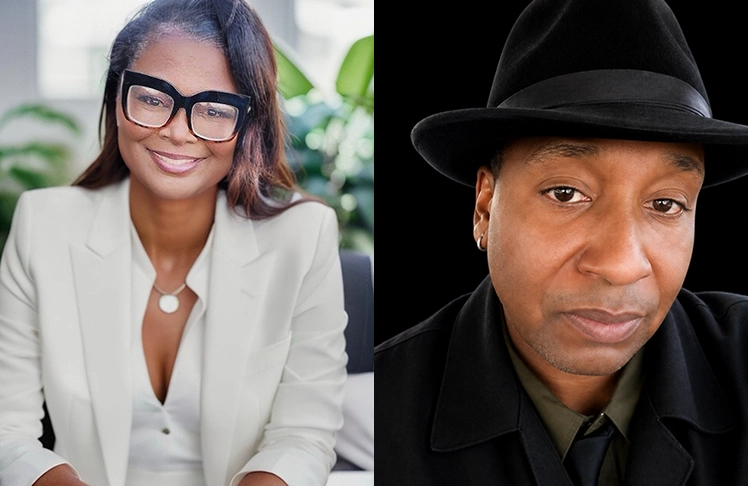
By Ahndrea L. Blue
My cousin Sean Ousley was many things.
He was a father. A son. A cousin. A protector. A DJ. The life of the party. A man with legendary dance moves, a sharp mind and a heart that was bigger than most people realized.
He was also a man who faced mental health challenges.
And too often, once society places that label on someone, we stop seeing everything else.
We see a diagnosis instead of a human being. We remember the difficult days while forgetting the good ones. We talk about someone’s struggles more loudly than we talk about their gifts. We allow a person’s hardest moments to become the definition of their entire life.
Sean taught me why that is so wrong.
He taught me that mental health challenges are real, but so is the humanity of the person experiencing them.
I had the privilege of sitting with Sean at my home, fixing him dinner and simply talking. We talked about his dreams, his disappointments, his pain and his hopes for his future.
And underneath so much of what he shared was a basic human desire that all of us understand:
He wanted to be seen.
Not judged.
Not dismissed.
Not reduced to what someone had heard about him.
Seen.
That should cause all of us to examine how we treat people living with mental health challenges.
Mental Health Challenges Do Not Erase Human Dignity
We have made progress in talking publicly about mental health, but talking about it and actually changing how we treat people are two very different things.
It is easy to post that mental health matters.
It is harder to extend patience to someone when their struggle is inconvenient.
It is easy to say we support people experiencing mental illness.
It is harder to resist labeling them when their behavior does not fit neatly into what we consider “normal.”
It is easy to advocate for compassion in theory.
It is much harder to practice compassion when someone is standing directly in front of us and needs it.
People experiencing mental health challenges are still entitled to dignity.
They are entitled to respect.
They are entitled to be heard.
They are entitled to boundaries without being dehumanized.
They are entitled to support without being infantilized.
And they are entitled to have their strengths recognized alongside their struggles.
Sean was always good enough.
Despite what anyone said.
Despite what anyone thought.
Despite anyone who misunderstood him or counted him out.
In the Black Community, This Conversation Is Urgent
Sean’s story is personal to me, but the larger conversation about mental health in the Black community cannot be ignored.
According to the Substance Abuse and Mental Health Services Administration’s 2023 National Survey on Drug Use and Health, approximately 6.1 million Black adults — 19.4% of Black adults age 18 and older — experienced a mental illness during the previous year. Among Black young adults ages 18 to 25, the rate was even higher: 26.1%, or approximately 1.2 million people.
Yet experiencing a mental health condition and receiving appropriate treatment are two very different things.
The National Alliance on Mental Illness currently reports that 38.5% of non-Hispanic Black adults with mental illness receive treatment annually, compared with 57.9% of non-Hispanic white adults with mental illness. These disparities underscore the continuing barriers many Black Americans face in accessing mental health care.
Those numbers represent millions of human beings.
They represent fathers and mothers.
Sons and daughters.
Cousins.
Friends.
Coworkers.
Church members.
Neighbors.
People sitting at our dinner tables and family reunions.
People who may be struggling quietly while the rest of us assume we know their story.
And stigma can make that struggle even harder.
When mental illness is treated as a character flaw, people may hide what they are experiencing. When asking for help is interpreted as weakness, people may suffer in silence. When families are more concerned about what other people will think than what their loved one needs, we become part of the problem.
Mental health challenges are not evidence that someone lacks intelligence, character, faith, purpose or value.
We have to stop treating people as diagnoses and start seeing them as human beings.
We Have to Do Better
Sean’s death leaves me grieving, but it also leaves me with a challenge that extends far beyond my family.
We have to do better in how we see and treat people experiencing mental health challenges.
Families have to do better.
Communities have to do better.
Churches have to do better.
Employers have to do better.
Our health and social-service systems have to do better.
And each of us individually has to do better.
That does not mean ignoring harmful behavior or abandoning healthy boundaries. Compassion and accountability can exist in the same space.
It means refusing to strip someone of their humanity because they are struggling.
It means becoming willing to ask what may have happened in a person’s life rather than simply asking what is wrong with them.
It means recognizing that someone’s behavior during the worst season of their life may not represent the totality of who they are.
Most importantly, it means seeing the person.
Because sometimes the person everybody has written off is still dreaming.
Still loving.
Still learning.
Still observing.
Still contributing.
Still fighting.
Still worthy.
Sean was.
Put Some Respect on His Name
I will remember my cousin as the man behind the turntables who could change the energy in a room.
I will remember his dance moves.
I will remember his humor.
I will remember his loyalty.
I will remember the teenager who told everybody, “Those are my cousins,” and made sure we were protected.
I will remember the grown man sitting at my table, sharing his heart and trusting me with pieces of himself that the rest of the world didn’t always get to see.
And I will remember the father who loved his children and was immensely proud of them.
Sean’s life was not perfect.
Neither is mine.
Neither is yours.
A person’s legacy should not be determined solely by the chapters other people found most difficult to understand.
So, yes, I am grieving my cousin.
But I am also speaking his name.
Sean Ousley.
A father.
A son.
A cousin.
A DJ.
A protector.
A black sheep.
A complicated, intelligent, loving human being who deserved dignity while he was here and deserves to be remembered in the fullness of who he was.
Rest easy, Cousin Sean.
And wherever his story is told, I have only one request:
Put some RESPECT on his name.