By Aaron Allen, The Seattle Medium
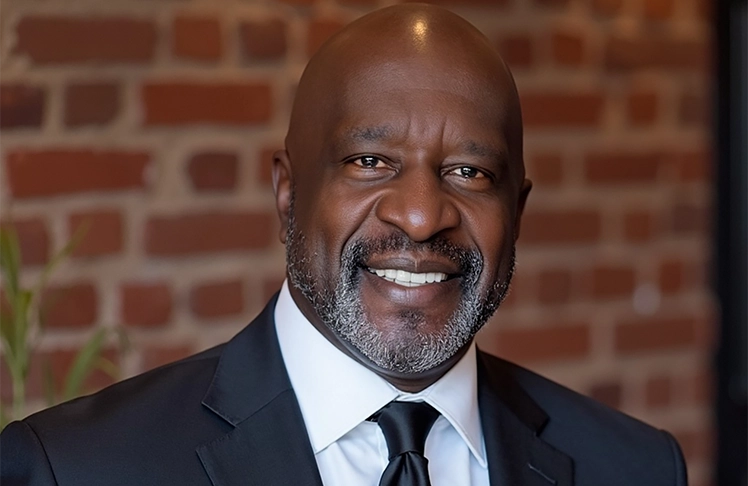
For more than a century, Mount Zion Baptist Church has been a spiritual home and community institution for generations of Black Seattle. Now, Rev. Charles Reginald Johnson Sr. is stepping into its pulpit as the church’s new senior pastor, bringing decades of ministry experience and a vision centered on faith, family and community.
For Johnson, coming to Mount Zion also carries a connection that reaches back to his childhood in Los Angeles. Long before he imagined leading the historic Central District congregation, he remembers hearing the late Rev. Dr. Samuel B. McKinney, Mount Zion’s longtime pastor and prominent Seattle civil rights leader, preach at Johnson’s childhood church.
“I remember Dr. McKinney coming to Mount Zion in L.A. when I was a little kid,” said Johnson. “To hear him speak as a boy, and now have God honor me to pastor the very church he built in Seattle—that is truly phenomenal.”
Johnson, who was named senior pastor-elect in early 2026, comes to Seattle after 17 years as senior pastor of Cochran Avenue Baptist Church in Los Angeles. His formal installation at Mount Zion is scheduled for Nov. 14-15.
Born in Huntsville, Texas, Johnson moved to Los Angeles as a young boy. His mother joined Mount Zion Missionary Baptist Church, where Johnson grew up under the leadership of Dr. Edward Victor Hill.
“I accepted Christ at the age of twelve May 17th, 1977,” said Johnson. “Early on, I sensed a calling. I got involved with youth usher boards, youth choirs, and youth ministries on local, district, and state levels.”
According to Johnson, by his teenage years, he was serving as president of the California State Baptist Youth Convention and organizing street evangelism efforts that brought thousands of people to the faith.
His path toward ministry, however, also included opportunities outside the church. Johnson attended the University of Southern California, where he studied political science and played football. He considered law school before ultimately deciding to pursue ministry.
After graduating from USC in 1988 with a bachelor’s degree, Johnson pursued theological training at Southwestern Baptist Theological Seminary in Fort Worth, Texas where he recieved his masters degree and continues doctoral studies at Liberty University.
Johnson began his pastoral career at Saint John Baptist Church in Greenville, Texas, in the early 1990s. After returning to Los Angeles in 1993, he joined the pastoral staff at New Christ Memorial Church of God in Christ under gospel artist and pastor Andraé Crouch, serving in ministries focused on education, new members and young adults.
For Johnson, working in the Church of God in Christ after being raised in the Baptist tradition exposed him to another expression of ministry and became an important part of his development as a pastor.
“That experience literally changed my life,” said Johnson. “I was traditional Baptist, educated Southern Baptist, and now working in the Church of God in Christ alongside Andraé Crouch as he transitioned from music to full-time ministry.”
Johnson later worked in international church planning through the Cities of Refuge Christian Fellowship before becoming senior pastor of Cochran Avenue Baptist Church in Los Angeles in 2009.
During his 17 years at Cochran Avenue, Johnson led the congregation as it expanded to three weekly services. When the COVID-19 pandemic disrupted in-person worship, he helped the church develop an online ministry that allowed it to continue reaching congregants beyond its physical sanctuary.
Many years before his calling to Mount Zion, Johnson’s ministry had already been shaped by several generations and traditions of the Black church. Those experiences would take on new significance as he began considering where he believed God was calling him next.
Johnson said he began sensing that his ministry would eventually take him to a church named Mount Zion, although he did not yet know where that church would be.
“Two years before I got called, God put it in my heart: ‘I’m going to send you to Mount Zion,'” said Johnson. “He didn’t tell me where or what city. When my home church in Los Angeles became vacant, people told me to put in a resume there. But I knew God wasn’t saying L.A.”
As he considered where his ministry would take him next, Johnson recalled a principle taught to him by Hill, his childhood mentor: “It’s bad to be in Chicago when God wants you in Detroit.”
Johnson said he waited. About a year and a half later, he received a call from denominational leadership suggesting that he consider Mount Zion Baptist Church in Seattle.
The transition is also a family journey. Johnson’s wife, Virna Johnson, said she is looking forward to becoming part of the Mount Zion congregation and building relationships in Seattle.
“I’m very happy for my husband and grateful for this opportunity,” said Virna Johnson. “I’ve seen his heart in ministry over the years, and it means a lot to see him welcomed by the Mt. Zion family. I’m looking forward to getting to know everyone, building relationships, and seeing what God has in store for us.”
As he begins his leadership at Mount Zion, Johnson said one of his priorities will be reaching younger generations. He believes churches must place greater emphasis on relationships and spiritual connection rather than expecting younger people simply to embrace religious traditions.
“We have done millennials and Gen Z a disservice because we have tried to get them locked into religion,” said Johnson. “Religion is man trying to reach God. Relationship is God reaching us because we couldn’t reach Him. Everything in life—school, home, social media—is about relationships. The greatest relationship we can have is with God.”
Johnson also recognizes that taking over Mount Zion means inheriting a congregation with a long history in Seattle’s Black community. For him, honoring that history, particularly McKinney’s legacy, does not mean allowing the church to remain unchanged.
“Time will not erase nor ages destroy what Dr. McKinney has done, it is written in history,” said Johnson. “But if we don’t continue the work, Mount Zion will just be a monument and not a ministry. What motivates me is the unfinished work of God: building the believer, building the family, and building the community.”
That idea of continuing the work forms the foundation of what Johnson describes as three themes for his ministry at Mount Zion: Believing, Building and Blessing.
Johnson said his priorities include strengthening families, expanding youth and young adult ministries and increasing the church’s engagement with issues affecting the surrounding community, including education and community safety.
He also wants Mount Zion to become a place of restoration for people who have become disconnected from churches or who have had difficult experiences with religious institutions.
“My prayer is that those who believe God can revive, restore, and renew will give Zion a chance,” said Johnson. “Any person who has been hurt, bruised, damaged, or looked over—come on to Mount Zion. We are a church that takes those who have been wounded, and we believe God will help make them a weapon for good.”
Johnson’s formal leadership transition will be celebrated during Mount Zion’s Pastoral Installation Celebration Weekend on Nov. 14-15.
For Johnson, assuming leadership of a congregation founded in 1890 means carrying forward a history that began long before his arrival. His challenge now is to honor what previous generations built while determining how Mount Zion can continue serving its congregation and community in the years ahead.
“We are Zion Strong,” said Johnson. “When you have the faith, God has the power.”