By Kiara Doyal, The Seattle Medium
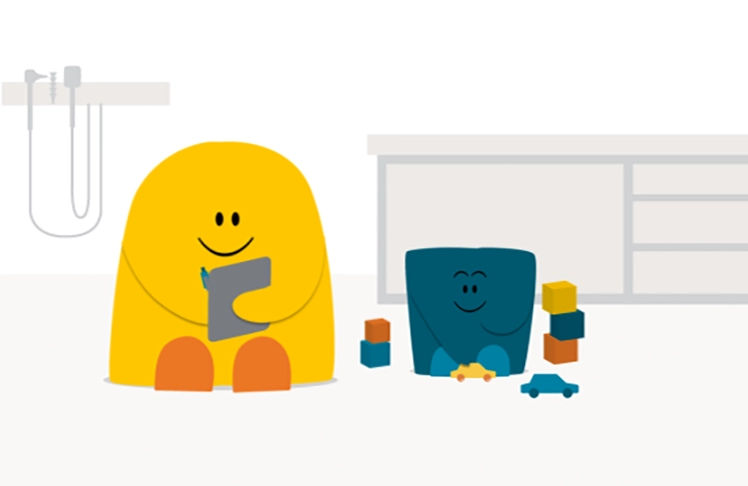
Seattle Children’s Autism Center recently launched “Introduction to Autism,” the nation’s first hospital-led animated video series designed to help families navigate autism diagnoses while addressing growing concerns about misinformation surrounding autism spectrum disorder.
The series was created to provide families with accessible, easy-to-understand information at a time when many are turning to social media for health information.
According to a recent study published in the Journal of Social Media Research, neurodivergence is the health topic most vulnerable to misinformation online, leaving many families and community members without reliable resources.
“We have three videos released so far, but we’re hoping to release five more later this year,” said Victoria Wilson, senior communications specialist for Seattle Children’s.
Joy Gehner, family advocate/case manager for the Seattle Children’s Autism Center, said the project emerged from a need to make autism education more approachable for families who may feel overwhelmed by traditional educational materials.
“We noticed there was maybe a gap, especially in this growing world of TikTok and X, and maybe an opportunity to provide information in smaller video snippets that people could take in and absorb maybe more easily,” said Gehner. “We also felt there was an opportunity to create videos in an animated format that would be more engaging.”
For Gehner, the project is also personal.
As both a healthcare provider and parent of a daughter with autism, she said the goal was to create resources that reflected the broad range of experiences within the autism community.
Because autism presents differently across communities and age groups, Gehner said inclusivity and accessibility remained central goals throughout the development process.
“Autism can look very different in people and can be diagnosed at many different ages, which is one of the things that we describe in the video about diagnosing autism,” said Gehner. “We needed to have videos that touch every community in Seattle and across the state.”
“We’re really excited about the way that this animation that Ashley and her team designed has been able to kind of capture that idea in these little shape people that could reflect different people,” she added. “I have a 27-year-old daughter with autism, and I see her reflected in these shapes.”
Ashley Wong, lead animator for the project, said the visual design intentionally centered individuality and emotional expression.
“All the autistic characters have eyebrows where the neurotypical characters do not, so I wanted to be able to really show the range of emotions that they can go through,” said Wong. “I think that’s something that has come up. That they feel autistic people can feel way more deeply about things, and their range of emotions can be much wider, so I wanted to be able to have the flexibility to do that.”
Wong said the team considered several visual approaches before choosing abstract, shape-based characters to avoid making the series feel aimed only at children and to ensure it resonated across age groups and audiences.
“Going with the different shapes and sort of these abstract characters was also a decision to not make it to focus on children or to adult,” said Wong. “We wanted it to feel like anyone could be looking at it, both neurodivergent and neurotypical.”
One of the videos focuses specifically on helping families navigate the autism diagnostic process in Washington state, an area Gehner said can often feel overwhelming.
“It can be hard for families to understand where to go to get that medical evaluation,” said Gehner. “Even among primary care providers, that isn’t necessarily one of the things that they have deep knowledge of.”
She noted that families often struggle to identify diagnostic resources because evaluations frequently require specialized centers and the process can be difficult to navigate without prior knowledge.
“We want people to understand that while we’re happy to diagnose the children who come to us, we’re not the only place that can do that,” she added. “Helping to disseminate that information to folks is part of what we try to do.”
Wong believes animation also provides unique opportunities to explain complex topics in accessible ways.
“The sky’s the limit with what you can do with animation,” said Wong. “You can get into imagined scenarios that you can’t necessarily get into with live action with humans.”
Seattle Children’s hopes the series will become a resource families can revisit throughout their autism journey, especially during the often overwhelming period following a diagnosis.
“I hear from families that it’s just hard to take all of that information in,” said Gehner. “One hope we have from this series is that it’s something families can go back to and revisit some of that key information on their own time.”
The series is intended not only to explain autism, but also to help families understand what comes next during a period that can often feel overwhelming and confusing.
“I hope that families feel really supported by having this information easily available, because the videos are intended to be not just about your child has autism, but your child has this diagnosis, here’s what you do now,” says Gehner.