By Aaron Allen, The Seattle Medium
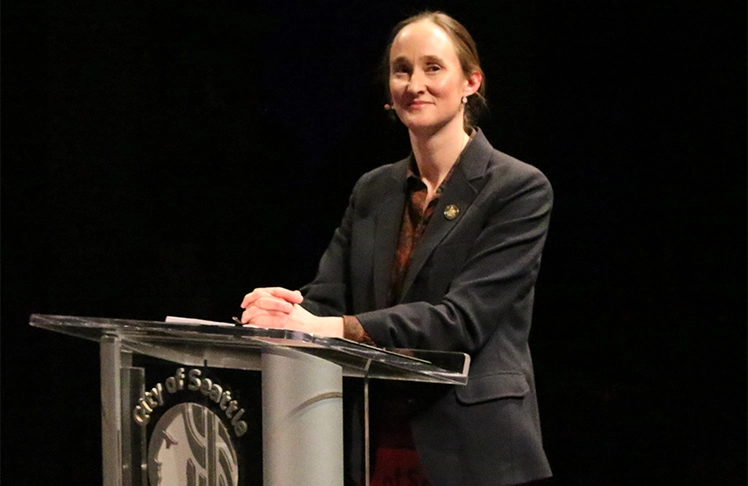
Seattle Mayor Katie Wilson has unveiled a new strategy to address persistent public safety challenges at 12th Avenue South and South Jackson Street, one of the city’s most visible and longstanding hotspots for open-air drug activity, retail theft and public disorder.
The initiative expands enforcement and community services in Little Saigon and North Beacon Hill while pairing increased police presence with investments in outreach, treatment and diversion programs. City leaders say the goal is to create lasting improvements in neighborhoods that have endured years of instability and unsuccessful interventions.
For residents, business owners and community advocates, the announcement represents the latest attempt to reclaim an intersection that has become synonymous with Seattle’s broader struggles around public safety, addiction, homelessness and behavioral health.
As Seattle launches its latest effort at 12th and Jackson, residents and business owners remain hopeful but cautious. After years of short-term improvements followed by setbacks, many say the true test will not be how quickly conditions change, but whether the city can sustain those improvements and restore long-term stability to one of Seattle’s most historic neighborhoods.
“The suffering and chaos we see in our streets has been tolerated too long and I’m glad that Mayor Wilson’s office is giving these neighborhoods the attention they deserve,” said Seattle City Councilmember Eddie Lin, whose district includes the area. “Seniors, families, and small business owners in the CID and North Beacon Hill are scared to walk around their neighborhood, struggling to access sidewalks and transit, and understandably frustrated by the lack of progress at all levels of government.”
Lin said drug dealers and others have profited from the suffering of vulnerable individuals and welcomed the administration’s focus on both safety and treatment.
Wilson said the plan was developed after months of conversations with neighborhood leaders, service providers and community stakeholders who expressed frustration with years of inconsistent progress.
“We’re taking a new approach to 12th & Jackson,” Wilson said. “Community groups and business owners in the Little Saigon neighborhood have been struggling for years with chronic safety issues near 12th & Jackson and now North Beacon Hill. The community has worked together to do what they can, but city leaders have failed to act with the necessary focus and determination to sustain a meaningful change in everyday conditions.”
The initiative comes after multiple city efforts to stabilize the area over the past several years.
One of the most prominent efforts occurred in 2022 under former Mayor Bruce Harrell, whose Operation New Day initiative deployed a highly visible Seattle Police Department mobile precinct and targeted fentanyl trafficking, illegal firearms and organized retail theft.
While the operation initially improved conditions, many residents and business owners reported that illegal activity returned as enforcement efforts declined, shifting between Little Saigon and nearby transit corridors.
Wilson said the city hopes to avoid that cycle by combining enforcement with services and neighborhood investments.
“After months of deep listening, my administration is taking a new path forward in close partnership with community leaders, the Seattle Police Department, and service providers,” said Wilson.
Under the plan, the city will increase police staffing in the area while also expanding access to outreach workers, treatment services and diversion programs. Officers will focus on disrupting illegal activity while connecting eligible individuals to services designed to address addiction, mental health challenges and housing instability.
Individuals who continue engaging in criminal activity may face arrest, while others may be referred to the Law Enforcement Assisted Diversion program, commonly known as LEAD, which connects participants with case management and behavioral health support.
“This focused effort to provide relief to the neighborhood and reduce flagrantly unlawful activity is the result of extensive consultation among diverse stakeholders,” said Sam Wolff, Seattle and King County policy director for the Public Defender Association.
“With a coordinated approach, we believe that we can make a meaningful change to street-level conditions, allow for people to adapt to public expectations about use of public space, and do so without unnecessary arrests,” added Wolff.
The city is also committing $1.1 million in one-time funding to support immediate neighborhood needs.
The funding will support dedicated outreach staff, mobile overdose prevention and treatment services, and community activation efforts intended to strengthen neighborhood engagement and support local businesses.
“While increased police presence is one part of this new approach, we know we can’t arrest our way out of these problems,” said Wilson. “I’m committed to ending the perception that illegal activity in Little Saigon and North Beacon Hill is acceptable. I’m also committed to making sure that people can get the treatment and support they need to change their lives.”
Community leaders say the success of the initiative will ultimately depend on whether the city can sustain its commitment over time.
“For too long, the Little Saigon community has demanded clear and decisive leadership from our governments to address the root causes and impacts of the activity at 12th & Jackson,” said Valerie Tran, interim executive director of Friends of Little Saigon.
“Little Saigon has endured significant damage to our economic and cultural vitality as a result of the public safety issues in the neighborhood,” continued Tran. “Friends of Little Sài Gòn is appreciative of Mayor Wilson’s nuanced understanding of the complex issues facing our community and her administration’s vision for improving the conditions in Little Saigon.”
Tran said community organizations look forward to partnering with the city while helping ensure accountability for the investments and commitments being made in the neighborhood.
“We look forward to continuing to partner with the City to ensure accountability and coordination of investments being made in Little Saigon,” said Tran.