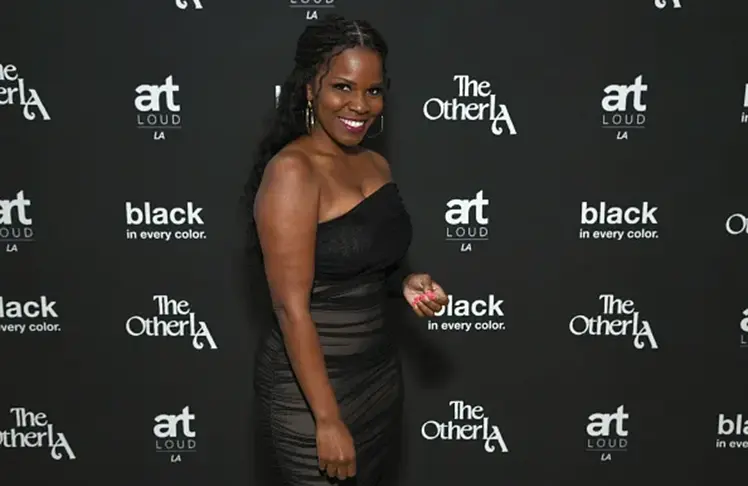
When Myesha Chaney walked back into the church she had helped build, she couldn’t tell where she belonged.
For nearly two decades, she had served as the wife of Pastor Wayne Chaney Jr. and First Lady of the Antioch Church of Long Beach in California. She worked alongside her husband, counseling members, helping families through crises, and helping launch the church’s event venue.
But when she and her husband split after 18 years of marriage, Cheney says she felt like a stranger in the place she once called her spiritual home. She tried returning a handful of times; one Sunday, ushers directed her to a seat far away from the pulpit and her ex-husband.
“They let me sit in the balcony,” Chaney recalled, effectively putting her in her place in a low-profile section of the church. “That was my cue.”
Emotional, Spiritual Burdens
For Chaney, a member of the original cast of the reality TV series “Preachers of L.A.,” the hardest part of divorce was not leaving a marriage that lasted nearly two decades or rebuilding her finances. It was seeing the church community turn its back on her.
“I felt utterly abandoned by the people I had known my entire life,” she says. “Not just from the people in my congregation, from almost every other faith-believing person I know.”
Researchers who study the Black church have found that when a marriage between members falls apart, women often carry the emotional and spiritual burden. In a community where marriage is celebrated as the ideal, divorced women frequently describe feeling shame, failure, and isolation. Some quietly drift away from church altogether, while others watch former husbands like Chaney’s remain in good standing or remarry with little apparent stigma.
I felt utterly abandoned by the people I had known my entire life. Not just from the people in my congregation, from almost every other faith-believing person I know.
Myesha chaney, fomer first lady, antioch church of Long Beach
Scholars say those experiences have fueled calls for churches to examine whether divorced women are being met first with judgment instead of the grace they so often preach from the pulpit.
“I don’t think many churches, especially in the Black community, support people walking through divorce well,” Chaney said. “There’s an unspoken idea that the person shouldn’t be going through divorce in the first place. There’s this overarching kind of shame around it.”
‘You’re On Your Own’
Because divorce remains largely hidden, many believers never hear honest stories from those who have lived through it, she said. Even pastors who have experienced divorce often avoid discussing it publicly.
“The bridge is not there from the people who are walking through it [to] the people who have the resources, the power and the influence to talk about it,” she said.
Chaney herself admits that, back when she was helping lead Antioch, she could have been more supportive of divorced parishioners. She counseled them, helped them pay bills and prayed with them, but didn’t realize they may have felt as isolated as she did.
“The church supports people through all kinds of things—homelessness, transition, jobs,” she said. “But when it comes to divorce, it’s like you’re on your own.”
Although she continued working with the church for nearly two years after the divorce, Chaney realized her relationship with the ministry had fundamentally changed. Shortly after the divorce, she met another woman who was involved with her former husband.
“That was my message that it was not going to be a safe space for me,” she said.
The losses multiplied. She moved repeatedly after the divorce, lost her job and watched the ministry she had invested in continue without her.
“I was the only one replaced, but everything seemed to have gone on perfectly well,” she said.
Rebuilding Faith
Recovery came largely outside church walls.
Chaney had already spent years in therapy before the divorce. She continued counseling, journaled extensively, read roughly a book each week and sought healing.
“My faith at that point was shot,” she said. “I reached for whatever I could.”
The journey eventually became the foundation for her book, “Honest,” which chronicles Chaney’s divorce and spiritual reconstruction. The crisis led Chaney to encounter God in an entirely different way.
“I had the God of the Bible that I had learned and trained,” she says. “And then I had the God of my experience. The God I found in the rubble when everything was gone was a very different experience than the one I was praising and worshiping in front of everybody.”
Today, Chaney says her calling is helping people tell the truths they are afraid to say aloud.
“I help give language to what people experience that they can’t say,” she said. “My mission was to be honest through lived experience so that anybody else walking by won’t feel the way I felt.”
Seeking Reconciliation
Still, she grieves relationships that simply disappeared when she and her husband divorced, and acknowledges they may never reappear.
“The Christian way is reconciliation,” she said. “But in these types of circumstances like divorce, there is no making anything right. It just is what it is.”
Even so, Chaney does not define her story by what she lost. Now, considering moving to New York and embracing what she calls an unexpected new chapter, she says the worst season of her life became the beginning of the most authentic one.
“What has happened has been the best thing in my entire life,” she said. “It was the worst thing, and it was the absolute best thing.”