46 F
Seattle
Friday, December 5, 2025
Home Blog Page 4

O’Dea Survives late Bellevue Rally To Advance To State Title Game

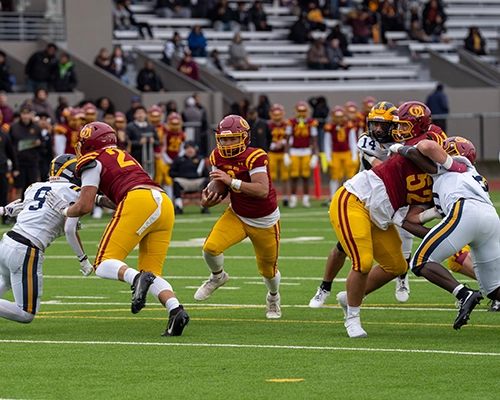
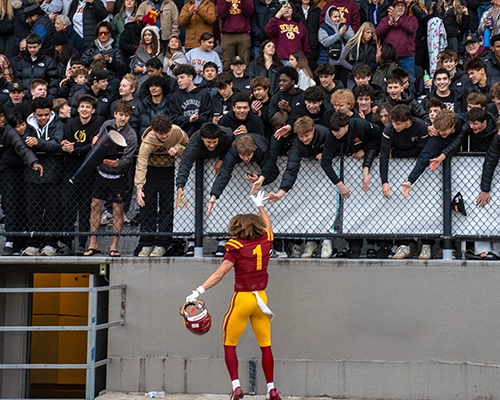
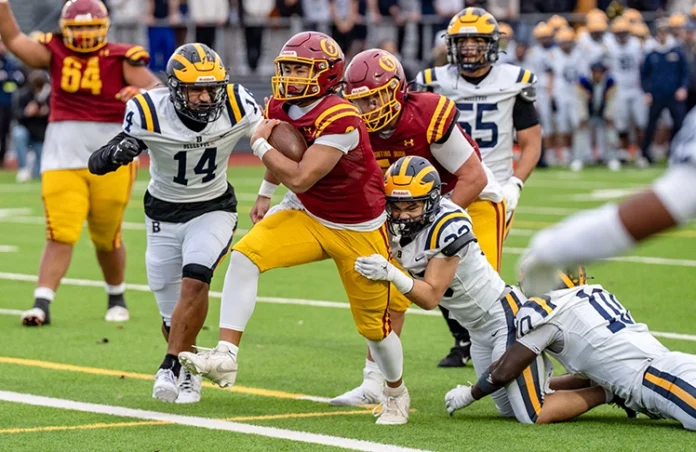
O'Dea's Allias Moimoi runs for a touchdown against Bellevue during their state 3A football semifinal victory over the Wolverines. Photo/Tyler Artis

By Kiara Doyal, The Seattle Medium

Yesterday afternoon, the O’Dea Fighting Irish punched their ticket to the State 3A football championships game next week at Husky Stadium with a hard-fought 20-14 victory against the Bellevue Wolverines.

Bellevue opened the game with possession of the ball, but their opening possession stalled quickly. Dreson Jimerson picked up 4 yards on first down, followed by short runs from Reylen Witherspoon and Max Jones. On 4th-and-4, Jimerson was stopped just short of the line of scrimmage, turning the ball over on downs at O’Dea’s 44.

O’Dea’s offense didn’t seem to be much better at first either. Peyton Egan was quickly stopped for no gain, and a false start pushed the Fighting Irish backward. But after another penalty and facing an enormous 2nd-and-31, J Shaun Wilson broke free on a 55-yard run, electrifying the stadium.

Now deep down the field, O’Dea chipped away with short gains to the 16-yard line before a penalty on Bellevue moved the ball to the 8-yard line. However, O’Dea would fail to capitalize on Wilson’s run, as a few plays later, quarterback Hutton Leverett had a pass intercepted in the end zone by Bellevue’s Nicolas Norrah.

Bellevue responded with their best drive of the quarter. Starting from their own 4-yard line, they relied on runs from Witherspoon and Max Jones as they pushed the ball downfield. Bellevue managed to cross midfield, but the opening quarter came to an end with the score tied at 0.

Bellevue started the second quarter with possession of the ball, but their offense quickly stalled with no significant gains on the field, resulting in a punt. Despite a 4-yard gain from Wilson and a 3-yard pass from Leverett to Banchero, O’Dea also went three-and-out and punted on their 4th down. After taking possession of the ball at their own 13-yard line, the Wolverines started building momentum as Jones picked up 11 yards, then added 4 more on the next series. A timeout seemed to help both teams regroup, but Bellevue’s momentum dwindled after a series of penalties forced them to punt.

O’Dea took possession of the ball near midfield and began to take control of the game, as Leverett began to find his rhythm after a personal foul on Bellevue. Runs from Owen Brustkern and J Shaun Wilson set up a 4th-and-1 at the 16-yard line. O’Dea would seize the moment as Allias Moimoi cut through the Wolverine defense for a 15-yard touchdown run, putting O’Dea on the board with the game’s first points. With the extra point good, O’Dea led 7-0 with 2:03 left in the first half.

After a short series for Bellevue, O’Dea blocked Bellevue’s punt, which was scooped up and returned 10 yards for a touchdown by Brustkern. The nail-biting play extended O’Dea’s lead to 14-0 with 1:11 remaining in the second quarter.

Bellevue tried to search for a last-minute push, as Witherspoon and Jones chipped in some short gains, but the clock ran out, and the Fighting Irish went into halftime up 14-0.

O’Dea opened with possession of the ball in the second half and immediately hurt themselves with a false start. Two plays later, Leverett was intercepted by a Wolverine defender, giving Bellevue the ball at the 2-yard line. On the very next snap, Max Jones stepped into the end zone for a touchdown. The extra point was good, and Bellevue narrowed the gap to 14-7 with 11:02 left in the third quarter.

O’Dea’s next drive stalled quickly, giving Bellevue a chance to tie. But even after what looked like a promising start for Bellevue, the Wolverines were stopped on 4th-and-1, turning the ball over to O’Dea.

O’Dea responded with their strongest drive since the second quarter. Wilson ran for 20 yards, Moimoi for 8, and Speller for multiple tough gains. Finally, Moimoi ended the drive with a 9-yard touchdown run, his second score of the night, but the kick was no good. With 4:48 remaining in the third quarter, the Fighting Irish led 20-7.

Bellevue struggled to find offensive rhythm on their next possession and punted again on 4th down. O’Dea would move the ball deep into Bellevue territory as the third quarter came to an end.

Bellevue opened the final quarter leaning on runs from Jones and Jimerson. Jimerson broke loose for a 20-yard gain and eventually brought the Wolverines to midfield. A series of short runs followed by a penalty put the Wolverines in a long-yardage situation as they faced a 3rd-and-26. However, the distance didn’t faze Bellevue as Kason Carta delivered a 27-yard strike to Nicolas Norrah to move the chains.

Just moments later, Carta found Norrah once again, this time for a 25-yard touchdown strike that reignited Bellevue’s momentum. With the extra point, the Wolverines closed the gap to just one score, trailing 20-14 with 7:45 left in the fourth quarter.

O’Dea attempted to respond, but Leverett’s pass on 4th down was intercepted by Norrah, giving Bellevue the ball with a chance to take the lead.

Bellevue started the possession at their own 8-yard line after a false start but managed to fight their way out. A pass interference call on O’Dea moved the Wolverines near midfield. Jones and Jimerson powered the ball into O’Dea territory, and with under two minutes on the clock, Bellevue had moved the ball to the O’Dea 31-yard line.

As time was winding down, Bellevue continued to move the ball into scoring position. Facing a 3rd-and-8 at the O’Dea 13-yard line, O’Dea came up with the play of the game. Tevita Nonu sacked Carta, forcing a fumble that Nonu recovered to seal the victory for the Fighting Irish.

With just three seconds left, O’Dea kneeled the ball and let the clock fade. With the win, O’Dea will head to the state 3A championship game at Husky Stadium next Friday for the second year in a row.

After the game, O’Dea head coach Monte Kohler said his heart was fluttering as he was so happy with how hard his team fought during the semifinal game.

“Great job, we got one more. We got to enjoy this ride and celebrate this feeling,” said Kohler. “We didn’t play clean, but we still played great. But the goal wasn’t to win a semifinal game, it is to win the championship, and we are going back for the second year in a row.”

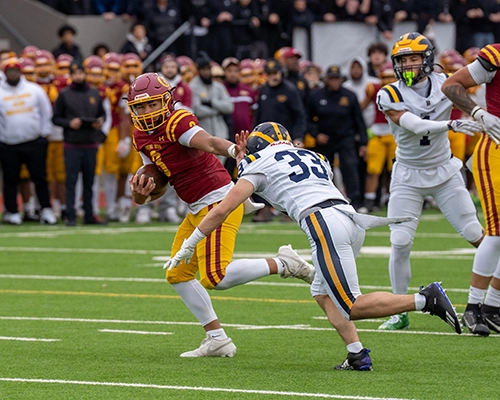
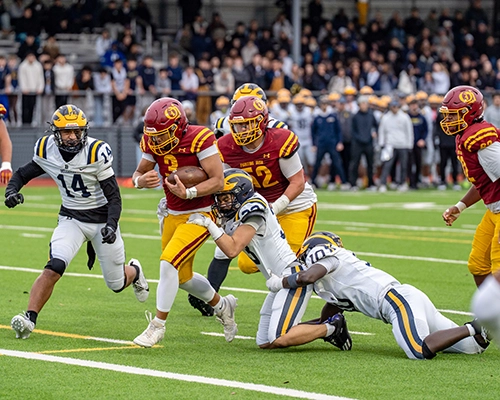
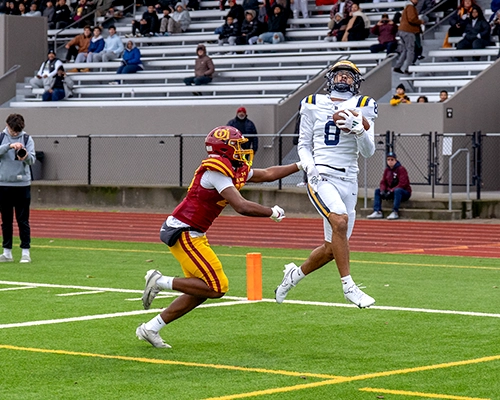
Pictorial Highlights of O’Dea vs. Bellevue

Photos/Tyler Artis

Eastside Catholic Falls To Mt. Tahoma In State 3A Semifinals

Reported by Karrington Kincaid, The Seattle Medium

TACOMA — Eastside Catholic’s playoff run came to a close Saturday night as the Crusaders fell 27-6 to Mt. Tahoma in the Class 3A state semifinal at Mt. Tahoma Stadium. The matchup featured two of the state’s top three seeds, but it was the second-seeded Thunderbirds who seized control early and never let go, using a consistent ground game and disciplined defense to earn a trip to the WIAA championship.

Eastside Catholic, the No. 3 seed, came in with momentum after a 41-0 quarterfinal victory over Kennewick last week. But Mt. Tahoma’s physical play on both sides of the ball made it difficult for the Crusaders to find any rhythm. They were held scoreless until the final two minutes, while the Thunderbirds steadily built their lead.

Both teams opened the game with short drives, trading punts in the early going. Eastside Catholic’s first series showed promise. Running back Nick Jones picked up 15 yards on two carries, and quarterback Luca Villasenor added short completions to receivers Asa Thompson, Caden Weber and Cayden Pili. But after a false start penalty and a swing pass that lost yardage, the Crusaders were forced to punt.

Mt. Tahoma quickly established its identity on the next drive. Running back Nezie White led a 13-play possession, running behind a strong offensive line that allowed the Thunderbirds to move from their own 4-yard line to the Crusaders’ red zone. Quarterback Mikkah Cordero chipped in with two short completions to receiver Kane Roy, but the Eastside Catholic defense held the line inside the 20. Mt. Tahoma settled for a short field goal to take a 3-0 lead early in the second quarter.

Eastside Catholic’s next possession ended in a costly turnover. Pili broke off a long run down the left sideline, but the ball came loose and was recovered by Mt. Tahoma’s Felix Diaz. The Thunderbirds capitalized, using an 18-yard pass from Cordero to receiver Elijah Durr and another short throw to Diaz to set up first and goal. Diaz then punched in a 1-yard touchdown. The extra point missed, but Mt. Tahoma extended its lead to 9-0.

Late in the second quarter, the Crusaders’ defense created a momentum shift. Safety Hudson Schock intercepted a pass from Cordero to give Eastside Catholic the ball near midfield. But the offense could not turn the takeaway into points. A negative run and two incomplete passes led to a punt, and Mt. Tahoma closed the half by running out the clock with a series of short runs by White and Diaz.

Trailing 9-0 after halftime, Eastside Catholic opened the third quarter with a false start and a broken play that led to an 11-yard sack of Villasenor. On the next snap, the quarterback tried to push the ball downfield but was intercepted by Mt. Tahoma defensive back Shan Jones. The Thunderbirds turned that turnover into another field goal, pushing their lead to 12-0.

Midway through the third quarter, Eastside Catholic responded with its best offensive series of the game. Villasenor found receiver Nepo Fareti on a deep throw down the left sideline for a 40-yard gain. Jones, Wassie Lugolobi and Pili added short runs that moved the Crusaders inside the 25. But a holding penalty and three straight incompletions ended the drive on downs.

Mt. Tahoma then put the game out of reach early in the fourth quarter. Cordero hit receiver Anthony Quintanilla Jr. in stride on a post route for a 68-yard completion, setting up White’s 1-yard touchdown run. The extra point extended the lead to 19-0.

On the following drive, Mt. Tahoma’s defense delivered again. A pass rush forced Villasenor to throw from his own end zone, and an intentional grounding penalty resulted in a safety. After receiving the ball again, Mt. Tahoma struck once more. Cordero hit Quintanilla Jr. again to flip the field, and White capped the possession with his second touchdown run of the game. The extra point pushed the lead to 27-0 with just under five minutes remaining.

To their credit, the Crusaders continued to battle. Villasenor completed passes to receiver Robert Ingram, Thompson and Pili before finding receiver Tytan McNeal over the middle for a 23-yard touchdown. The extra point attempt was no good, but Eastside Catholic avoided the shutout with under two minutes left.

The Crusaders’ defense produced several bright spots, including interceptions from Schock and Villasenor, along with red zone stops in the first and third quarters. But Mt. Tahoma’s ability to control the clock with 47 rush attempts and a 9-of-9 passing performance from Cordero left Eastside Catholic with limited opportunities.

The loss ends the Crusaders’ postseason run, while Mt. Tahoma advances to the WIAA Class 3A state championship game on Friday, Dec. 5, against Metro League powerhouse O’Dea at Husky Stadium.

Player Stats

Eastside Catholic Crusaders – Offense:
Luca Villasenor – 15 of 25 passing, 105 yards, 1 TD, 2 INT; 1 rush, minus-11 yards

Nepo Fareti – 3 receptions, 60 yards

Tytan McNeal – 1 reception, 23 yards, 1 TD

Asa Thompson – 3 receptions, 12 yards

Nick Jones – 6 rushes, 23 yards; 1 reception, 2 yards

Cayden Pili – 3 rushes, 3 yards; 3 receptions, 0 yards

Caden Weber – 1 reception, 10 yards

Zavier Traxler – 1 reception, 3 yards

Robert Ingram – 1 reception, 5 yards

Wassie Lugolobi – 1 rush, 6 yards

Hudson Schock – 1 rush, 0 yards

Eastside Catholic Crusaders – Defense:

• Hudson Schock – 3 tackles, 1 interception

Mt. Tahoma Thunderbirds – Offense:

Nezie White – 19 rushes, 59 yards, 2 touchdowns

Felix Diaz – 14 rushes, 65 yards, 1 touchdown; 1 reception, 18 yards

Anthony Quintanilla Jr. – 2 receptions, 72 yards

Elijah Durr – 2 rushes, 30 yards; 1 reception, 18 yards

Kane Roy – 3 rushes, 24 yards; 2 receptions, 15 yards

Mikkah Cordero – 9 completions for144 yards; 2 rushes, minus-12 yards

Kemarjae Davis – 4 rushes, 9 yards

Keshawn Hines – 1 rush, 1 yard

Shan Jones – 2 rushes, 0 yards

Mt. Tahoma Thunderbirds – Defense:

Felix Diaz –1 fumble recovery

Shan Jones – 2 interceptions

SNAP Benefits Are Flowing Again, But Many Enrollees Will Soon Hit Another Hurdle

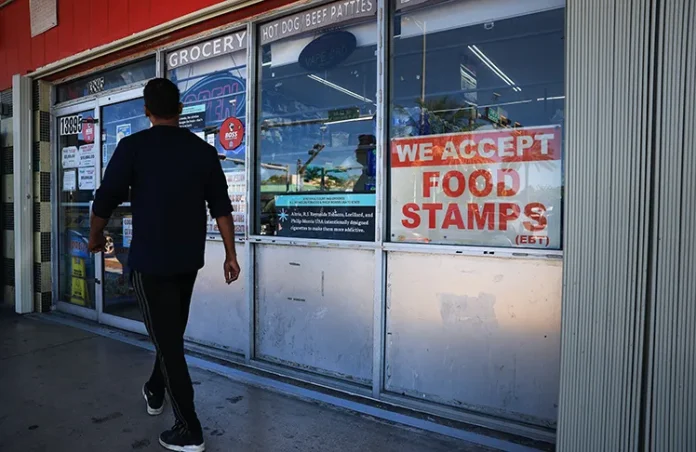
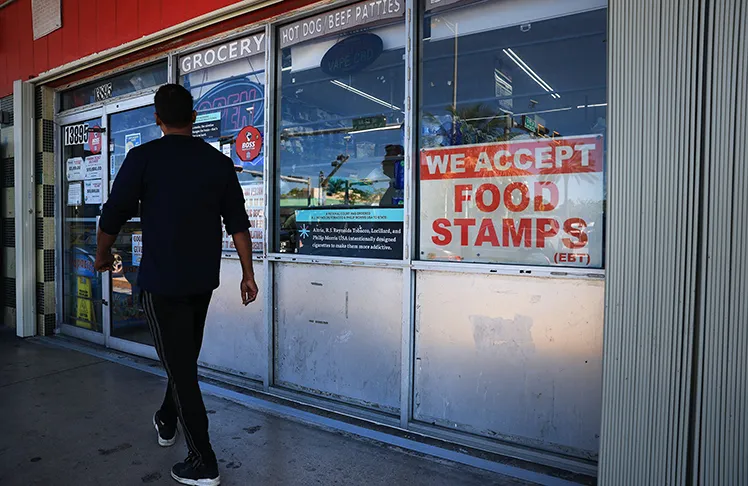
A 'We Accept Food Stamps' sign hangs in the window of a grocery store on October 31, in Miami, Florida. (Joe Raedle/Getty Images via CNN Newsource)
A ‘We Accept Food Stamps’ sign hangs in the window of a grocery store on October 31, in Miami, Florida. (Joe Raedle/Getty Images via CNN Newsource)

By Tami Luhby, CNN

(CNN) — Food stamp recipients are now receiving their November benefits, but a growing swath of enrollees may soon lose their vital food assistance completely.

At the same time as the government shutdown disrupted the Supplemental Nutrition Assistance Program, or SNAP, states began implementing an expansion of the program’s work requirements as mandated in the Republicans’ “big, beautiful bill,” which was signed into law by President Donald Trump this summer.

Under the GOP package, more food stamp enrollees will have to work, volunteer or participate in job training for at least 80 hours a month or they will only be able to receive benefits for three months out of every three years.

The expanded work requirements will result in 2.4 million fewer Americans receiving food stamps benefits in an average month over the next decade, according to a Congressional Budget Office analysis. This includes 300,000 families with children.

Recipients who don’t meet the requirement will likely start losing their benefits in March, but the timing will depend on where they live and when they must recertify their eligibility for food stamps.

Republicans have long wanted to beef up SNAP’s existing work requirement, which used to apply to beneficiaries ages 18 to 49 who did not have disabilities or dependent children. The GOP increased the age threshold to 54 as part of the 2023 debt ceiling agreement.

The GOP spending bill further broadened the work requirement to include recipients through age 64 and parents of children ages 14 through 17. Veterans, people experiencing homelessness and former foster youth are now also subject to the mandate.

Plus, the legislation made it harder for states to seek waivers during poor economic conditions. Previously, states could obtain waivers in areas they identify as having a lack of sufficient jobs. Now, only areas with unemployment rates over 10% qualify.

A federal judge in Rhode Island has temporarily barred the US Department of Agriculture from terminating existing waivers before their expiration dates, but the agency has yet to release guidance on the decision, said Chloe Green, assistant director of policy at the American Public Human Services Association.

Asked about the case, the USDA said it is approving waivers “within its statutory authority under the One Big Beautiful Bill Act of 2025, on an individual basis.”

Overall, roughly double the number of SNAP recipients will be subject to the mandate, said Lauren Bauer, a fellow in economic studies at the Brookings Institution.

The rollout of the expanded work requirements, however, has been chaotic, which was exacerbated by the record-long government shutdown, states officials and experts say.

“There is both a tremendous amount of confusion and, strangely, a wide array of differences across states and how they are implementing it,” Bauer said.

Rushed timetable

The SNAP work requirement provisions were among the few GOP agenda bill measures that did not have a set implementation date. In the fall, the US Department of Agriculture published guidance that said the new rules took effect on July 4, when the bill was signed into law, but effectively gave states until November 1 to stand up their programs.

Then, earlier this month, the USDA said that states should not count November when calculating whether enrollees are meeting their work requirements because of the shutdown-spurred benefit disruptions.

Most states set November 1 as their implementation date, though some started earlier, Green said. But other states say their systems may not be ready to track the expanded requirement until the spring, even though that could put them at risk for being penalized by the USDA.

“One worry we have is that when you make systems changes this fast, there’s a risk for unintended impacts somewhere else in the system,” she said, noting that such updates usually take 12 to 18 months to do properly.

States are particularly sensitive to making payment mistakes now because another provision of the Republican agenda bill requires that they shoulder a larger share of the program’s administrative costs if they have high error rates.

Beneficiaries who may be newly subject to the work requirements need to be notified and screened to make sure they don’t qualify for other exemptions, such as having physical or mental limitations.

“A lot of people who are calling in are worried that now they’re being assigned work requirements without them even knowing,” Green said. “That should not happen.”

Many states are starting the three-month clock when residents first apply for food stamps or when they file their recertification forms, which generally happens every six to 12 months depending on the state and entails an interview. But some states are checking all their enrollees at once, without waiting for their recertification dates.

Updating systems

Connecticut has found it “very challenging” to implement the expanded work requirements, said Dan Giacomi, director of program oversight and grants administration at the state’s Department of Social Services. An estimated 36,000 residents — or 10% of the state’s SNAP enrollees — could be at risk of losing their benefits in coming months because of the law’s changes.

“You can’t just flip a switch in your eligibility system and have it do all of these new categories or new processes you have,” he said.

To ensure it is complying with the Republican agenda bill the state has had to implement temporary workarounds — which involve case workers manually inputting whether recipients are newly subject to the requirement — while it races to update its technology. Giacomi is also concerned about these cases being integrated properly into the system once it is updated, as well as any payment errors that may result in penalties for the state.

Another reason for the delay is that the state had to wait for guidance from the USDA so staffers knew how to handle all scenarios, he said. Though it still has several outstanding questions, it has enough information to get started.

States often want to wait for clear USDA guidance so they don’t take steps that the agency might later say don’t comply with the regulations, said Ed Bolen, director of state SNAP strategies for the left-leaning Center on Budget and Policy Priorities.

In Pennsylvania, the timetable began even earlier because its economic waivers, which covered many counties and localities, expired in September. The commonwealth took “substantial steps” to connect with all the SNAP recipients in these areas to determine if they could qualify for another exemption from the work requirements, Hoa Pham, a deputy secretary in the Department of Human Services, said. If they don’t qualify, they could start losing their benefits as soon as January 1 unless they meet the work mandate.

Pennsylvania has several ways of verifying recipients’ income, including state and federal data and a pilot program in which enrollees allow a third-party platform to pull and report their payroll information. But these sources don’t necessarily cover all the work that recipients perform so they may also have to submit pay stubs.

Prior to the GOP agenda bill, fewer than 25,000 of Pennsylvania’s roughly 1 million SNAP enrollees were subject to the work requirement rules that applied to those ages 18 to 54. The legislation expanded that number to just under 248,000 people.

The department projects that a total of 144,000 recipients could lose their benefits over the next year when they renew their eligibility.

States are also racing to inform SNAP beneficiaries who may now be subject to the work requirements to make sure they meet the mandate or file for exemptions.

Connecticut is sending text messages, mailing notices and meeting with community groups. It has also set up an online questionnaire that will direct those potentially affected to the next steps they have to take. Pennsylvania has launched a website — with a video and a screener — to explain the changes to residents.

Still, Pham is worried that some people who would continue to qualify could lose their benefits because of the paperwork.

“It is all too easy for someone to miss an action step, and for that reason alone, that opens up the risk for people to lose their SNAP eligibility — for just missing an administrative process, and not because they are not otherwise eligible,” she said.

The-CNN-Wire
™ & © 2025 Cable News Network, Inc., a Warner Bros. Discovery Company. All rights reserved.

FEMA Workers Reinstated After Suspension And Investigation Over Letter Criticizing Trump’s Overhaul Of Agency

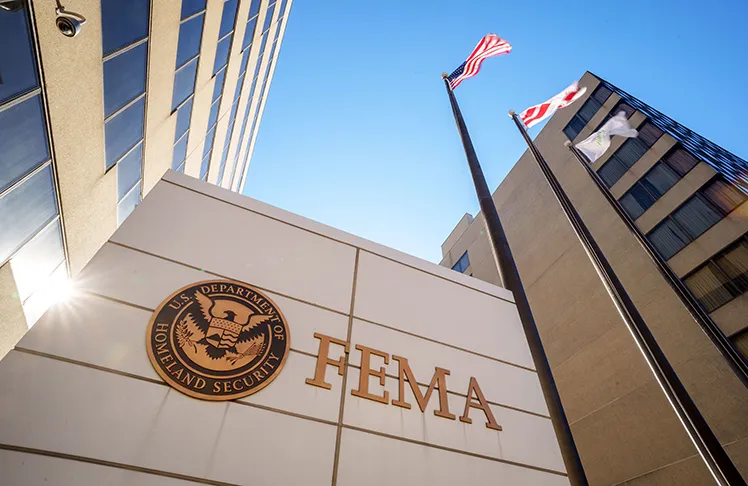
The Federal Emergency Management Agency headquarters in Washington, DC. (J. David Ake/Getty Images via CNN Newsource)

By Gabe Cohen, CNN

(CNN) — A group of FEMA workers has been reinstated after three months of forced leave and an investigation into alleged misconduct for signing an open letter to Congress that criticized the Trump administration’s overhaul of the disaster relief agency and warned it could put American lives in danger.

More than a dozen workers received reinstatement notices from the Federal Emergency Management Agency last week, according to multiple sources and internal emails reviewed by CNN. “The misconduct investigation has been closed, and as a result you are being removed from Administrative Leave,” one email said. Some of the staffers have already reported back to work, while others will rejoin their teams this week.

“I was dumbfounded,” said Virginia Case, a FEMA external affairs officer who was among those reinstated. “I really did think we were going to get terminated.”

FEMA and the Department of Homeland Security, which oversees the agency, did not respond to CNN’s request for comment.

The controversy began in August, when more than 190 current and former FEMA officials signed what became known as the “Katrina Declaration.” The letter warned Congress that the Trump administration’s efforts to dismantle FEMA could put American lives at risk, raising fears of another failed federal disaster response on the scale of Hurricane Katrina.

Most signers remained anonymous, but a handful of current staff — including Case — publicly signed their names. Within days, those employees were placed on paid leave.

“Change is always hard,” a FEMA spokesperson said in a statement at the time. “It is especially for those invested in the status quo, who have forgotten that their duty is to the American people not entrenched bureaucracy.”

FEMA launched formal misconduct investigations in September, summoning the outspoken staffers for interviews. The Trump administration had already suspended or fired more than 100 employees at the Environmental Protection Agency for a similar act of dissent earlier in the summer.

In mid-November, one of the FEMA workers received a termination notice as the others remained under investigation. But the employee appealed, and in a sudden reversal, that staffer was among those told last week they could return to work, multiple sources told CNN. David Seide, senior counsel for the Government Accountability Project, which represents some of the workers, said FEMA management emailed the employee to say agency lawyers had determined that signing the letter was protected by whistleblower laws.

Another reinstated worker was told by their supervisor that the investigation found they “didn’t abide by policy” but were “protected by the whistleblower act,” according to a message viewed by CNN.

“This case is important precedent,” Seide told CNN. “It reaffirms what should be obvious. That it is unlawful to retaliate against federal employees who exercise their free speech and whistleblower rights by publicly dissenting against agency policies.”

However, some of the reinstated FEMA staffers fear they could still face additional retaliation.

“I don’t think that it’s over yet. I think it’s still an evolving situation,” said Abby McIlraith, a FEMA emergency management specialist who was reinstated. “But I know that I didn’t do anything wrong, so I feel pretty vindicated and happy to be back and be able to see my co-workers and do my job again.”

Case, who returned to work Wednesday, said she had considered resigning to avoid being blacklisted from federal service.

“We were willing to put our jobs on the line for our values,” Case said. “I’m grateful that we’re able to go back and continue supporting these communities and these survivors.”

The-CNN-Wire
™ & © 2025 Cable News Network, Inc., a Warner Bros. Discovery Company. All rights reserved.

What We Know – And Don’t Know – About The Immigration Crackdown Expected In New Orleans This Week

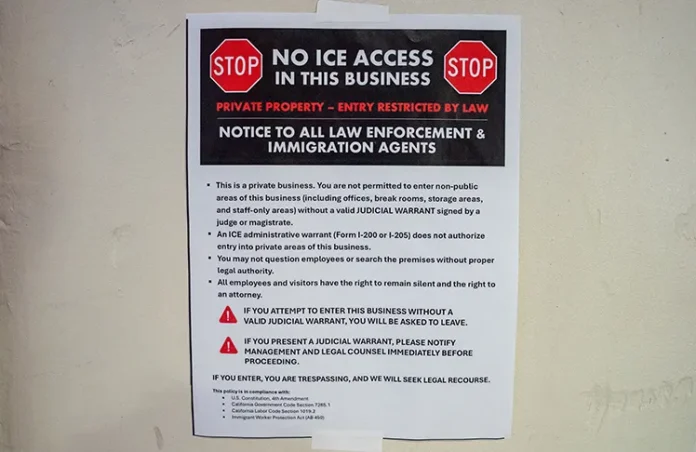
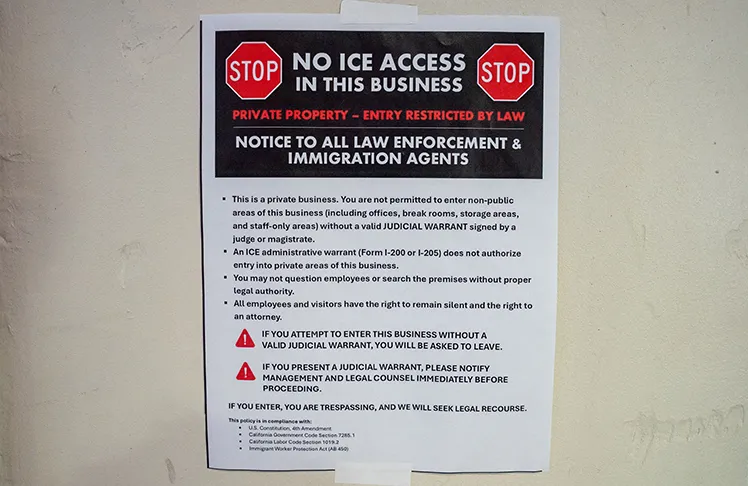
A sign stating no access to Immigration and Customs Enforcement (ICE) is displayed inside a business in New Orleans on Thursday, amid reports the US Department of Homeland Security is planning to deploy federal border agents to Louisiana in the coming days. (Seth Herald/Reuters via CNN Newsource)

By Zoe Sottile, CNN

(CNN) — As Department of Homeland Security agents are expected to surge into New Orleans this week, the latest Democrat-led city targeted by a federal immigration enforcement crackdown, a common thread has emerged among local officials: They’re being kept in the dark – and it’s spiking fear among the immigrant community.

There is “mass chaos and confusion” as the campaign looms, newly elected Councilmember at-Large Matthew Willard told CNN. He said he and other local officials have received scant details about the operation – and the information they have received “isn’t reassuring.”

“We’re really just fearful of the unknown, and looking at the coverage that we’ve seen in other cities by CNN, we certainly don’t want that here in the city of New Orleans,” he said.

He’s one of several leaders who say that they’re looking to DHS operations in past cities, both for examples of the heavy-handed tactics federal agents employ and strategies communities can use to protest and organize.

The operation comes after top Border Patrol official Gregory Bovino and Customs and Border Patrol agents spent around a week in Charlotte, North Carolina, following a weekslong Chicago-area operation that led to harrowing scenes: a daycare teacher arrested inside a childcare centerparents separated from their US citizen children; and protesters struck or hit with tear gas by federal agents.

Here’s what we know about the expected operation in New Orleans:

When will the operation start?

The operation is expected to start as early as December 1, according to two sources familiar with the planning. Bovino will be joined by 250 Department of Homeland Security agents – roughly the same number sent to other cities to assist the top Border Patrol official, the sources said.

In response to CNN’s questions about operations in New Orleans last week, DHS sent CNN a statement from Assistant Secretary Tricia McLaughlin: “For the safety and security of law enforcement, we’re not going to telegraph potential operations.”

It’s unclear how long the agents are expected to stay in New Orleans.

Why is DHS targeting New Orleans?

President Donald Trump has previously floated New Orleans as a destination for his federal crackdown, saying in an Oval Office meeting this year the city “has a crime problem.” The Crescent City is a Democrat oasis in a Republican state, whose governor is a Trump ally.

And Louisiana is familiar territory for Bovino, who led Border Patrol’s New Orleans Sector during Trump’s first term.

Asked by CNN last month how he chooses cities for targeted operations, Bovino cited Trump, DHS Secretary Kristi Noem, and “what our intelligence says.”

Willard, a Democrat, told CNN he doesn’t “understand the strategy of them coming to the city of New Orleans,” which is a “welcoming place for visitors from all over the world.”

Federal agents “have no strategy,” the councilman-elect said. “They have no real plan. It’s really just to invoke fear in people and sort of a power move, a demonstration of power.”

He noted that Louisiana does not share a land border with any other country, “so for Border Patrol to come into the state of Louisiana really makes no sense to me.”

Similarly, Susan Weishar, a longtime immigrant rights researcher and advocate in New Orleans, said the blitz “doesn’t make any sense in terms of public policy or public safety,” noting the city’s recent crime drop.

Instead, it seems “we’re just being punished for voting the way that we did,” she said.

What is the immigration landscape in New Orleans?

Part of why the Big Easy has struck some as an odd destination for the immigration crackdown is because the city, while known as a cultural melting pot, has a smaller proportion of immigrants than other cities targeted by DHS. Roughly 6.5% of the city’s total population are immigrants, including naturalized US citizens, according to data from the US Census Bureau. Over half of the city’s immigrants are non-US citizens.

But immigrants play an important role in the city’s economy, particularly in the service and construction industries. They were also essential to the reconstruction of the 307-year-old city after the devastation of Hurricane Katrina.

Around half of the reconstruction workers after the hurricane were Latino and a quarter were undocumented immigrants, primarily from Mexico and Honduras, a study from the University of California, Berkeley Human Rights Center found.

Neighborhoods with significant Latino populations include parts of Metairie, Bridge City, Terrytown and Harvey, census data shows.

The city is also home to historic immigrant populations, including a significant Vietnamese American community that originated when refugees fled the fall of Saigon.

Immigrants to New Orleans “have been widely welcomed and have assimilated well and become a part of the fabric of our communities,” Weishar said. She noted that the city has a small-town feel where people know their neighbors.

“This is why so many people in our city and across the region are just so outraged, disappointed and saddened that suddenly our government is sending in federal agents to terrorize our immigrant neighbors, friends and parishioners,” she said.

What have politicians said?

New Orleans Mayor-elect Helena Moreno, who was born in Mexico, has said she’s received limited information about the expected operation but that the fear among immigrant communities is palpable.

“You have parents who are scared to send their children to school,” Moreno, a Democrat, told CNN affiliate WWL. “At my church,” she said, “there is a one o’clock service, Spanish-speaking service every Sunday, that keeps getting smaller and smaller. People are really, really scared.”

Her office has released guidelines for interacting with immigration enforcement agents, urging people to comply with orders from law enforcement and to record with their phones if they feel safe.

US Rep. Troy Carter, who serves on the House Homeland Security Committee, told WWL he also wasn’t briefed on any Border Patrol operations and suggested federal agents had profiled people in other cities.

“Turn on the television. Turn on the internet. Pick up a newspaper and you find some people who were profiled because they looked a certain way,” Carter said. “Never mind the fact that they were actually US citizens.”

The state’s Republican Gov. Jeff Landry has taken a different tack, calling for stronger immigration enforcement in the city and state.

“New Orleans is a place under which we’ve had illegal criminal activity, alien activity,” he said in an interview on Fox News last week.

Speaking about Kenner, a New Orleans suburb where census data estimates say about 10% of the population are not US citizens, he added, “When ICE is ready, we certainly welcome them to come into the city and be able to start taking some of these dangerous criminal illegal aliens off of our streets.”

How is the immigrant community responding?

Even before the operation has officially begun, it has already triggered fear and anxiety among the Crescent City’s close-knit immigrant communities.

Willard said, “We’ve had parents reach out to the school systems, seeing if they could go back to virtual learning while Border Patrol is active in the city of New Orleans.”

The owners of several businesses told CNN that they’ve had to cut their hours or pause projects as immigrant workers are too scared to come to work.

For immigrants in the city, there’s “a lot of anxiety and uncertainty, because you’ve seen what’s going on in other cities,” Jose Almendares, the owner of Honduran restaurant Tia Maria’s Kitchen, told CNN last week. “And a lot of people are scared and they’re hiding.”

Organizers and activists have also rushed into action to prepare, distributing hundreds of whistles (a tool used in other cities to alert sightings of immigration enforcement agents), hosting know-your-rights trainings, holding food drives for neighbors who are scared to leave their homes, and organizing protests and neighborhood watch groups.

“This city is really, really used to having to come together after every storm, whether that’s a hurricane or snowstorm or the pandemic,” Rachel Taber, a volunteer with New Orleans-based grassroots organization Unión Migrante, told CNN. “And I think that we can expect more of that.”

What happened in previous operations?

Bovino’s previous operations in other Democrat-led cities have seen masked, armed agents taking to the streets in unmarked vehicles – a hallmark of immigration enforcement under the Trump administration. Thousands of immigrants have been arrested, some without criminal records, despite the administration’s emphasis that they’re targeting the “worst of the worst.”

During “Operation Midway Blitz,” DHS’s operation in Chicago and the surrounding areas, more than 3,000 migrants were arrested. Federal agents shot several people, at least one fatally. In September, an ICE officer fatally shot Silverio Villegas-Gonzalez, an undocumented immigrant from Mexico who worked as a cook, who DHS said resisted arrest and dragged the officer during a vehicle stop in a Chicago suburb. And a 30-year-old American woman was shot five times in her vehicle by a DHS agent in October.

Bovino and his agents also regularly used tear gas and other “crowd control” measures against the protesters they faced in Chicago, who they said were impeding immigration operations and threatening officers. A federal judge issued an order on November 6 restricting agents’ use of force against protesters, although an appeals court has temporarily blocked the judge’s order.

In Charlotte, North Carolina, where Bovino last oversaw arrests, the operation was much shorter than that in Chicago. Operation “Charlotte’s Web” – criticized by the granddaughter of the author of its namesake – led to over 370 arrests over more than five days and disrupted life across the city as businesses closed, thousands of children were kept home from school, and widespread fear took hold in the community.

Where will Border Patrol go next?

It’s unclear where exactly Bovino and his agents will be headed after New Orleans, although he and other officials have floated the names of various Democrat-led cities as possible targets for federal intervention.

“You’re going to see us redeploy to – it could be New York, it could be Chicago, it could be Charlotte,” Bovino told Fox News earlier in November from West Virginia, before the Charlotte operation was officially announced.

The president, however, has dismissed immediate plans to send federal authorities to New York City, his hometown and a Democratic stronghold, after meeting with the city’s Mayor-elect Zohran Mamdani. “Other places need it more,” he said after the surprisingly friendly meeting with Mamdani, a Democratic socialist and a vocal critic of the president. But he noted he would send in the National Guard to the city “if they need it.”

The-CNN-Wire
™ & © 2025 Cable News Network, Inc., a Warner Bros. Discovery Company. All rights reserved.

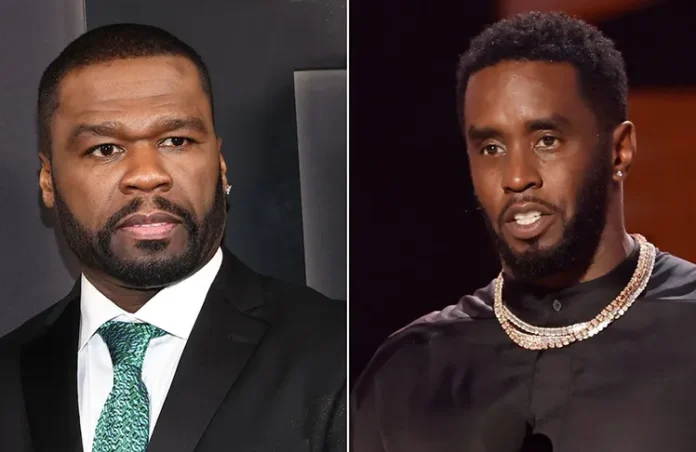
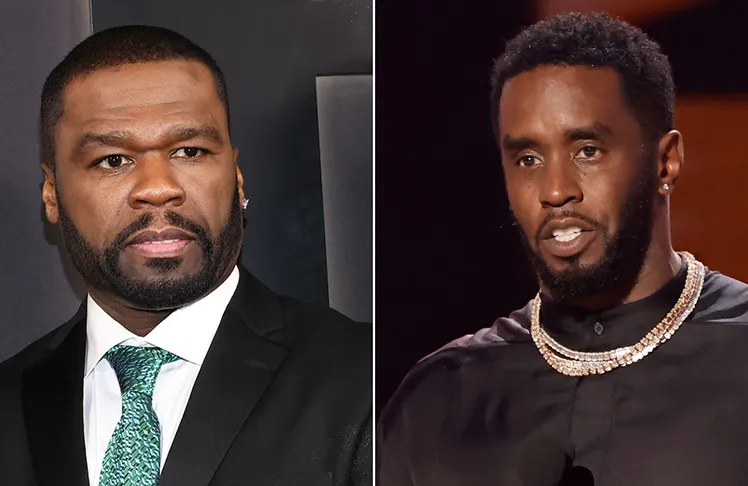
50 Cent Mercilessly Trolled Diddy And Now Has A Doc About Him. Here’s The History Of The Beef Between Them

50 Cent, born Curtis Jackson, is a producer on the four-part series “Sean Combs: The Reckoning”. (Getty Images via CNN Newsource)

By Lisa Respers France, CNN

(CNN) — There is no love lost between hip-hop moguls 50 Cent and Sean “Diddy” Combs.

50 Cent has long trolled Diddy on social media, especially after CNN’s publication of surveillance video showing Combs assaulting his then-girlfriend, Cassie Ventura, in 2016.

Now the rapper turned actor and producer has taken it up a notch with his latest project, a Netflix docuseries about Combs.

50 Cent, born Curtis Jackson, is a producer on the four-part series “Sean Combs: The Reckoning” which drops Tuesday.

According to the director, Alexandria Stapleton, the project was inspired in part by Ventura. She testified against Combs in a federal sex trafficking trial this year, in which Combs was convicted on charges of transportation to engage in prostitution.

“Being a woman in the industry, and going through the #MeToo movement — watching giants in music and film go on trial, and to know what their outcomes were … When Cassie dropped her lawsuit, I just thought this could go a million different directions,” Stapleton said. “I wondered how she had the confidence to go out there against a mogul like Sean Combs. As a filmmaker, I instantly knew it was a stress test of whether we’ve changed as a culture, as far as being able to process allegations like this in a fair way.”

Combs has previously denied all allegations of wrongdoing. That hasn’t stopped 50 Cent from trolling him on social media since the allegations went public.

But why the bad blood? Here’s a look back at how there came to be animosity between the two men.

A diss track

In 2006, 50 Cent released a diss track “The Bomb,” which featured sounds of gunfire and his allegation that Combs knew the identity of the killer of Christopher Wallace, a rapper known as The Notorious B.I.G., who was both a protégée and best friend to Combs.

Wallace was gunned down in Los Angeles in March 1997 as he and his crew, which included Combs, were traveling in a caravan. Combs was in a different vehicle from the one Wallace was in at the time Wallace was shot.

No one has ever been charged with the murder.

In his diss track, 50 raps, “I guess this means I won’t be invited to the white parties in the Hamptons,” referencing Combs’ famous soirees held in the upscale New York community.

50 Cent has also said he believes Combs is connected to the 1996 murder of rapper Tupac Shakur.

Combs called such allegations “nonsense” in a 2016 interview with the syndicated radio show “The Breakfast Club.” He has never been charged in connection to either case.

Consistent trolling

Followers of 50 are familiar with his reputation for sharp comments and social media trolling.

The rapper-turned-television-producer has made Combs a frequent target, attacking everything from his music to his age.

Some believed it was mostly marketing, especially given the men’s parallel career tracks and even competing vodkas at one point, Effen Vodka from 50 Cent and Ciroc, which formally partnered with Combs.

But 50 upped his comments after Combs was sued in November 2023 by Ventura, who in a now-settled civil complaint alleged that Combs raped her in 2018 and abused her over the more than decade they were in an off-and-on relationship.

Combs has denied the allegations, but apologized on Sunday for the incident depicted in the surveillance video.

After federal investigators searched Combs’ homes in Miami and Los Angeles in March, 50 Cent posted on X, “Now it’s not Diddy do it, it’s Diddy done. They don’t come like that unless they got a case.”

Diddy denies there’s beef

Combs was asked about the tension between him and 50 Cent during an appearance on “The Breakfast Club” in 2018.

“I don’t have no beef with Fif. He loves me,” Combs said. “Y’all can’t see that he loves me? You really think that’s hate? … You know he loves me.”

He added that he didn’t take the things 50 Cent says about him seriously.

“When he does that it’s like funny to me,” Combs said. “I don’t really take it personal. I know he has a different sense of humor, and he’s just not in my life. We don’t have to never cross paths, and I will never say nothing negative about him, you know, because that’s just not me.”

A son’s defense

Christian Combs, who goes by King Combs, is the 27-year-old son of Diddy. In May 2024 he released a song titled “Pick a Side” in support of his father and taking aim at critics like 50 Cent.

The younger Combs and his brother, Justin, were temporarily handcuffed and detained by authorities during the March 2024 search of their father’s home. Neither was arrested or charged.

Aaron Dyer, Diddy’s attorney, said in a statement to CNN at the time that “there was a gross overuse of military-level force as search warrants were executed at Mr. Combs’ residences. There is no excuse for the excessive show of force and hostility exhibited by authorities or the way his children and employees were treated.”

King Combs appeared to profess his father’s innocence in his track and took a swipe at 50 Cent.

“All that gossip sh*t is whack when all they had was 50 Cent / Who put this city on the map? / Stop lying,” the younger Combs raps.

50 Cent responded with a tongue-in-cheek post on social media.

“I feel so threatened by the things Christian is saying on his record,” he wrote in a since-delated post on Instagram, according to Billboard. “I’m afraid for my life, please don’t hurt me guys.”

The-CNN-Wire
™ & © 2025 Cable News Network, Inc., a Warner Bros. Discovery Company. All rights reserved.

Trump’s EPA Moves To Kill Life-Saving Soot Rules

The agency wants a court to toss protections that would save thousands — especially in Black and Brown communities. (Credit: Getty/Konoplytska)

by Willy Blackmore

Last February, the Environmental Protection Agency updated its rules for soot, the almost quaint-sounding pollutant produced by burning anything from wood to fossil fuels that is not only carcinogenic but can both cause and irritate a host of respiratory diseases when inhaled.

Soot, which is also called fine particulate matter, is produced so widely and so many people are routinely exposed to it that the tightened standards were estimated to deliver significant improvements in public health: saving 4,500 lives and “yielding up to $46 billion in net health benefits in 2032,” according to the EPA. And because there is more fine particulate matter in communities close to freeways and power plants, and other sources of soot, Black and Brown people stood to benefit the most.

Trump’s EPA Takes an Unprecedented Step Backward

Now, however, the Trump Administration’s EPA is taking the unprecedented step of asking a court to throw out the rule.

Soon after the Biden Administration announced the tightened standards — the first update to soot regulations since the Obama Administration — a number of Republican-led states and industry groups sued the EPA to try to stop the rule change from going into effect.

In the suit, the plaintiffs argued that the Biden Administration didn’t consider “the tremendous costs and burdens” of the rule change, which reduced the allowable limit for soot pollution from 12 micrograms per cubic meter of air to 9 micrograms. Now, instead of continuing its defense of the rule change, the Trump EPA is essentially siding with the plaintiffs: in a brief filed with the U.S. District Court of Appeals for the District of Columbia Circuit, the agency claimed the rule change didn’t follow the necessary process and that the “EPA now confesses error and urges this Court to vacate the Rule.”

It’s the first time the EPA has ever given up on defending a strengthened pollution standard in court.

Communities and Advocates Push Back

“Walking away from these clean air standards doesn’t power anything but disease,” said Patrice Simms, vice president of Healthy Communities at Earthjustice, in a statement. (When the Biden EPA first announced the new standard last year, the agency’s press release included a quote from an Earthjustice official.) “Trump has made it clear that his agenda is all about saving corporations money, and this administration’s EPA has nothing to do with protecting people’s health, saving lives, or serving children, families or communities. We will continue to defend this life-saving standard.”

What Happens if the Rule Is Vacated?

If the court does vacate the Biden rule, the soot standards will revert to the Obama-era standard. But the Trump Administration has said that it will also propose its own rule change for fine particulate matter, too. However, there is reason to believe that the appeals court will not vacate the rule, as there is established precedent that the EPA does not have to consider the costs of regulations when considering rule changes.

A Dramatic Shift From the EPA of Just Two Years Ago

But while the Trump EPA’s about-face in favor of industry is not necessarily unexpected or surprising, it certainly highlights how drastically both regulatory efforts and the language used to talk about them have changed at the EPA over the course of not even two years.

“This final air quality standard will save lives and make all people healthier, especially within America’s most vulnerable and overburdened communities,” former EPA Administrator Michael Regan said when announcing the tightened soot standard last February. “Cleaner air means that our children have brighter futures, and people can live more productive and active lives, improving our ability to grow and develop as a nation.”

Trump Commutes Sentence Of Private Equity CEO Convicted Of Fraud

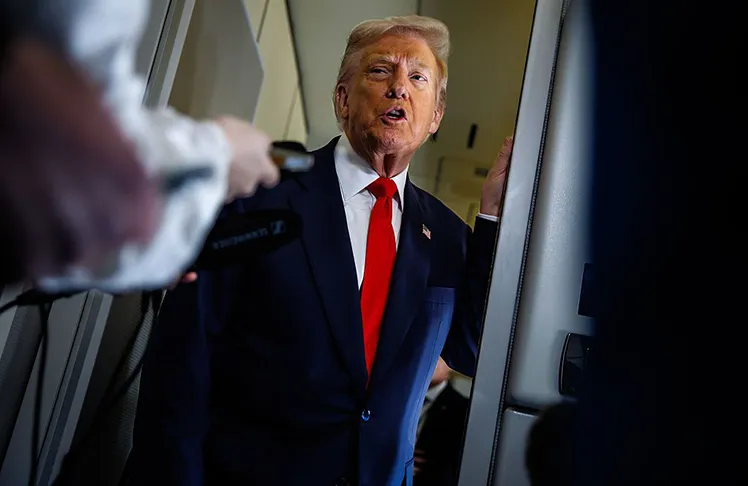
President Donald Trump speaks to reporters on Air Force One on October 31, 2025. (Samuel Corum/Getty Images/File via CNN Newsource)

By Kit Maher, CNN

(CNN) — President Donald Trump commuted the sentence of David Gentile, a private equity executive who was convicted and sentenced to seven years in prison for a fraud scheme, according to a White House official.

Gentile, the former CEO and owner of GPB Capital Holdings, and Jeffry Schneider of Ascendant Capital, were convicted in August 2024 on charges of securities and wire fraud. They were sentenced in May. It does not appear that Schneider’s sentence was commuted.

Gentile is the latest white-collar defendant Trump has given a reprieve as the president has leaned into his clemency powers in his second term. He has pardoned Binance founder Changpeng Zhao, who pleaded guilty to a money laundering charge in 2023; Ross Ulbricht, who had been serving a life sentence for creating the Silk Road marketplace; and Trevor Milton, the founder of an electric vehicle startup who was sentenced to four years in prison for exaggerating the potential of his technology.

CNN has reached out to Gentile’s lawyer for comment, as well as to Breon Peace, the former US attorney for the Eastern District of New York who announced the verdict in 2024.

Trump’s pardon czar, Alice Johnson, posted on X on Thanksgiving Day that she is “deeply grateful to see David Gentile heading home to his young children.”

Gentile and Schneider were charged in 2021 in what the US Securities and Exchange Commission described as a Ponzi-like scheme that raised over $1.7 billion. Prosecutors say they used investors’ own funds to pay out monthly distributions to investors instead of putting them toward customers’ investments.

The Eastern District of New York wrote in a news release in 2024 that Gentile and Schneider were convicted “for their roles in a multi-year scheme to defraud more than 10,000 investors by misrepresenting the performance of three GPB Capital private equity funds and the source of funds used to make monthly distribution payments to investors.”

The White House official defended Gentile’s actions at GPB Capital.

“Unlike similar companies, GPB paid regular annualized distributions to its investors. In 2015, GPB disclosed to investors the possibility of using investor capital to pay some of these distributions rather than funding them from current operations,” the official said.

“At trial, the government was unable to tie any supposedly fraudulent representations to Mr. Gentile,” the official added. “Mr. Gentile also raised serious concerns that the government had elicited false testimony and failed to correct such testimony.”

The-CNN-Wire
™ & © 2025 Cable News Network, Inc., a Warner Bros. Discovery Company. All rights reserved.

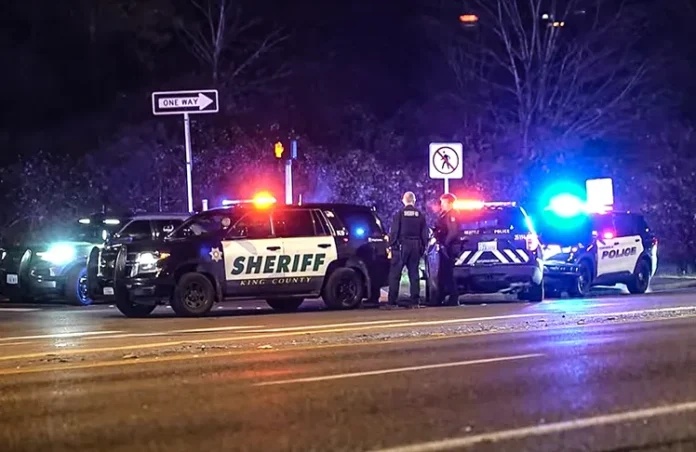
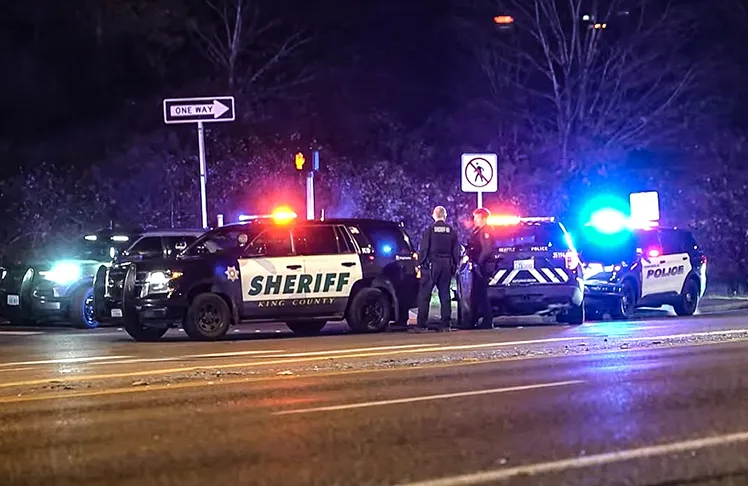
Teenagers Taken Into Custody After Gunfire At Police Incident In Seattle

A series of confrontations between local law enforcement and a group of teenagers in Seattle on Saturday night led to multiple arrests, with some teens facing serious assault charges. According to a report released by the Seattle Police Department on November 30, a man sustained a gunshot wound to the leg, and an officer from the Seattle Community Response Group narrowly avoided being hit by gunfire from an SUV occupied by the teenagers.

The incident began around 9 p.m. on November 29 when CRG officers were patrolling northern Seattle. They attempted to pull over a Dodge Durango SUV that was speeding and driving erratically on Aurora Avenue North. However, the driver fled the scene, prompting the officers to refrain from pursuing the vehicle at that time. Later, in South Seattle, officers spotted the same SUV again.

Upon approaching the vehicle during this second encounter, the SUV accelerated away from the officers. While traveling southbound on Interstate 5, the teenagers inside the SUV allegedly opened fire on the Seattle police officers. Thankfully, no officers returned fire during this dangerous exchange.

Eventually, the police were able to stop the SUV using a Precision Immobilization Technique (PIT) maneuver. Following the stop, several teenage boys and girls exited the vehicle and fled on foot. Law enforcement managed to apprehend three girls and one boy, who are now facing several charges, including two counts of first-degree assault, possession of a stolen vehicle, unlawful possession of a firearm, and eluding police.

In a related development, a man with gunshot wounds to his legs arrived at Valley Medical Center in Renton shortly after the incident. Witnesses reported that one of the bullets struck their vehicle, with fragments landing in their lap, adding to the chaotic scene. Despite the deployment of K9 units, two male suspects continued to evade capture. The Seattle Police Department has launched an investigation into the events of the night, seeking to gather more information and identify any additional suspects involved in this alarming incident. The community is left shaken as authorities work to ensure safety and accountability in the wake of the gunfire exchange.

It Takes GOP Courage, Not Compromise

By David W. Marshall

(Trice Edney Wire) – Every elected official is required to take an oath of office. The sworn oath publicly binds them to the Constitution, laws, and to the people they were elected to represent. Taking an oath is an act of accountability and a moral commitment that is not optional. It is a statement that should always be a reminder to the official that their power in office is a privilege with limits and moral boundaries.

Therefore, disloyalty or any abuse of power is an unethical breach of their sworn obligation to the people. Elected officials are servants of the people, rather than rulers above the law. It is safe to say there is not a day that goes by that the current “servant” in the White House does not compromise his sworn oath of office by surrendering morals and integrity in maintaining political power and personal loyalty. But the president is not alone. Every day, children and teens face compromising situations that tempt them to do what they know is wrong. By doing wrong, they can fit in and be accepted. Our lawmakers can be the same way. They are constantly faced with similar situations in which their personal desire to achieve and maintain political power overshadows character and moral standards.

The choice is clear; they can stay true to their sworn oath or compromise the oath to “fit in.” Many lawmakers, like children and teens, choose the path of compromise to keep their political positions and stay in the good graces of President Donald Trump. Our Constitution has a system of checks and balances that many lawmakers choose to compromise and ignore. Until recently, Rep. Marjorie Taylor Greene was one of those compromised lawmakers.

It didn’t take long for the feud between Rep. Marjorie Taylor Greene and President Trump to result in Taylor Greene’s resignation from the House of Representatives. The relationship between the president and his longtime MAGA ally quickly fell apart after Taylor Greene’s public criticism of Trump’s policy positions, her advocacy for Jeffrey Epstein’s sexual abuse survivors, and finally her support for the discharge petition forcing a House vote on releasing the full Epstein files. Despite being one of Trump’s most ardent supporters, Taylor Greene challenged the president when she uncharacteristically spoke out against Trump’s global tariffs and sided with the Democrats on extending the expiring Affordable Care tax credits.

“Now that the [Affordable Care Act] tax credits are expiring, which Democrats did put in place—and they set the expiration date for this year—I see a financial crisis for Americans,” Taylor Greene told CBS Morning. “And so, on this issue, I don’t see political party lines.” While Taylor Greene’s blind loyalty to Trump has run its course, Trump responded in typical fashion by calling her a “lightweight Congresswoman,” a “traitor,” and a “disgrace” to the Republican Party. Since her public feud with the president, Taylor Greene said the threats against her have increased. On Truth Social, the president wrote that he was “withdrawing” his “support and endorsement” of Taylor Greene, indicating that he might back an opponent of her effort to win an upcoming primary.

Overall, Taylor Greene was not a popular figure with many Democrats. Much of the toxic politics from the past can be easily traced back to her antics. Therefore, it remains a shock to see her, a powerful and influential MAGA official, speak up and join Democrats when defending the ACA and seeking presidential transparency and accountability over the Epstein files. Trump, a onetime friend of Jeffrey Epstein, has gone as far as to call the controversy a “hoax.” Taylor Greene was morally and politically correct as a member of the legislative branch to request full transparency from the executive branch.

Like former Vice President Mike Pence and former Rep. Liz Cheney before her, when Taylor Greene chose not to compromise, she automatically became the “enemy” to many throughout the MAGA base, leading to her resignation. I felt that Taylor Greene should have remained in office and run for re-election even if it meant facing a Trump-backed primary challenger. If Taylor Greene won the tough battle, it would have sent a powerful message to other GOP lawmakers who struggle to follow their convictions and their oath. Taylor Greene’s resignation continues to embolden the president to punish those who challenge his authority.

Compromised Republicans who govern under the fear and intimidation of the president are not true representatives of the people they were elected to serve. They are not the voice of the people when their fear keeps them silent. As a result, the nation as a whole suffers as they fail to uphold their Constitutional responsibility of oversight and accountability. Liz Cheney did not give in to the fear and intimidation of Donald Trump.

She became a Trump critic and was removed from Republican leadership. She agitated Trump nonstop, and Wyoming voters chose a Trump-backed candidate to replace her. Although Cheney lost her seat, she did so by fighting to the end and standing up against a political bully. Where Cheney allowed Wyoming voters to decide her political fate, Taylor Greene chose not to. When it comes to the economic and healthcare issues Taylor Greene spoke about, the GOP voters of Georgia’s 14th congressional district have a clear choice. They can still vote for a candidate who will defend the ACA and affordability issues by voting Democratic in the general election.

David W. Marshall is the founder of the faith-based organization TRB: The Reconciled Body and the author of the book “God Bless Our Divided America.”