By B. Maurice Ward, Judge Charles V. Johnson Youth and Law Forum Organizing Committee
Young people can encounter alcohol, marijuana, counterfeit pills and other substances without fully understanding what they contain or how they may affect their judgment and decision-making.
That’s why young people need honest information about drugs and alcohol before they find themselves in a situation where they have to make a choice.
The choices young people make while under the influence are not always small choices.
Alcohol can interfere with brain functions involved in judgment, memory and coordination. The National Institute on Alcohol Abuse and Alcoholism says adolescent brains are particularly vulnerable to alcohol’s negative effects and that alcohol misuse during adolescence can affect brain development.
Cannabis also can affect thinking, attention, memory, coordination and decision-making. The Centers for Disease Control and Prevention says the brain continues developing until around age 25 and that cannabis use during adolescence may affect the developing brain. The effects can vary depending on factors including the amount and potency of THC, frequency of use and age when use begins.
Counterfeit pills present another danger.
A pill obtained from someone other than a licensed pharmacy may not contain what a young person thinks it does. The U.S. Drug Enforcement Administration warns that counterfeit pills can contain fentanyl and that a potentially lethal amount of fentanyl can fit into a very small dose.
That means a young person may not always know exactly what they are putting into their body.
Substance use also can make an already difficult situation harder.
A disagreement with another person may require judgment and restraint. A dangerous situation may require someone to recognize the risk and walk away. Peer pressure may require the confidence to say no.
When judgment is impaired, those decisions can become more difficult.
This matters when young people are already navigating school pressure, family conflict, neighborhood violence, social media disputes, trauma or pressure from their peers.
Drugs and alcohol don’t exist separately from those circumstances.
They can become another risk in an already complicated situation.
The Judge Charles V. Johnson Youth and Law Forum is about altering trajectories — giving young people knowledge and tools that can help them make informed decisions.
That means we must speak plainly.
Young people should not assume a pill is what someone says it is.
They should not assume they will make exactly the same decisions while impaired that they would make sober.
And they should not assume that a situation will remain under control simply because it started that way.
Parents, mentors and community leaders have responsibilities, too.
We must talk openly about drugs and alcohol.
We must give young people accurate information.
We must create safe spaces for conversations.
And we must help young people understand the risks before they face them.
Our young people deserve honesty, not silence.
They deserve to make choices with a clear mind.
They deserve a future that isn’t changed by one impaired decision.
Your life matters.
Your choices matter.
And we are here to help you choose a different path.
By B. Maurice Ward, Judge Charles V. Johnson Youth and Law Forum Organizing Committee
Editor’s note: This commentary is part of The Seattle Medium’s special content produced in partnership with the Judge Charles V. Johnson Youth and Law Forum. The views expressed are those of the author.
In King County — and especially here in Seattle — our young people want to work, want to learn and want to build their futures.
What too many of them lack is access.
Access to mentorship.
Access to guidance.
Access to networks.
Access to internships.
Access to summer jobs.
For Black youth, those opportunities can make the difference between simply being told that a future is possible and actually seeing a path toward one.
Finding a first job can be difficult when no one has shown you where to begin.
Many young people need someone who can help them build a résumé, prepare for an interview or connect them to an opportunity.
That person might be a parent.
A teacher.
A coach.
A mentor.
A community leader.
What matters is having someone willing to help open that first door.
You cannot apply for an internship you never hear about.
You cannot pursue an opportunity you do not know exists.
Too often, information moves through networks that young people have not yet had an opportunity to build.
That is why adults and institutions need to do more than create opportunities. We need to make sure young people know about them and understand how to pursue them.
Seattle already has programs that demonstrate what this kind of access can look like. The Seattle Youth Employment Program provides career-development programming, job-readiness training and paid internship opportunities.
We need more pathways that connect young people with opportunity.
Transportation matters, too.
A job you cannot get to is not a job you can keep.
When we talk about employment opportunities for young people, we must consider how they will get to work, how long that trip will take and whether transportation creates another barrier between a young person and an opportunity.
Employment is not just about money.
It is about trajectory.
A first job can introduce a young person to new people, new expectations and new possibilities.
It can help build confidence.
It can create a professional network.
It can lead to another job, an internship, a mentor or a career.
When young people cannot access those opportunities, they lose more than a paycheck.
And our community loses potential.
The Judge Charles V. Johnson Youth and Law Forum is about helping young people understand the systems around them and giving them tools to build their futures.
That means we must teach young people how to find internships, apply for jobs, build résumés and advocate for themselves.
But we cannot put all of the responsibility on them.
Employers, institutions and community leaders must also look at the barriers standing between young people and opportunity.
Our job is not simply to tell young people to succeed.
Our job is to help make sure they have a fair opportunity to do so.
By B. Maurice Ward, Judge Charles V. Johnson Youth and Law Forum Organizing Committee
Editor’s note: This commentary is part of The Seattle Medium’s special content produced in partnership with the Judge Charles V. Johnson Youth and Law Forum. The views expressed are those of the author.
In my work across King County, I’ve seen a pattern that should concern us all: Many young people do not fully understand the risks and potential consequences that come with possessing a firearm.
Not firing it.
Not threatening anyone.
Just possessing it.
For a young person who is scared, pressured or trying to feel safe, carrying a gun may seem like protection.
But that gun can bring consequences the young person never anticipated.
A young person may get a gun without knowing where it came from or what happened before it reached them.
That gun may have changed hands several times. It may have been lost, hidden, sold or stolen. It may have been involved in something the young person knows nothing about.
But the gun keeps moving.
And every time it changes hands, another young person can become connected to a weapon whose history they do not know.
Young people also need to understand that there can be serious legal consequences for possessing a firearm.
Washington law generally prohibits firearm possession by people younger than 18, although the law provides specific exceptions under certain circumstances, including firearm safety courses, target shooting and lawful hunting.
The exact circumstances matter.
But the larger lesson for our youth is simple:
Gun possession is not a small decision.
It can be a life-altering risk.
We also cannot have an honest conversation about youth and guns without talking about fear.
Some young people carry weapons because they are afraid.
Some feel pressured.
Some believe a gun is the only way to protect themselves.
That means adults cannot simply tell young people, “Don’t carry a gun,” and consider the problem solved.
We must create spaces where young people can talk about fear, pressure and safety without judgment.
We must teach them the legal realities the streets may never explain.
We must build trust so they come to us before they turn to a weapon.
And we must work to make sure young people have safe alternatives when they believe they are in danger.
The Judge Charles V. Johnson Youth and Law Forum is about altering trajectories — giving young people the knowledge, tools and relationships they need to make informed decisions.
This year, we must speak plainly:
A gun is not something to pick up casually.
You cannot know everywhere that gun has been.
You cannot know everything it may have been used for.
And you should not assume that carrying one will make you safer.
Our young people need to understand the consequences before they face the decision.
Parents, mentors and community leaders have a role.
We must create spaces where young people can talk about fear, pressure and safety without judgment.
We must listen.
We must help them understand the risks.
And we must build enough trust that they come to us before they come to a weapon.
To our young people:
You deserve to grow old.
You deserve to feel safe.
You deserve a future that isn’t defined by a moment of fear or a bad decision.
Your life matters.
Your choices matter.
And we are here to help you choose a different path.
Counterfeit pills can be made to resemble legitimate prescription medications while containing fentanyl or other substances. The DEA continues to warn about fentanyl-laced counterfeit pills.
2. Alcohol can affect judgment.
Alcohol interferes with brain functions involved in judgment, balance, memory and other abilities. Adolescents are particularly vulnerable to its negative effects.
3. Cannabis can affect thinking and attention.
Cannabis affects functions including attention, memory, learning, decision-making, coordination and reaction time. The developing brain can be particularly susceptible to its effects.
4. Being impaired can make a difficult situation harder.
Arguments, peer pressure and unsafe situations require judgment. Being impaired can make it more difficult to assess what’s happening and determine what to do next.
5. Don’t let embarrassment stop you from seeking help.
If someone is unresponsive, having difficulty breathing or experiencing another apparent medical emergency after taking a substance, seek emergency medical assistance immediately.
1. Don’t assume a gun is safe because someone you know gave it to you.
You may not know where a firearm came from, who previously possessed it or its history. Don’t casually handle a gun you unexpectedly encounter.
2. Your age matters under Washington law.
Washington law generally prohibits firearm possession by people younger than 18. There are specific exceptions, including certain circumstances involving firearm or hunter safety courses, target shooting, organized competitions and lawful hunting.
3. The circumstances matter.
Firearm laws can depend on factors including a person’s age, the firearm and the circumstances of possession. Don’t assume something is legal because someone else says it is.
4. Don’t rely on friends or social media for legal advice.
If you need to understand what the law allows, get information from a reliable legal source or qualified professional.
5. If fear is making you consider carrying a gun, talk to someone you trust.
Fear, threats and pressure are real. A trusted parent, guardian, mentor, teacher or other responsible adult may be able to help you find another way to address the danger.
This information is provided for general educational purposes and is not legal advice.
You don’t need years of work experience to create one. School activities, volunteering, community involvement and useful skills can help an employer understand what you have to offer.
2. Practice before your interview.
Ask a teacher, mentor, relative or another trusted adult to conduct a practice interview. Be prepared to explain why you want the job and give examples of when you’ve been dependable, learned something new or solved a problem.
3. Look for programs designed for young people.
The Seattle Youth Employment Program offers career development and employment opportunities. Its programs include job-readiness training, career exploration and paid internships.
4. Don’t wait until you need a job to build relationships.
Teachers, coaches, mentors, counselors and community leaders may know about opportunities you haven’t seen advertised.
Tell trusted adults what kinds of work interest you.
5. Make a transportation plan.
Before accepting a job, figure out how you will reliably get there and get home. Consider travel time as well as the hours you will be expected to work.
A job you cannot get to is not a job you can keep.
6. Ask for help.
Someone can review your résumé.
Someone can practice interview questions with you.
Someone may know about an internship.
Asking for guidance is part of preparing for work.
(Trice Edney Wire) – The White House was built in part by enslaved Black people. They quarried stone, hauled materials and did skilled work. The wages recorded for their labor went to their enslavers. That history ought to haunt every occupant of the building. It also ought to sharpen our attention to families struggling to put food on the table in the capital today.
The Capital Area Food Bank reports that 38 percent of households across the Washington region experienced food insecurity during the past year. In Prince George’s County, the figure was 56 percent. Food insecurity means that families could not count on having enough food. Some stretched what they had; some sacrificed the quality of their meals; some went without. Where decisions about the nation’s food programs are made, those numbers should provoke more than a ceremonial food drive.
As Hunger Action Month draws to a close, hunger shows no sign of doing the same. Nor does hunger stop at the Beltway. A new survey finds that 36 percent of Chicago households lacked consistent access to enough food in June; nearly half of households with children were affected. In Los Angeles County, 24 percent of households experienced food insecurity in 2025. These studies cover different places and periods, but their message is unmistakable: too many Americans are making impossible choices at the grocery store.
What does a parent put back when the total at the register is too high? The fruit? The milk? The medicine that must also be paid for this week? Meanwhile, in Washington, somebody can put another steak dinner on an expense account without asking whether it will crowd out the electric bill. Food insecurity is an economist’s term for brutally personal calculations. It is also an indictment of an economy that produces extraordinary wealth without assuring people enough to eat.
Hunger is not evenly distributed. The Washington-area report finds that households of color face food insecurity at two to three times the rate of white households. In Chicago, the highest rates are on the South and West Sides. Unequal pay, insecure work, housing costs and the racial wealth gap determine who has a cushion when groceries become more expensive—and who has none.
Consider that cushion. In the Federal Reserve’s 2022 Survey of Consumer Finances, the median white family held $285,000 in wealth; the median Black family held $44,900. That is roughly six dollars to one. Wealth lets a family absorb a layoff, a rent increase or a medical bill without the grocery budget collapsing. When politicians tell people to tighten their belts, they ignore how many families have run out of notches.
A wealth gap this wide is a policy failure. But families cannot wait for policy to catch up before they eat. Feeding America, the nationwide network of food banks that launched Hunger Action Month, asked us to “play your part.” We should keep doing so after September. Food banks and neighborhood pantries do indispensable work. Donate money. Volunteer. Make sure people know where to find help. But a volunteer cannot replace a paycheck, and a pantry cannot repair a national safety net by itself.
The Supplemental Nutrition Assistance Program, SNAP, is part of that safety net. The Center on Budget and Policy Priorities calculates that participation fell by more than five million people—nearly 13 percent—between July 2025 and June 2026. That figure alone cannot tell us why each person left. But the 2025 law expanded SNAP’s work-related time limits to adults ages 55–64 and parents whose youngest child is 14 or older, and ended exceptions for veterans, people experiencing homelessness and former foster youth. Congress should reverse those restrictions and ensure eligible families can get the benefits they need.
American politics has a perverse habit of demanding proof that poor people deserve dinner while asking remarkably little of those who profit from their labor. The debate becomes a referendum on the shopping carts of SNAP recipients, as though policing purchases could solve low wages, high rents and inadequate benefits. It cannot. If we care what children eat, we must care whether their families can buy food throughout the month.
The enslaved people who built the White House under bondage were denied the fruits of their own work. Their circumstances and today’s are different, but this nation has long taken essential labor while resisting the obligation to provide a decent life to the people who perform it. That history calls for more than sympathy. It calls for economic justice.
Hunger Action Month should leave us with questions for every elected official: Will you protect access to SNAP? Will you support wages that keep pace with the cost of living? Will you tackle the wealth gap that leaves Black families especially exposed to economic shocks? Will you treat a child’s empty refrigerator as an emergency, rather than a talking point? And will you listen to people facing hunger before writing policies in their name?
The campaign may end with September. Families will still need breakfast. Our action must last longer than the month.
Dr. Julianne Malveaux is a DC based economist and author.
Things started badly for Chief Sealth and didn’t get any better, as Eastside Catholic took advantage of a series of early turnovers and special teams miscues to defeat the Seahawks 49-0 in Metro League action.
The trouble began almost immediately for the Seahawks.
Chief Sealth opened the game with possession but fumbled on its second play from scrimmage, and Eastside Catholic recovered at the Seahawks’ 7-yard line. On the very next play, Crusaders quarterback Jordan Meas connected with Tytan McNeal for a 7-yard touchdown pass.
Eastside Catholic then converted the two-point conversion, as Drew Hixson connected with Ezekiel Sale-Ayala to give the Crusaders an 8-0 lead with 11:39 remaining in the opening quarter.
Things quickly went from bad to worse for Chief Sealth.
The Seahawks got the ball back but turned it over again, giving Eastside Catholic possession at the Chief Sealth 29-yard line. Running back Daniel Jones quickly took advantage of the short field, breaking loose for a 21-yard touchdown run that increased the Crusaders’ lead to 15-0 with 11:18 remaining.
Eastside Catholic’s defense forced Chief Sealth to punt on the Seahawks’ next possession, and Zavier Traxler returned the kick 35 yards to once again give the Crusaders favorable field position.
This time, Meas and Traxler finished the job through the air, connecting on a 25-yard touchdown pass to extend Eastside Catholic’s advantage to 22-0 with 6:26 remaining in the first quarter.
The Crusaders’ special teams unit soon joined the scoring.
On Chief Sealth’s next possession, Eastside Catholic’s Caden Weber blocked a Seahawks punt, and the Crusaders recovered the ball in the end zone for a touchdown. The score gave Eastside Catholic a commanding 29-0 lead with 5:21 still remaining in the opening quarter.
Less than two minutes later, Traxler struck again.
Fielding another Chief Sealth punt, Traxler raced 58 yards for a touchdown, his second score of the game, to push the Crusaders’ lead to 36-0 with 4:02 remaining in the first quarter.
By the end of the opening period, Eastside Catholic had scored five touchdowns in a variety of ways. The Crusaders found the end zone through the air and on the ground, recovered a blocked punt for a touchdown and returned another punt for a score as Chief Sealth struggled to slow their early momentum.
The start of the second quarter brought more of the same.
On the first play of the period, Meas connected with Traxler again, this time for a 38-yard touchdown. Traxler broke three tackles before striding the final 10 yards into the end zone for his third touchdown of the night.
The score increased Eastside Catholic’s lead to 43-0 with 11:43 remaining in the second quarter and capped a remarkable stretch in which the Crusaders scored 43 points in just over 12 minutes of game time.
Eastside Catholic would add one more touchdown before the night was over, completing the 49-0 victory over the Seahawks.
With the win, the Crusaders improved to 4-0 and continued their dominant start to the season. Through four games, Eastside Catholic is averaging 45 points per game while allowing just 5.25 points per contest. Chief Sealth, meanwhile, dropped to 0-4.
Franklin 18, Nathan Hale 0
Franklin used a strong rushing attack and a dominant defensive performance to shut out Nathan Hale 18-0 in Metro League action. Henry Moore led the Quakers’ offense, rushing 17 times for 85 yards and two touchdowns, while Devion Frazier added the team’s other rushing touchdown. Tyrique Galloway also contributed on the ground with 33 yards on just three carries as Franklin finished with 107 rushing yards and scored all three of its touchdowns on the ground. Pasted markdown Pasted markdown
Defensively, the Quakers kept Nathan Hale off the scoreboard while recording seven tackles for loss, three sacks, two fumble recoveries and an interception. Serigne Ndiaye and Moore led Franklin with eight tackles apiece, while Isa Abdul Shakur recorded six tackles and two sacks. Abdikadir Hajir added an interception, while Galloway and Abdirahim Omar each recovered a fumble as Franklin’s defense preserved the shutout.
Blanchet 19, Ballard 13
Bishop Blanchet wasted little time making an impact, returning the opening kickoff 94 yards for a touchdown to take an early 6-0 lead over Ballard.
Ballard’s first possession was slowed by penalties, eventually forcing the Beavers to punt. Blanchet took advantage, putting together a methodical drive that ended with another touchdown and extended its lead to 12-0.
Ballard eventually found its footing and cut Blanchet’s lead to 12-7 before halftime, keeping the game within reach heading into the second half.
The Beavers continued to battle, but Blanchet did enough down the stretch to hold them off and secure a 19-13 victory.
Ingraham 53, Garfield 20
Ingraham scored four unanswered touchdowns to open the game and never looked back, as the Rams cruised to a 53-20 Metro League victory over Garfield.
Ingraham got their first score of the game when quarterback Keisik Pedersen connected with Blake Stauff for a 15-yard touchdown pass. The Rams followed with a 5-yard touchdown run by James Montagner before Pedersen struck again, finding Graham Bergstrom for a 32-yard touchdown pass.
Ingraham continued to apply pressure as Mac Faw connected with Bina Wolde for a 37-yard touchdown pass, giving the Rams a commanding 26-0 lead.
Garfield eventually stopped the bleeding, finding the end zone on a 21-yard touchdown pass with 1:46 remaining in the first half. The score cut Ingraham’s lead to 26-7 heading into halftime.
The Bulldogs continued to battle in the second half, but Ingraham’s fast start proved too much to overcome as the Rams went on to secure a 53-20 victory.
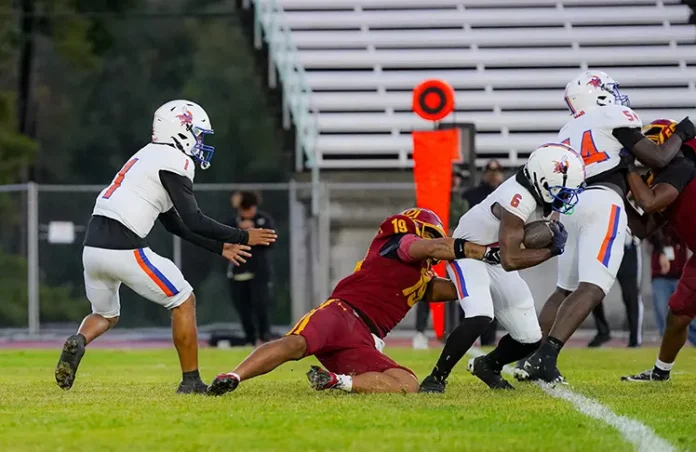
O'Dea's Nino Moksivong returns a punt for a touchdown during the Fighting Irish's Metro League victory over Rainier Beach. Staff Photo/Tyler Artis.
By Kiara Doyal, The Seattle Medium
Last night, the Rainier Beach Vikings and O’Dea Fighting Irish faced off in one of the most highly anticipated Metro League games of the week, with the sidelines swarmed by media for a matchup that drew plenty of attention.
O’Dea’s J’Shaun Wilson literally carried the load for the Fighting Irish, rushing 15 times for 183 yards and four touchdowns to help lead O’Dea to a 50-18 victory over Rainier Beach.
But the final score didn’t tell the entire story. Rainier Beach showed an ability to move the football and repeatedly challenged the Fighting Irish defense, but O’Dea’s combination of a dominant rushing attack, explosive plays and timely defensive stops proved too much for the Vikings to overcome.
Rainier Beach’s opening possession stalled after a loss on first down and back-to-back incomplete passes by quarterback Esquire Williams. The Vikings were forced to punt, and Nino Moksivong provided the game’s first big play, returning the punt 35 yards for a touchdown to give O’Dea a 7-0 lead with 10:57 remaining in the first quarter. Pasted markdown
Despite the early setback, Beach responded with a strong drive of its own.
Williams converted a fourth down with a 12-yard completion to Quis Tovia and later found Tovia again for a 29-yard gain as the Vikings moved deep into O’Dea territory. After the Fighting Irish defense made several stops near the goal line, Micah Ili-Meneese finally broke through with a 9-yard touchdown run, cutting O’Dea’s lead to 7-6. Pasted markdown
But O’Dea didn’t allow Beach to hold onto that momentum for long, answering with a scoring drive of its own.
Wilson and Max Speller went to work on the ground, with Speller breaking loose for 22 yards before Wilson finished the drive with a 19-yard touchdown run to give the Fighting Irish a 14-6 lead with 2:09 remaining in the opening quarter.
With O’Dea back in front by eight, its defense quickly gave the offense another opportunity when the Vikings fumbled on their ensuing possession. Wilson immediately took advantage, breaking loose for a 31-yard run before Speller added eight more yards, putting the Fighting Irish deep in Beach territory as the first quarter expired. Pasted markdown
Wilson finished the drive early in the second quarter, powering through from four yards out for his second touchdown of the night and extending O’Dea’s lead to 21-6 with 11:11 remaining in the half.
Rainier Beach kept putting pressure on the Fighting Irish defense.
Damari Ae Barrington picked up a series of tough runs before Wes Armstrong broke loose for a 20-yard gain, moving the Vikings to the O’Dea 26-yard line. But once again, the Fighting Irish defense stiffened with Beach threatening to score. Williams threw four consecutive incomplete passes, and the Vikings turned the ball over on downs. Pasted markdown
O’Dea eventually found the end zone again when Wilson scored on a 5-yard touchdown run, his third rushing touchdown of the first half, to increase the Fighting Irish lead to 28-6 with 3:43 remaining.
Beach, however, refused to let O’Dea completely take control before halftime.
The Vikings put together one of their best drives of the quarter, with Williams connecting with Pootie Stewart for 11 yards while Beach mixed in runs from Ili-Meneese, Tovia and Barrington. Barrington finished the drive with a 1-yard touchdown run. The two-point conversion failed, but Beach had cut the deficit to 28-12 with 43 seconds remaining. Pasted markdown
O’Dea carried the 28-12 advantage into halftime.
The Fighting Irish came out of the locker room looking to build on their lead, and their offense wasted little time doing so.
Wilson opened the second half with a 13-yard run, and Allias Moimoi added a 22-yard run as O’Dea quickly moved into Beach territory. Wilson later added another 15-yard gain before Moimoi connected with Tevita Nonu for a 7-yard touchdown pass. Wilson converted the two-point attempt, pushing the Fighting Irish lead to 36-12 with 8:40 remaining in the third quarter. Pasted markdown
Beach tried to answer, with Williams finding Ili-Meneese for five yards and Tovia for 13, but the possession stalled and the Vikings were forced to punt.
O’Dea went right back to its ground game. Speller ripped off a 17-yard run, and with the Fighting Irish later facing third-and-19, Wilson powered his way for another 17 yards. The drive carried into the fourth quarter with O’Dea still holding a 36-12 advantage. Pasted markdown
The Fighting Irish didn’t wait long to add to it.
Moimoi connected with Kaydon Tatum for a 13-yard gain before taking off for a 16-yard touchdown run, extending O’Dea’s lead to 43-12 with 11:08 remaining.
Rainier Beach responded with one of its biggest plays of the night when Williams connected with Armstrong for a 40-yard completion, setting the Vikings up inside the O’Dea 20-yard line. Two plays later, Williams found Ili-Meneese for a 19-yard touchdown pass. Beach’s two-point attempt failed, but the Vikings had cut the lead to 43-18. Pasted markdown
Once again, O’Dea answered almost immediately.
Wilson broke loose for a 56-yard touchdown run, his fourth touchdown of the night, and the extra point pushed the Fighting Irish lead to 50-18 with 9:04 remaining.
Rainier Beach continued to battle, but O’Dea’s defense kept the Vikings out of the end zone the rest of the way as the Fighting Irish ran down the clock and secured the 50-18 victory. Pasted markdown
After the game, O’Dea head coach Monte Kohler said the final score didn’t fully reflect how competitive the matchup was and viewed the game as an opportunity for his team to continue improving.
“The game was closer than the score. It was a great game to grow and learn from. We have to clean up and we have to trust them to do that work,” said Kohler. “We need to work hard and we have to get smarter. We will see Rainier Beach again. It was a great win and we will take it. It was fun and we had great effort across the board.”
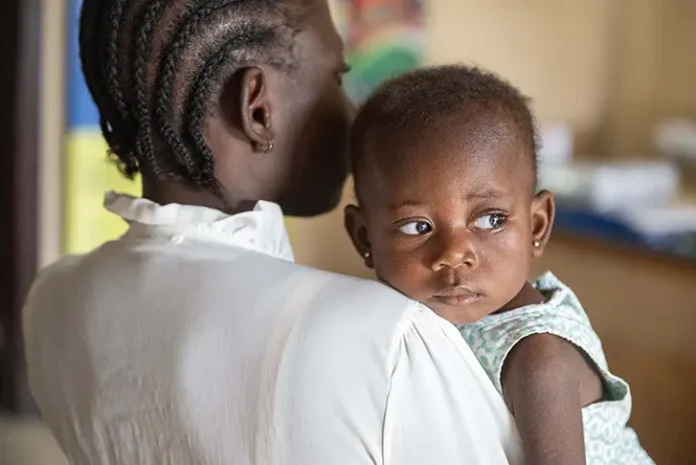
A woman living with HIV brings her baby to an antenatal clinic at Okrika Zonal Hospital in Rivers State, Nigeria. Through prevention of mother-to-child transmission, her daughter has tested negative for HIV. (Eric Bond/EGPAF via CNN Newsource)
A woman living with HIV brings her baby to an antenatal clinic at Okrika Zonal Hospital in Rivers State, Nigeria. Through prevention of mother-to-child transmission, her daughter has tested negative for HIV. (Eric Bond/EGPAF via CNN Newsource)
By Lauren Kent, CNN
(CNN) — Dr. Theopista Masenge was at the hospital in Mbeya, Tanzania, rolling out new treatments for children with high HIV viral loads when she got the call: Stop work, now.
It was January 2025, and the healthcare program the pediatrician was implementing, which provided services for HIV-exposed infants, children and pregnant women, had just received a letter from the now-dismantled United States Agency for International Development (USAID) directing it to halt all operations.
“It was really, very abrupt, and I recall even the hospital managers were running up and down like, ‘What are we going to do?’” said Masenge, who lost her job not long after. Almost overnight, “the system that was built for almost 40 years was gone.”
“Everything has been disrupted,” she told CNN.
More than a year later, she said that disruptions to HIV/AIDS services for children and pregnant women remain across Tanzania, even though limited US government funding has returned.
It’s a pattern playing out across Africa, Asia and beyond as the Trump administration’s cuts to global health funding and dismantling of USAID have severely disrupted the United States’ flagship HIV/AIDS program, PEPFAR, according to a new study by the Foundation for AIDS Research (amfAR). The study, conducted with Johns Hopkins University and published in July, surveyed 166 organizations that received PEPFAR funding last year across 46 countries (representing 23% of all PEPFAR partner organizations).
Although the US government said last September that HIV services to prevent mother-to-child transmission would be prioritized and protected from funding cuts, the amfAR survey found that 63% of respondents reported disruptions to those services.
That includes 22% of surveyed organizations that said they ended those mother-to-child prevention services entirely amid the funding cuts.
“Even if the administration’s intention was to not touch these programs, PEPFAR (funding) awards generally aren’t sort of specific to doing one individual task,” said Elise Lankiewicz, a senior policy associate at amfAR. “There was really no way to protect very singular parts of the system while dismantling others.”
It comes as 1,714 health clinics once supported by PEPFAR closed last year around the world, according to the organizations surveyed.
“I’m not so worried in terms of supplies and medications, but I’m super worried about the quality of care for the children, for the mothers,” said Masenge, now the president of the Paediatric Association of Tanzania, regarding the situation in her area. “People are not going back to the facility to pick up their medication because they feel like the services have really become worse, and the early infant diagnosis is suffering similarly.”
PEPFAR, which was established by the George W. Bush administration in 2003, is credited with saving more than 26 million lives and preventing millions of infections, mostly in Africa, according to the World Health Organization and the program’s own data. It’s one of the US government’s hallmark global health programs that is now experiencing significant funding cuts, as the administration transitions to a strategy of striking new agreements with aid-recipient nations and demanding more co-financing from them.
A US State Department spokesperson told CNN that the amfAR survey has “flawed” methodology and said that “the Trump Administration has strengthened PEPFAR through clear strategic direction, promoting greater recipient-country ownership, and sharpening the program’s focus on measurable health outcomes. As a result, the number of children testing positive and on treatment for HIV has continued to decline.”
While it’s true that the number of children starting new HIV treatment fell last year, experts say that’s not necessarily a marker of success. Declines in the number of children being tested and monitored for HIV indicate that children are losing access to care and falling through the cracks, according to the Elizabeth Glaser Pediatric Aids Foundation. Meanwhile, disruptions to data gathering and reporting have made it more difficult to spot negative outcomes.
The State Department spokesperson added: “Today, we are focusing on real outcomes: fewer new infections, mature programs transitioning to local management, and countries advancing toward long-term self-reliance … FY2025 Q4 data show that as of September 30, 2025, the U.S. government supported lifesaving HIV treatment for 20.6 million people living with HIV in more than 50 countries.”
‘HIV crisis hiding in plain sight’
The Elizabeth Glaser Pediatric Aids Foundation has called the drops in pediatric diagnosis and treatment an “HIV crisis hiding in plain sight.”
“Every single indicator in the pediatric HIV cascade shows decline,” the foundation said. Its president, Dr. Doris Macharia, added: “Where the (PEPFAR) program reaches children, it works. But the data tell us that far fewer are now being reached.”
Despite US government carve-outs for “life-saving” work to continue in relation to pregnant and breastfeeding women, amfAR’s analysis of the latest US government data found that HIV testing for pregnant women declined slightly, by 2%, at the end of 2025 compared with the same time period a year before. Testing for babies declined further, by at least 6%, although some health facilities reported far worse metrics for infant testing.
Meanwhile, respondents to the amfAR survey reported that the Orphans and Vulnerable Children Program, aimed at helping high-risk children access HIV care and other general health services, has also been severely disrupted. KFF, a nonprofit health policy research organization, found that the number of children and family members served by that program fell by about 4.8 million in 2025 compared with the year before.
Another recent analysis by the Clinton Health Access Initiative found that the number of children getting on medications used to treat HIV declined 15% in 2025 compared with the year before across eight countries that it studied. The organization said that reflects the negative impacts of HIV test kit shortages, as well as “ongoing integration of pediatric HIV services into general health facilities without adequate provider training and support.”
Beyond medications and basic care, PEPFAR once provided many “wraparound services” designed to prevent infections, encourage marginalized people to come to clinics and keep people from falling off their treatment plans, according to HIV/AIDS experts who spoke to CNN.
“I would expect those are the first things that are going to drop off, especially in countries with limited funds to replace what’s been lost from PEPFAR,” amfAR’s Lankiewicz said.
When it comes to preventing mother-to-child transmission, those wraparound services include things like paying community healthcare workers to follow up with mothers about scheduling appointments or providing community education about how HIV can be transmitted to babies. What is preserved will depend on the ability of each country’s government to upkeep and pay for services, experts said.
“On top of that, then we have this issue with money not flowing. So even though PEPFAR received the regular amount of appropriations from Congress in the last year, that money is not actually moving,” Lankiewicz added.
CNN has previously reported on the Trump administration underspending roughly $1.7 billion that Congress has already approved for the flagship HIV/AIDS program, as well as redirecting $2 billion in funding intended for global health programs to cover the cost of closing USAID.
Hard to see full picture of disruptions
Changes to the implementation of PEPFAR and spending cuts have affected not only health services but also data collection.
PEPFAR’s robust data collection was once a valuable resource for researchers and healthcare providers around the world. But the Trump administration has stopped releasing the program’s quarterly reports and withheld some of the data.
The State Department said earlier this year that the US government had “greater confidence in data” from the fourth quarter of fiscal year 2025 but added that “earlier quarters experienced reporting and implementation challenges which limit data interpretability.”
Experts warn that the data upheaval makes it harder to see the full picture of health service disruptions and final outcomes.
“You don’t always see the impact on outcomes till it’s too late,” said Jennifer Kates, director of global and public health policy at KFF. “And that would be a crisis, if we get to a point in a year or so where we look back and say more babies died and more children were born with HIV.”
For example, the US government has suggested that declines in the number of children being treated for HIV indicate that programs to prevent infections in the first place are working. But the Elizabeth Glaser Pediatric AIDS Foundation has said that “does not explain such a dramatic and sudden drop of 54,000 children already on treatment.”
When it comes to the decline in the number of infants being tested for HIV, Kates said, it could lead to researchers and program-implementers being in the dark.
She asked, “If there’s not as much detection going on, are we going to even know what is happening for babies?”